A slight temperature swing can turn a clear reactant stream into a clogged pipe full of gelatinous precipitate.
Precise temperature and chemical equilibrium control are critical because salt hydrolysis is an endothermic reaction. When temperature rises, the equilibrium shifts to favor hydrolysis, dramatically altering pH and driving insoluble metal hydroxides out of solution. In a pilot plant handling ferric chloride or similar salts, this chain of events quickly leads to fouled equipment, blocked lines, and unpredictable yields. The only way to operate safely and consistently is to tightly couple thermal management with pH suppression.
The entire processing window for hydrolyzable salts rests on a delicate balance: temperature pushes hydrolysis forward, while acid addition shifts it back. Losing control of either variable means sacrificing safe operation, clean equipment, and reproducible chemical conversions.
The Endothermic Nature of Hydrolysis: A Built-in Instability
Hydrolysis is the reverse of neutralization and absorbs heat as it proceeds. Understanding this thermodynamic behavior is the first step to preventing operational surprises.
Why Hydrolysis Accelerates with Heat
According to Le Chatelier’s principle, an endothermic reaction is driven forward by adding heat. For a hydrolyzable salt dissolved in water, raising the temperature pushes the equilibrium toward the hydrolysis products—typically an acidic or basic species and the corresponding metal hydroxide. Even a few degrees of unintended temperature rise can multiply the concentration of these hydrolysis products.
The pH Tipping Point and Precipitation
As hydrolysis proceeds, the solution’s pH shifts. Many metal hydroxides are virtually insoluble; once their solubility product is exceeded, they precipitate as a flocculent solid. For example, ferric chloride solutions form gelatinous iron(III) hydroxide if the pH rises above roughly 2–3. This tipping point is extremely sensitive to temperature, because the equilibrium constant that governs hydrolysis increases with temperature, lowering the threshold at which precipitation occurs.
Consequences in a Pilot Plant Environment
Chemical engineering pilot plants are designed to mimic industrial conditions. When hydrolysis runs out of control, the effects are immediate and costly.
Equipment Fouling and Clogging
Precipitated hydroxides adhere to pipe walls, heat exchanger surfaces, and internals of continuous stirred-tank reactors. Even a thin layer of fouling can drastically reduce heat transfer efficiency and lead to partial or complete blockages. In small-diameter pilot-plant tubing, a localized precipitation event can shut down an experiment entirely, wasting expensive materials and hours of research time.
Loss of Yield and Reproducibility
Uncontrolled hydrolysis converts a valuable reactant into an unwanted solid. This directly reduces the concentration of active species available for the intended reaction, slashing process yield. Moreover, because the extent of hydrolysis varies with temperature fluctuations, results become irreproducible, undermining the entire purpose of a pilot‑scale trial to generate scalable data.
Safety Risks from Uncontrolled Reactions
A sudden surge in precipitation can build backpressure in closed systems. If a reactor vessel’s pressure relief pathway is obstructed by solids, the risk of over‑pressurization grows. Even in open systems, handling hot, acidic streams that have partially hydrolyzed can release corrosive vapors, demanding that temperature and pH be held within safe limits.
The Solution: Integrated Temperature and pH Control
To suppress hydrolysis, you must simultaneously manage thermal energy and chemical equilibrium. These two levers work in tandem.
Stabilizing Equilibrium with Acidic Suppression
Adding a small amount of a suitable acid—typically hydrochloric acid for chlorides—reverses the hydrolysis equilibrium. This principle, highlighted in the ferric chloride example, is standard practice: maintain a slight excess of acid to keep metal ions solubilized and prevent hydroxide precipitation. The exact amount required depends on the salt’s hydrolysis constant at the operating temperature.
Precision Thermal Management in Jacketed Reactors
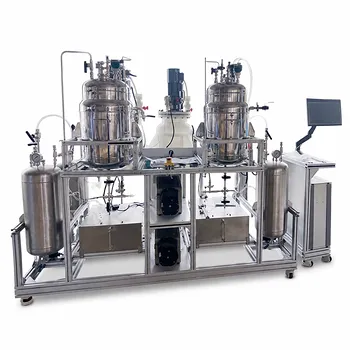
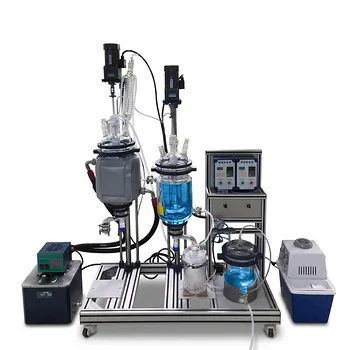
Even with acid suppression, a temperature excursion can overwhelm the buffer capacity. Pilot plants rely on jacketed reactors with advanced PID temperature controllers, cooling/heating circuits, and high‑precision thermal sensors. This setup keeps the solution at the chosen set point, ensuring the equilibrium constant stays where the process was designed to run. It also allows researchers to calculate activation energies and model scale‑up conditions with confidence.
Understanding the Trade-offs
No control strategy is free of downside. Recognizing these trade-offs builds a more resilient process design.
- Acid corrosion and material selection: Maintaining a low pH to suppress hydrolysis can corrode stainless steel over time. Pilot plants may require higher‑grade alloys or glass‑lined equipment, increasing capital cost.
- Over‑stabilization: Adding too much acid can alter the kinetics of the main reaction, shift side‑reaction equilibria, or complicate downstream neutralization steps, raising waste‑treatment costs.
- Energy and operational cost: Running a jacketed reactor with tight temperature control consumes significant energy. For process economies to scale, the control precision must be justified by the yield gain or safety improvement.
- Sensor drift and calibration drift: pH probes and thermocouples can drift in harsh, acidic conditions. Without frequent calibration, automated control loops may mistakenly “correct” a stable system into an unstable state.
Making the Right Choice for Your Pilot Plant Goal
Your specific research or production objective determines how you prioritize these control strategies.
- If your primary focus is preventing pipe clogging and maintaining uptime: Prioritize a robust acid‑dosing loop with online pH monitoring, and run at the lower end of the temperature window to minimize hydrolysis driving force.
- If your primary focus is maximizing reaction yield for a specific product: Find the optimal temperature where hydrolysis produces a desired intermediate species while using the minimum acid concentration that suppresses precipitation. Use kinetic studies to determine that sweet spot.
- If your primary focus is generating data for industrial scale‑up: Invest in high‑precision PID temperature control and redundant pH sensors. Document the exact temperature‑pH‑acid concentration map so it can be replicated reliably at full scale.
- If your primary focus is education or academic research: Use the hydrolyzable salt system to vividly demonstrate Le Chatelier’s principle and solubility equilibria. Intentionally explore failure modes so students learn to recognize early signs of precipitation and master the control response.
Precision in temperature and pH isn’t just good practice—it’s the difference between a pilot plant that delivers useful engineering data and one that becomes a costly clogged pipe waiting to happen.
Summary Table:
| Key Risk Factor | Operational Impact | Control & Mitigation Strategy |
|---|---|---|
| Temperature Excursion | Shifts endothermic equilibrium forward, causing rapid precipitation | High-precision PID temperature control in jacketed reactors |
| pH Shifts | Exceeds solubility threshold, forming gelatinous metal hydroxides | Controlled acid suppression (e.g., HCl dosing) to stabilize solution |
| Equipment Fouling | Clogs small-bore tubing, reduces heat transfer, ruins scale-up data | Redundant sensor loops, regular probe calibration, corrosion-resistant alloys |
Optimize Your Process Control with LABPARK
Don't let unstable reactions and clogged lines disrupt your research. LABPARK provides advanced Educational and Vocational Unit Operations Pilot Plants in chemical engineering, bioprocess & biotech, and environmental & water treatment.
Whether you are a university, research institute, or enterprise, our systems offer the precise thermal management and chemical dosing controls required for reliable scale-up and teaching.
Contact LABPARK today to request a quote or custom design!
Related Products
- Green Anhydrous Ethanol Refining Practical Training Pilot Plant
- Water Electrolysis Hydrogen Production and Storage Educational Pilot Plant
- Carbon Dioxide Hydrogen Methanol Synthesis Educational Unit Operations Pilot Plant
- Electrolytic Hydrogen Production Educational Unit Operations Pilot Plant
- Multi-Functional Special Distillation Educational Pilot Plant
People Also Ask
- How do deviation & overshoot serve as quality indicators in pilot plant control loop tuning?
- How is settling time measured on chemical engineering pilot plants? Master process control dynamics.
- How Batch vs. Continuous Pilot Plants Affect Polymer Distribution: Reactor Selection Guide
- What parameters are critical when teaching reactor mechanical design and safety? Key Pilot Plant Metrics
- How to Integrate Spectroscopy in Distillation Pilot Plants for Advanced Process Control