In the world of industrial mixing, the jump from a digital simulation to a 10,000-liter reactor is not linear—it’s a leap of faith unless your CFD model is grounded in reality. CFD mixing models are powerful, but they rely on simplified assumptions and empirical sub-models that introduce significant uncertainty, particularly in multiphase flows. Validating those models with experimental data from laboratory and pilot-scale stirred vessels is critical because it tunes the model’s parameters against physical truth, ensuring that when you scale up, predictions for mixing time, power consumption, and phase distribution are accurate and trustworthy.
CFD models are only as reliable as the assumptions baked into them. Validating with physical experiments at both laboratory and pilot scales is not just best practice—it’s the only way to de-risk scale-up, bridging the gap between idealized computer simulations and the messy reality of industrial mixing.
The Hidden Pitfalls of Pure CFD Modeling
CFD simulations are mathematical approximations of reality. The gap between the two can be dangerously wide if left unchecked.
The Limits of Built‑In Assumptions
Every CFD model for stirred vessels operates on a foundation of assumptions—no‑slip boundaries, turbulence closures, idealized bubble or particle behaviors. These simplifications make complex flows solvable, but they also inject uncertainty.
In laminar or single‑phase flows, these assumptions often work well. However, once you introduce a second phase or strong turbulence, the model’s ability to capture real‑world physics degrades unless it is explicitly corrected with measured data.
The Uncertainty of Multiphase Closure Models
For stirred tanks handling gas‑liquid or solid‑liquid mixtures, the core challenge shifts to closure models: drag coefficients, lift forces, swarm corrections, and turbulence modulation terms. These are not derived from first principles but are empirical correlations fitted from limited experimental datasets.
If your tank geometry, impeller type, or operating regime falls outside the original fitting range, the model’s predictions can be wildly off. Without experimental validation, you are simply guessing whether the chosen closure is still valid.
Why Dual‑Scale Validation Is Essential
Validation at two distinct scales—laboratory and pilot—is the industry’s answer to this uncertainty. It transforms a generic simulation into a calibrated digital twin.
Lab‑Scale Fine‑Tuning
Laboratory‑scale vessels (a few liters) offer a controlled environment where high‑resolution measurements are practical. You can directly measure local velocity fields, turbulent kinetic energy, and phase distribution using laser‑based diagnostics or tomography.
By comparing these measurements with CFD predictions, you can tune model parameters—such as turbulence model constants, drag corrections, or interphase momentum exchange terms—until the simulation closely mirrors the physical flow. This step grounds the model in measurable reality.
Pilot‑Scale Reality Check
A model that works beautifully at lab scale does not automatically work at a larger scale. Pilot‑scale reactors (tens to hundreds of liters) introduce scale‑dependent changes in flow structure, such as shifting vortex patterns or altered bubble‑impeller interactions.
Validation at the pilot scale confirms that the fine‑tuned parameters remain valid when the length scales increase. It exposes any breakdown in the assumed physics and forces you to adapt the model—perhaps by switching from a steady‑state to a transient simulation or by adding a gas cavity correction.
Capturing Scale‑Dependent Physics
The primary reference emphasizes that CFD must be validated “at least at two different scales.” The supplementary references explain why: the ratio of impeller blade size to gas bubble size changes drastically during scale‑up, altering how cavities form behind blades. In solid‑liquid systems, industrial feeds are often polydispersed, and concentration profiles become non‑linear in ways a lab‑scale monodispersed system cannot capture.
Without dual‑scale validation, you risk designing a full‑scale vessel based on flow physics that only exist at a benchtop scale—a recipe for dead zones, poor heat transfer, or catastrophic power overloads.
Understanding the Trade‑offs of Experimental Validation
Experimental validation is not free, and it comes with its own set of compromises. Acknowledging these builds a robust business case for the investment.
The Cost and Time Penalty
Building and instrumenting a pilot plant is expensive. Running a full set of tomography scans or cold‑flow experiments can delay a project by weeks or months. For fast‑moving development programs, there is always pressure to skip this step and trust the “pretty” CFD images.
However, the cost of an unvalidated model leading to a faulty full‑scale design is orders of magnitude higher—think mixing‑limited reactions, unplanned downtime, or off‑spec product.
Risk of Overfitting to One Scale
There is a subtle danger in validation: if you tune your model exclusively to match one set of laboratory data, you might create a model that is overfitted to that specific geometry and operating condition.
The model then loses its predictive power for other scales or conditions. This is precisely why the primary reference insists on at least two scales—the validation process must demonstrate transferability, not just a local match.
Measurement Limitations in Stirred Vessels
Even the best experimental techniques have blind spots. Optical methods fail in dense dispersions; intrusive probes disturb the flow. When your “ground truth” has its own uncertainty bands, you cannot expect a model to match it perfectly.
A responsible validation strategy acknowledges these experimental errors and uses the comparison to identify the dominant physical trends rather than chasing a pixel‑perfect agreement.
Making Validation a Strategic Advantage
Your approach to CFD validation should depend on what you are trying to achieve with the mixing system.
- If your primary focus is mitigating scale‑up risk: Invest in multi‑scale validation early to confirm that your CFD model can predict critical performance indicators like mixing time and phase hold‑up before you commit to full‑scale construction.
- If your primary focus is accelerating process development: Use lab‑scale experiments to rapidly calibrate your model, then rely on a few targeted pilot‑scale checks for the most scale‑sensitive phenomena; this offsets the time penalty while still building trust in your digital twin.
- If your primary focus is multiphase systems (gas‑liquid or solid‑liquid): Prioritize cold‑flow tomography or phase‑specific measurements to capture local holdup and bubble/particle size distributions—variables that govern mass transfer and reaction rates and that change drastically during scale‑up.
- If your primary focus is cost efficiency: Recognize that validation is an insurance policy; the few extra weeks of pilot‑plant work are trivial compared to the cost of a mis‑designed industrial stirred vessel that must be modified or replaced.
The goal is not to eliminate all uncertainty—it is to quantify it and reduce it to a level where you can confidently scale your mixing process from a beaker to a full production line.
Summary Table:
| Validation Scale | Key Focus & Measurements | Major Scale-Up Benefit |
|---|---|---|
| Laboratory Scale | Local velocity fields, turbulence kinetic energy, and parameter tuning. | Grounds the CFD model's basic physics in measurable reality. |
| Pilot Scale | Shifting vortex patterns, bubble-impeller interactions, and flow structures. | Confirms model transferability and prevents scale-up failures. |
Bridge the Gap Between Simulation and Reality with LABPARK
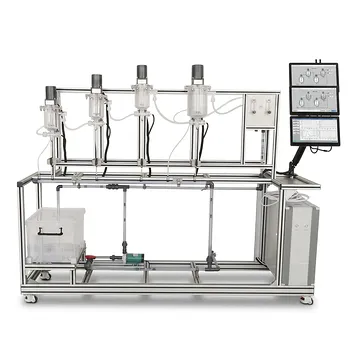
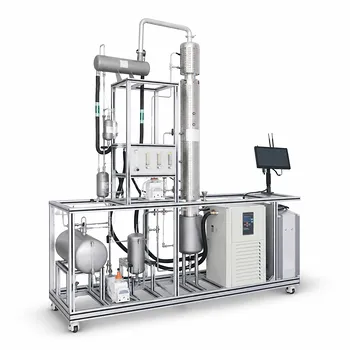
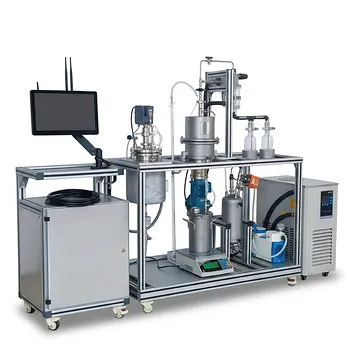
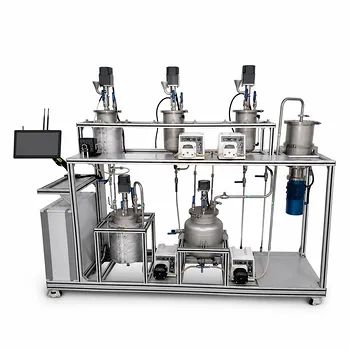
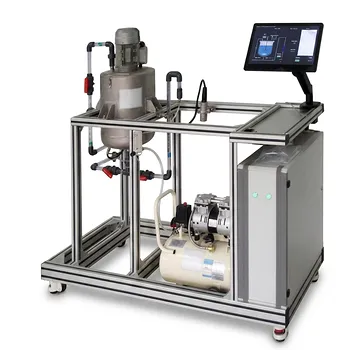
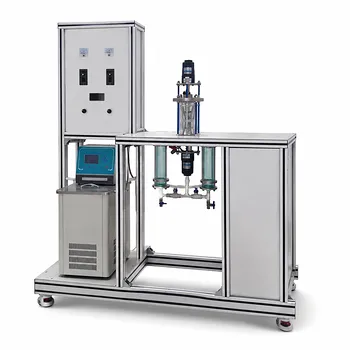
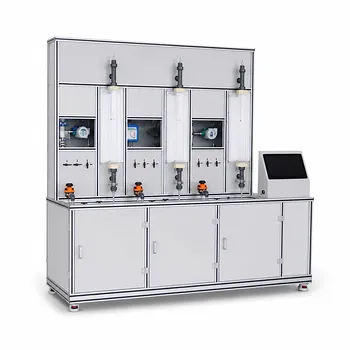
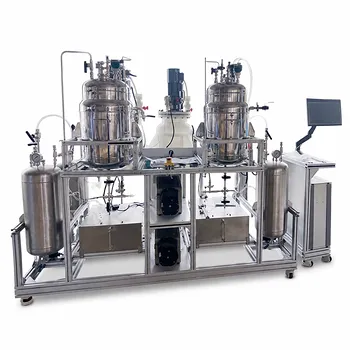
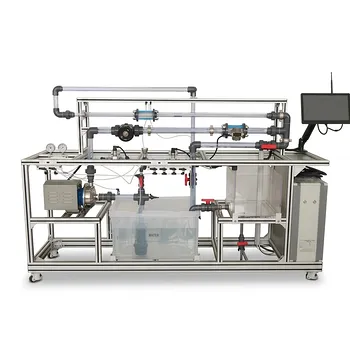
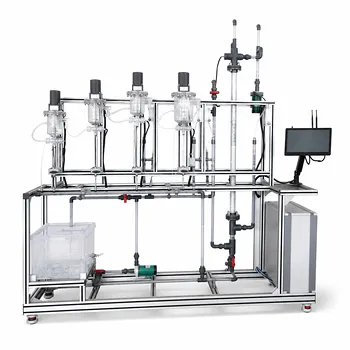
Accurate scale-up requires reliable physical equipment to validate your digital models. LABPARK provides premium Educational and Vocational Unit Operations Pilot Plants in chemical engineering, bioprocess & biotech, and environmental & water treatment. Designed specifically for universities, research institutes, and enterprises, our systems enable precise experimental validation to de-risk your processes.
Ready to elevate your research and scale-up accuracy? Contact LABPARK today to find the perfect pilot-scale solution for your laboratory.
Related Products
- Multi-Stage Stirred Tanks in Series Residence Time Distribution and Mixing Performance Determination Educational Pilot Plant
- Multi-Reactor Educational Pilot Plant for Reaction Engineering Unit Operations
- Continuous Sieve-Plate Distillation Pilot Plant for Unit Operations Laboratory Education
- Multi Functional Catalytic Reaction and Reactor Evaluation Educational Unit Operations Pilot Plant
- Micro-Scale Gas-Solid Catalytic Reaction Educational Pilot Plant
People Also Ask
- How does MRF model impeller rotation in CFD? Key Boundary Conditions Explained
- How can a CSTR pilot plant demonstrate reactor staging? Visualize volume savings.
- How does steady-state multiplicity affect the operation and safety of exothermic reactions within a CSTR pilot plant? - Guide
- What parameters to monitor transitioning from Batch to CSTR? Master Pilot Plant Setup
- Why is temperature regulation via a cooling jacket a critical feature in CSTR pilot plants used for laboratory training?