The simple answer is that theoretical models are not predictive enough. Direct scale-up of slurry reactors using only calculations for hydrodynamics and mass transfer is a gamble with multimillion-dollar consequences. The complex, chaotic interactions between gas, liquid, and solid catalyst particles generate non-linear behaviors that equations cannot capture from first principles. A pilot plant provides the non-negotiable empirical data needed to validate safety, performance, and efficiency before committing to a full-scale facility.
The central challenge in scaling slurry reactors is the breakdown of similarity theory. You cannot keep all critical mixing parameters—like power per volume and impeller tip speed—constant simultaneously. This means the hydrodynamics and mass transfer environment will fundamentally change, and a pilot plant is the only definitive tool to measure and de-risk that change before full-scale investment.
The Fundamental Flaw in Theoretical Scale-up
Laboratory-scale chemistry provides idealized kinetics, but it creates a dangerous illusion of simplicity. The jump to an industrial reactor introduces macro-scale physics that fundamentally alters the reaction environment. This is the core reason pilot plant validation is not optional—it is the bridge that connects a beaker to a building.
Theory Cannot Predict the Full Reality
Theoretical calculations for critical parameters like gas hold-up and catalyst distribution carry a high degree of uncertainty. Models are built on simplifying assumptions that often fail in the chaotic environment of a large, three-phase stirred tank.
A commercial reactor's final size and performance cannot be determined from kinetic models and computational fluid dynamics alone. The empirical data from a pilot plant is required to correct and tune these models. This turns a theoretical estimate into an engineering reality.
The Insurmountable Problem of Similarity
This is the heart of the scale-up challenge. When you increase the size of a reactor, you cannot keep all the dimensionless numbers constant.
You must compromise between parameters like impeller tip speed, rotational speed, power per volume, and the Reynolds number. A change in any one of these directly impacts the two most critical functions of a slurry reactor: suspending the solid catalyst and dispersing the gas.
Pinpointing the Risks: What a Pilot Plant Validates
The deep need for a pilot plant is risk removal. A failure at industrial scale is catastrophic. The pilot plant acts as a controlled environment to physically test and mitigate several interlinked risks that are invisible in a laboratory.
Guaranteeing Complete Catalyst Suspension
The entire reaction depends on the contact between the reactant gas, the liquid, and the solid catalyst surface. If the agitator fails to uniformly suspend the catalyst, you don't just lose efficiency; you create process failure.
A pilot plant allows you to experimentally determine the just-suspended speed (Njs) for your specific catalyst and fluid. Without this, you risk settled solids, dead zones, and localized hot spots that can trigger side reactions, degrade the catalyst, or create severe safety hazards in exothermic processes.
Measuring the True Mass Transfer Coefficient (kLa)
The rate of gas absorption into the liquid is usually the limiting factor. The mass transfer coefficient, kLa, is a function of power input, gas flow rate, and fluid properties—all of which shift dramatically with scale.
Pilot plant testing allows for direct gas uptake experiments. This delivers a measured value for kLa under realistic conditions, which is the single most important input for predicting the overall reaction rate and ensuring the final reactor delivers the required yield and selectivity.
Evaluating Long-Term Operational Reality
A lab run might last hours, but a commercial catalyst must perform for months or years. A pilot plant is essential to replicate these real-world stresses.
It enables you to test the mechanical stability of catalyst particles as they collide with impeller blades, evaluate the impact of continuous recycling and feedstock impurities on deactivation rates, and prove the effectiveness of catalyst filtration and separation systems. This validates the entire process lifecycle, not just the chemistry.
Understanding the Trade-offs
Pilot plant testing is a powerful tool, but it is not a flawless crystal ball. Its effectiveness depends entirely on how well it is designed and how its limitations are understood.
The Multi-Phase Compromise
The gas distribution in a pilot-scale vessel will not be perfectly identical to a vessel a hundred times its size. Correlations used to translate pilot data to the final design introduce a margin of error.
The art of scale-up, therefore, is not to achieve a perfect physical replica. It is to design the pilot experiment to identify the rate-determining step and accurately model that specific phenomenon, whether it's mass transfer or kinetics. The goal is a validated model, not a perfect miniature.
The Danger of Low-Yield Reactions
For high-value products, the decision to pilot may be an obvious economic one. The trade-off becomes more complex for low-yield or low-margin commodity chemicals.
The time and cost of building and operating a pilot facility can be significant. In these cases, the deep need is to scope the pilot plant strategically, focusing only on the highest-risk elements like solids suspension and mass transfer, rather than attempting a full process optimization.
Making the Right Choice for Your Project
Your investment in a pilot plant must be directly proportional to the uncertainty and cost of failure. The path forward should be dictated by your specific goals.
- If your primary focus is safety with an exothermic reaction: Pilot plant data on temperature control and the elimination of hot spots is non-negotiable before scaling up.
- If your primary focus is maximizing yield and product purity: Use the pilot plant to systematically measure and optimize the mass transfer coefficient (kLa) and validate a kinetic model that accounts for physical transport.
- If your primary focus is long-term operational cost: A pilot plant run over weeks or months is the only way to generate reliable data on catalyst deactivation, mechanical attrition, and the efficiency of your separation loop.
The core justification for a pilot plant is simple: it replaces the high uncertainty of theoretical models with the managed, measured risk of empirical data. In the complex world of three-phase reactions, that transformation is the single most critical factor for a successful industrial design.
Summary Table:
| Scale-Up Challenge | Theoretical Model Limitation | Pilot Plant Empirical Solution |
|---|---|---|
| Catalyst Suspension (Njs) | Cannot predict multi-phase dead zones | Determines actual minimum speed to prevent settling |
| Mass Transfer (kLa) | Simplistic correlations overlook scale shifts | Direct gas uptake tests under real process conditions |
| Catalyst Stability | Short-term lab runs ignore mechanical wear | Simulates long-term attrition & deactivation cycles |
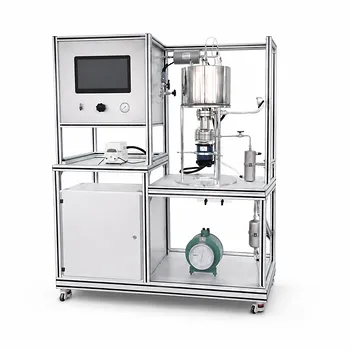
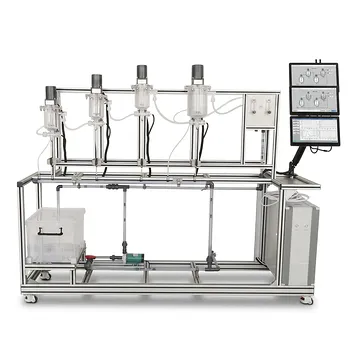
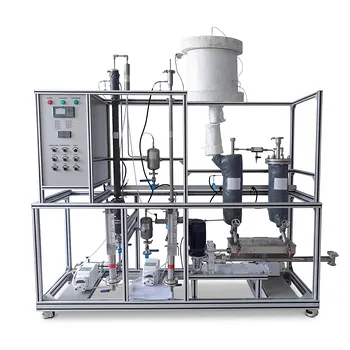
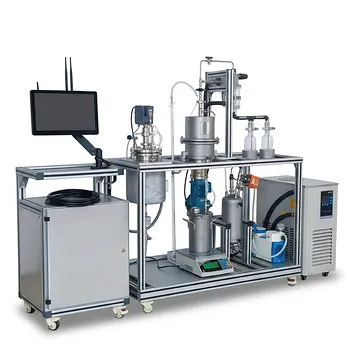
Transition your chemical engineering concepts from lab to reality with confidence. LABPARK provides state-of-the-art Educational and Vocational Unit Operations Pilot Plants in chemical engineering, bioprocess & biotech, and environmental & water treatment. Designed specifically for universities, research institutes, and enterprises, our pilot systems deliver the precise, empirical data you need to validate hydrodynamics, optimize mass transfer, and de-risk your scale-up processes.
Ready to enhance your research and training capabilities? Contact us today to explore our custom pilot plant solutions!
Related Products
- Fixed-Bed Chemical Reaction and Gas Dust Tar Removal Unit Operations Pilot Plant
- Fluidized Bed Gas Solid Catalytic Reaction Educational Pilot Plant
- Multi-Reactor Educational Pilot Plant for Reaction Engineering Unit Operations
- Fixed Bed Gas Solid Catalytic Reaction Educational Pilot Plant
- Methane Cracking Educational Unit Operations Pilot Plant
People Also Ask
- When to transition from PID to adaptive control in pilot plants? Key process indicators.
- How do deviations in estimating latent heat impact pilot plant thermal systems? Avoid hardware mis-sizing.
- Why Compare Predicted and Experimental Excess Enthalpy? Key to Accurate Pilot Plant Scale-up
- Why Use PTFE & Hastelloy in Chemical Pilot Plants? Prevent Corrosion & Ensure Safety
- How to study gasification in pilot plants? Compare exit gas composition & efficiency