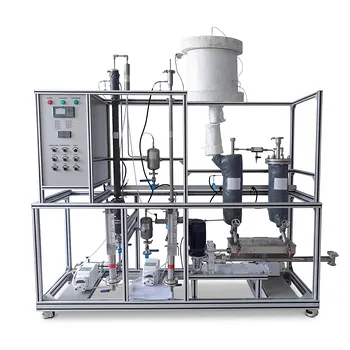
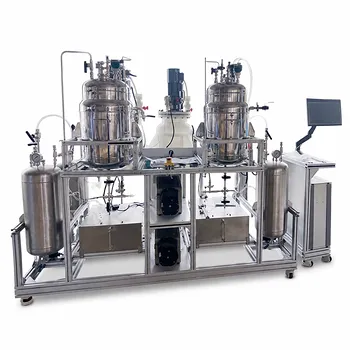
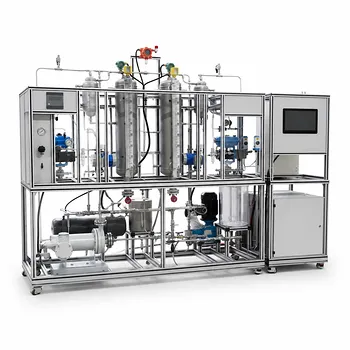
Hydrogenation is not just an optional step—it’s the fundamental chemical bridge that transforms low-quality synthetic crude oils into viable, stable, and clean-burning fuels. Without it, shale oil and coal-derived liquids remain too viscous, corrosive, and energy-poor to integrate into modern engines and infrastructure. The process is crucial because it simultaneously solves three problems: it boosts the hydrogen-to-carbon ratio to match petroleum, it strips out catalyst-poisoning sulfur and nitrogen, and it stabilizes reactive molecules to prevent gum formation. Chemical engineering pilot plants then serve as the essential proving ground, making this high-pressure chemistry tangible by replicating industrial conditions at a manageable scale so researchers can measure catalyst life, manage explosive exothermic heat, and validate thermodynamic models before committing billions of dollars to a full-scale refinery.
Synthetic fuels are starved of hydrogen and loaded with heteroatoms—a combination that makes them a poor substitute for petroleum unless chemically rebalanced. Hydrogenation under pressure is the only scalable way to add that missing hydrogen while scrubbing out sulfur, nitrogen, and oxygen. Pilot plants make this invisible molecular transformation visible, allowing engineers to study the dangerous interplay of high pressure, high temperature, and reactive catalysts in a controlled, instrumented environment that a benchtop reactor simply cannot replicate.
Why Hydrogenation Is the Linchpin of Synthetic Fuel Upgrading
The raw liquids squeezed from shale or coal are chemically more like tar than gasoline. Their deficiency strikes at the heart of fuel quality, and hydrogenation is the targeted repair mechanism.
The Hydrogen-to-Carbon Imbalance
Petroleum-based fuels like diesel average a hydrogen-to-carbon atomic ratio around 1.7:1. Coal-derived liquids, by contrast, can start as low as 0.7:1—a structural deficit that makes them dense, aromatic, and prone to forming soot when burned. Hydrogenation directly injects hydrogen atoms into these electron-starved molecules, saturating aromatic rings and lifting the H:C ratio into the petroleum range. This simple addition dramatically improves combustion characteristics and energy density per unit volume.
The Heteroatom Poison Problem
Beyond carbon and hydrogen, synthetic crudes carry a payload of sulfur, nitrogen, and oxygen atoms. These aren’t just environmental concerns; they’re active saboteurs. Sulfur and nitrogen compounds poison the very catalysts used in downstream refining, while oxygen-containing molecules cause acidity and instability. Hydrogenation strips these out by converting sulfur to hydrogen sulfide and nitrogen to ammonia, both of which can be separated from the product stream. The result isn’t just cleaner fuel—it’s a fuel that won’t itself destroy the catalysts intended to upgrade it further. This is why hydrogenation is typically the first major step in any synthetic fuel refinery, serving as a purification gatekeeper before other processes can even begin.
Boosting Liquid Yields and Product Stability
Without hydrogenation, thermal cracking of heavy synthetic molecules would leave a charred mess of coke and unstable free radicals. Hydrogen acts as a capping agent, terminating these radicals to prevent them from recombining into even larger, unwanted solids. In practice, a well-designed hydrogenation step can increase the overall yield of desirable liquid fuels while minimizing solid coke formation. It also saturates olefins, preventing the gumming and oxidation that would otherwise make the fuel shelf-unstable.
How Chemical Engineering Pilot Plants Reveal the Process's True Nature
Understanding why hydrogenation is needed is only half the picture. The how—translating this chemistry into a safe, efficient industrial operation—is where pilot plants become irreplaceable. The primary reference highlights that these unit operations setups are specifically designed to simulate high-pressure catalytic hydrogenation and even Fischer-Tropsch synthesis, turning abstract thermodynamic equations into empirical data.
Replicating Industrial Truths That Bench-Scale Work Misses
A lab-scale autoclave can tell you a reaction happens. It cannot tell you how a catalyst bed will behave when exposed to a continuous stream of raw, impurity-laden feed for 1,000 hours, or how recycled hydrogen gas carrying trace H₂S will slowly shift equilibrium. Pilot plants introduce continuous flow, product separation, and gas recycle loops—the "recycling effects" and feed impurity impacts that the supplementary references correctly identify as the gap that only piloting can close. This is where you discover the real deactivation rate of your expensive catalyst, not the idealized one from a pure-chemical experiment.
Visualizing Phase Equilibria and Multi-Component Thermodynamics
Under the extreme pressures required (historically 350 to 700 atm for direct coal liquefaction), hydrocarbons, hydrogen, and byproduct gases enter a supercritical dance where ideal gas laws fail spectacularly. Pilot plants are heavily instrumented with temperature probes, pressure transducers, and sampling ports at multiple points along the reactor. This allows researchers to map phase boundaries directly—observing, for example, where a liquid-vapor mixture becomes a single dense phase—and to validate the complex equations of state that process simulation software depends on. Without this empirical anchor, design models for full-scale reactors would be dangerously speculative.
Managing the Exotherm and Safety Demonstrated at Scale
The hydrogenation reaction is highly exothermic. In a large reactor, uncontrolled heat release can sinter the catalyst or, worse, cause a thermal runaway and breach the pressure vessel. Pilot plants serve as a miniature test bed for heat management strategies: inter-stage cooling, cold gas quench injections, or specialized slurry systems that handle heavy coal liquids. The supplementary references note the necessity of heavy-duty reactors, slurry handling, and advanced pressure safety relief systems precisely because these are the unit operations where academic theory meets the unforgiving reality of high-pressure energetic materials. By running the process at a scale of a few liters per hour, engineers can safely induce and then mitigate temperature excursions, developing the control logic that will protect the multi-million-dollar plant later on.
Understanding the Trade-offs and Practical Challenges
While hydrogenation is indispensable, an honest assessment requires acknowledging its steep operational costs and the compromises it demands. The choice to hydrogenate is always a balance between fuel quality and economic and safety constraints.
The High-Pressure Cost Barrier
The necessity for high pressures, especially with coal liquids, means the reactors themselves must have thick, alloyed walls, and the hydrogen compressors consume a significant fraction of the plant’s own energy output. This capital and operating expenditure is the primary reason synthetic fuel plants remain economically challenged compared to simple petroleum refining. A pilot plant helps quantify exactly how low you can push the pressure without sacrificing product quality, directly informing the ultimate profitability.
Catalyst Deactivation as a Moving Target
No catalyst lasts forever. In a pilot plant, you confront the reality that even trace levels of sulfur slipping past an upstream guard bed slowly and permanently poison your precious metal sites. The pilot plant becomes the only venue to accurately measure the catalyst’s effective lifetime and to test regeneration procedures under realistically contaminated conditions. The data curve of activity versus time—obtained only through long pilot runs—determines the required catalyst inventory and reactor size, two of the biggest line items in a project budget.
The Challenge of Accurate Scale-up
A reaction’s selectivity can change as you scale from a 1-inch tube to a 10-foot bed due to differences in back-mixing and heat distribution. The pilot plant exists to uncover these scale-dependent effects. While it can’t eliminate all surprises, it reduces the uncertainty to a manageable level, validating kinetic models that can then be confidently plugged into a larger reactor design. The primary reference’s focus on studying heat transfer in exothermic reactions points directly to this: a hot spot in a small reactor might be a 5°C blip; in a large one, it could be a 50°C runaway.
Making the Right Choice for Your Research or Scale-Up Goal
Your decision on how to utilize a hydrogenation pilot plant—or whether you truly need one for your specific synthetic fuel project—should be driven by your specific objective and risk tolerance.
- If your primary focus is fundamental catalyst screening: Continue using micro-reactors for speed, but only rely on a pilot plant for your top candidate to validate performance under continuous operation with real, impure feeds.
- If your primary focus is generating data for a techno-economic analysis: A pilot plant is non-negotiable. You need long-duration runs to produce the yield, consumption, and catalyst life figures that investors and corporate boards will demand before sanctioning capital.
- If your primary focus is developing a safety and control strategy for scale-up: The pilot plant is your only ethical and practical path forward, serving as the platform to deliberately explore upset conditions and failure modes in a contained environment.
- If your primary focus is understanding the fundamental thermodynamics of your mixture: Prioritize a pilot plant with ample sampling ports and sophisticated analytical capabilities, allowing you to map the phase behavior that underpins all process models.
The heavy, impure liquids that come from shale and coal are not a usable fuel resource until they are chemically re-born through hydrogenation, and the pilot plant is the crucible where that re-birth is perfected without the catastrophic risk of failing at a billion-dollar scale.
Summary Table:
| Key Challenge | Hydrogenation Solution | Pilot Plant Role |
|---|---|---|
| H:C Imbalance (e.g., Coal 0.7:1) | Saturates aromatics, increases H:C ratio to ~1.7:1 | Maps phase equilibria & thermodynamic models |
| Heteroatoms (Sulfur, Nitrogen) | Converts impurities to H₂S and NH₃ for removal | Measures real-world catalyst deactivation rates |
| Exothermic Heat Runaway | Replaces heavy molecules, but releases extreme heat | Tests cooling, quench systems, & control safety |
| Product Instability | Saturates olefins to prevent gum/coke formation | Validates liquid yields under continuous operation |
Need to bring complex chemical engineering concepts to life? LABPARK provides state-of-the-art Educational and Vocational Unit Operations Pilot Plants in chemical engineering, bioprocess & biotech, and environmental & water treatment. Designed specifically for universities, research institutes, and enterprises, our plants bridge the gap between laboratory research and industrial reality.
Ready to upgrade your training and research capabilities? Contact LABPARK today to find the perfect pilot plant solution for your facility!
Related Products
- 100L Continuous Loop Hydrogenation Educational Unit Operations Pilot Plant
- Crude Benzene Hydrogenation Educational Unit Operations Pilot Plant
- Carbon Dioxide Hydrogenation Methanol Synthesis Educational Unit Operations Pilot Plant
- Electrolytic Hydrogen Production Educational Unit Operations Pilot Plant
- Steam Methane Reforming Hydrogen Production and Purification Educational Pilot Plant
People Also Ask
- Why is the chemical plant startup schedule crucial? De-risk scale-up with pilot plants.
- How to study gasification in pilot plants? Compare exit gas composition & efficiency
- How do deviations in estimating latent heat impact pilot plant thermal systems? Avoid hardware mis-sizing.
- Why Use PTFE & Hastelloy in Chemical Pilot Plants? Prevent Corrosion & Ensure Safety
- Why Compare Predicted and Experimental Excess Enthalpy? Key to Accurate Pilot Plant Scale-up