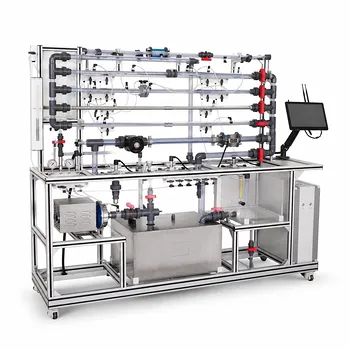
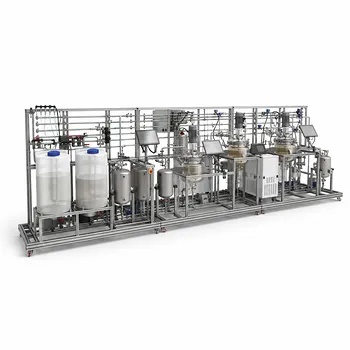
Hands-on training shrinks the gap between theoretical design and operational reality. Vocational unit operations pilot plants provide a high-fidelity sandbox where trainees deliberately encounter and resolve the very failures—pump blockages, heat exchanger fouling, control valve malfunctions—that cause costly “teething problems” in new industrial plants. By learning to troubleshoot, plan for redundancy, and establish preventive maintenance rituals on a forgiving scale, graduates arrive on the production floor with battle-tested instincts, not just textbook knowledge.
Pilot plants are not simply small factories; they are deliberate failure laboratories. Their greatest value is in teaching operators and engineers how to fail safely, how to recognize the earliest symptoms of equipment distress, and how to build the operational discipline that prevents those symptoms from becoming shutdowns. This systematic exposure to early-life equipment fragility is what directly prevents the reliability dip that plagues most full-scale plants during startup.
The Hidden Curriculum of a Pilot Plant
Classroom theory teaches steady-state design. An industrial plant’s first months, however, are a chaotic assault of transient conditions, unmapped interactions, and infant-mortality failures. A pilot plant inserts real physics—with its sticky, clogging, vibrating, fouling nature—back into the learning process.
Confronting Real Failure Modes, Not Just Simulations
A control valve that works flawlessly on a P&ID can seize in service because of a trace impurity that was never documented. In a pilot plant, that impurity exists. Trainees experience the valve sticking, diagnose the root cause, and learn to verify material compatibility before installation—an instinct that immediately raises reliability in the full-scale plant. The pilot plant’s most important safety is that it allows a $200 repair to replace a $200,000 lesson in lost production.
Building the ‘Failure Library’ — Pattern Recognition for Troubleshooting
Expert troubleshooters do not follow generic scripts; they match a real-time symptom to a mental catalog of past failures. That catalog cannot be built from lectures. Each pump blockage, heat exchanger fouling event, or instrument drift that a trainee solves becomes a stored pattern. When an industrial centrifuge starts vibrating in an unfamiliar way, the trained operator recognizes the signature of an imbalance versus a bearing issue and responds in minutes, not days.
Designing for Reliability with Parallel Standby Systems
Industrial plants often suffer long outages because a single critical pump fails with no configured alternative. Pilot plant training teaches the discipline of configuring parallel standby equipment (redundant pumps, bypass lines) for continuous operation. Trainees physically install, switch over, and test these redundancies, internalizing the principle that reliability is not a component specification—it is a system architecture.
Developing Maintenance Protocols That Prevent Downtime
A great preventive maintenance (PM) program is a living document born from observed failure patterns, not a generic template. On a pilot plant, trainees record which instruments drift, which seals degrade with thermal cycling, and which filters clog after a specific feedstock batch. They then draft PM schedules rooted in those observations. This habit of evidence-based maintenance is the strongest antidote to unplanned shutdowns.
Bridging the Gap Between Theory and Industrial Reality
Teething problems are often not mechanical but analytical: the plant runs blind because its sophisticated analyzers never work as promised. The traditional curriculum leaves a dangerous blind spot here.
The Overlooked Complexity of Process Analyzers
Most operators and engineers are trained on univariate sensors—pressure, temperature, pH. A modern plant, however, depends on multivariate spectroscopic analyzers that require chemometric model building, method qualification, and ongoing maintenance. Without hands-on exposure, these analyzers become expensive paperweights. In a pilot plant, trainees grapple with the full lifecycle: installing the hardware, assessing speed, accuracy, and precision on real process streams, and establishing the daily verification protocols that ensure long-term business value.
Why Operation Manuals Are the Unsung Heroes of Training
A pilot plant’s operation manual is not just a paper guide; it is the codification of safe, repeatable discipline. Trainees follow step-by-step startup, shutdown, and emergency shutdown procedures, building a muscle memory for structured operation. This discipline directly prevents the operator errors and equipment damage (dry-running pumps, thermal shock to reactors) that cause many early-life failures. When they transition to an industrial plant, a rigorous manual-usage culture is already second nature.
Understanding the Trade-offs and Common Pitfalls
While pilot plant training is enormously effective, it is not a silver bullet. Its value depends entirely on how it is implemented.
The Risk of Pilot Plant Myopia — When Training Doesn’t Translate
Not all pilot plants capture the scaling factors—mixing dynamics, heat transfer coefficients, material of construction stresses—that dominate full-scale reliability. If trainees only see idealized equipment that never fouls or vibrates, the training becomes dangerously misleading. The curriculum must be designed to deliberately introduce realistic failure modes and to discuss how the observed failures would manifest differently at industrial scale.
The Resource Intensity of Effective Hands-on Training
Running a pilot plant with intentional fault injection requires skilled instructors, ample time, and maintenance of the training equipment itself. Poorly maintained pilot plants teach students to accept broken instrumentation as normal—exactly the culture you want to avoid in industry. The investment must cover not just the hardware but the expertise to turn each failure into a structured learning event.
Making the Right Choice for Your Goal
How you structure pilot plant training should align with the specific reliability challenges you face.
- If your primary focus is maximizing uptime in a new production facility: Ensure the pilot plant curriculum forces trainees to configure and switch between redundant equipment paths under simulated process upsets, building the instinct for automatic contingency planning.
- If your primary focus is improving process analyzer utilization: Integrate multivariate spectroscopic analyzers into the pilot plant workflow and require trainees to perform the complete method qualification and daily maintenance routines that determine analyzer trustworthiness.
- If your primary focus is building operational discipline in inexperienced hires: Lean heavily on a meticulously written operation manual and make step-by-step adherence, not speed, the core evaluation criterion, thereby inoculating them against improvisation that breaks industrial equipment.
- If your primary focus is hardening a design before construction: Use the pilot plant as an accelerated life-test platform, intentionally cycling temperatures and feedstocks to reveal fouling, corrosion, and wear mechanisms early, then feed those findings directly into the plant’s preventive maintenance strategy and spare parts inventory.
The most reliable industrial plants are not the ones with the best design specifications on paper—they are the ones whose teams have already broken, diagnosed, and fixed every core failure mode in the forgiving environment of a well-instrumented pilot plant.
Summary Table:
| Training Focus Area | Hands-on Pilot Plant Activity | Industrial Prevention Outcome |
|---|---|---|
| Fault Diagnostics | Troubleshooting real blockages, fouling, and drift | Prevents extended startup delays and downtime |
| System Redundancy | Configuring and switching parallel standby equipment | Avoids complete plant shutdowns during equipment failure |
| Preventive Maintenance | Drafting PM schedules based on observed wear patterns | Stops unplanned outages through evidence-based upkeep |
| Process Analyzers | Calibrating and maintaining complex multivariate sensors | Prevents operating blind and ensures accurate process control |
Bridge the Gap Between Theory and Industrial Reality with LABPARK
To eliminate costly industrial teething problems, operators and engineers need hands-on experience in a safe, controlled environment. LABPARK provides state-of-the-art Educational and Vocational Unit Operations Pilot Plants designed specifically for universities, research institutes, and enterprises.
Our customized pilot plant solutions cover critical domains, including:
- Chemical Engineering (distillation, extraction, and reaction systems)
- Bioprocess & Biotechnology (fermentation and separation units)
- Environmental & Water Treatment (filtration and purification systems)
Empower your team or students with the practical troubleshooting skills and operational discipline required to maximize industrial reliability.
Contact LABPARK today to discuss your training needs and explore our range of pilot plant solutions!
Related Products
- Three-Tube Heat Transfer Educational Pilot Plant for Unit Operations Training
- Multi-Reactor Educational Pilot Plant for Reaction Engineering Unit Operations
- Multimodal Absorption and Desorption Pilot Plant for Unit Operations Training
- Multi-Functional Drying Educational Unit Operations Pilot Plant
- Dual Mode Heat Transfer Pilot Plant for Unit Operations Training
People Also Ask
- When is ε-NTU preferred over LMTD in pilot plants? Predict heat exchanger performance without iteration.
- What engineering trade-offs must students analyze in a heat transfer pilot plant? Balance performance & cost.
- How does cascade control achieve superior disturbance rejection in heat transfer pilot plants?
- Why is emissivity critical in heat transfer pilot plants? Bridge the Gap Between Theory & Industrial Design
- How to configure heat transfer pilot plants for pinch analysis? Teach energy recovery.