Carbon steel is fundamentally incompatible with polymer slurry storage. In chemical engineering pilot plants, it corrodes upon contact with these often aqueous, chemically active mixtures, leaching iron ions that directly contaminate the product. This contamination ruins the polymer's purity, alters its properties, and can derail an entire experimental run, making the material a non-starter for any meaningful research or scale-up work.
The core challenge is not just structural integrity, but maintaining absolute product purity. For polymer slurries, the vessel itself becomes a process input if the wrong material is chosen. The solution is to select inherently corrosion-resistant materials like 300-series stainless steel or high-density polymers that won't trade metallic contamination for product volume.
The Contamination Mechanism: Why Iron is the Enemy
The Silent Corrosion Reaction
Polymer slurries are not inert. They often contain monomers, initiators, or slight acidity from the polymerization process. When this slurry contacts carbon steel, a simple electrochemical reaction begins. The iron in the steel dissolves, releasing ferrous (Fe²⁺) or ferric (Fe³⁺) ions directly into the mixture.
The Domino Effect on Polymer Quality
These stray iron ions act as a potent contaminant. They can discolor the final polymer, turning what should be a clear or white product into an off-yellow or brown one. More critically, iron can interfere with the polymer's molecular structure, cross-linking chains or degrading the carefully controlled molecular weight distribution. This ruins the very properties—viscosity, strength, adhesion—that the pilot plant was built to test.
The Downstream Process Nightmare
The damage doesn't stop at the storage tank. Iron contamination is a gift that keeps on giving. It can foul sensitive membranes in filtration units or leave stubborn residues during the drying stage. The resulting contaminated solid is useless for quality analysis, rendering the pilot plant's data unreliable and defeating its purpose of predicting full-scale production behavior.
The Trusted Alternatives: A Tiered Approach to Purity
The Gold Standard: Stainless Steel (304/316)
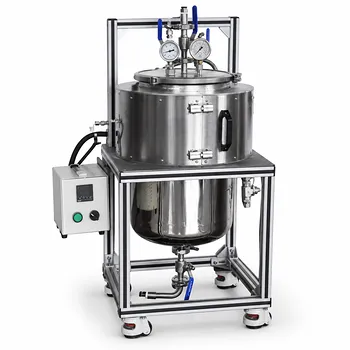
Austenitic stainless steels are the backbone of pilot plant construction for a reason. Their high chromium and nickel content forms a passive chromium oxide layer on the surface that actively resists corrosion from mild acids and chlorides often found in slurries. Grade 304 is a robust, widely available choice, offering excellent general protection. For more aggressive environments, Grade 316 adds molybdenum, which significantly boosts resistance to pitting corrosion, making it the safest bet when absolute purity is non-negotiable.
The Lightweight Contender: High-Density Polymers
High-density polyethylene (HDPE) or polypropylene tanks offer a different value proposition. They are inherently immune to the electrochemical corrosion that plagues metals. They can't leach metal ions because they don't contain them. This makes them exceptionally clean for storage. Their limitations are mechanical: they lack the strength and temperature range of metal, so they are best suited for smaller volumes, lower pressures, and ambient-temperature operations where structural demands are minimal.
Understanding the Trade-offs
A purely material-focused view can miss the bigger picture. You aren't just picking a substance; you're balancing a system constraint.
- The Clean vs. Cost Balance: 316L stainless steel is the ultimate guardian of purity, but it comes at a premium price and weight. 304 is cheaper but can still pit under high chloride conditions. HDPE is dirt-cheap for corrosion resistance, but you sacrifice mechanical robustness and the ability to visually verify internal cleanliness through sight glasses in a metal tank.
- The Myth of the Universal Tank: There is no single perfect material. An HDPE tank that is ideal for an ambient acrylic slurry would catastrophically fail if suddenly used for a hot solvent-based polymer. The material choice is married to the specific chemistry and temperature of the experiment.
- Training Value: In an academic pilot plant, using more expensive corrosion-resistant alloys isn't just about that one experiment. It embeds a quality-by-design mentality in students and researchers, teaching them that material compatibility is as critical a process parameter as temperature or pressure.
Making the Right Choice for Your Goal
Your final material selection should be driven by the specific objectives of your pilot plant's program.
- If your primary focus is guaranteed product purity for sensitive analytical work: Choose 316L stainless steel. The added molybdenum content provides the widest safety margin against contamination from even trace ions.
- If your primary focus is on a budget-conscious, short-term campaign with less aggressive chemistries: 304 stainless steel is a proven workhorse that balances cost and excellent corrosion resistance effectively.
- If your primary focus is maximum chemical inertness for a small-scale, ambient-temperature slurry: A high-density polymer like HDPE is an excellent choice, offering complete immunity to metal ion leaching where mechanical demands are low.
The tank holding your material is not just a container; it's a critical process component. Selecting the right one ensures your pilot plant results are a product of your chemistry, not your construction materials.
Summary Table:
| Material | Corrosion Resistance | Contamination Risk | Best Use Case |
|---|---|---|---|
| Carbon Steel | Low | High (Iron leaching) | Avoided for polymer slurries |
| 304 Stainless Steel | High | Low | Cost-effective general storage |
| 316 Stainless Steel | Excellent | Very Low | Highly sensitive or acidic mixtures |
| HDPE / Polymers | Complete | None | Small-scale, ambient-temp storage |
Achieve Uncompromised Purity in Your Pilot Plant
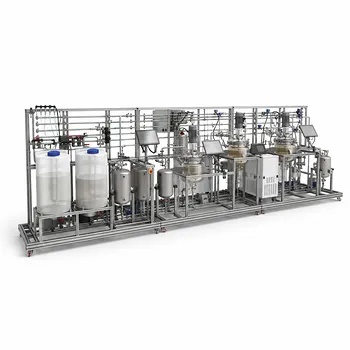
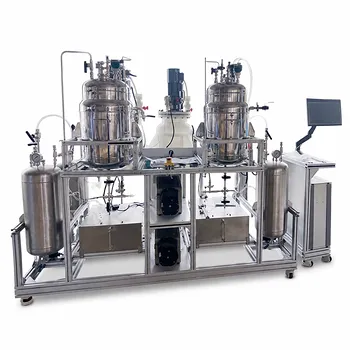
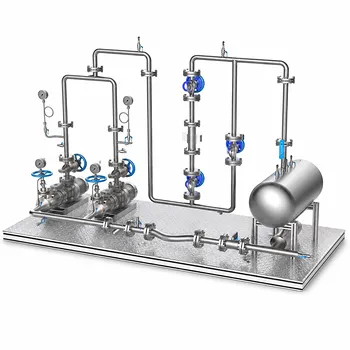
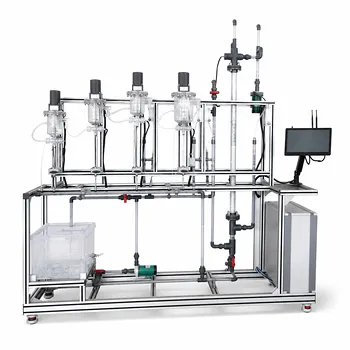
Selecting the right materials is crucial for reliable experimental data. LABPARK designs and manufactures high-quality Educational and Vocational Unit Operations Pilot Plants in chemical engineering, bioprocess & biotech, and environmental & water treatment. Specifically built for universities, research institutes, and enterprises, our systems ensure maximum corrosion resistance and zero product contamination.
Take the next step in your research—contact our technical experts today to find the perfect configuration for your lab.
Related Products
- Polymerization Granulation and Pellet Processing Educational Unit Operations Pilot Plant
- Multi-Stage Stirred Tanks in Series Residence Time Distribution and Mixing Performance Determination Educational Pilot Plant
- 100L Continuous Loop Hydrogenation Educational Unit Operations Pilot Plant
- Centrifugal Pump Performance Determination Educational Unit Operations Pilot Plant
- Tubular Reactor Flow Characteristics Determination Educational Unit Operations Pilot Plant
People Also Ask
- How do educational unit operations pilot plants bridge theory and design? Bridge the Engineering Gap
- How do educational unit operations pilot plants address safety and waste management when scaling up?
- Why Compare Predicted and Experimental Excess Enthalpy? Key to Accurate Pilot Plant Scale-up
- When to transition from PID to adaptive control in pilot plants? Key process indicators.
- Why Use PTFE & Hastelloy in Chemical Pilot Plants? Prevent Corrosion & Ensure Safety