Bacteriophage contamination is a batch-threatening biological failure mode. A phage can infect a susceptible bacterial culture, redirect cellular machinery toward viral production, and lyse infected cells within minutes to hours. Because each lysed cell releases hundreds of infectious particles, contamination can spread exponentially through a pilot vessel and destroy the batch before operators can respond.
The central risk is not simply the presence of a phage, but its amplification inside the process. Viral lifecycle dynamics determine whether contamination remains hidden, rapidly collapses the culture, or reappears later—so aseptic design, monitoring, and containment must protect every operation from media preparation through vessel shutdown.
Why Phage Contamination Is a Critical Pilot-Plant Risk
It can convert a small introduction into a major failure
Bacteriophages are viruses that infect bacteria and depend entirely on bacterial hosts for replication. A small initial contamination can therefore become a large population when susceptible cells are abundant and actively growing.
During a lytic infection, the phage attaches to a specific receptor on the bacterial surface and injects its nucleic acid into the cell. The infected cell then becomes a production system for viral genomes, proteins, and enzymes rather than for the intended fermentation product.
Lysis directly destroys the production population
Late in the lytic cycle, viral enzymes such as lysozyme weaken the bacterial cell wall. The cell bursts, releasing newly formed phage particles into the broth.
This creates a self-reinforcing cycle: more phages infect more cells, more cells lyse, and the culture rapidly loses viable biomass. In a pilot plant, that can invalidate an entire experimental run, consume valuable media and raw materials, and compromise production schedules.
Pilot plants amplify both biological and operational consequences
Pilot plants are used to scale processes, test operating windows, and generate data for larger production systems. A phage event can therefore damage more than one batch: it can make scale-up data unreliable and introduce contamination into shared equipment, seed trains, or downstream activities.
The operational impact may include:
- Loss of the batch and its associated data
- Interruption of the seed train
- Extended cleaning and decontamination
- Potential cross-contamination of vessels or process areas
- Delayed development or manufacturing timelines
- Unreliable conclusions about media, feeding, or control strategies
How the Viral Lifecycle Affects Unit Operations
Adsorption and infection create a host-specific entry point
Phages bind to particular receptors on the bacterial cell surface, sometimes using structures such as tail fibers. This specificity explains why a phage may be harmless to one production organism but devastating to another.
It also means that unit operations must be evaluated against the actual host strain and process configuration. A contamination-control strategy that works for one organism may not protect a different strain with different surface receptors.
Host takeover changes process behavior before visible lysis
After genome injection, the phage redirects cellular resources toward viral replication. Host DNA replication and normal biosynthetic activity may be suppressed while ribosomes produce viral proteins and enzymes.
The culture can therefore become compromised before obvious clarification, foaming, or cell-density loss appears. Monitoring only final biomass or product concentration may detect the event too late.
Lysis drives rapid broth-wide propagation
Once infected cells rupture, progeny phages are released directly into the fermentation medium. Mixing distributes those particles throughout the vessel, allowing them to contact additional susceptible cells.
This links viral lifecycle speed to unit-operation response time. Sampling intervals, alarm thresholds, and operator decision rules must be fast enough to identify abnormal culture behavior before exponential phage amplification causes irreversible loss.
Latency can make contamination difficult to recognize
Some phages enter a lysogenic cycle rather than immediately lysing the host. Their genetic material integrates into the bacterial chromosome as a prophage and is replicated along with the host cell.
A lysogenic infection may remain inconspicuous during routine operation. Under suitable stress or process conditions, the prophage can switch into a lytic state, creating a sudden culture failure after the process has apparently been performing normally.
Where Lifecycle Dynamics Intersect the Process
Media preparation and sterilization
The process begins with the media and raw-material pathway. Inadequate sterilization or poor segregation can introduce phages before the culture reaches the production vessel.
Rigorous media sterilization is therefore a foundational control. It must be considered alongside the handling of supplements, inoculum materials, transfer lines, and any components added after the primary sterilization step.
Seed train operations
The seed train is particularly sensitive because it contains actively growing, concentrated host cells. A phage introduced at an early stage can multiply through successive transfers and reach the production vessel with little obvious warning.
Each transfer is consequently both a biological amplification opportunity and a contamination-control checkpoint. Seed vessels, sampling systems, transfer connections, and operator practices must prevent phage movement between cultures.
Aeration and sterile air systems
Sterile air filtration reduces the risk of introducing biological contaminants through aeration and gas-transfer systems. It is an important part of pilot-plant design, particularly where large gas volumes pass continuously through the vessel.
Air filtration should not be treated as a complete phage-control strategy. Phages may also enter through media, personnel, equipment surfaces, liquid transfers, or cross-contaminated process areas.
Mixing, feeding, and sampling
Mixing improves process uniformity, but it also distributes infectious particles once contamination is present. Feeding can further support rapid host growth, creating more susceptible cells for phage replication.
Sampling systems represent another potential route for contamination and exposure. They must be designed and operated so that sampling does not introduce contaminants into the vessel or spread contaminated broth to the surrounding area.
Harvest and shutdown
If phage-driven lysis occurs, the harvest stream may contain high concentrations of infectious particles. This changes the containment requirements for broth transfer, equipment draining, cleaning, and waste treatment.
Shutdown is therefore not merely a recovery step. It is a critical containment operation intended to prevent the event from becoming a facility-wide contamination problem.
Connecting Phage Risk to Bacterial Growth Phases
Exponential growth increases vulnerability to rapid amplification
During exponential growth, cells divide rapidly and consume nutrients efficiently. This creates a large and actively replicating host population for a lytic phage.
A phage introduced during this phase may therefore produce the fastest visible collapse. Operators should be especially attentive to unexpected deviations in biomass accumulation, oxygen demand, carbon consumption, or product formation during high-growth operation.
Stationary phase changes the production objective
In stationary phase, nutrient limitation or by-product accumulation stops net growth, although cells may remain metabolically active. For some processes, this phase is important because secondary metabolites such as antibiotics are produced after growth slows.
Phage damage during this phase can still compromise product formation and culture viability. A process cannot be considered safe merely because cell division has decreased; surviving cells may remain susceptible, and latent phage material may persist.
Death phase can resemble or obscure contamination
During the death phase, toxic by-products and nutrient exhaustion reduce viable cell concentration. That decline may look similar to a phage-associated culture failure if operators rely only on viability or biomass trends.
Distinguishing ordinary process decline from phage infection requires contextual monitoring, investigation of abnormal kinetics, and examination of contamination-control records. The key issue is whether the decline follows expected process behavior or an abrupt, unexplained loss of culture performance.
Designing Unit Operations for Phage Resilience
Build asepsis into the entire process pathway
Phage control is a system property, not a single piece of equipment. Effective design combines:
- Rigorous media sterilization
- Sterile air filtration
- Strict containment and segregation
- Controlled transfers and sampling
- Validated cleaning and decontamination
- Continuous or frequent process monitoring
- Clear response procedures for suspected infection
The objective is to prevent introduction, limit spread, and detect abnormal behavior before amplification becomes uncontrollable.
Treat the seed train as a protected asset
The seed train should be operated as a controlled biological chain rather than as a series of ordinary transfers. Each stage should preserve culture identity and viability while minimizing opportunities for contact with other bacterial cultures or contaminated equipment.
This is especially important because an undetected phage can be carried forward and amplified at every subsequent stage.
Consider host-strain resistance carefully
Phage-resistant host strains can reduce susceptibility to known phages and provide an additional layer of protection. However, resistance may affect growth, productivity, substrate use, or other process characteristics.
The appropriate strain must therefore be evaluated not only for resistance but also for fermentation performance and genetic stability under the intended operating conditions.
Treat engineered or lysogenic approaches as specialized tools
Engineered vectors or related genetic strategies may be relevant in some development programs, but they require careful evaluation of stability, containment, and production behavior. Lysogeny is not automatically a safe solution because a prophage can remain latent and later enter a lytic cycle.
Such approaches should be considered only within a controlled biological-risk assessment, not as a substitute for aseptic design and monitoring.
Understanding the Trade-offs
Sterility controls increase complexity
More stringent sterilization, filtration, segregation, and containment controls increase equipment, validation, maintenance, and operating requirements. They also introduce additional procedures that must be executed consistently.
Those costs are generally justified when compared with the consequences of losing a pilot batch or contaminating shared infrastructure. The correct comparison is not control cost versus no-cost operation; it is preventive cost versus failure cost.
Resistant strains may create process compromises
A phage-resistant strain may grow more slowly, produce less target material, or behave differently in the selected medium. Resistance can also be specific to known phages and may not protect against a newly introduced phage.
Strain resistance should therefore be treated as a complementary barrier, not a universal replacement for contamination prevention.
Monitoring cannot reverse advanced lysis
Process monitoring can provide early warning, but detection alone does not restore a culture after widespread infection. Once a large fraction of the host population has lysed, the operational decision may be containment and safe disposal rather than recovery.
Monitoring is most valuable when linked to predefined actions, including isolation, sampling, investigation, and decontamination.
Normal process stress can complicate diagnosis
Temperature shifts, pH changes, nutrient depletion, oxygen limitations, and toxic product accumulation can all alter culture performance. These effects may overlap with the signs of phage infection.
A credible investigation must compare the observed behavior with expected growth-phase kinetics and review the complete process history rather than attributing every decline to phage contamination.
How to Apply This to Your Pilot Plant
A practical strategy is to connect each lifecycle stage to a specific prevention, detection, or containment control.
- If your primary focus is contamination prevention: Prioritize validated media sterilization, sterile air filtration, controlled transfers, strict segregation, and disciplined aseptic practices across the entire seed-to-harvest pathway.
- If your primary focus is early detection: Track culture kinetics and product performance closely, particularly during exponential growth, and establish action thresholds for unexplained deviations.
- If your primary focus is process development: Evaluate phage-resistant host strains or engineered approaches for both resistance and fermentation performance, while treating lysogenic behavior as a potential risk.
- If your primary focus is facility containment: Design sampling, transfer, harvest, cleaning, and waste-handling operations to prevent a contaminated broth from spreading beyond the affected vessel.
- If your primary focus is reliable scale-up data: Record contamination events and abnormal culture behavior as process failures, because phage exposure can invalidate conclusions about media, feeding, and operating conditions.
A resilient pilot plant assumes that phage risk must be controlled from introduction through shutdown, not only after a culture visibly collapses.
Summary Table:
| Area | Phage-related risk | Key control |
|---|---|---|
| Media and raw materials | Contamination introduced before inoculation | Validated sterilization and controlled additions |
| Seed train | Phages amplify through successive transfers | Segregation, aseptic connections, and culture monitoring |
| Fermentation vessel | Lysis rapidly destroys productive biomass | Frequent kinetic monitoring and predefined alarms |
| Aeration and transfers | Infectious particles spread through process pathways | Sterile air filtration and controlled liquid transfers |
| Feeding and mixing | Distributes phages and supports host growth | Controlled feeding and rapid deviation response |
| Harvest and shutdown | High phage loads may contaminate equipment and waste streams | Isolation, validated decontamination, and safe waste handling |
| Strain selection | Resistance may reduce susceptibility but affect productivity | Evaluate resistance, growth, yield, and genetic stability together |
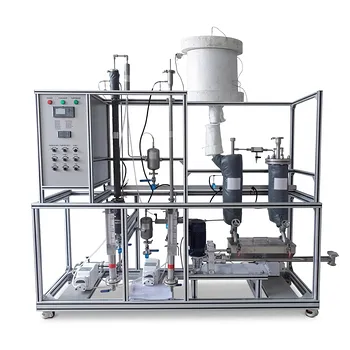
Protect your fermentation development work with LABPARK Educational and Vocational Unit Operations Pilot Plants. Our bioprocess and biotech pilot-plant solutions help universities, research institutes, and enterprises evaluate aseptic workflows, seed-train operations, sterile air systems, controlled transfers, monitoring strategies, harvest procedures, and decontamination practices. Build more reliable scale-up data, reduce batch-loss risk, and train teams on realistic unit operations. Contact LABPARK to discuss a pilot-plant configuration matched to your fermentation process, host strain, facility requirements, and research or production goals.
Related Products
- Bio-fermentation Ethanol Production Practical Training Unit Operations Pilot Plant
- Multi-Functional Special Distillation Educational Pilot Plant
- Continuous Batch Extractive Distillation Educational Pilot Plant
- Green Anhydrous Ethanol Refining Practical Training Pilot Plant
- Ethyl Acetate Synthesis Unit Operations Pilot Plant for Practical Training
People Also Ask
- Why Use PTFE & Hastelloy in Chemical Pilot Plants? Prevent Corrosion & Ensure Safety
- Why Compare Predicted and Experimental Excess Enthalpy? Key to Accurate Pilot Plant Scale-up
- How can pilot plants demonstrate a control strategy in a design space? Practical QbD implementation.
- Why is the chemical plant startup schedule crucial? De-risk scale-up with pilot plants.
- Why Does a Pilot Plant Solver Return a Singular Matrix Error, and How Can You Resolve It?