Accurate thermodynamic and phase equilibria data is not just important—it’s the foundational control logic that prevents a synthetic fuel pilot plant from becoming an expensive heater. Without it, you cannot predict how much energy a reaction will produce, how to separate the fuel from a toxic soup of byproducts, or whether your purification column will flood with foam instead of producing pure methane. In essence, this data translates the chemical possibility of a reaction into an engineerable, scalable, and safe industrial process.
While a reactor makes the fuel, it is the separation train that makes the product viable. The criticality of precise thermodynamic data lies in its role as the sole arbiter for designing separation units—where 70% of engineering data requests focus on phase equilibrium—and avoiding catastrophic modeling errors, like an eight-fold miscalculation of water solubility in CO2, that instantly invalidate a gas cleanup design.
The Thermodynamic Backbone of Synthetic Fuel Synthesis
Defining the Reaction Envelope
Synthetic fuel production, whether through anaerobic biomass fermentation or high-temperature coal gasification, fundamentally converts low-value feedstocks into a mixture of gases like methane, hydrogen, and carbon monoxide. The primary job of a pilot plant is to maximize this yield, and that begins with heat management.
Using accurate heat of combustion and reaction enthalpy data allows you to model the heat recovery network precisely. Without this, a gasifier can slag internally, or a methanation reactor can thermally run away, instantly destroying catalyst beds and invalidating an experimental run.
The Ubiquity of Non-Ideal Mixtures
The challenge isn't with pure substances; it's with the complex mixtures created. Synthetic gas streams are notoriously "dirty" and non-ideal, often blending non-polar hydrocarbons with highly polar components like water, alcohols, and dissolved CO2. Standard equations of state built for petroleum processing simply break down here.
The primary reference cites a classic pitfall: predicting the solubility of water in CO2. Standard cubic models can estimate 2.1 mole percent when the physical reality is just 0.25 mole percent. That's not a minor deviation; it’s an order-of-magnitude error that would cause a researcher to completely undersize a dehydration unit, leading to hydrate formation and blockages downstream.
The Real-World Consequences in Pilot Plant Operations
Why Models Fail Without Experimental Validation
Simulation software relies entirely on thermodynamic models to perform flash calculations. When experimental data for a novel biofuel mixture is missing, different models (e.g., NRTL vs. UNIQUAC vs. Peng-Robinson) will predict wildly different phase distribution coefficients. Relying on an unvalidated estimate is guesswork.
The pilot plant’s value proposition here is its role as a physical arbitrage tool. Running a distillation or absorption trial with the actual syn-gas mixture generates real pressure, temperature, and composition data. This experimental data point is the only definitive way to validate which thermodynamic model is accurate, ensuring the scaled-up industrial design has a reliable foundation.
The Danger of Designing Separation Without Equilibrium Data
Separation engineering is fundamentally governed by phase equilibrium. The internal traffic inside a distillation column—the reflux ratio and boil-up rate—is calculated from vapor-liquid equilibrium (VLE) data. Incorrect VLE data cascades into failures beyond just poor purity.
Common failure modes include:
- Flooding or Weeping: Incorrectly sizing column internals because the predicted vapor/liquid traffic was unrealistic.
- Inadequate Separation: Azeotropes or pinch points that weren't identified in the model suddenly appear in the physical column, making target purity impossible.
- Excessive Energy Use: Overdesigned heat exchangers that hemorrhage utility costs, hurting the process's Energy Return on Investment (EROI), a critical metric for synthetic fuels.
The Hidden Role of Data Consistency
Even physical data from a pilot plant isn't automatically trustworthy. Systematic errors from faulty thermocouples or sampling techniques can render experimental results dangerously misleading. This is where thermodynamic consistency tests, like the Herrington area test based on the Gibbs-Duhem equation, become essential.
For isobaric pilot plant data, the enthalpy of mixing cannot be ignored unless the boiling range is minimal. Applying these rigorous thermodynamic checks to experimental data ensures the dataset you feed back into your scale-up model isn't just "real," but is also physically sound and thermodynamically possible.
Understanding the Trade-offs
The Speed of Simulation vs. The Certainty of Experiment
The primary tension in pilot plant research is time versus accuracy.
- Relying solely on software predictions is fast but carries high technical risk, especially with polar mixtures.
- Insisting on exhaustive experimental VLE measurement for every conceivable mixture is scientifically ideal but financially and temporally prohibitive.
The Financial Cost of the "Thermodynamic Safety Net"
Installing the sensors needed for high-fidelity thermodynamic monitoring is expensive. Automated temperature jackets for bioreactors and precision pressure transducers for VLE cells increase the capital cost of a pilot unit. However, this cost must be weighed against the impact of a failed scale-up. A pilot plant's purpose is to fail cheaply, at small scale. Skimping on thermodynamic rigor defeats this purpose, potentially allowing a fatally flawed process to leak into a multi-million dollar demonstration plant.
How to Apply This to Your Research Project
To effectively mitigate risk in your synthetic fuel pilot program, you must adapt your thermodynamic validation strategy based on your primary objective.
- If your primary focus is screening novel catalysts or microorganisms: Prioritize precise control of the reactor environment using accurate reaction enthalpy and heat capacity data to manage temperature and pH kinetics, ensuring you are observing biological or chemical performance, not thermal stress.
- If your primary focus is scaling up a gas cleanup train: Immediately validate the solubility of polar components like water and acid gases in your hydrocarbon stream using physical pilot plant data, as standard cubic equations of state will likely be the single point of failure.
- If your primary focus is commercial feasibility (EROI): Focus relentlessly on the link between phase equilibrium and energy demand, using accurate VLE data to optimize the distillation reflux ratio and minimize the reboiler heat duty, which dominates operating costs.
Accurate thermodynamic data is, in the end, the enabling constraint that converts a chemical curiosity in a beaker into a predictable, profitable industrial process.
Summary Table:
| Key Focus Area | Critical Thermodynamic Data | Consequence of Inaccurate Data |
|---|---|---|
| Reaction Envelope | Reaction enthalpy, heat capacity | Reactor runaway, catalyst damage, slagging |
| Separation Units | Vapor-Liquid Equilibrium (VLE) | Column flooding, poor purity, high energy use |
| System Validation | Phase distribution, consistency tests | Hydrate blockages, wrong scale-up models |
Bridge the Gap from Lab to Industrial Scale with LABPARK
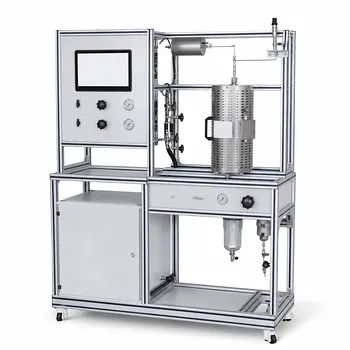
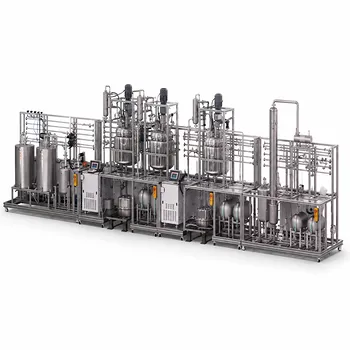
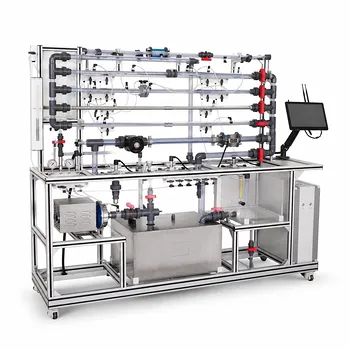
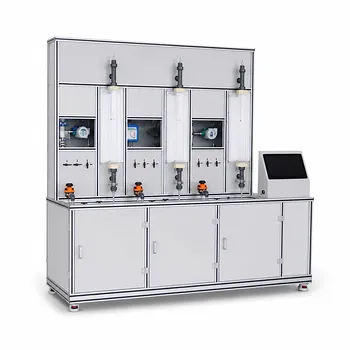
Don't let inaccurate thermodynamic data stall your research. LABPARK provides state-of-the-art Educational and Vocational Unit Operations Pilot Plants in chemical engineering, bioprocess & biotech, and environmental & water treatment. Designed for universities, research institutes, and enterprises, our systems deliver the precise, reliable data you need to validate models and scale up safely.
Ready to optimize your synthetic fuel or chemical research? Contact LABPARK today to find the perfect pilot plant solution for your facility!
Related Products
- Methanol Synthesis and Catalyst Performance Evaluation Educational Unit Operations Pilot Plant
- Carbon Dioxide Hydrogenation Methanol Synthesis Educational Unit Operations Pilot Plant
- Ethyl Acetate Synthesis Unit Operations Pilot Plant for Practical Training
- Carbon Dioxide Hydrogen Methanol Synthesis Educational Unit Operations Pilot Plant
- Aspirin API Synthesis Unit Operations Training Pilot Plant
People Also Ask
- Why is a purge system necessary when operating a gas recirculation loop in a methanol synthesis pilot plant? (Guide)
- How do temp & pressure affect methanol synthesis pilot plants? Optimize equilibrium and catalyst performance.
- Why do modern methanol pilot plants operate at lower pressures? Catalyst & Feed Requirements Explained
- What are the operational requirements for catalyst activation? Safe Methanol Pilot Plant Operation
- Why Compare Predicted and Experimental Excess Enthalpy? Key to Accurate Pilot Plant Scale-up