Solid-state excitation sources (LEDs and laser diodes) overwhelmingly outperform traditional xenon arc lamps for in-line fluorescence monitoring in chemical and environmental pilot plants. The shift is driven by three non-negotiable requirements in these settings: intrinsic operational safety, optical precision under dynamic conditions, and seamless physical integration into distributed, often hazardous, process lines.
The core problem with xenon lamps is that they are fundamentally incompatible with the distributed, safety-sensitive, and performance-demanding nature of modern pilot-scale monitoring. Solid-state sources like LEDs and laser diodes (LDs) solve this by eliminating the explosion hazard, removing the need for lossy excitation filters, and enabling real-time optical power control—all within a compact, energy-efficient footprint that was impossible with arc-lamp technology.
The Safety Imperative: Eliminating the Ignition Hazard
Pilot plants handling volatile chemicals cannot tolerate unnecessary ignition sources. This single factor often disqualifies xenon lamps immediately.
The Inherent Danger of High-Current Arc Lamps
Traditional xenon arc lamps operate by striking a high-current electrical arc, typically demanding a continuous current of around 25 A. This creates a concentrated, high-temperature plasma discharge that is, by its very nature, an ignition source.
Deploying such a source in a flammable or explosive atmosphere requires expensive, dedicated safety enclosures and purging systems that add significant mechanical complexity and cost. A solid-state LED, in contrast, generates light through electron-hole recombination at low power, producing dramatically less local heat and carrying no intrinsic spark or arc risk.
Achieving Intrinsic Safety for Hazardous Area Classification
Solid-state sources like LEDs and LDs operate at low voltage and low current, making them fundamentally suitable for intrinsic safety (IS) designs. They can run on battery power, further isolating them from mains-powered hazards.
This allows the optical sensor head to be certified for direct deployment in Zone 0 or Zone 1 classified areas without the added bulk of explosion-proof housings. For a pilot plant aiming for flexible reconfiguration, the safety simplicity of an LED-based probe is a strategic advantage, not just a compliance checkbox.
The Performance Advantage: Precision and Dynamic Control
Beyond safety, the optical performance characteristics of solid-state sources decisively outmatch xenon lamps for in-line fluorometry.
Eliminating the Excitation Filter Penalty
Xenon lamps emit a broad, continuous spectrum from UV to visible. To isolate an excitation wavelength for a specific fluorophore, you must pass this white light through an excitation filter.
These filters are inherently lossy, typically attenuating the desired excitation intensity by 10% to 60%. This directly reduces the fluorescence emission signal, degrading your detection limit before any measurement even begins. Solid-state LEDs and LDs, by contrast, emit inherently narrow-band light centered on the required excitation wavelength. In many configurations, no excitation filter is needed at all, preserving the full optical power for the measurement and maximizing signal yield.
Narrow Spectral Output and Signal Purity
Because an LED’s emission is confined to a narrow spectral window, it naturally discriminates against stray light and minimizes spectral crosstalk with the fluorescence emission channel.
This high optical purity simplifies the optical train and improves the signal-to-noise ratio without the need for complex, high-overhead optics like gratings or multi-stage filters. The result is a cleaner baseline and more confident detection of trace analytes in a flowing process stream.
Real-Time Dynamic Optical Power Control
Perhaps the most critical performance differentiator is the ability to modulate the excitation intensity in real time. Xenon lamps lack this capability natively—their arc intensity is coarse and slow to adjust.
Solid-state sources can be precisely driven by a microcontroller, allowing the system to dynamically ramp the optical power to optimize sensitivity, avoid detector saturation, or compensate for process variability without any mechanical intervention. This closed-loop control is indispensable for maintaining robust calibration over long, unattended monitoring campaigns on a pilot line.
Operational Efficiency: Energy, Size, and Distributed Integration
The performance advantages are amplified by the radical operational and physical benefits solid-state sources bring to pilot-scale installation.
From High-Current Demands to Battery-Powered Operation
A xenon lamp’s thirst for 25 A makes it a logistics headache. It requires substantial power supplies, generates significant waste heat, and ties you to a fixed electrical infrastructure. LEDs and LDs are extraordinarily energy-efficient.
Their low power consumption enables battery-operated or loop-powered sensor heads, a transformative capability for remote pilot plant skids where running mains power to every measurement point is impractical. This efficiency directly supports the vision of truly portable and automated process analytical technology.
Compact Form Factor Enables True Distributed Monitoring
A xenon lamp housing, with its cooling, power supply, and filter wheel, is a bulky laboratory instrument ill-suited for clamping onto a process pipe. Solid-state sources are minute, chip-scale devices that can be integrated directly into a submersible probe or a flow cell the size of a human fist.
This compactness allows you to deploy dense arrays of localized, self-contained sensors across a pilot-scale manufacturing line. You can monitor fluorescence at multiple critical unit operations simultaneously—reactors, separators, evaporation skids—creating a distributed data network that a single, centralized xenon-based analyzer could never achieve.
Understanding the Trade-offs: When Broad Spectrum Matters
A balanced assessment requires acknowledging where solid-state sources still concede ground to xenon arc lamps. For specific research contexts, this informs the correct tool selection.
The Wavelength Versatility Bottleneck
A xenon lamp's greatest strength is its ultra-broad, continuous spectrum. From a single source, you can select any excitation wavelength in the UV-Vis range, making it easy to switch between different fluorophores or perform excitation scans in a development study.
A single LED covers only one narrow wavelength band. Monitoring multiple analytes with distinct excitation profiles typically requires multiple, discrete LED modules or a more complex optical multiplexing strategy. In a pilot plant, this trade-off is almost always acceptable because the target analyte panel is known and fixed, allowing you to match a dedicated, optimized LED to each channel. The gain in signal purity and robustness vastly outweighs the loss of universal flexibility.
Power vs. Compactness in Extremely Dilute Streams
While LEDs offer dynamic control, their absolute optical power density is generally lower than a high-power laser. For a pilot stream where the analyte concentration is exceedingly low (sub-part-per-trillion), a carefully filtered laser diode or a traditional laser might still be considered.
However, for the vast majority of chemical and environmental pilot plant applications—wastewater traces, catalyst residue, polymer additive levels—the LED’s combination of narrow-band purity and dynamic power provides more than sufficient detection limits without sacrificing the safety and integration benefits. The operational envelope where a xenon lamp’s raw broadband power is absolutely necessary has become vanishingly small for in-line use.
Making the Right Choice for Your Pilot Plant Goal
Your decision architecture should map directly to the operational priorities of your specific pilot-scale deployment.
- If your primary focus is safe deployment in hazardous classified areas: Choose an LED-based sensor. Its intrinsic low-energy operation is the only path that eliminates the explosion risk without burdening the installation with heavy explosion-proof housings.
- If your primary focus is maximizing real-time signal quality and detection limit: Prioritize a laser diode or high-power LED system with dynamic power control. The ability to eliminate lossy excitation filters and actively manage the optical output will directly improve your signal-to-noise ratio.
- If your primary focus is creating a distributed, multi-point monitoring network: Solid-state sources are non-negotiable. Only their compact, low-power, heat-free form factor makes it economically and practically possible to deploy ten sensors on a single pilot line skid.
The migration from xenon arc lamps to solid-state LEDs is not an incremental upgrade; it is the enabling technology that finally makes in-line fluorescence monitoring safe, precise, and infinitely scalable for the demanding realities of chemical and environmental pilot plants.
Summary Table:
| Feature | Solid-State (LEDs/LDs) | Xenon Arc Lamps |
|---|---|---|
| Safety & Ignition | Low voltage/current; intrinsically safe (Zone 0/1) | High-current arc (25A); high ignition risk |
| Optical Precision | Narrow-band emission; no lossy filters needed | Broad spectrum; requires lossy excitation filters |
| Power Control | Real-time dynamic optical power modulation | Coarse and slow intensity adjustment |
| Size & Integration | Compact, chip-scale; ideal for distributed lines | Bulky housing; requires cooling and active purging |
| Energy Efficiency | Extremely low power; supports battery operation | High power consumption; requires mains power |
Optimize Your Pilot Plant Operations with LABPARK
Are you looking to upgrade your process monitoring systems for safer and more precise scale-up? LABPARK provides state-of-the-art Educational and Vocational Unit Operations Pilot Plants in chemical engineering, bioprocess & biotech, and environmental & water treatment.
Tailored for universities, research institutes, and enterprises, our pilot plants integrate advanced, safety-compliant monitoring technologies to ensure reliable data collection and seamless operation.
Ready to elevate your research, training, or production capabilities? Contact us today to discuss your custom pilot plant requirements!
Related Products
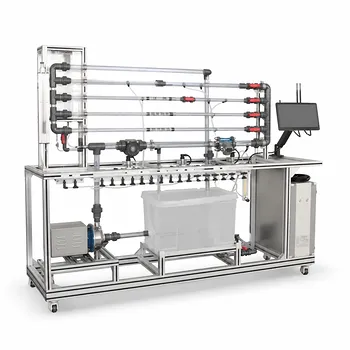
- Two Phase Flow Pattern Velocity Resistance Measurement Educational Pilot Plant
- Continuous Batch Extractive Distillation Educational Pilot Plant
- Multi-Functional Special Distillation Educational Pilot Plant
- Water Electrolysis Hydrogen Production and Storage Educational Pilot Plant
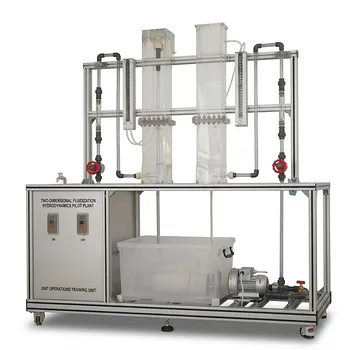
- Two-Dimensional Fluidization Hydrodynamics Educational Pilot Plant for Unit Operations Training
People Also Ask
- How to update chemometric calibration models in pilot plants? Best practices for process engineers.
- Why Correct Sig Figs & Rounding Matter in Educational Pilot Plants: Ensure Data Accuracy
- How can educational pilot plants be used to teach process safety and risk assessment in chemical engineering curricula?
- How does nuclear yield inefficiency translate to chemical engineering education? Optimize kinetics with pilot plants.
- How to identify two-phase gas-liquid flow patterns? Master fluid dynamics with pilot plants