The core difference lies in their physical assumptions about the membrane’s active layer.
The solution-diffusion model treats transport as dissolution into the polymer, followed by diffusion down a concentration gradient, using pure solvent permeabilities to predict binary mixtures with no adjustable parameters for swelling. In contrast, the classical Hagen-Poiseuille model assumes convective flow through permanent capillaries and applies a constant average permeability. For OSN experiments at pilot scale, this pore‑flow approach generally fails because it ignores the dramatic, solvent‑specific swelling of the membrane—the very phenomenon a two‑parameter, swelling‑corrected version of the model can capture, often matching solution-diffusion accuracy for specific mixtures.
The practical takeaway for pilot‑plant operators is this: the solution-diffusion model is the physically faithful default that predicts binary solvent flux from pure solvent data without fitting extra coefficients. The classical one‑parameter Hagen-Poiseuille model fails because it overlooks matrix swelling, but a modified two‑parameter form can close the gap—at the cost of introducing a membrane‑solvent interaction parameter that must be experimentally determined.
The Two Transport Models at a Glance
The Solution-Diffusion Mechanism
The solution-diffusion model applies to dense active layers, such as those in OSN membranes.
Permeating molecules first dissolve in the upstream side, diffuse through the polymer matrix under a chemical potential gradient, and then desorb from the downstream side.
Transport is governed by the product of each species’ solubility and diffusivity in the membrane material.
The Hagen-Poiseuille (Pore-Flow) Assumption
The pore‑flow model treats the separation layer as a collection of stable, cylindrical capillaries.
Convective flow is driven by a pressure gradient, and the flux is described by the Hagen-Poiseuille law, with a constant permeability tied to pore size and liquid viscosity.
This assumption works well for true porous membranes (MF/UF), but it is physically questionable for the dense, swelling‑prone layers used in organic solvent nanofiltration.
Predicting Binary Solvent Fluxes: Where the Models Diverge
How the Solution-Diffusion Model Handles Mixtures
When predicting flux from a binary solvent mixture, the solution-diffusion approach draws on pure solvent permeabilities measured on the same membrane.
It implicitly accounts for how each solvent’s solubility and diffusivity change in the mixture, reflecting the thermodynamic interactions between the solvents and the polymer.
For systems like methanol/toluene, this yields reliable predictions without additional fitting parameters.
The Failure of the Classical One‑Parameter Hagen-Poiseuille Model
The basic pore‑flow model assumes the membrane’s structure—pore size, tortuosity, and thickness—is fixed and independent of the solvent.
It therefore uses a single, averaged permeability for both pure solvents and their mixtures.
In OSN, where organic solvents cause significant membrane swelling, this assumption collapses. The constant‑permeability model cannot capture the flux enhancement or depression that arises when the membrane matrix expands (or contracts) in the presence of different solvents.
The Role of Membrane Swelling and Solvent Interactions
Swelling alters the free volume and effective transport pathways in the dense polymer layer.
A membrane that swells in toluene, for instance, will show a higher permeance for toluene and its mixtures than a rigid‑pore model would predict.
Because the classical Hagen-Poiseuille equation ignores these solvent‑polymer interactions, it consistently underpredicts or mis‑ranks binary fluxes in all but the most rigid membranes.
Modified Pore-Flow Models: Bridging the Accuracy Gap
Introducing a Second Parameter for Swelling
To salvage the pore‑flow framework for OSN, researchers add a solvent‑membrane interaction parameter—essentially a swelling correction—to the basic equation.
This creates a two‑parameter Hagen-Poiseuille model: the first term still reflects the capillary geometry, while the second accounts for how the permeance scales with the amount of each solvent present.
Such a model can now fit the pure solvent data and then predict binary fluxes with far greater fidelity.
When a Two‑Parameter Model Can Outperform Solution-Diffusion
For certain solvent pairs, such as toluene/ethyl acetate, the two‑parameter pore‑flow model can achieve predictive accuracy comparable to or even slightly better than the solution-diffusion model.
This happens because the empirical swelling parameter directly captures the dominant physical effect—membrane expansion—without requiring detailed solubility and diffusivity data.
However, this advantage is specific to the mixture measured; the solution-diffusion model remains more robust when a wide range of solvent chemistries must be covered using only pure‑solvent inputs.
Understanding the Trade-offs
Physical Fidelity vs. Empirical Convenience
The solution-diffusion model is physically consistent with the dense nature of OSN membranes, especially for low‑swelling materials like polyimides (swelling < 15 %).
The two‑parameter Hagen-Poiseuille model, while more accurate than its one‑parameter parent, is still an empirical correction—it treats the membrane as an adjustable medium rather than a material with defined solubility/diffusivity properties.
Parameter Proliferation and Experimental Burden
The solution-diffusion model requires careful measurement of pure solvent permeabilities, but once done, those data can predict any binary, ternary, or quaternary mixture without further fitting.
In contrast, every new solvent‑membrane pair in a two‑parameter pore‑flow model demands its own swelling coefficient, which must be determined from additional mixture experiments.
Compaction Effects at Pilot Scale
At the high pressures typical of OSN pilot plants (above 20 bar), membrane compaction reduces pore‑size and free volume, increasing overall resistance.
Neither model inherently accounts for compaction, but its effect uniformly raises membrane resistance and can diminish the relative influence of swelling. Operators should correct raw flux data for compaction before using either model, especially when comparing pure‑solvent and mixed‑solvent runs.
Applying This to Your Pilot Plant Experiments
If your primary focus is physical insight and minimal fitting: Choose the solution-diffusion model. It leverages pure-solvent permeability data to predict binary fluxes for a wide range of solvents, giving you a direct window into solubility‑diffusivity behavior without additional adjustable parameters.
If you are studying a fixed solvent pair and need maximum numeric accuracy: Experiment with a two‑parameter Hagen-Poiseuille model that incorporates membrane swelling. Measure the swelling coefficient from pure solvents and validate against binary data; for mixtures like toluene/ethyl acetate, this may slightly outperform solution-diffusion.
If your work involves highly swelling, rubbery membranes (e.g., PDMS): Recognize that even the solution-diffusion model in its simple form may fall short. You will need to transition to swollen‑rubber models specifically developed for materials where swelling exceeds 30‑50 %.
Trust the model that matches the physics of your membrane—but never forget that the membrane itself changes under the influence of the very solvents you are trying to separate.
Summary Table:
| Feature | Solution-Diffusion Model | Classical Hagen-Poiseuille | Modified Hagen-Poiseuille (2-Parameter) |
|---|---|---|---|
| Physical Basis | Dissolution & diffusion in dense layer | Convective pore-flow in capillaries | Pore-flow with a swelling correction |
| Swelling Effect | Implicitly handled via solubility | Ignored (assumes rigid pores) | Directly fitted via interaction parameter |
| Required Parameters | Pure solvent permeabilities only | Single average permeability | Extra membrane-solvent interaction parameter |
| Prediction Scope | Broadly predicts various mixtures | Poor accuracy for swelling membranes | Highly accurate but limited to specific mixtures |
Optimize Your Membrane Separation Research with LABPARK
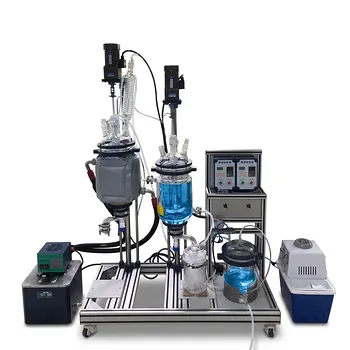
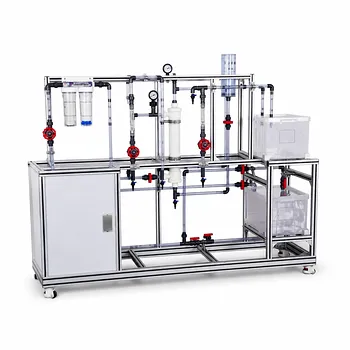
Are you looking to enhance your laboratory's research or training capabilities? LABPARK provides premium Educational and Vocational Unit Operations Pilot Plants in chemical engineering, bioprocess & biotech, and environmental & water treatment for universities, research institutes, and enterprises.
Whether you are investigating transport models, teaching membrane separation processes, or scaling up OSN experiments, our robust pilot plants deliver the precise process control and reliable data you need.
Contact LABPARK today to discuss your pilot plant requirements and request a tailored quote!
Related Products
- Multifunctional Membrane Separation Educational Pilot Plant with Ultrafiltration, Nanofiltration, Reverse Osmosis
- Multi-Functional Membrane Separation Educational Pilot Plant for Unit Operations Lab
- Natural Product Extraction Unit Operations Training Pilot Plant
- Green Anhydrous Ethanol Purification Extractive Distillation Unit Operations Training Pilot Plant
- Constant Pressure Filtration Educational Unit Operations Pilot Plant
People Also Ask
- Pervaporation vs. Vapor Permeation: Handling Suspended Solids in Membrane Pilot Plants
- How do PEI, PVDF, and PSU membranes compare in pilot plants? Find the best fit.
- What are the trade-offs of polymer vs inorganic membranes in teaching pilot plants? Key laboratory comparison.
- What are the key flow configuration loops in membrane pilot plants? Optimize Performance
- How can operators optimize operating conditions and cleaning protocols in membrane separation pilot plants to mitigate fouling?