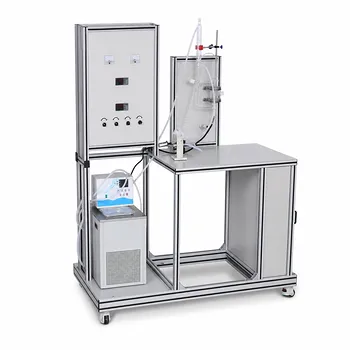
Acetylene-based VCM synthesis delivers a higher single-pass conversion, but ethylene-based routes dominate industrial practice due to overwhelming safety and economic advantages. In educational pilot plants, students directly compare these pathways by measuring conversion efficiency, byproduct selectivity, and energy consumption, while also assessing catalyst toxicity, thermal management challenges, and the capital cost implications of each reactor configuration. The exercise brings the theoretical trade-off between chemical yield and process viability into sharp, practical focus.
In unit operations pilot plants, students learn that a VCM pathway’s true value is not just its conversion percentage, but the total safety burden, feedstock cost, and equipment complexity required to sustain that conversion safely and profitably. The ethylene route, despite a lower per-pass conversion, emerges as the industrially rational choice because it eliminates mercury, reduces runaway risks, and integrates into a balanced, cost-effective flowsheet.
Performance Comparison in a Pilot Plant Setting
Conversion and Yield Under Realistic Conditions
The most immediate metric students measure is conversion efficiency. Under controlled pilot conditions, the acetylene route reliably approaches 99% conversion of acetylene to VCM. The ethylene route, operating through exothermic chlorination followed by endothermic cracking of ethylene dichloride (EDC), yields a lower per-pass conversion—typically around 93% for the overall sequence.
However, the pilot plant also exposes how unreacted feedstock is managed. The ethylene process relies heavily on recycle loops to boost overall yield, while the acetylene route demands downstream separation of VCM from unreacted HCl and acetylene at cryogenic temperatures (as low as -16°C). Students learn that headline conversion numbers do not capture the energy and capital spent on separation and recycling.
Product Selectivity and Byproduct Profiles
Pilot-scale runs allow students to quantify byproduct formation directly. The acetylene route, using a mercuric chloride catalyst, is highly selective, generating minimal chlorinated byproducts. In contrast, the ethylene route requires cracking EDC at temperatures up to 500°C in a chlorine-rich environment. Poor temperature control leads to a wide spectrum of chlorinated byproducts that foul heat exchangers and complicate purification. Students observe how selectivity affects both product quality and downstream separation costs, linking reactor performance to economic outcomes.
Catalyst Lifetimes and Deactivation
The pilot plant makes catalyst behavior tangible. Mercuric chloride-on-carbon catalysts degrade rapidly due to mercury volatilization and sintering at hot spots, demanding frequent regeneration and creating toxic waste. Students record catalyst activity over time, tracking conversion decline. The ethylene route’s oxychlorination catalyst, while more robust, still faces deactivation in aggressive HCl atmospheres. Comparing decay curves connects classroom kinetics to maintenance scheduling and operational reliability.
Safety Comparison in an Instrumented Environment
Managing Reactive Instability and Thermal Runaway
Acetylene is notoriously unstable; it can decompose explosively even in the absence of air. In pilot plants, the acetylene-HCl reaction is strongly exothermic. Students must implement precise thermal control to avoid localized hot spots that volatilize mercury and risk runaway decomposition. Emergency interlocks, dilution with inert gases, and rigorous pressure relief become non-negotiable. The ethylene route, while highly exothermic in the chlorination step, operates with more stable feedstocks and is inherently less susceptible to explosive decomposition, reducing catastrophic risk.
Catalyst Toxicity and Environmental Containment
The most striking safety contrast students confront is catalyst toxicity. The acetylene route’s mercuric chloride catalyst poses severe health and environmental hazards. Pilot plants teaching this pathway must integrate robust exhaust scrubbing, sealed catalyst handling, and mercury monitoring. Decommissioned catalyst becomes hazardous waste. The ethylene route avoids mercury entirely, substituting it with less toxic metal chlorides, although high-temperature chlorine corrosion still demands special materials of construction. Students evaluate the entire safety lifecycle—from reagent storage to waste disposal—not just the reaction step.
Scale-Up and Failure Mode Analysis
Instrumented pilot plants let students simulate failure modes safely. A loss of cooling in the acetylene reactor demonstrates rapid thermal excursion within seconds. A leak in a high-pressure ethylene feed line at 30 atm reveals the need for dispersion modeling and gas detection. By comparing the safety integrity levels (SIL) required for each process, students learn that the inherently safer design (ethylene) reduces the probability of a major accident, even if it requires more unit operations.
Economic Trade-Offs Evaluated on the Pilot Scale
Feedstock Costs and Supply Chain Stability
Students often assume higher conversion means lower raw material cost. The pilot plant helps them see the full picture. Acetylene is significantly more expensive than ethylene per ton of VCM produced, often derived from more costly partial oxidation of hydrocarbons. Ethylene, as a commodity olefin from steam crackers, enjoys stable, low-cost, large-volume supply. Even with a 6% lower per-pass conversion, the ethylene route delivers lower feedstock expense when recycle costs are accounted for.
Capital and Maintenance Expenditures
Operating two distinctly configured pilot plants reveals enormous differences in equipment count and complexity. The ethylene route demands a dual-reactor setup (direct chlorination and EDC cracking), a high-pressure pump loop sustaining 30 atm, and multiple distillation columns to purify EDC and VCM. The acetylene route uses a single tubular reactor and a simpler separation train, but must handle cryogenic temperatures and mercury containment. Capital cost comparisons on the pilot scale, extrapolated using standard scaling laws, show that the mercury-free route avoids costly materials of construction for catalyst handling and waste treatment, often offsetting its higher equipment count.
Energy Consumption and Utility Loads
Energy is where the acetylene route loses much of its apparent advantage. Separating VCM from unreacted HCl and acetylene at -16°C requires intense refrigeration. The ethylene route’s cracking furnace runs at 500°C but benefits from heat integration: the exothermic chlorination step provides steam for the endothermic cracking, reducing net utility demand. Pilots equipped with energy meters let students see that the apparently simpler acetylene flow sheet can carry a higher specific energy cost per kilogram of product.
Understanding the Trade-offs and Common Pitfalls
Why Highest Conversion Does Not Mean Best Process
The pilot plant environment directly challenges the instinct to chase maximum conversion. Students who fixate on the 99% figure quickly learn that catalyst toxicity, waste handling, and energy penalties erase any yield advantage. The real lesson is that an economically and environmentally sustainable process balances conversion, selectivity, energy integration, and safety into a viable whole.
Simulation vs. Reality: The Pitfall of Idealized Models
Software like ASPEN PLUS may suggest the acetylene route is competitive under idealized equilibrium or kinetic models. Only the physical pilot plant exposes the true deactivation rates, heat transfer bottlenecks, and fugitive emission challenges that make the process unattractive at scale. Students learn never to trust a simulation without experimental validation, particularly for hazardous chemistries where safety factors dominate economics.
The Danger of Underestimating Waste Streams
A subtle pitfall is ignoring life-cycle waste. The acetylene route’s spent mercuric chloride catalyst represents a long-term environmental liability and regulatory burden. Pilot plants that require students to bookkeep their waste streams—catalyst change-outs, scrubber effluents—make this cost tangible. In contrast, ethylene route byproducts can often be incinerated or recycled, lowering cradle-to-grave costs.
Making the Right Choice for Your Learning Goals
Each pathway teaches different core lessons in unit operations, and the choice depends on your educational objectives.
-
If your primary focus is inherent safety and toxicology: Choose the acetylene-based pilot plant demonstration, but ensure full mercury containment, scrubbing, and exposure monitoring are part of the exercise. The value is in teaching students how to manage extreme hazards and understand why industry moved away from such technologies.
-
If your primary focus is integrated process economics and heat integration: Implement the ethylene-based pilot plant with its dual-reactor setup and recycle loops. Students will learn how capital cost, energy recovery, and material selection determine industrial viability more than per-pass conversion.
-
If your primary focus is bridging simulation and reality: Run both pathways on parallel pilot units. Let students model each in ASPEN PLUS, then directly confront the idealized predictions with actual deactivation, pressure fluctuations, and selectivity data, driving home the critical role of physical validation.
The true power of a unit operations pilot plant is that it forces every student to ask not just “which reaction is more efficient?” but “which process can I operate safely, profitably, and repeatably for 8,000 hours a year?” That question, answered with hands-on data, builds the judgment that distinguishes a process engineer.
Summary Table:
| Feature | Acetylene-Based Pathway | Ethylene-Based Pathway |
|---|---|---|
| Single-Pass Conversion | High (~99%) | Lower (~93%, requires recycling) |
| Safety & Catalyst | High risk (mercury catalyst, explosive feed) | Inherently safer (no mercury, stable feed) |
| Feedstock & Supply | Expensive, volatile supply chain | Cost-effective commodity ethylene |
| Energy & Capital | Simpler reactor, high cryogenic utility cost | Complex setup, excellent heat integration |
Bring Real-World Chemical Engineering Trade-offs to Your Lab
Looking to equip your students, researchers, or operators with hands-on process engineering experience? LABPARK provides premium Educational and Vocational Unit Operations Pilot Plants across chemical engineering, bioprocess & biotech, and environmental & water treatment. Specially designed for universities, research institutes, and enterprises, our systems bridge the gap between process simulation and physical reality.
Contact LABPARK today to discuss your laboratory training goals and get a customized pilot plant proposal!
Related Products
- Methanol Synthesis and Catalyst Performance Evaluation Educational Unit Operations Pilot Plant
- Polymerization Granulation and Pellet Processing Educational Unit Operations Pilot Plant
- Fluidized Bed Gas Solid Catalytic Reaction Educational Pilot Plant
- Multi Functional Membrane Crystallization Educational Unit Operations Pilot Plant
- Continuous Batch Extractive Distillation Educational Pilot Plant
People Also Ask
- Why is a purge system necessary when operating a gas recirculation loop in a methanol synthesis pilot plant? (Guide)
- How do temp & pressure affect methanol synthesis pilot plants? Optimize equilibrium and catalyst performance.
- Why do modern methanol pilot plants operate at lower pressures? Catalyst & Feed Requirements Explained
- What are the operational requirements for catalyst activation? Safe Methanol Pilot Plant Operation
- How do steady-state and dynamic simulations complement pilot plants? Validate scale-up and controllability