Knowledge Bioprocess and Biotechnology Education What triggers isothermal steady-state multiplicity in pilot plants studying nonmonotone kinetics?
Author avatar

Tech Team · LABPARK

Updated 1 month ago

What triggers isothermal steady-state multiplicity in pilot plants studying nonmonotone kinetics?


"Multiplicity without heat? Absolutely." Isothermal steady-state multiplicity is a genuine, purely kinetic phenomenon born from nonmonotone rate laws like substrate inhibition. For a classic bimolecular Langmuir-Hinshelwood reaction, it is triggered when reactant inhibition grows so severe that a dimensionless inhibition parameter exceeds 8—a condition you can create in a pilot plant by progressively raising the feed concentration until a critical threshold is crossed, causing an abrupt, discontinuous drop in conversion (extinction).

Even when you perfectly control temperature, nonmonotone kinetics such as strong substrate inhibition can create multiple stable steady states. The trigger is a high reactant concentration that pushes the system past a dimensionless inhibition strength of 8, leading to sudden jumps between high- and low-conversion branches.

Understanding the Kinetic Roots of Isothermal Multiplicity

The phenomenon does not rely on heat generation or thermal feedback. It lives entirely inside the rate expression.

The Role of Nonmonotone Kinetics

In a nonmonotone rate law, the reaction rate first rises with reactant concentration and then falls as inhibition takes over.

Enzymatic substrate inhibition and certain catalytic mechanisms like CO oxidation on noble metals behave exactly this way. When the rate passes through a maximum, a continuous-flow stirred-tank reactor (CSTR) can see its material-balance operating line intersect the rate curve at three points.

The Langmuir-Hinshelwood Mechanism and the Inhibition Parameter

For a bimolecular Langmuir-Hinshelwood mechanism, the rate often takes the form
rate = k * C_A / (1 + K_A C_A)^2.

Here, K_A is the adsorption equilibrium constant for the inhibiting species. The key dimensionless group is K_A·C_A0, where C_A0 is the feed concentration.
When K_A·C_A0 exceeds 8, the rate expression becomes steep enough to generate three steady states—two stable, one unstable.

Triggering Multiplicity in a Pilot Plant

You can reproduce this isothermal behavior safely in a catalytic or bioprocess pilot plant with careful experimental design.

The Concentration Ramp Experiment

Start the reactor at a moderate, “safe” concentration that yields a high conversion. Then slowly increase the feed concentration in small steps, allowing the system to reach steady state after each change.

At first, conversion may decline gently—but at a sharp threshold conversion crashes to a low-value branch. This is the extinction point, triggered solely by the growing inhibition term.

Hysteresis and Startup Procedures

Once on the low-conversion branch, simply lowering the concentration back to the original value does not restore high conversion. You must drop the concentration significantly below the extinction point to “ignite” the reaction again—this is hysteresis.

That means startup procedures matter enormously. To reach the desired high-conversion steady state, you often need to start at a very low concentration and then gradually raise it, bypassing the middle unstable region.

Isothermal vs. Thermal Multiplicity – A Critical Distinction

The supplementary references describe a more common, but different, source of multiplicity—thermal feedback from exothermic reactions. In that classic picture, temperature gradients cause ignition and extinction.

The isothermal multiplicity discussed here is purely kinetic. It requires no temperature rise, no transport limitations—only a sufficiently inhibited rate law. In a well-cooled pilot plant with excellent temperature control, you can isolate this mechanism and study it cleanly.

Pitfalls and Practical Considerations

Interpreting pilot plant data without recognizing kinetic multiplicity can lead to costly mistakes.

Mistaking a Kinetic Jump for Sensor Failure

When conversion suddenly plummets during a concentration ramp, inexperienced operators may suspect instrument error. In reality, you have just crossed the extinction threshold.

Underestimating the Width of the Hysteresis Gap

The concentration gap between extinction and ignition can be wide. Recovering high conversion may require diluting the feed far below the original operating point, which is counterintuitive if you only think linearly.

The Need for True Isothermal Control

Any process upset that introduces a temperature gradient will mix thermal and kinetic multiplicity. To trust your observed hysteresis curve, you must verify that the catalyst bed or bioreactor stays isothermal within tight tolerances.

Designing Your Experiment: Goal-Driven Strategies

What you adjust in the pilot plant depends entirely on what you need to learn or demonstrate.

  • If your primary focus is mapping the hysteresis loop: Use an automated, stepwise concentration ramp in both directions, allowing ample time to reach steady state, and record conversion at each step to capture the extinction and ignition points.
  • If your primary focus is teaching non-linear dynamics: Start with a simple bimolecular Langmuir-Hinshelwood system and deliberately push the inhibition parameter well beyond 8, prompting students to predict and then witness the sudden conversion drop.
  • If your primary focus is safe process scale-up: Identify the inhibition parameter for your actual catalyst or enzyme, determine the critical concentration, and establish startup protocols that keep you on the high-conversion branch from the beginning.

Mastering this purely kinetic source of multiplicity gives you the ability to predict, avoid, or exploit sudden performance shifts—even when every thermometer insists nothing has changed.

Summary Table:

Operating Condition / Parameter Trigger Threshold Kinetic Phenomenon & Effect
Inhibition Parameter ($K_A \cdot C_{A0}$) $> 8$ Generates three steady states (two stable, one unstable)
Feed Concentration Ramp Stepwise increase past threshold Causes an abrupt, discontinuous drop in conversion (extinction)
Startup / Recovery Path Lowering concentration Requires dropping far below extinction point to reignite (hysteresis)
Temperature Control Tight isothermal tolerances Isolates purely kinetic multiplicity from thermal feedback

Advance Your Kinetics Research with LABPARK

To study complex chemical and biological phenomena like isothermal multiplicity, precise process control is critical. LABPARK offers high-quality Educational and Vocational Unit Operations Pilot Plants tailored for chemical engineering, bioprocess & biotech, and environmental & water treatment.

Whether you are a university, research institute, or enterprise, our pilot plants deliver the accuracy and stability required for both advanced research and hands-on training.

Contact our specialists today to discuss your laboratory requirements!

Related Products

People Also Ask

Related Products

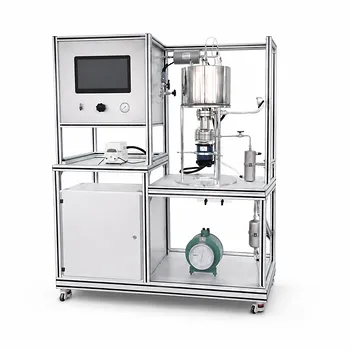
Fixed Bed Gas Solid Catalytic Reaction Educational Pilot Plant

Fixed Bed Gas Solid Catalytic Reaction Educational Pilot Plant

Fixed-bed gas-solid catalytic reaction unit operations pilot plant for chemical engineering education. Features split-furnace, mass flow controllers, PID control, safety interlocks. Ideal for heterogeneous catalysis, reactor dynamics, catalyst evaluation studies. Fully customizable configurations for university laboratories and academic research.

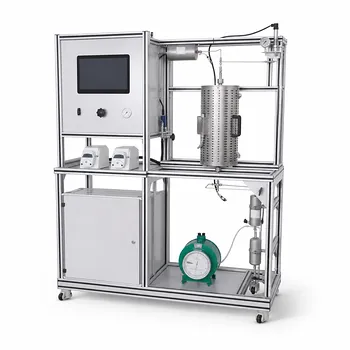
Internal Circulation Gradient Free Catalytic Reaction Educational Pilot Plant

Internal Circulation Gradient Free Catalytic Reaction Educational Pilot Plant

Internal circulation gradient free catalytic reaction educational pilot plant for chemical engineering unit operations. Provides isothermal gradient free operation and hands on study of heterogeneous catalysis kinetics and mass transfer with precise control. Ideal for academic labs.

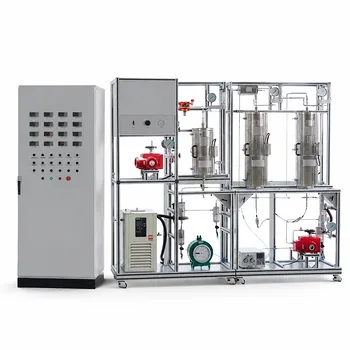
Fluidized Bed Gas Solid Catalytic Reaction Educational Pilot Plant

Fluidized Bed Gas Solid Catalytic Reaction Educational Pilot Plant

Our educational fluidized bed gas-solid catalytic reaction pilot plant is ideal for chemical engineering labs. Students study fluidization dynamics, catalyst evaluation, and process control hands-on. Features include a customizable reactor, touchscreen HMI, and safety interlocks for safe, curriculum-aligned experiments.

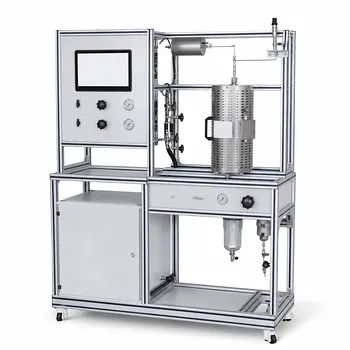
Micro-Scale Gas-Solid Catalytic Reaction Educational Pilot Plant

Micro-Scale Gas-Solid Catalytic Reaction Educational Pilot Plant

Explore heterogeneous catalysis with this micro-scale gas-solid catalytic reaction educational pilot plant. Designed for university labs, it enables hands-on study of reaction kinetics and transport phenomena in a benchtop packed bed reactor with high-precision flow control and touchscreen automation.

Fixed-Bed Chemical Reaction and Gas Dust Tar Removal Unit Operations Pilot Plant

Fixed-Bed Chemical Reaction and Gas Dust Tar Removal Unit Operations Pilot Plant

Integrated educational pilot plant for studying catalytic gas-solid reactions and downstream gas purification. Features dual fixed-bed reactor, three-stage heating, and touchscreen control for hands-on engineering training. Ideal for chemical and environmental engineering curricula.

Methanol Synthesis and Catalyst Performance Evaluation Educational Unit Operations Pilot Plant

Methanol Synthesis and Catalyst Performance Evaluation Educational Unit Operations Pilot Plant

Bench-scale methanol synthesis and catalyst evaluation educational pilot plant for chemical engineering labs to study catalytic kinetics, high-pressure operations, process control, and unit operations under realistic conditions with industrial safety features, precision gas delivery, data acquisition, and intelligent monitoring.

Ethylbenzene Dehydrogenation Educational Unit Operations Pilot Plant

Ethylbenzene Dehydrogenation Educational Unit Operations Pilot Plant

Ethylbenzene dehydrogenation educational pilot plant replicates industrial styrene production, offering hands-on experience with fixed-bed reactors, catalyst activation, regeneration, automated process control. Designed for university chemical engineering labs, it enables study of gas-solid catalysis, catalyst deactivation, steam regeneration, and safety interlocks.

Crude Benzene Hydrogenation Educational Unit Operations Pilot Plant

Crude Benzene Hydrogenation Educational Unit Operations Pilot Plant

Advanced pilot plant for higher education, enabling hands-on study of crude benzene hydrogenation and gas-liquid catalytic reactions. Triple-stage reactor system with precision flow and temperature control, AI-driven PID, remote monitoring, and comprehensive safety interlocks. Customizable for curriculum integration.

Multi Functional Catalytic Reaction and Reactor Evaluation Educational Unit Operations Pilot Plant

Multi Functional Catalytic Reaction and Reactor Evaluation Educational Unit Operations Pilot Plant

Bench-scale educational pilot plant for catalytic reaction and reactor evaluation, integrating fixed bed, fluidized bed, and stirred tank reactors. Students compare reactor designs, evaluate catalysts, and study reaction kinetics and hydrodynamics. Perfect for unit operations labs in chemical engineering curricula.

Methane Cracking Educational Unit Operations Pilot Plant

Methane Cracking Educational Unit Operations Pilot Plant

This bench-scale methane cracking educational pilot plant provides hands-on catalytic conversion training with a 1000°C furnace, seven mass flow controllers, and real-time automation for safe, curriculum-aligned experiments. Designed for university teaching of unit operations and reaction engineering.

Bio-fermentation Ethanol Production Practical Training Unit Operations Pilot Plant

Bio-fermentation Ethanol Production Practical Training Unit Operations Pilot Plant

Bio-fermentation ethanol production pilot plant for hands-on training in unit operations: fermentation, solid-liquid filtration, membrane separation, and distillation. Bridges theory with industrial practice using industrial-grade components, customizable for university labs. Hybrid automated and manual control for comprehensive learning.

Electrolytic Hydrogen Production Educational Unit Operations Pilot Plant

Electrolytic Hydrogen Production Educational Unit Operations Pilot Plant

Bench-scale electrolytic hydrogen production pilot plant designed for university engineering labs. Provides hands-on training in water electrolysis, gas-liquid separation, and process safety. Fully customizable system with digital PID control, corrosion-resistant components, and hydrogen gas detector. Ideal for chemical engineering curricula.

Educational Unit Operations Pilot Plant for Intraparticle Diffusion Effective Factor Measurement

Educational Unit Operations Pilot Plant for Intraparticle Diffusion Effective Factor Measurement

Designed for chemical engineering university labs, this pilot plant allows hands-on determination of catalyst particle intraparticle diffusion effective factors and gas-solid reaction kinetics using a fixed-bed tubular reactor with industrial touchscreen control, bridging theory and practical reactor design.

Carbon Dioxide Hydrogen Methanol Synthesis Educational Unit Operations Pilot Plant

Carbon Dioxide Hydrogen Methanol Synthesis Educational Unit Operations Pilot Plant

Hands-on educational pilot plant for methanol synthesis from carbon dioxide and hydrogen. Enables practical study of high-pressure catalysis, unit operations, and process control. Features real-time data acquisition, safety systems, and customizable experiment modules for undergraduate and graduate chemical engineering laboratories.

Electrolyte Distillation Purification and Formulation Educational Pilot Plant

Electrolyte Distillation Purification and Formulation Educational Pilot Plant

Integrated bench-to-pilot scale educational pilot plant for electrolyte distillation, purification, and formulation with borosilicate glass construction, PLC automation, touchscreen HMI, and advanced industrial safety features for hands-on chemical process training, ideal for chemical engineering and materials science curricula.

Natural Product Extraction Unit Operations Training Pilot Plant

Natural Product Extraction Unit Operations Training Pilot Plant

Integrated natural product extraction pilot plant for chemical engineering training bridges theory and industrial practice with modular extraction and evaporation/concentration units, hybrid touchscreen and manual control, realistic process simulation, and self-contained softened water and vacuum utilities.

Continuous Batch Extractive Distillation Educational Pilot Plant

Continuous Batch Extractive Distillation Educational Pilot Plant

Versatile pilot plant for continuous, batch, and extractive distillation training. High-borosilicate glass column for visualizing hydraulics, 15.6-inch touchscreen with data logging, precise reflux ratio control 1-99, and durable corrosion-resistant frame. Ideal for chemical engineering education and process research.

Carbon Dioxide Hydrogenation Methanol Synthesis Educational Unit Operations Pilot Plant

Carbon Dioxide Hydrogenation Methanol Synthesis Educational Unit Operations Pilot Plant

Pilot-scale educational system for carbon dioxide hydrogenation to methanol. Designed for unit operations teaching, it features a fixed-bed reactor, three-stage heating, dual mass flow controllers, and a 15.6-inch touchscreen with data acquisition. Perfect for chemical engineering and sustainable energy courses.

Ethyl Acetate Synthesis Unit Operations Pilot Plant for Practical Training

Ethyl Acetate Synthesis Unit Operations Pilot Plant for Practical Training

Modular and customizable pilot plant for ethyl acetate synthesis practical training. Integrates esterification reaction, liquid-liquid extraction, neutralization, and sieve-plate distillation unit operations. Bridging theory and real-world industrial processes. Designed for university chemical engineering labs

Green Anhydrous Ethanol Refining Practical Training Pilot Plant

Green Anhydrous Ethanol Refining Practical Training Pilot Plant

Advanced integrated pilot plant for university labs demonstrating extractive distillation to produce high-purity absolute ethanol from crude feedstock, featuring multi-column continuous operation, closed-loop solvent recycling, and customizable controls for hands-on engineering education, ideal for chemical engineering training and research.


Leave Your Message