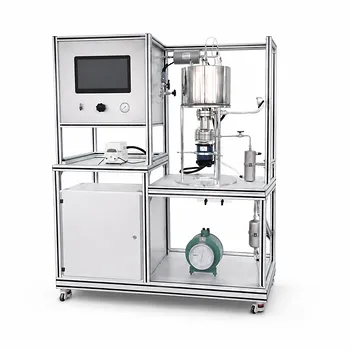
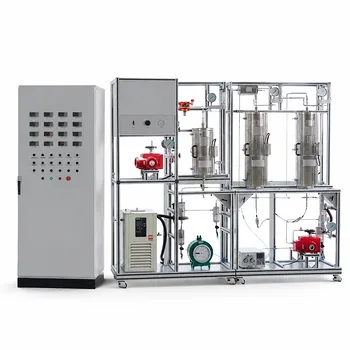
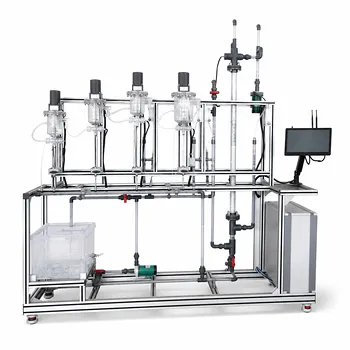
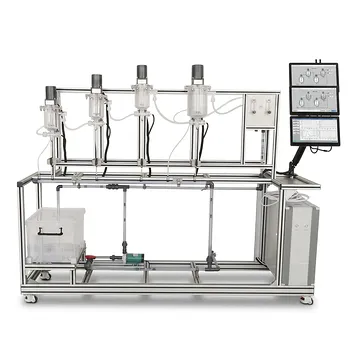
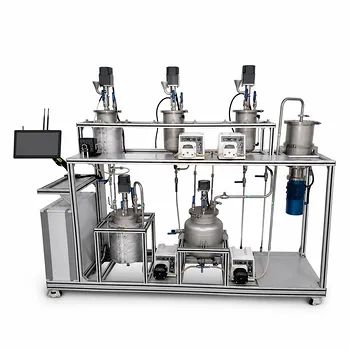
The key to teaching waste minimization through reactor design lies in demonstrating how reactor choice and operating parameters directly control byproduct formation. On a chemical engineering pilot plant, students move beyond theory to see that selecting a Plug Flow Reactor (PFR) over a Continuous Stirred Tank Reactor (CSTR) can eliminate backmixing, boost yield, and slash toxic byproducts. By adjusting residence time, temperature, and flow dynamics in a safe, scaled-down environment, they learn to prevent waste at its source rather than relying on costly end-of-pipe clean-up.
Reactor selection governs selectivity and backmixing, while parameters like temperature and residence time dictate reaction pathways and byproduct formation. Pilot plants bring these interactions to life, enabling students to optimize processes that slash waste at the source—before costly end-of-pipe treatment is needed.
How Reactor Selection Drives Waste Outcomes
The configuration of a reactor fundamentally shapes what gets made and what gets thrown away. In a teaching pilot plant, comparing different reactor types reveals why one design can generate dramatically less waste than another.
PFR vs. CSTR: The Backmixing Effect
A PFR pushes reactants through a tube with near-perfect plug flow, so every fluid element experiences the same residence time. This minimizes backmixing—the recirculation of already-reacted material—which in a CSTR can over-react desired products into unwanted waste. By swapping a CSTR for a PFR in the pilot plant, students witness how eliminating backmixing improves selectivity and cuts toxic byproduct formation immediately.
Tailoring Reactors for Complex Reaction Networks
For series reactions (A + B → R → S, where R is the desired product), backmixing is especially harmful because it drives R further into waste product S. Here, a spray tower or venturi loop reactor excels—offering extremely controlled contact times and minimal liquid holdup. For parallel reactions with a slow side reaction, a packed tower with small liquid holdup suppresses the slow waste-forming path. Letting students run these alternatives side by side makes the waste–selectivity link tangible.
Built-in Protection: Feed Purification and Catalyst Guards
Reactor selection isn’t only about the vessel shape. Integrating a feed purification unit upstream removes impurities that trigger side reactions and degrade solvents. Placing protective adsorbents or filtration systems before a catalyst bed guards against contaminants that shorten catalyst life, reducing solid waste from deactivated materials. In a pilot plant, adding these elements demonstrates how hardware choices directly shrink the waste footprint.
Operating Parameters: The Levers of Waste Control
Beyond reactor hardware, the knobs of temperature, residence time, and flow rate let students dial in waste-minimizing conditions. A pilot plant makes these adjustments immediate and measurable.
Residence Time and Temperature: The Cost–Waste Trade-off
Higher operating temperatures can slash required residence time and reactor volume, but they come with hard limits. The vessel’s metallurgy, defined by codes like the ASME Boiler and Pressure Vessel Code, sets a maximum allowable design temperature. Using higher-grade alloys raises that limit—but at a significant fabrication cost. In the teaching lab, students weigh whether the reduction in byproduct formation justifies the jump in capital cost, learning to think like a process designer.
Flow Dynamics: Eliminating Backmixing to Maximize Yield
Even within a single reactor type, flow dynamics can be tuned. In a PFR, achieving true plug flow means avoiding channeling and stagnant zones—both of which create unwanted side reactions. On a pilot scale, students can adjust flow rates and tracer studies to visualize residence time distributions, directly linking uniform flow to higher yield and lower waste.
Closing the Loop: Separation and Recycle as Waste Minimization
Reactor design and operation intersect strongly with downstream recovery. A teaching pilot plant that couples a reactor with separation units shows that waste minimization is a systems-level challenge.
Solvent Recovery and Recycling
Integrating a distillation column or liquid-liquid extraction unit directly into the process flow lets students recover and reuse solvents. They can explore the energy-to-purity trade-off and see how recycled solvents reduce both hazardous liquid waste and raw material costs. Running these units at different reflux ratios and feed temperatures brings waste reduction from an abstract concept to an engineering exercise.
Reducing Solvent Diversity to Simplify Recovery
Minimizing the number of different solvents used in a process drastically simplifies the recovery loop. In a pilot plant, students can experiment with a single-solvent strategy, observing how fewer separation steps and less cross-contamination lead to a smaller waste stream and a more efficient recycle.
Understanding the Trade-offs
True waste minimization comes with built-in tensions that every engineer must manage.
- High temperature vs. side reactions: Pushing temperature up can reduce reactor volume but may trigger decomposition or side reactions that generate additional waste.
- Premium materials vs. capital cost: Alloys that withstand aggressive conditions increase upfront expenditure; the economic return depends on the value of the waste avoided.
- Recycle loops vs. energy demand: Recovering and reusing unreacted feed or solvents cuts waste but adds heat exchanger and pumping loads, shifting the environmental burden from waste to energy.
- Backmixing suppression vs. pressure drop: A tightly packed tower or a long PFR reduces backmixing but can increase pressure drop, raising operational costs. The pilot plant reveals these interdependencies where equations alone fall short.
How to Apply This in the Teaching Laboratory
Align your pilot plant configuration and experiments with the specific learning outcome you want to achieve.
- If your primary focus is fundamental reactor theory: Compare a PFR and a CSTR with the same reaction, and measure the byproduct profiles to cement the impact of backmixing on waste.
- If your primary focus is source reduction in industrial practice: Integrate feed purification and catalyst guard beds, and then run the same process without them to quantify the solid and liquid waste reduction.
- If your primary focus is economic design optimization: Use different alloy test sections and vary temperature, calculating the breakeven point where lower waste offsets higher material cost.
- If your primary focus is multi‑step green chemistry: Couple a spray tower reactor with a downstream distillation column, then have students optimize selectivity and solvent recovery simultaneously.
By leveraging pilot plants to manipulate reactor selection and operating parameters, you equip future engineers with the ability to design inherently cleaner processes from the very first reaction step.
Summary Table:
| Design Element / Parameter | Impact on Waste Minimization | Key Engineering Trade-off |
|---|---|---|
| PFR vs. CSTR Selection | Minimizes backmixing to prevent over-reaction and reduce toxic byproducts. | Suppressing backmixing can increase system pressure drop. |
| Temperature & Residence Time | Higher temperatures speed up reaction paths, lowering required reactor volume. | Can trigger product decomposition and requires expensive alloys. |
| Feed Purification & Guards | Removes feed impurities and protects catalysts from premature deactivation. | Adds upfront equipment cost and footprint to the process. |
| Integrated Recycle Loops | Recovers and reuses solvents, drastically shrinking hazardous liquid waste. | Increases utility loads (heating/cooling) and system complexity. |
Bring Green Chemistry and Process Optimization to Life with LABPARK
Equip your students, researchers, and engineers with the hands-on tools needed to master sustainable process design. LABPARK designs and manufactures high-quality Educational and Vocational Unit Operations Pilot Plants tailored for universities, research institutes, and industrial enterprises.
Our specialized pilot plants span key engineering disciplines:
- Chemical Engineering: Hands-on CSTR, PFR, distillation, and heat exchange systems.
- Bioprocess & Biotech: Advanced bioreactors and fermentation units.
- Environmental & Water Treatment: Systems designed to teach modern recycling and waste-minimization techniques.
Bridge the gap between theoretical kinetics and real-world environmental stewardship. Contact LABPARK today to discuss your laboratory curriculum requirements or request a custom quotation!
Related Products
- Fixed-Bed Chemical Reaction and Gas Dust Tar Removal Unit Operations Pilot Plant
- Multi-Reactor Educational Pilot Plant for Reaction Engineering Unit Operations
- 100L Continuous Loop Hydrogenation Educational Unit Operations Pilot Plant
- Fixed Bed Gas Solid Catalytic Reaction Educational Pilot Plant
- Internal Circulation Gradient Free Catalytic Reaction Educational Pilot Plant
People Also Ask
- When to transition from PID to adaptive control in pilot plants? Key process indicators.
- How do deviations in estimating latent heat impact pilot plant thermal systems? Avoid hardware mis-sizing.
- Why Compare Predicted and Experimental Excess Enthalpy? Key to Accurate Pilot Plant Scale-up
- How to study gasification in pilot plants? Compare exit gas composition & efficiency
- Why Use PTFE & Hastelloy in Chemical Pilot Plants? Prevent Corrosion & Ensure Safety