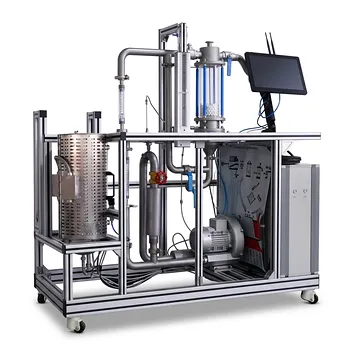
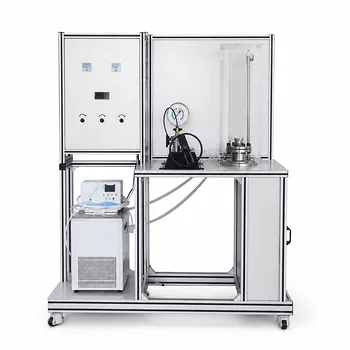
Borosilicate glass is chosen because it eliminates the two most common failure modes in chemical pilot plants—thermal shock and chemical degradation—while providing a safer failure mechanism than standard soda-lime glass.
The selection of a glass material for a pilot plant is not just a decision about transparency; it is a fundamental safety and performance calculation. High borosilicate glass, with more than 8% boron trioxide (B2O3) in its structure, delivers a uniquely balanced profile of thermal stability, chemical resistance, and predictable failure behavior that ordinary soda-lime glass simply cannot match. In an experimental environment where temperature gradients and aggressive chemistry are the norm, soda-lime glass becomes a point of unacceptable risk.
While soda-lime glass is cheap and adequate for windows, the intense demands of a chemical reactor—rapid heating, acidic or alkaline corrosion, and the catastrophic danger of an explosive failure—make high borosilicate glass the only rational choice. Its low expansion coefficient prevents thermal cracking, its silica-borate network resists most chemical attack, and if it ever does fail, it cracks into large, safe sections rather than a cloud of dangerous shards.
Understanding the Core Advantage of High Borosilicate Glass
The superiority of high borosilicate glass is rooted in its composition and the physical properties that composition creates. To understand why it excels in pilot plants, you must look at the chemistry at the network level.
How the Glass Network Resists Thermal Shock
Standard soda-lime glass is composed primarily of silica (SiO2), sodium oxide (Na2O), and calcium oxide (CaO). The sodium ions disrupt the silica network, lowering the melting point but creating a structure that expands significantly when heated.
High borosilicate glass replaces much of the sodium with boron trioxide (B2O3). Boron forms strong bridging bonds within the silica network, resulting in an exceptionally low coefficient of thermal expansion.
This low expansion means the glass barely moves as the temperature changes. A soda-lime reactor charged with a hot exothermic reaction can develop extreme internal stress and shatter with a minor temperature differential.
Borosilicate glass tolerates these rapid thermal swings effortlessly. This is the foundational property that prevents fracture during steam sterilization, quenching, or sudden reaction exotherms.
Superior Chemical Durability in Reactive Environments
In a pilot plant, glass surfaces are constantly attacked by reactants, cleaning agents, and process fluids. The chemical resistance of the glass is non-negotiable.
Soda-lime glass is chemically vulnerable. The sodium and calcium oxides in its structure are easily leached out by acids, and alkaline solutions can directly attack its silica backbone, causing pitting, clouding, and structural weakening.
High borosilicate glass presents a far more inert surface. Its high silica content (>70%) and the tight integration of boron into the network make it highly resistant to corrosion by most acids and moderate alkalis.
This ensures that the glass does not contaminate sensitive reactions with leached ions and that the structural integrity of a column or reactor is maintained over many experimental campaigns.
The Safety Dividend of a "Cracking" Failure Mode
Safety in a pilot plant is not just about preventing failure; it is about controlling the consequences when an unforeseen failure occurs. This is where the mechanical difference is stark.
Under extreme stress, soda-lime glass shatters violently into thousands of sharp-edged fragments. In a pressurized or heated reactor, this creates an explosive release with a high probability of injury and equipment damage.
High borosilicate glass fails by cracking. Its internal network, while rigid, is not as brittle as soda-lime glass. When an ultimate stress limit is exceeded, it typically develops large cracks and sections, containing the vast majority of the debris.
This failure mode is a critical safety feature, turning a potentially catastrophic event into a manageable material replacement.
Navigating the Critical Limitations
Your expertise as a technical advisor requires acknowledging that no material is perfect. A complete trust-based conversation must cover where high borosilicate glass does not work.
The Hydrofluoric Acid and Strong Alkali Blind Spot
The primary reference correctly states high borosilicate glass has a “higher resistance to acid and alkaline corrosion,” but this invites a dangerous misapplication if not qualified.
Borosilicate glass is rapidly attacked by hydrofluoric acid (HF). The fluoride ion specifically dissolves silica, eating through the glass network regardless of its boron content.
Similarly, prolonged contact with strong, hot alkaline solutions (like concentrated sodium or potassium hydroxide) will degrade the glass. The hydroxide ion breaks the Si-O-Si bonds, leading to surface etching and eventual structural failure.
For these specific chemistries, a borosilicate glass pilot plant component is simply the wrong material, and alternatives like PTFE or Hastelloy must be considered for those sections.
Making the Right Choice for Your Pilot Plant
Your selection criteria should be driven by the specific goal of your experimental setup. Use this framework to apply the principles correctly.
- If your primary focus is thermal cycling and safety: Specify high borosilicate glass without hesitation. Its low expansion and cracking failure mode directly protect your operators and your experimental continuity.
- If your primary focus is maximum chemical inertness for versatile research: Borosilicate glass remains the default choice, but you must rigorously audit your complete chemical compatibility list for HF, hot concentrated alkalis, or phosphoric acid at high temperatures.
- If your primary focus is high-pressure containment: Glass alone is insufficient. The glass must be used as a lining or sight glass within a metal pressure vessel, where its thermal and chemical advantages still make it the superior transparent barrier over soda-lime.
For the vast majority of pilot plant reactors, condensers, and piping, high borosilicate glass transforms the setup from a fragile glassware experiment into a robust, industrial-grade research tool that you can trust with valuable reactions and personnel safety.
Summary Table:
| Feature / Property | High Borosilicate Glass | Standard Soda-Lime Glass |
|---|---|---|
| Thermal Shock Resistance | Excellent (Very low expansion coefficient) | Poor (High risk of cracking under thermal stress) |
| Chemical Durability | High resistance to acids and moderate alkalis | Low (Prone to leaching, pitting, and etching) |
| Failure Mode | Cracks safely into large, manageable sections | Shatters violently into dangerous, sharp shards |
| Best Suited For | Chemical reactors, pilot plant piping, columns | Windows, consumer bottles, low-stress labware |
Build Safer, High-Performance Pilot Plants with LABPARK
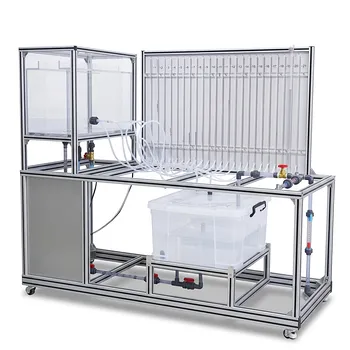
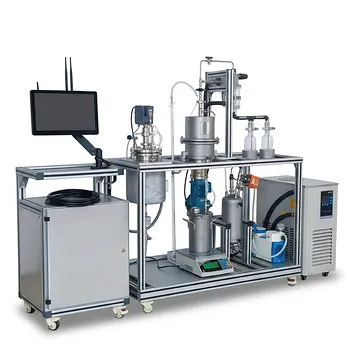
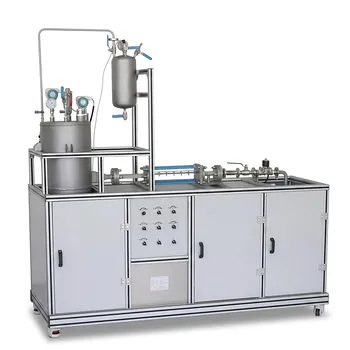
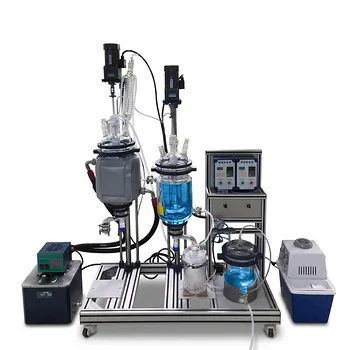
At LABPARK, we design and manufacture state-of-the-art Educational and Vocational Unit Operations Pilot Plants for chemical engineering, bioprocess & biotech, and environmental & water treatment. Built with premium materials like high borosilicate glass, our systems ensure maximum safety, thermal stability, and durability for universities, research institutes, and enterprises.
Ready to elevate your research and training capabilities? Contact our engineering experts today to discuss your custom setup!
Related Products
- Multi-Functional Special Distillation Educational Pilot Plant
- Rising and Falling Film Evaporation Educational Unit Operations Pilot Plant
- Bernoulli Equation Demonstration Unit Operations Pilot Plant
- Supercritical High-Gravity Flash Evaporation Educational Unit Operations Pilot Plant
- Constant Pressure Filtration Educational Unit Operations Pilot Plant
People Also Ask
- Why does simple distillation yield higher efficiency than flash distillation? Key thermodynamic differences.
- Why is the acentric factor important in pilot plants? Fluid property prediction.
- How Batch vs Continuous Configuration Affects Distillation Pilot Plant Versatility & Footprint
- How does double temperature difference control improve distillation pilot plants? Stabilize purity.
- How to Estimate Distillation Pilot Plant Tray Efficiency? O'Connell's Correlation Guide