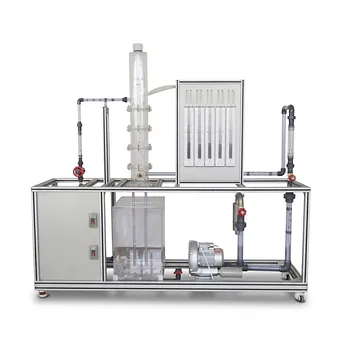
The fundamental trade-off is between pedagogical transparency and modern efficiency. Conventional methods like Soxhlet and maceration excel at making core separation principles visible, but they are slow and consume large volumes of organic solvents. Modern Pressurized Liquid Extraction (PLE) delivers faster results at higher temperatures and pressures, drastically reducing solvent use, yet it can obscure the underlying mass-transfer phenomena and introduce higher capital costs.
Choosing between conventional extraction pilot plants and PLE is not about which is “better” in a vacuum—it is about what you need your students or researchers to internalize. The deep decision lies between anchoring learning in timeless, observable fundamentals or accelerating workflows in alignment with today’s green chemistry and industrial speed requirements.
Understanding the Two Paradigms
Conventional Extraction: The Pedagogical Workhorse
Conventional systems—maceration, percolation, and Soxhlet extraction—operate at atmospheric pressure and moderate temperatures. Their operation is transparent: you can see solvent contact the matrix, watch the siphon cycle, and physically measure extraction progress over hours.
This visibility makes them ideal for teaching fundamental mass-transfer principles. Thermodynamics, diffusion, and partitioning are not hidden inside a sealed vessel; they unfold in front of the user.
However, this visibility comes at a price. Extraction times are prolonged, often lasting hours to days. Solvent consumption is high, and the methods typically rely on volatile organic compounds. This creates an educational tension: students learn the "old way" deeply, but the process clashes with modern environmental and efficiency standards.
Modern Pressurized Liquid Extraction (PLE): Efficiency and Green Chemistry
PLE elevates the solvent above its atmospheric boiling point by applying pressure. The result is a dramatic increase in mass-transfer rates, enabling extractions in minutes rather than hours and radically lower solvent volumes.
This aligns PLE directly with green chemistry goals. It also better preserves thermolabile compounds because although temperatures are high, the fast cycle time minimizes thermal degradation compared to hours-long Soxhlet exposure.
The compromise is pedagogical distance. The extraction happens inside a sealed, automated cell. Parameters like pressure and temperature ramps are controlled digitally, and the core separation physics are less tangible to a new learner.
Primary Process Trade-offs
Extraction Time and Throughput
Conventional methods impose long, fixed extraction cycles. A Soxhlet run may take 6–24 hours, effectively dictating lab schedules and limiting the number of experiments students or researchers can perform in a semester.
PLE compresses this to 10–30 minutes per sample. This throughput advantage enables more iterative research—screening multiple solvents, matrices, or conditions rapidly. The trade-off? The concept of “extraction endpoint” becomes a software parameter rather than a directly observed phenomenon, potentially leading to a weaker intuitive grasp of extraction kinetics.
Solvent Consumption and Environmental Impact
Soxhlet and maceration can consume 100–500 mL of organic solvent per sample. Disposal and exposure costs quickly mount in a teaching lab, and the environmental footprint is hard to ignore.
PLE typically uses 10–40 mL per run. This directly supports sustainable chemistry curricula and reduces operational costs over time. However, the sealed, high-pressure nature of PLE makes solvent recovery more complex to demonstrate than in an open distillation setup, which is a lost teaching opportunity for some courses.
Temperature Control and Compound Stability
Both approaches carry thermal risks, but they operate differently. Conventional systems often require boiling-point temperatures for hours, which can degrade heat-sensitive analytes.
PLE uses higher temperatures but for much shorter durations. This often improves overall recovery of thermally labile compounds, but it demands precise system control. The trade-off is that students cannot easily observe phase changes under pressure; they must rely on data logging, which shifts the learning objective from direct observation to process monitoring.
Complexity of Operation and Learning Curve
Conventional glassware is simple to set up and maintain. It teaches apparatus assembly, liquid-solid contact, and manual control. Failures are visible and usually non-hazardous, making it forgiving in a training environment.
PLE units are automated benchtop instruments. Operation requires navigating a user interface, not building the apparatus. While this better reflects modern industrial practice, it can leave a gap in understanding when something goes wrong—troubleshooting a pressure drop versus a cracked siphon arm are entirely different learning experiences. Additionally, the higher capital and maintenance costs of PLE systems may be prohibitive for some labs.
Capital Cost and Maintenance
Conventional equipment has low up-front costs. A Soxhlet setup can be built from basic glassware for a few hundred dollars, which scales easily across large student cohorts.
A PLE system represents a significant capital investment, often requiring specialized extraction cells and pressure-rated components. Maintenance cycles must respect high-pressure safety protocols. This shifts budget allocation from consumables (solvents) to hardware and technician time, which must align with institutional priorities.
The Hidden Curriculum: What Are You Really Teaching?
Bridging the Gap to Industrial Reality
The decision goes beyond extraction efficiency. As supplementary industry guidance suggests, pilot plants for training must let users manipulate critical parameters, observe phase behavior, and bridge benchtop chemistry to plant-scale thinking.
Conventional methods make the transition from batch to continuous processes conceptually clearer. You can easily add stages, compare single-stage to multi-stage extraction, and visualize equilibrium stages. This mirrors the logic behind mixer-settler cascades or tall extraction columns, where the number of theoretical stages is a first-order design parameter.
PLE’s automation can obscure this scaling logic. However, pairing a PLE unit with complementary modules like membrane separation or continuous liquid-liquid extraction (LLE) systems can create a powerful integrated curriculum—one that mirrors modern pharmaceutical or environmental treatment lines.
Safety and Material Compatibility
Safety in conventional systems is straightforward: ventilation for solvents, heat-resistant gloves, and glassware integrity. The risks are well-known and manageable by novices.
Modern pressurized systems add a new dimension of safety training. Pressure ratings, rupture disc specifications, and material compatibility with alternative green solvents (like ionic liquids or deep eutectic solvents) become critical. This aligns with the supplementary emphasis on teaching system safety for supercritical and pressurized processes, which is a valuable but distinct educational outcome.
Understanding the Trade-offs
The core trade-off is not merely technical—it is philosophical. Conventional extraction pilot plants champion slow, observable science that builds deep foundational knowledge but at an environmental and time cost. Modern PLE pilot plants champion speed, sustainability, and industry alignment but risk turning a fundamental unit operation into a “black box” for learners.
Equally critical is the scalability and flexibility of the platform. Conventional glassware is inherently modular, allowing students to freely modify setups—adding columns, changing packing, or integrating detectors. PLE systems offer rapid parameter screening but narrow the scope of physical reconfiguration, which can limit creative research exploration.
Making the Right Choice for Your Educational or Research Goal
Your specific goal should dictate the platform. Here is how to align the choice:
- If your primary focus is teaching fundamental extraction principles: Choose conventional pilot plants. They make mass-transfer phenomena visible, teach apparatus construction, and provide a low-cost, safe sandbox for foundational learning.
- If your primary focus is green chemistry and sustainability training: Choose a modern PLE system. Its drastically lower solvent consumption and rapid cycles are the best in-class demonstration of green sample preparation.
- If your primary focus is bridging lab-scale to industrial operations: Consider a hybrid or dual-platform approach. Start with conventional stages to teach equilibrium, then move to PLE and continuous modules to showcase automation, pressure safety, and process integration.
- If your primary focus is maximizing research throughput and preserving thermolabile compounds: Select PLE without hesitation. The speed and gentleness of the technique directly enable high-output research programs that would be impossible with Soxhlet or maceration.
The right pilot plant is the one that makes your learners’ or researchers’ blind spots visible—whether that is the quiet drift of a solute across a phase boundary, or the precise digital control of a modern industrial process.
Summary Table:
| Feature | Conventional Extraction (Soxhlet / Maceration) | Pressurized Liquid Extraction (PLE) |
|---|---|---|
| Extraction Time | Slow (6–24 hours) | Rapid (10–30 minutes) |
| Solvent Consumption | High (100–500 mL per sample) | Low (10–40 mL per sample) |
| Pedagogical Value | High visibility of mass-transfer physics | Training in automation and process control |
| Green Chemistry | Low alignment (high solvent waste) | High alignment (sustainable, low solvent) |
| Capital Cost | Low up-front cost, easy to scale | High initial investment and maintenance |
Equip Your Lab with the Right Extraction Technology
Choosing the right pilot plant is critical for bridging academic theory and industrial reality. LABPARK provides state-of-the-art Educational and Vocational Unit Operations Pilot Plants in chemical engineering, bioprocess & biotech, and environmental & water treatment.
Whether you are a university upgrading your teaching labs, a research institute testing green chemistry processes, or an enterprise scaling up operations, we have the ideal solution to fit your budget and learning objectives.
Contact LABPARK today to consult with our experts and design the perfect pilot plant setup for your institution!
Related Products
- Gallium and Indium Selective Extraction Educational Pilot Plant
- Comprehensive Liquid-Liquid Extraction Pilot Plant for Engineering Education
- Electrolytic Hydrogen Production Educational Unit Operations Pilot Plant
- Electrolyte Distillation Purification and Formulation Educational Pilot Plant
- Ethyl Acetate Synthesis Unit Operations Pilot Plant for Practical Training
People Also Ask
- How do pilot plants differentiate physical vs chemical extraction? Enhance Chemical Engineering Training
- What is the significance of the isopycnic line in liquid-liquid extraction? Avoid Column Flooding
- How do droplet motion states affect kD in extraction pilot plants? Optimize Mass Transfer
- Why is predicting multicomponent LLE from binary data more challenging than VLE? Master your pilot plant design.
- How to Use McCabe-Thiele on an LLE Pilot Plant to Determine Column Efficiency