Selecting a reactor configuration for a polymer synthesis pilot plant is fundamentally a choice about what kind of education you want to deliver. Batch polymerization reactors give students direct, time-based control over the entire reaction trajectory, making them ideal for teaching formulation experimentation and transient process behavior. Continuous polymerization reactors, on the other hand, force students to master steady-state flow control, residence time distribution, and automated feedback loops, mirroring the realities of high-volume industrial production. The learning outcomes diverge sharply: one builds recipe-driven intuition, the other builds scale-up and system dynamics expertise.
While batch reactors teach the fundamentals of recipe-driven polymer synthesis and the impact of temporal changes, continuous reactors force students to master steady-state operation, residence time distribution, and automation. The most comprehensive educational pilot plant integrates both modes, allowing students to directly observe how identical chemistry yields different materials simply because of process dynamics.
The Divergent Worlds of Process Control
Batch Control: Mastering Time-Dependent Variables
In a batch reactor, all reactants are loaded, and the polymerization proceeds over a finite time under unsteady-state conditions. Students actively manipulate temperature ramps, pressure profiles, and timed initiator or monomer additions.
Control is about tracking a trajectory – learning to follow a recipe curve and correct deviations minute-by-minute. This builds deep competence in transient kinetics and quality control for low-volume, high-variety products.
Batch operation naturally introduces batch-to-batch variation, forcing students to troubleshoot differences in conversion, molecular weight, or viscosity from run to run. It’s a powerful way to teach Good Manufacturing Practice (GMP) mentality and statistical process analysis.
Continuous Control: Engineering Steady-State Stability
A continuous reactor (CSTR, tubular, or loop) operates with uninterrupted feed and product withdrawal. The goal is a stable steady-state, where concentrations, temperature, and product properties remain constant over time.
Students learn to control flow rates, residence time distribution (RTD), and feedback loops such as temperature-dosing cascades. Start-up and shutdown procedures become critical safety lessons, as moving from idle to steady state often traverses dangerous regimes.
The control strategy shifts from time-based profiling to disturbance rejection and system optimization. This teaches process dynamics, automation, and how to achieve the 90–95% utilization rates common in large-scale polymer manufacturing.
Why Control Strategy Shapes Learning Outcomes
The distinct control philosophies imprint fundamentally different mental models. Batch training cultivates flexibility and formulation intuition; continuous training instills steady-state thinking and the ability to design for consistency, safety, and throughput.
When students alternate between both modes on the same pilot plant, they directly experience how a polymer’s quality is not just a product of chemistry but of process architecture. That leap is the hallmark of deep engineering education.
Polymer Science: Why Reactor Choice Defines the Product
The Molecular Weight Distribution Connection
The molecular weight distribution (MWD) – which governs a polymer’s mechanical properties and processability – is exquisitely sensitive to reactor type. Identical monomer and initiator systems produce different distributions in batch versus continuous units.
According to Denbigh’s rule, when a growing polymer chain has a long lifetime relative to the CSTR’s mean residence time (common in step-growth or living anionic polymerizations), the CSTR yields a broader MWD than a batch reactor. Continuous outflow acts as an artificial termination, spreading chain lengths.
Conversely, in free-radical polymerization where chain lifetimes are extremely short, switching from batch to a CSTR can narrow the MWD. The batch environment causes a drift in monomer concentration over time, broadening the distribution; the steady CSTR eliminates that drift. This counter-intuitive result is a potent learning moment.
Heat Transfer and Safety Considerations
Batch reactors can become hazardous with highly exothermic polymerizations because heat generation rises rapidly with conversion while cooling capacity remains fixed. Runaway risks are real, making thermal safety analysis a critical lesson.
Semi-batch operation (slowly feeding one reactant) mitigates risk by controlling accumulation, a key control strategy students must understand. For truly fast, energetic reactions, continuous reactors offer superior heat transfer per unit volume and minimize the inventory of hazardous reactants, demonstrating inherently safer design.
Modeling and Scale-Up Literacy
Modeling batch reactors relies on transient differential equations from initial conditions. This helps students appreciate time-dependent kinetics and optimize cycle times.
Modeling continuous reactors demands population balances that explicitly track how residence time distribution shapes the MWD. The mass balance approach becomes a powerful tool for predicting gel points, throughput limits, and property scale-up—skills essential for modern polymer engineering.
Understanding the Trade-offs
Flexibility vs. Throughput
Batch reactors can process dozens of different formulations in the same vessel with minimal changeover, earning their place in specialty-chemical and pharmaceutical training. The trade-off is low reactor utilization and high labor per kilogram of product.
Continuous lines deliver unmatched consistency and production volume, perfect for demonstrating commodity polymer economics. But they are inflexible—changing grades often requires prolonged purge and loss of steady state, a lesson in itself about industrial logistics.
Operational Complexity and Learning Curve
Batch operation is conceptually simpler to grasp initially, which can speed up student onboarding. However, it may give a false sense of control because the real industrial world is often continuous.
Continuous reactors demand upfront understanding of fluid dynamics, feedback stability, and RTD theory. The learning curve is steeper, but graduates emerge with the high-demand skills to design and troubleshoot large-scale plants.
The Critical Role of Hybrid Configurations
Pilot plants that offer both batch and continuous modes are uniquely valuable. Running the same polymerization recipe in both configurations forces students to confront how residence time, back-mixing, and recycle streams reshape the product.
Such side-by-side comparison is the fastest route to the deep insight that process selection is a design variable, not just a scale-up afterthought.
Making the Right Choice for Your Educational Goals
The optimal reactor configuration for your pilot plant must align with the competencies you want to build. Match the equipment to your curriculum’s core mission.
- If your primary focus is formulation discovery and specialty polymer training: Choose a versatile batch reactor system with precise additive dosing. It will let students explore wide recipe spaces and learn to manage batch-to-batch quality—skills essential for R&D and low-volume, high-value production.
- If your primary focus is industrial process engineering and scale-up: Invest in a continuous reactor train (CSTRs or tubular reactors) with integrated automation. Here, students master steady-state kinetics, residence time distribution control, and the startup/shutdown safety protocols that govern real-world plants.
- If your goal is to build versatile chemical engineers who bridge lab and plant: Seek a modular pilot plant offering both batch and continuous modes. The ability to run identical chemistry under different flow regimes cements the lesson that reactor configuration is a key design parameter—and it future-proofs your facility for evolving teaching needs.
The reactor is not just a vessel—it is a teacher that embeds a lifetime’s process understanding; choose the one that will graduate your students with the deepest, most versatile grasp of polymerization reality.
Summary Table:
| Feature | Batch Reactors | Continuous Reactors |
|---|---|---|
| Control Focus | Time-based trajectory & recipe tracking | Steady-state flow, RTD & feedback loops |
| MWD Control | Narrower for step-growth polymerizations | Narrower for free-radical polymerizations |
| Key Learning | Formulation discovery & transient behavior | Process dynamics, scale-up & automation |
| Flexibility | High (easy formulation changes) | Low (designed for high-volume consistency) |
Equip Your Lab with LABPARK Pilot Plants
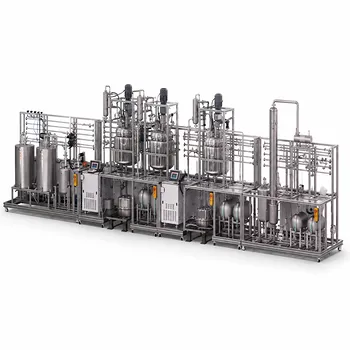
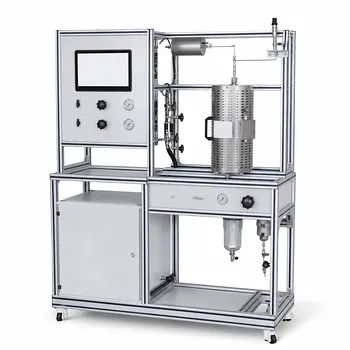
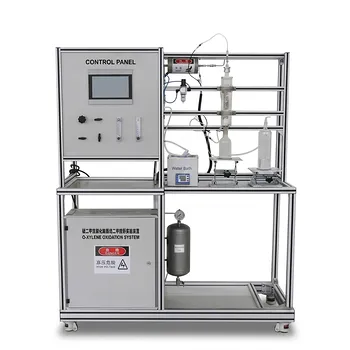
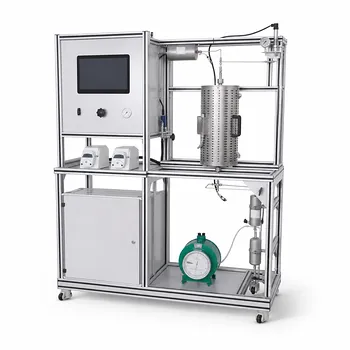
Choosing the right reactor setup is essential for preparing students for modern industrial careers. LABPARK delivers advanced Educational and Vocational Unit Operations Pilot Plants in chemical engineering, bioprocess & biotech, and environmental & water treatment. Designed specifically for universities, research institutes, and enterprises, our modular systems allow you to demonstrate both batch and continuous operations seamlessly.
Ready to upgrade your laboratory? Contact LABPARK today to consult with our engineering team and find the ideal pilot plant solution for your educational goals.
Related Products
- Polymerization Granulation and Pellet Processing Educational Unit Operations Pilot Plant
- Ethyl Acetate Synthesis Unit Operations Pilot Plant for Practical Training
- Carbon Dioxide Hydrogen Methanol Synthesis Educational Unit Operations Pilot Plant
- Fixed Bed Gas Solid Catalytic Reaction Educational Pilot Plant
- Aspirin API Synthesis Unit Operations Training Pilot Plant
People Also Ask
- How do educational unit operations pilot plants address safety and waste management when scaling up?
- How do educational unit operations pilot plants bridge theory and design? Bridge the Engineering Gap
- What role do educational pilot plants play in scaling green chemistry? Bridging the Lab-to-Industry Gap
- Why Compare Predicted and Experimental Excess Enthalpy? Key to Accurate Pilot Plant Scale-up
- When to transition from PID to adaptive control in pilot plants? Key process indicators.