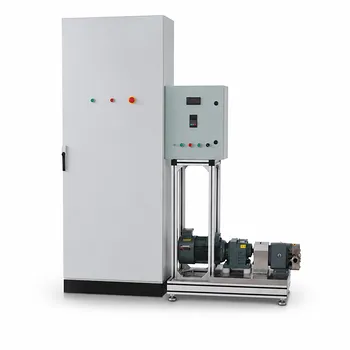
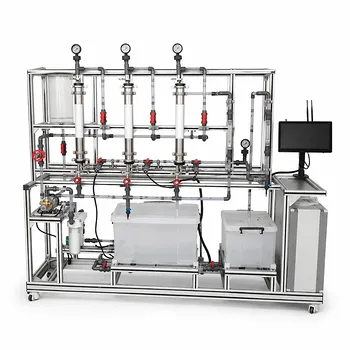
For any metal recovery pilot plant, the first and non-negotiable fork in the road is the electrochemical activity of the target metal. The decision to use an aqueous or fused salt electrolysis unit hinges on a simple but absolute principle: if the metal cation is more reactive than the hydrogen ion in an aqueous environment, reduction from a water-based electrolyte is impossible. Active metals—think sodium, potassium, calcium, magnesium, and aluminum—will always favor hydrogen gas evolution at the cathode, leaving you with bubbles instead of recoverable metal. For these, only a high-temperature, water-free fused salt system works. For less reactive metals such as nickel, copper, or zinc, an aqueous unit becomes the straightforward, safer, and more cost-effective choice.
The surface answer is deceptively simple—match the metal’s position in the electrochemical series to the electrolyte. But the deeper challenge is designing a unit that safely manages the extreme conditions and reactive products of fused salt systems while delivering clear pedagogical value. The core insight is that a fused salt unit isn't just a "hotter" version of an aqueous cell; it’s a fundamentally different operation that teaches high-temperature materials science, product containment, and reactive handling that cannot be replicated in water-based setups.
The Electrochemical Barrier: Why Water Limits Your Options
The entire selection process starts with a single, non-negotiable electrochemical fact. Understanding this prevents wasted effort and unsafe designs.
The Activity Series Determines Feasibility
In any aqueous solution, water itself can be reduced to hydrogen gas. The standard reduction potential of water (under typical pH conditions) sets a hard ceiling. For metals with a more negative reduction potential than hydrogen, the water molecule dissociates at the cathode before the metal cation can discharge. This is why you cannot electrodeposit sodium, potassium, lithium, magnesium, or aluminum from a water-based electrolyte—hydrogen evolution completely dominates.
Where the Line Is Drawn in Practice
The textbook “less active” metals—copper, nickel, cobalt, zinc—sit comfortably below hydrogen’s reduction potential under typical conditions. Their cations can accept electrons and plate onto a cathode without being outpaced by hydrogen gas. For these metals, an aqueous electrolysis unit is not just possible, it is the default choice. The moment your target metal shifts to the active side (alkali, alkaline-earth, or amphoteric metals like aluminum), the aqueous route becomes physically impossible.
Designing the Right Unit for the Metal’s Nature
Once you know which side of the activity line your metal falls on, the practical design requirements diverge dramatically. The pilot unit becomes a teaching tool for two entirely different branches of electrochemical engineering.
Aqueous Units: Simplicity and Flexibility for Less Reactive Metals
Aqueous cells operate at ambient or near-ambient temperatures, using familiar materials like stainless steel or lead anodes, and they present minimal chemical hazard from electrolyte decomposition. This makes them ideal for teaching core principles of mass transfer, current efficiency, and cathode morphology without the additional burden of extreme thermal management. In a pilot plant curriculum, aqueous setups allow students to rapidly iterate experiments on nickel or zinc recovery, exploring variables like current density, additive chemistry, and electrode spacing.
Fused Salt Units: High-Temperature Rigor for Active Metals
For active metals, the unit must operate in the complete absence of water, typically at temperatures between 400°C and over 1000°C depending on the salt mixture. The electrolyte becomes a molten ionic liquid—often a eutectic blend of chlorides or fluorides. This introduces a cascade of new teaching modules: thermal insulation, corrosion-resistant materials (massive graphite anodes and iron cathodes are standard), and the handling of byproducts that are violently reactive. For example, in a fused NaCl cell producing sodium, the liberated chlorine gas and molten sodium must be physically separated with barriers and collection hoods to prevent instantaneous recombination—a real industrial safety lesson.
Separation of Products Is the Make-or-Break Design Feature
In a fused salt unit, the liberated metal is often less dense than the electrolyte, so it rises to the surface and must be continuously collected under an inert fluid like mineral oil. Simultaneously, the co-generated halogen gas (like chlorine) rises and must be captured without contacting the metal. This demands engineered hoods, separate collection paths, and continuous inert gas blanketing. In a teaching environment, this becomes a vivid demonstration of how industrial cell design solves the problem of chemical incompatibility in real time.
Understanding the Trade-offs
Choosing between aqueous and fused salt is not a value judgment—it’s a deliberate trade-off between complexity, safety, and learning outcomes.
Cost and Complexity vs. Industrial Reality
Aqueous pilot units are relatively low-cost, easy to instrument, and safe enough for student teams to operate with standard supervision. The trade-off is that they cannot model the immense industrial processes that produce millions of tons of aluminum or sodium. Fused salt units demand specialized materials (ceramic-lined crucibles, high-temperature resistant anodes) and strict operating protocols, raising both capital and operational expense. However, they expose learners to the exact engineering challenges of the most energy-intensive electrochemical processes on Earth.
Pedagogical Focus: Fundamentals or High-Temperature Operations
An aqueous unit excels at teaching the fundamentals of electrodeposition, current distribution, and reaction kinetics unclouded by aggressive side reactions. A fused salt unit shifts the focus to high-temperature thermodynamics, material compatibility, and reactive containment. Most advanced pilot plant courses include both types precisely because they exist to teach different chapters of chemical engineering. A zinc recovery project in an aqueous cell teaches one lesson; an aluminum extraction exercise in a cryolite melt teaches a completely different lesson about phase diagrams and molten salt chemistry.
Making the Right Choice for Your Lab or Research Goal
The selection boils down to the metal’s identity and your educational or research objective. Use this goal-oriented lens to decide.
- If your primary focus is recovering or demonstrating a less reactive metal like copper, nickel, or zinc: Use an aqueous electrolysis unit. It will give you clean deposits, simpler safety protocols, and maximum experimental throughput for teaching mass-balance and kinetics.
- If your primary focus is teaching the industrial reality of active metal production (sodium, aluminum, magnesium, etc.): A fused salt electrolysis unit is non-negotiable. The high-temperature water-free operation replicates the exact conditions found in Hall–Héroult cells or Downs cells, and the engineering challenges of product separation and material selection become the core curriculum.
- If your research involves a metal that sits at the borderline (e.g., manganese or chromium): You may need to explore non-aqueous solvents or ionic liquids as a middle ground, but for clear pedagogical value, align the unit type with the dominant industrial route—aqueous for electroplating, fused salt for primary metal extraction.
- If your lab must accommodate multiple metals with minimal reconfiguration: Accept that no single unit does both well. Maintain two dedicated pilot cells—an aqueous cell for the less active suite and a fused salt cell for the active suite—and treat them as distinct unit operations learning stations.
Your decision is always rooted in the metal’s place in the electrochemical series. Match the electrolyte to the cation, and you build a safe, instructive, and truthful pilot experience that prepares students for the real-world split between ambient electrochemistry and high-temperature molten salt engineering.
Summary Table:
| Feature | Aqueous Electrolysis Unit | Fused Salt Electrolysis Unit |
|---|---|---|
| Target Metals | Less active (e.g., Copper, Nickel, Zinc) | Highly active (e.g., Aluminum, Sodium, Magnesium) |
| Operating Temp | Ambient to near-ambient | High temperature (400°C to >1000°C) |
| Electrolyte | Water-based solution | Molten salt (ionic liquid) |
| Key Focus | Mass transfer & current efficiency | Thermal insulation & product separation |
Optimize Your Chemical Engineering Lab with LABPARK
Choosing the right electrochemical setup is vital for academic and research success. LABPARK provides state-of-the-art Educational and Vocational Unit Operations Pilot Plants in chemical engineering, bioprocess & biotech, and environmental & water treatment. Specifically tailored for universities, research institutes, and enterprises, our systems deliver safe, industry-aligned, and hands-on learning.
Ready to upgrade your department? Contact our experts today to find the perfect pilot plant for your curriculum or research goals!
Related Products
- Water Electrolysis Hydrogen Production and Storage Educational Pilot Plant
- Alkaline Membrane Water Electrolysis Educational Pilot Plant Unit Operations Training System
- Electrolytic Hydrogen Production Educational Unit Operations Pilot Plant
- Electrochemical Water Treatment Educational Unit Operations Pilot Plant
- Electrolyte Distillation Purification and Formulation Educational Pilot Plant
People Also Ask
- How do chemical engineering pilot plants demonstrate electrolysis? Bridge Theory & Industrial Scale
- Bipolar vs Monopolar Electrolysis: Key Configuration Details to Analyze in Pilot Plants
- Which Electrolysis Pilot Plant Parameters Ensure Safety & Efficiency? Key Controls Explained
- Why is the selection of electrode materials critical when configuring or operating educational electrolysis pilot plants?
- How to update chemometric calibration models in pilot plants? Best practices for process engineers.