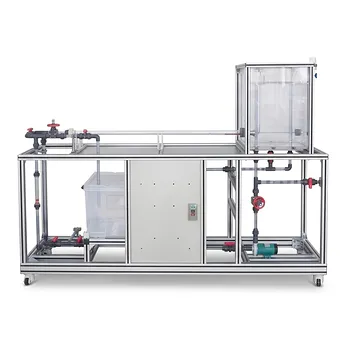
Steam quality in a pilot plant is not a single valve setting—it’s the direct result of how three critical boiler components work together. The steam drum acts as the primary phase separator, storing and delivering saturated steam while allowing water to recirculate. The mud drum collects precipitated solids from the boiler feed water, preventing sludge from fouling the tubes and interrupting circulation. Finally, the superheater takes that saturated steam and heats it beyond its saturation temperature, producing completely dry superheated steam that eliminates the risk of moisture carryover during downstream heating or demonstration of turbine concepts.
Understanding the operational roles of the steam drum, mud drum, and superheater is essential to generating wet, saturated, or superheated steam on demand. Together they form a closed-loop system that not only teaches thermodynamic principles but also mirrors industrial utility management at a manageable scale.
The Steam Drum: Where Saturated Steam Is Born
The steam drum sits at the top of a water-tube boiler and serves as the plant’s primary vapor-liquid separator. Its performance directly determines whether the output is wet or dry saturated steam.
Natural Circulation and Phase Separation
In the typical A-type or D-type water-tube boiler found in many pilot plants, heated riser tubes carry a mixture of steam bubbles and hot water into the steam drum. Inside the drum, gravity and internal baffles give the heavier water time to separate and fall back down to the mud drum, while the lighter steam rises to the top. This natural convection loop relies on density differences and does not require a circulating pump.
The separation efficiency of the steam drum dictates the quality of the saturated steam. Poor separation leaves entrained water droplets in the steam—producing wet steam that can damage downstream equipment and distort heat transfer measurements. Good separation, aided by mist eliminators or cyclone separators in the drum, yields dry saturated steam at the exact boiling point for the drum’s pressure.
Saturated Steam Storage and Moisture Control
Beyond separation, the drum also acts as a surge volume that buffers changes in steam demand. When a distillation column or heat exchanger calls for more steam, the drum’s stored steam maintains pressure stability. However, if the evaporation rate suddenly spikes, droplet carryover increases and the steam quality drops.
To maintain consistent saturated steam for classroom exercises, operators must balance the drum level—too high, and the steam space shrinks, encouraging carryover; too low, and the boiler tubes risk overheating. Many instructional pilot plants integrate level transmitters and alarms to let students observe this relationship between drum level, pressure, and steam quality in real time.
The Mud Drum: The Hidden Foundation of Reliable Circulation
Often overlooked, the mud drum is equally vital to continuous steam generation by protecting the heat-absorbing tubes and sustaining circulation.
The Role in Water-Tube Boiler Circulation
The mud drum, located at the bottom of the boiler, receives the descending cooler water from the steam drum through downcomers. This water then re-enters the heated riser tubes, completing the circuit. Without a dedicated lower header to collect water and distribute it evenly, circulation would stall in some tubes, causing hot spots and potential tube failure.
More importantly, the mud drum’s design ensures a quiet, low-velocity zone where suspended solids can settle out. These solids—calcium carbonate, silica, and metal oxides—come from the feed water and would otherwise form scale on the tube walls, reducing heat transfer and raising the risk of tube burnout.
Precipitated Solids Collection and Blowdown
The mud drum collects precipitated solids under the elevated temperature and pressure of the boiler. Over time, these solids concentrate as a sludge that must be removed through blowdown—a controlled release of a small amount of boiler water. During pilot plant operations, instructors often schedule a “bottom blowdown” exercise from the mud drum to teach students about water quality management and the consequences of neglecting it.
A clean mud drum ensures steady circulation, which in turn maintains the thermal head needed for reliable phase separation in the steam drum. This interdependence highlights why troubleshooting poor steam quality often begins with checking blowdown logs and mud drum conditions.
The Superheater: Converting Saturated to Superheated Steam
When an application demands steam that is absolutely free of moisture—such as driving a small steam turbine or heating a reaction without risk of condensation—the superheater becomes the star component.
How Superheating Works
The superheater is a bank of tubes located in a hot gas path, often after the main boiler furnace or in a separate flue gas pass. Saturated steam from the steam drum flows through these tubes, where additional heat raises its temperature above the saturation point for the given pressure. Unlike evaporation in the boiler, this heating occurs entirely in the vapor phase, so no liquid water remains.
The result is superheated steam, characterized by a degree of superheat (the temperature above saturation). For example, at a medium pressure of 10 bar (saturation temperature ~180 °C), routing the saturated steam through a superheater can easily deliver steam at 250 °C. This dry, high-energy vapor does not condense even if it cools slightly during transport, making it ideal for demonstrations where moisture would skew heat balances or damage instrumentation.
Superheated Steam for Pilot Plant Operations
In educational pilot plants, superheaters serve a dual purpose. First, they let students compare the heat transfer performance of saturated versus superheated steam in shell-and-tube exchangers. Second, they enable turbine operation exercises—a small turbine can safely run on dry steam without blade erosion from wetness.
However, integration adds complexity. The superheater must be correctly sized so that adequate flue gas heat is available, and students need to learn how to control the firing rate to achieve a target superheat temperature without overheating the tubes. This teaches practical process control alongside thermodynamics.
Generating Three Distinct Steam Qualities on a Single Skid
By understanding the steam drum, mud drum, and superheater as an integrated system, a pilot plant can intentionally produce three steam qualities for different unit operations.
Wet Steam (Unsaturated)
Wet steam occurs when the steam drum separation is intentionally reduced or the boiler is pushed beyond its stable circulation limit. The output contains a mixture of vapor and fine water droplets. While undesirable in most processes, wet steam can be useful for studying the impact of steam quality on heat exchanger fouling or for demonstrating vacuum jet performance issues.
Dry Saturated Steam (The Baseline)
With proper drum level control, good feed water chemistry, and effective blowdown from the mud drum, the steam drum delivers dry saturated steam at the saturation temperature corresponding to drum pressure. This is the standard heating medium for reboilers, jacketed vessels, and stripping steam in distillation experiments. The system’s ability to maintain this saturated condition at three distinct pressure levels—low (3 bar), medium (10 bar), and high (40 bar)—allows students to apply steam tables and observe how latent heat changes with pressure.
Superheated Steam (Completely Dry, High-Temperature)
Firing the superheater raises the saturated steam’s temperature without increasing its pressure, delivering a dry vapor that stays gaseous even when slightly cooled. In pilot plants, this steam is often used for driving a small steam turbine-generator, for high-temperature reactor heating where condensation must be avoided, or for comparing heat transfer coefficients in sensible-heat versus latent-heat exchangers.
Trade-offs to Consider in Pilot Plant Steam Generation
Every component choice introduces operational and pedagogical trade-offs that must be managed.
Complexity vs. Learning Objectives
Adding a superheater and associated control loops increases system complexity, capital cost, and the risk of operator error. For a pilot plant focused primarily on distillation or simple heating, saturated steam from a well-designed steam drum may be sufficient. The superheater becomes essential only when the curriculum explicitly covers turbine dynamics or the difference between condensing and non-condensing heat transfer.
Pressure Level Selection
Operating at 40 bar dramatically reduces the latent heat of vaporization compared to 3 bar, which can minimize heat transfer efficiency for some demonstrations. However, high pressure allows students to study the behavior of superheated steam closer to industrial steam main conditions (often above 40 bar). Pilot plant designers must match the pressure tiers to the thermodynamic points students are expected to measure and plot.
Blowdown vs. Maintenance
Frequent blowdown of the mud drum is essential for water quality, but it represents a loss of treated water and energy. In a teaching lab, heavy sludge accumulation between runs can damage tubes, yet overly aggressive blowdown schedules can disrupt steam pressure stability during long experiments. Teaching this balance is itself a valuable exercise in utility management.
Safety Enclosures and Instrumentation
Superheated steam is invisible if a small leak occurs, and it can reach hazardous temperatures well above 100 °C. Pilot plants must incorporate robust insulation, pressure relief devices, and safety interlocks. These requirements increase the budget but are non-negotiable when students interact directly with the equipment.
Making the Right Choice for Your Unit Operations Curriculum
When configuring a steam utility skid, the selection and integration of the steam drum, mud drum, and superheater should be driven by the specific teaching goals and the steam qualities you need to generate reliably.
- If your primary focus is demonstrating saturated steam thermodynamics at multiple pressures: Optimize the steam drum’s separation efficiency and automate its level control. Keep the mud drum clean with a regular blowdown schedule. The superheater is optional until you add turbine experiments.
- If your primary focus is preventing condensation in process lines and protecting downstream equipment: Size a superheater to provide at least 30–50 °C of superheat at the lowest operating pressure. Ensure the superheater outlet temperature can be controlled safely, and monitor drum level stability to avoid slugging the superheater with wet steam.
- If your primary focus is studying the full spectrum of steam quality (wet, saturated, superheated): Design for flexible operation—use adjustable carryover baffles or a bypass around the superheater so students can compare all three qualities in the same heat exchanger. Emphasize mud drum blowdown as a controllable variable that affects overall thermal performance.
A well-designed steam utility system turns a pilot plant into a living heat-transfer laboratory, where the roles of the steam drum, mud drum, and superheater are not just theoretical concepts but tangible components that shape every measured datum.
Summary Table:
| Component | Primary Role | Steam Quality Produced | Key Benefit |
|---|---|---|---|
| Steam Drum | Vapor-liquid phase separation & saturated steam storage | Dry Saturated Steam (normal) / Wet Steam (poor separation) | Prevents water carryover; buffers steam demand shifts. |
| Mud Drum | Collects precipitated solids & distributes cooler water | Supports steady baseline generation | Prevents tube scaling and hotspots via regular blowdown. |
| Superheater | Raises saturated steam temperature above boiling point | Superheated Steam (completely dry) | Eliminates condensation risk; protects downstream turbines. |
Elevate Your Unit Operations Training with LABPARK
Looking to equip your facility with reliable, industrial-grade utility systems? LABPARK provides premium Educational and Vocational Unit Operations Pilot Plants in chemical engineering, bioprocess & biotech, and environmental & water treatment.
Tailored for universities, research institutes, and enterprises, our systems offer students and researchers hands-on experience with thermodynamic principles, process control, and steam quality management.
Ready to enhance your lab's training capabilities? Contact us today to discover how LABPARK can customize the perfect pilot plant solution for your curriculum!
Related Products
- Centrifugal Pump Performance Determination Educational Unit Operations Pilot Plant
- Centrifugal Pump Performance and Orifice Flowmeter Calibration Educational Pilot Plant
- Steam Methane Reforming Hydrogen Production and Purification Educational Pilot Plant
- Fluid Friction Resistance Determination Educational Unit Operations Pilot Plant
- Continuous Batch Extractive Distillation Educational Pilot Plant
People Also Ask
- Why start a centrifugal pump with a closed outlet valve? Protect your pilot plant motors.
- How are pump shaft power, valve pressure drops, and NPSH evaluated? A practical pilot-plant guide
- How can cavitation and slurry erosion be studied and mitigated using fluid transport and centrifugal pump pilot plants?
- How does fluid density affect pump head and pressure? Avoid Pilot Plant Motor Overload
- How does fluid viscosity affect centrifugal pump performance? Key pilot plant correction methods.