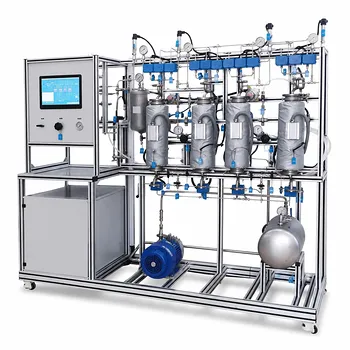
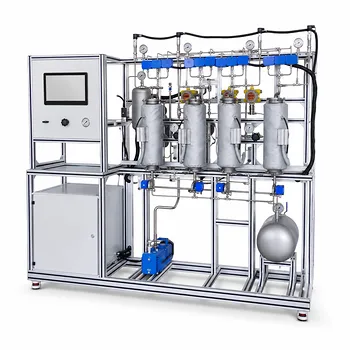
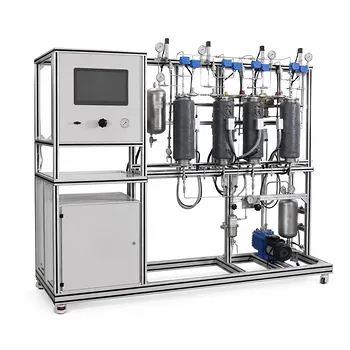
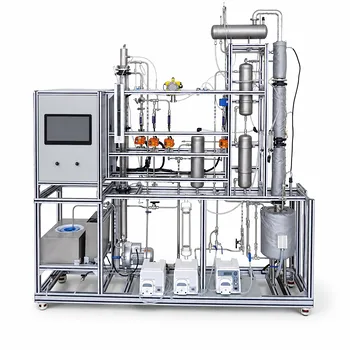
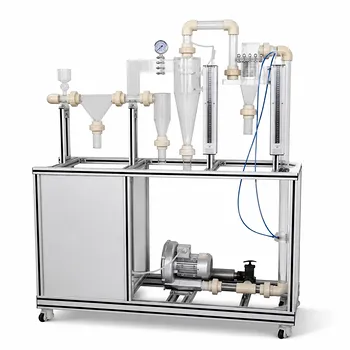
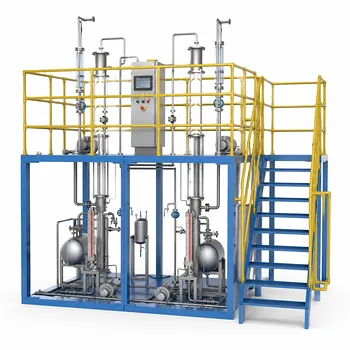
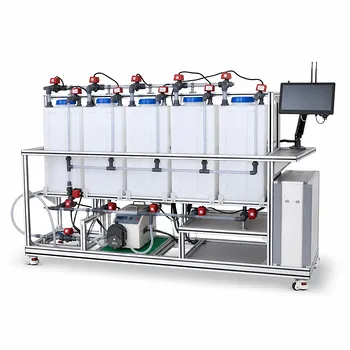
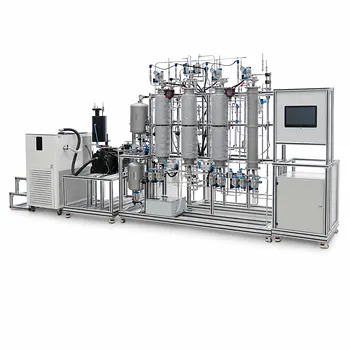
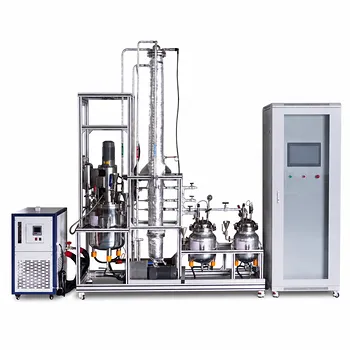
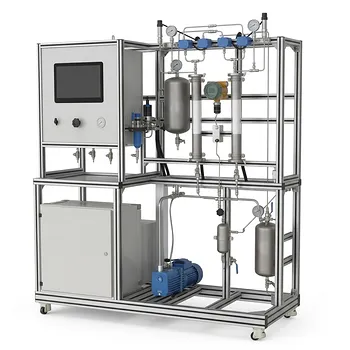
Explosion-proof hardware, integrated gas detection, and modular treatment trains are the essential safety pillars. When configuring a pilot plant for teaching VOC removal, you must first enclose the entire gas-handling system in a design that assumes ignition is possible. This means every electrical component—pumps, sensors, control panels—must be certified explosion-proof. Integrated gas leak detectors that monitor for both toxic concentrations and flammable lower explosive limits (LEL) then provide the crucial early warning that prevents an accident from ever reaching that ignition point. Finally, pressure relief valves and flame arrestors serve as passive, foolproof guards against over-pressurization and flame propagation, giving you defense-in-depth.
The core design challenge isn’t just keeping students safe—it’s embedding that safety into a flexible, measurable system. A teaching pilot plant must combine explosion-proof containment, continuous gas monitoring, and passive flame mitigation with modular unit operations. This allows students to safely explore adsorption, catalytic oxidation, and absorption while collecting the performance data that turns a laboratory exercise into real engineering insight.
The Non-Negotiable Safety Systems
Safety isn’t a feature you add later. It’s the architecture that allows hazardous work to become educational routine. For a waste gas treatment pilot plant, three layers of protection form the irreducible minimum.
Explosion-Proof Everything: Why It’s the First Line of Defense
VOCs like benzene derivatives, phenol, and chlorinated hydrocarbons can form flammable vapor-air mixtures at remarkably low concentrations. In a teaching lab, where operating errors are expected, you cannot rely on perfect procedural compliance.
Every electrical device within the classified zone must be explosion-proof. This includes motors, junction boxes, solenoid valves, and even the analytical instruments that sample the gas stream. The housings are designed to contain an internal explosion and cool the escaping gases below the ignition temperature of the surrounding atmosphere. This passive protection works even when a student accidentally introduces a solvent-rich slug of gas.
Gas Leak Detection: Early Warning Saves Lives
Explosion-proof enclosures protect against ignition, but they do not tell you when a leak has already occurred. For that, you need integrated gas leak detectors that provide real-time monitoring of both the flammable risk and the toxic hazard.
Detectors should be placed at every potential leak point—flange connections, sample ports, and pump seals. They must measure the lower explosive limit (LEL) for the specific VOC classes you’re using and trigger audible and visible alarms well before a dangerous concentration is reached. In an educational setting, logging this data also lets students correlate operating conditions with fugitive emissions, reinforcing the link between good engineering and safety.
Pressure Relief and Flame Arrestors: Preventing Catastrophic Failure
VOCs are often run through fixed-bed reactors or adsorption columns at elevated pressures. A blocked downstream line or a student valve sequencing error can create an over-pressurization event in seconds.
Pressure relief valves set below the vessel’s maximum allowable working pressure vent excess gas to a safe location, preventing a mechanical rupture that could release a large, flammable cloud. Downstream, flame arrestors installed on vent lines quench any flame front that might travel back from an external ignition source. Together, these components turn a worst-case scenario into a managed, uneventful release.
Designing for Educational Value: Modularity and Measurement
Safety gets you into the lab. Modularity and instrumentation determine what students learn once they’re there. The plant must let them touch, change, and measure.
Modular Unit Operations: From Adsorption to Catalytic Oxidation
The primary reference describes a plant that combines activated carbon adsorption, catalytic oxidizers, or wet absorption scrubbers in a modular arrangement. This is critical for teaching.
A single, hard-piped system teaches only one process. A modular skid with quick-connect flanges lets students reconfigure the treatment train, comparing the removal efficiency of carbon adsorption against thermal oxidation for the same waste gas stream. They can insert and remove a wet scrubber to see how a water-soluble VOC behaves differently from a hydrophobic one. The plant becomes a unit operations laboratory, not a black box.
Instrumentation That Teaches: Measuring Removal Efficiency and Breakthrough
The safety systems keep people safe, but the process instrumentation teaches them to be engineers. You need sensors and sampling ports that make the invisible visible.
Pressure transmitters across each treatment unit let students evaluate pressure drops and diagnose channeling in a packed bed. A flame ionization detector (FID) or photoionization detector (PID) sampling before and after each module quantifies VOC removal efficiency. By logging outlet concentration over time, a student can plot an adsorption breakthrough curve and calculate the dynamic adsorption capacity of the carbon. These data transforms a qualitative demonstration into a quantitative, design-relevant exercise.
Understanding the Trade-offs
Every design decision in a teaching plant involves balancing safety, pedagogical depth, and operational practicality. Ignoring the trade-offs leads to a plant that is either too dangerous to use or too simplified to teach.
Safety vs. Complexity: Avoiding Over-Engineering
A plant bristling with redundant safety interlocks and automated shutdowns can become a black box that students fear to touch. If troubleshooting a spurious gas alarm requires a faculty technician, the educational value plummets.
The safer design choice is often simplicity plus robust passive protection. For example, using explosion-proof mechanical switches instead of complex programmable logic controllers (PLCs) for basic pump interlocks keeps the logic transparent. Students can trace the circuit and understand why a failure mode triggers a shutdown, turning a safety system into a learning opportunity.
Realistic Operation vs. Classroom Simplicity
Real industrial VOC abatement plants use sophisticated feed-forward control and continuous emissions monitoring. A teaching pilot plant cannot replicate that complexity without overwhelming students.
The goal is representative rather than identical operation. Choose a gas flow rate small enough to keep total VOC inventory low, but large enough to demonstrate real mass transfer and reaction kinetics. This means you can safely use synthetic waste gas mixtures in small cylinders rather than drawing from a bulk chemical totes, drastically reducing the hazard without sacrificing the learning objectives.
Making the Right Choice for Your Teaching Lab
The exact configuration of your pilot plant should follow the curriculum it serves. Use the following goal-driven guidelines to prioritize your features.
- If your primary focus is process safety education: Maximize the visibility of passive safety components. Choose an open-frame skid where students can trace every relief valve discharge line and flame arrestor location. Gas detectors should drive clear, manual shutdown procedures rather than automatic isolation.
- If your primary focus is unit operations and mass transfer: Invest in a modular, reconfigurable treatment train with high-accuracy differential pressure sensors and multiple gas sampling ports. Prioritize the ability to swap between activated carbon, catalytic, and absorption modules on the same base frame.
- If your primary focus is instrumentation and control: Include inlet and outlet VOC analyzers with data logging, and design the plant so students can deliberately induce breakthrough or flooding. Control panels should plot real-time removal efficiency, making the cause-and-effect relationship between manipulation and performance immediately visible.
Design with safety as the non-negotiable foundation, then build modularity and measurement on top. That combination produces a plant that not only protects your students but also gives them the hands-on confidence to design the real systems that will one day protect the air we breathe.
Summary Table:
| Design Feature | Key Components | Safety & Educational Value |
|---|---|---|
| Explosion-Proof Hardware | Motors, junction boxes, sensors | Contains internal explosions; prevents atmospheric ignition |
| Gas Leak Detection | Real-time LEL & toxic sensors | Provides early warning alarms; tracks fugitive emissions |
| Pressure & Flame Guards | Relief valves, flame arrestors | Prevents mechanical rupture and downstream flame propagation |
| Modular Unit Operations | Adsorption, oxidation, absorption | Allows comparison of different VOC abatement methodologies |
| Process Instrumentation | Flow, pressure & VOC sensors (FID/PID) | Enables data logging, breakthrough curves, and efficiency analysis |
Bring Safe, Hands-On Engineering to Your Lab
Are you looking to equip your institution with advanced, compliant training systems? LABPARK provides state-of-the-art Educational and Vocational Unit Operations Pilot Plants in chemical engineering, bioprocess & biotech, and environmental & water treatment.
We help universities, research institutes, and enterprises bridge the gap between theory and industrial reality with built-in safety systems, modular configurations, and precise process control.
Ready to customize your waste gas treatment pilot plant? Contact our technical experts today to get a quote and system design consultation.
Related Products
- Fixed-Bed Chemical Reaction and Gas Dust Tar Removal Unit Operations Pilot Plant
- Carbon Dioxide Capture and Utilization Educational Pilot Plant for Unit Operations
- Carbon Dioxide Adsorption and Capture Educational Unit Operations Pilot Plant
- Bench Scale Carbon Dioxide Capture Educational Unit Operations Pilot Plant
- Solid Waste Pyrolysis and Refining Educational Pilot Plant for Unit Operations
People Also Ask
- When to transition from PID to adaptive control in pilot plants? Key process indicators.
- How do deviations in estimating latent heat impact pilot plant thermal systems? Avoid hardware mis-sizing.
- Why Compare Predicted and Experimental Excess Enthalpy? Key to Accurate Pilot Plant Scale-up
- Why Use PTFE & Hastelloy in Chemical Pilot Plants? Prevent Corrosion & Ensure Safety
- How to study gasification in pilot plants? Compare exit gas composition & efficiency