Rhodium-based catalysts dramatically outperform nickel in microchannel steam reformers, achieving 95%+ conversion of complex fuels in milliseconds, while nickel requires >20x longer and delivers less than half the yield. This performance gap stems from Rh's intrinsically higher activity and superior coke resistance at steam-to-carbon ratios that would quickly deactivate a conventional nickel catalyst.
When configuring a multi-fuel pilot plant, the choice between Rh and Ni catalysts is essentially a decision between intensified, compact operation with broad fuel flexibility (rhodium) and a slower, less productive system (nickel). The microchannel reactor's superior heat transfer amplifies the activity advantage of rhodium, making it the definitive high-performance choice—but that performance comes with a higher catalyst cost.
The Core Performance Gap: Activity and Residence Time
The most immediate difference you'll observe in the pilot plant is the required contact time to achieve meaningful conversion. This has profound implications for reactor size, throughput, and dynamic response.
Millisecond Kinetics of Rhodium
Rhodium-based catalysts, such as a 5% Rh/Al2O3 formulation, operate in a kinetic regime where residence times of 25 to 50 milliseconds are sufficient to convert gasoline, diesel, and kerosene with yields exceeding 95% at near-atmospheric pressure.
This ultra-short contact time is critical because it allows an extremely compact reactor to process significant fuel flow rates. The reaction essentially occurs the instant the reactants contact the catalyst wall.
Nickel’s Second-Scale Requirement
Conventional nickel-based steam reforming catalysts, when tested under identical microchannel conditions, require a residence time often exceeding one full second to achieve their maximum conversion.
That's more than a 20x difference in required catalyst contact time. Even then, the achievable conversion is less than half of what the rhodium catalyst delivers for the same fuels. The nickel catalyst is simply orders of magnitude less active for these higher hydrocarbon fuels.
Why the Gap Matters in a Microchannel Reactor
The supplementary references reveal why a microchannel environment makes this kinetic advantage so decisive. The reactor's design does not change the intrinsic kinetics, but it removes the heat transfer bottlenecks that would otherwise obscure the catalyst's true potential.
Heat Transfer That Keeps Pace
A microchannel reactor provides over ten times the heat transfer area of a tubular reactor with the same total volume. The convection heat transfer coefficients are also substantially higher.
For a highly endothermic reaction like steam reforming, this means you can supply the necessary heat flux with a much smaller temperature difference. The Rh catalyst, with its millisecond kinetics, becomes entirely heat-transfer-limited in a conventional reactor. The microchannel design unshackles it, allowing the reaction to run at its true kinetic limit.
Consequences for Pilot Plant Operation
Because the nickel catalyst's kinetics are so much slower, the enhanced heat transfer of the microchannel cannot compensate. The Ni catalyst simply processes fuel too slowly to benefit fully from the design. You would need a much larger catalyst volume and a longer reactor to achieve acceptable conversion, negating much of the microchannel advantage.
The rhodium catalyst, on the other hand, fully exploits the microchannel's heat transfer capability, enabling a hydrogen production rate per unit volume that is dramatically higher than what nickel can achieve.
Fuel Flexibility and Coke Resistance
A multi-fuel pilot plant must handle feedstocks ranging from methane to diesel. This is where the catalyst's resistance to deactivation becomes as important as its activity.
Rhodium’s Performance at Low Steam Ratios
The primary reference highlights that Rh-based catalysts exhibit excellent resistance to coke formation even at steam-to-carbon ratios as low as 1:1 during methane reforming at 800°C.
For heavier fuels like diesel, this property is essential. High steam ratios dilute the fuel, reduce efficiency, and increase separation costs downstream. Rhodium maintains high activity and surface cleanliness under conditions where nickel would rapidly foul with carbon deposits.
Nickel’s Susceptibility to Deactivation
Nickel catalysts are notorious for coke formation, especially with unsaturated or aromatic hydrocarbons found in liquid fuels. To maintain stability, they often require much higher steam-to-carbon ratios, increased operating temperatures, or promoters that add complexity. Under the low-S/C, high-flux conditions in a microchannel, a nickel catalyst would quickly deactivate, leading to unstable pilot plant operation.
Understanding the Catalyst Trade-offs
While the performance data heavily favors rhodium, a pilot plant configuration requires balancing multiple practical factors.
Catalyst Cost and Availability
Rhodium is a precious metal with a higher and more volatile price compared to nickel. The initial catalyst loading cost will be significantly greater. However, in a microchannel reactor, the total catalyst mass is often small because of the high productivity per unit volume, which can partially offset the high specific cost.
Nickel catalysts are commodity-priced and widely available in many engineered forms. For a budget-constrained pilot plant, this lower upfront cost may be appealing, but it directly constrains the achievable throughput and fuel flexibility.
Operational Life and Regeneration
The excellent coke resistance of Rh tends to translate into longer uninterrupted run times and less frequent regeneration cycles. This simplifies pilot plant automation and data consistency. Nickel may require more frequent decoking procedures, adding operational complexity. The trade-off between a higher catalyst purchase price and lower operational burden is a key decision point for a unit operations lab.
Making the Right Choice for Your Goal
Your selection should be driven by the primary objective of the pilot plant and the feedback speed you need for research and development.
- If your primary focus is maximizing conversion and reactor intensification: Choose the rhodium-based catalyst. You will achieve >95% conversion of multiple fuels with a reactor that responds instantly to changes in feed, all while operating at low steam ratios. This is the only path to a truly compact, high-flux demonstration unit.
- If your primary focus is demonstrating a low-cost, conventional catalyst system: A nickel-based catalyst can be used, but you must accept a residence time beyond one second and a conversion ceiling far below that of rhodium. The microchannel's heat transfer benefits will still support stable, isothermal operation, but the overall system productivity will be fundamentally limited.
- If your primary focus is flexible fuel testing under varying conditions: The rhodium catalyst’s resistance to coke at low steam-to-carbon ratios is a decisive advantage. It allows you to explore a wider experimental matrix (especially with diesel and kerosene) without catastrophic deactivation, yielding more robust data.
For any research pilot plant where the goal is to push the boundaries of process intensification and multi-fuel capability, the rhodium-based microchannel system is unequivocally the superior, enabling technology.
Summary Table:
| Parameter | Rhodium-based Catalyst | Nickel-based Catalyst |
|---|---|---|
| Residence Time | 25 – 50 milliseconds | >1 second (20x longer) |
| Conversion Yield | 95%+ | Under 50% |
| Coke Resistance | Excellent (down to 1:1 S/C) | Low (prone to deactivation) |
| Relative Cost | High (Precious metal) | Low (Commodity metal) |
Optimize Your Chemical Engineering Lab with LABPARK
Are you configuring a laboratory-scale pilot plant for steam reforming or advanced catalytic research?
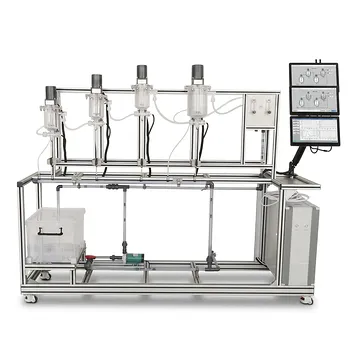
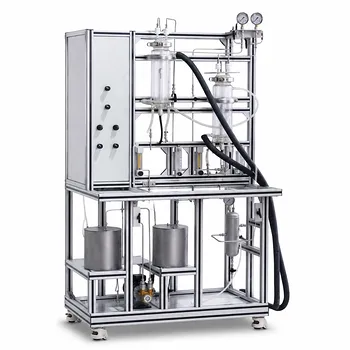
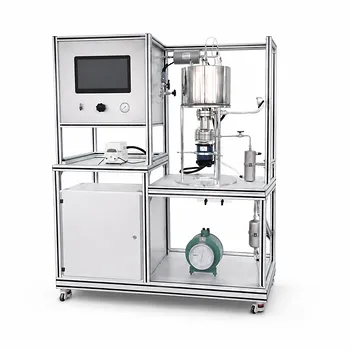
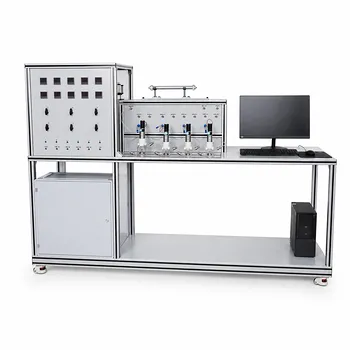
LABPARK provides premium Educational and Vocational Unit Operations Pilot Plants in chemical engineering, bioprocess & biotech, and environmental & water treatment for universities, research institutes, and enterprises. We design high-performance, flexible systems that enable you to test diverse feedstocks and catalyst formulations under precise operational controls.
Contact LABPARK today to discuss your custom pilot plant configuration and accelerate your research!
Related Products
- Micro-Scale Gas-Solid Catalytic Reaction Educational Pilot Plant
- Multi-Stage Stirred Tanks in Series Residence Time Distribution and Mixing Performance Determination Educational Pilot Plant
- Photocatalytic Membrane Separation and Degradation Unit Operations Pilot Plant
- Methane Cracking Educational Unit Operations Pilot Plant
- Internal Circulation Gradient Free Catalytic Reaction Educational Pilot Plant
People Also Ask
- Why is a multibed configuration necessary for exothermic reactions? Optimize your pilot plant trajectory.
- Fluidized vs. Fixed Bed Reactors: Comparing Heat & Complexity in Pilot Plants
- Why is thermal management a major challenge in methane oxidative coupling? Reactor Solutions for Pilot Plants
- How does the Mears criterion evaluate transport resistance? Key Guide to Intrinsic Kinetics
- How do reactor pilot plants safely study gas-solid reactions? Master kinetics with thermal & flow control.