Knowledge Chemical Engineering Education Why use a fluidized bed for ethylene oxychlorination? Key pilot plant advantages.
Author avatar

Tech Team · LABPARK

Updated 1 month ago

Why use a fluidized bed for ethylene oxychlorination? Key pilot plant advantages.


The single most critical advantage is thermal control. When configuring a pilot plant for the highly exothermic ethylene oxychlorination reaction, a fluidized bed reactor is vastly superior to a fixed bed reactor primarily because of its ability to maintain a near-isothermal temperature profile, preventing the catastrophic hot spots that plague fixed-bed configurations. For an educational or research pilot plant, this translates directly to safer operation, longer catalyst life, and more reliable data by eliminating a major source of experimental error.

In an ethylene oxychlorination pilot plant, the violent release of heat (~251 kJ/mol) can instantly deactivate a fixed-bed catalyst and ruin an experiment. Fluidized beds solve this problem at its core. Their turbulent solid mixing delivers heat transfer coefficients an order of magnitude higher than fixed beds, ensuring uniform temperature and intrinsically safe operation for this reaction.

The Critical Flaw of a Fixed Bed for This Reaction

The defining challenge of ethylene oxychlorination is not just that it’s exothermic, but the sheer intensity of the heat release. The primary reference confirms this at 251 kJ/mol. A standard fixed-bed reactor is architecturally incapable of managing this flux without severe consequences.

The Unavoidable Problem of Hot Spots

In a fixed bed, the catalyst pellets are stationary. Heat transfer relies on conduction through the particle bed and to the reactor wall.

This mechanism is slow. The heat generated by the reaction accumulates locally faster than it can be removed.

The result is a localized temperature spike, or a "hot spot," where the actual catalyst temperature can soar far above the intended set point of 205–235°C.

How Hot Spots Sabotage Your Pilot Plant

For a unit operations lab, a hot spot is a cascade failure. Its effects destroy the educational value and research integrity of the experiment.

  • Catalyst Deactivation: In a hot spot, the active CuCl₂ component can volatilize, permanently destroying the catalyst's activity. Your pilot plant data becomes meaningless as the catalyst changes mid-experiment.
  • Byproduct Formation: High temperatures trigger side reactions, primarily deep oxidation of ethylene to CO and CO₂. This directly lowers the selectivity for your desired product and invalidates material balance calculations.
  • Risk of Thermal Runaway: A hot spot can accelerate the reaction rate exponentially, creating a positive feedback loop that leads to a dangerous loss of temperature control, a key safety lesson in process engineering.

Why the Fluidized Bed is a Superior Solution

A fluidized bed reactor's inherent design elegantly eliminates the hot-spot problem, converting a chaotic safety risk into a controlled engineering demonstration. The constant motion of the solid catalyst is the key.

Near-Isothermal Operation is the Standard

The primary reference highlights the "uniform temperature distribution" as a fundamental feature. Supplementary sources confirm this as near-isothermal operation.

The violent, liquid-like mixing of catalyst particles constantly distributes heat throughout the entire bed. The heat transfer is now dominated by convection, not conduction.

This mechanism achieves heat transfer coefficients of around 200 W/(m²·°C), an order of magnitude greater than in fixed beds. A hot spot cannot physically form because the heat is immediately whisked away by the moving solids.

Directly Demonstrating Core Engineering Principles

For an educational pilot plant, this setup is invaluable. It makes abstract thermodynamic principles visually and operationally tangible.

Students directly observe how fluidization dynamics achieve thermal uniformity, a textbook concept made real. The system shows, in real-time, how heat removal efficiency prevents catalyst damage and byproduct formation.

This allows for safe, hands-on instruction on managing a highly exothermic reaction, a key competency the primary reference points out is essential for training on safe gas-solid catalytic operations.

Understanding the Trade-offs

To build trust and provide a definitive guide, you must understand that the fluidized bed's advantages come with specific operational complexities that a fixed bed does not have.

The Reality of Catalyst Attrition

A fluidized bed is a chaotic, high-friction environment. Solid catalyst particles are constantly colliding with each other and the reactor walls.

This leads to severe catalyst attrition, creating fine dust. As a supplementary reference notes, this necessitates the use of small, robust particles (under 300 μm) and complex gas-solid separation units like cyclones or filters to prevent catalyst loss.

In a research context, this lost catalyst must be accounted for in your mass balance, adding a layer of complexity.

Gas Backmixing and Conversion Efficiency

The same turbulent mixing that provides thermal uniformity also mixes the gas phase. Unlike the orderly plug-flow of an ideal fixed bed, gas in a fluidized bed can backmix.

This can lower the single-pass conversion efficiency. Furthermore, gas can bypass the catalyst entirely by rising as large bubbles.

A well-designed pilot-plant experiment must account for these non-ideal hydrodynamic behaviors, making the unit perfect for studying complex reaction kinetics, but less "plug-and-play" than a simple fixed bed.

Making the Right Choice for Your Goal

Your selection must be driven by your educational or research objective. Here’s how to decide based on what you need to demonstrate.

  • If your primary focus is demonstrating safe operation of highly exothermic reactions: A fluidized bed reactor is the only responsible choice. It provides the intrinsic thermal stability required for ethylene oxychlorination.
  • If your primary focus is studying heat and mass transfer fundamentals: A fluidized bed is indispensable. It allows students to visually contrast fluidization dynamics, pressure drop, and heat transfer coefficients against the static behavior of a fixed bed.
  • If your primary focus is simple kinetic studies without a heat management challenge: A fixed-bed reactor’s mechanical simplicity and plug-flow behavior make it a more straightforward system for data interpretation.

The fluidized bed reactor is not just a component; it is the definitive platform for safely and effectively mastering the complexities of this exothermic process.

Summary Table:

Feature Fluidized Bed Reactor Fixed Bed Reactor
Thermal Control Near-isothermal; eliminates hot spots Poor; prone to localized hot spots
Catalyst Stability Long lifetime; uniform temperature High risk of thermal deactivation (CuCl₂ volatilization)
Safety Profile High (prevents thermal runaway) Risk of dangerous reaction acceleration
Hydrodynamics High backmixing; lower single-pass conversion Plug-flow behavior; higher conversion efficiency
Operational Complexity High (requires cyclones/filters for attrition) Low (mechanically simple, stationary catalyst)

Build a Safer, More Effective Lab with LABPARK

Teaching complex exothermic processes requires equipment that balances safety with educational value. LABPARK provides advanced Educational and Vocational Unit Operations Pilot Plants in chemical engineering, bioprocess & biotech, and environmental & water treatment specifically designed for universities, research institutes, and enterprises.

Whether you are demonstrating fluidization dynamics or conducting advanced reaction kinetics research, our pilot plants deliver the reliability and safety controls your institution needs.

Contact us today to configure the perfect pilot plant system for your lab!

Related Products

People Also Ask

Related Products

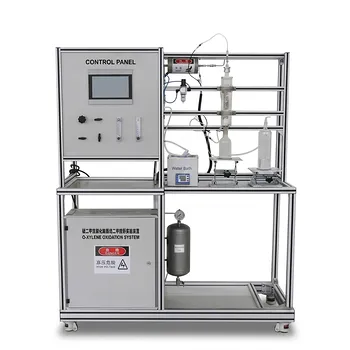
O-Xylene Oxidation to Phthalic Anhydride Educational Unit Operations Pilot Plant

O-Xylene Oxidation to Phthalic Anhydride Educational Unit Operations Pilot Plant

Explore our bench-scale educational pilot plant for o-xylene oxidation to phthalic anhydride, featuring a fixed-bed tubular reactor with visual observation, precise temperature control, and safety systems, ideal for chemical engineering hands-on training and industrial simulation, designed for university unit operations.

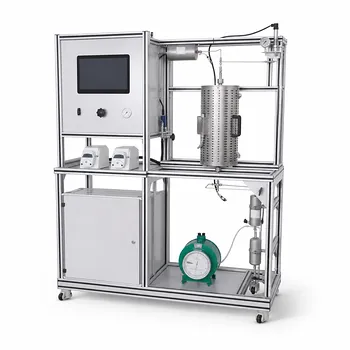
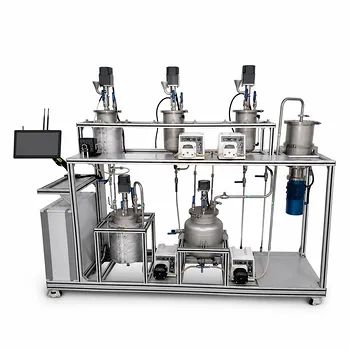
Multi-Reactor Educational Pilot Plant for Reaction Engineering Unit Operations

Multi-Reactor Educational Pilot Plant for Reaction Engineering Unit Operations

Integrated bench-scale educational pilot plant for chemical engineering teaching featuring fixed bed fluidized bed and stirred tank reactors with web-based digital twin controls and safety interlocks for hands-on unit operations and reaction engineering comparative studies in one compact system.

Fluidized Bed Gas Solid Catalytic Reaction Educational Pilot Plant

Fluidized Bed Gas Solid Catalytic Reaction Educational Pilot Plant

Our educational fluidized bed gas-solid catalytic reaction pilot plant is ideal for chemical engineering labs. Students study fluidization dynamics, catalyst evaluation, and process control hands-on. Features include a customizable reactor, touchscreen HMI, and safety interlocks for safe, curriculum-aligned experiments.

Ethylbenzene Dehydrogenation Educational Unit Operations Pilot Plant

Ethylbenzene Dehydrogenation Educational Unit Operations Pilot Plant

Ethylbenzene dehydrogenation educational pilot plant replicates industrial styrene production, offering hands-on experience with fixed-bed reactors, catalyst activation, regeneration, automated process control. Designed for university chemical engineering labs, it enables study of gas-solid catalysis, catalyst deactivation, steam regeneration, and safety interlocks.

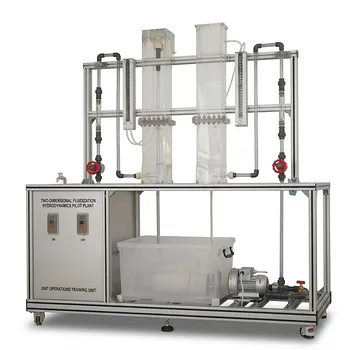
Two-Dimensional Fluidization Hydrodynamics Educational Pilot Plant for Unit Operations Training

Two-Dimensional Fluidization Hydrodynamics Educational Pilot Plant for Unit Operations Training

Explore gas-solid and liquid-solid fluidization hydrodynamics with our transparent 2D educational pilot plant. Ideal for chemical engineering unit operations labs, it demonstrates fixed to fluidized bed regimes, measures pressure drop, and integrates QR-code digital learning for enhanced student training.

Multi Functional Catalytic Reaction and Reactor Evaluation Educational Unit Operations Pilot Plant

Multi Functional Catalytic Reaction and Reactor Evaluation Educational Unit Operations Pilot Plant

Bench-scale educational pilot plant for catalytic reaction and reactor evaluation, integrating fixed bed, fluidized bed, and stirred tank reactors. Students compare reactor designs, evaluate catalysts, and study reaction kinetics and hydrodynamics. Perfect for unit operations labs in chemical engineering curricula.

Micro-Scale Gas-Solid Catalytic Reaction Educational Pilot Plant

Micro-Scale Gas-Solid Catalytic Reaction Educational Pilot Plant

Explore heterogeneous catalysis with this micro-scale gas-solid catalytic reaction educational pilot plant. Designed for university labs, it enables hands-on study of reaction kinetics and transport phenomena in a benchtop packed bed reactor with high-precision flow control and touchscreen automation.

Methanol Synthesis and Catalyst Performance Evaluation Educational Unit Operations Pilot Plant

Methanol Synthesis and Catalyst Performance Evaluation Educational Unit Operations Pilot Plant

Bench-scale methanol synthesis and catalyst evaluation educational pilot plant for chemical engineering labs to study catalytic kinetics, high-pressure operations, process control, and unit operations under realistic conditions with industrial safety features, precision gas delivery, data acquisition, and intelligent monitoring.

Fixed-Bed Chemical Reaction and Gas Dust Tar Removal Unit Operations Pilot Plant

Fixed-Bed Chemical Reaction and Gas Dust Tar Removal Unit Operations Pilot Plant

Integrated educational pilot plant for studying catalytic gas-solid reactions and downstream gas purification. Features dual fixed-bed reactor, three-stage heating, and touchscreen control for hands-on engineering training. Ideal for chemical and environmental engineering curricula.

Fixed Bed Gas Solid Catalytic Reaction Educational Pilot Plant

Fixed Bed Gas Solid Catalytic Reaction Educational Pilot Plant

Fixed-bed gas-solid catalytic reaction unit operations pilot plant for chemical engineering education. Features split-furnace, mass flow controllers, PID control, safety interlocks. Ideal for heterogeneous catalysis, reactor dynamics, catalyst evaluation studies. Fully customizable configurations for university laboratories and academic research.

Methane Cracking Educational Unit Operations Pilot Plant

Methane Cracking Educational Unit Operations Pilot Plant

This bench-scale methane cracking educational pilot plant provides hands-on catalytic conversion training with a 1000°C furnace, seven mass flow controllers, and real-time automation for safe, curriculum-aligned experiments. Designed for university teaching of unit operations and reaction engineering.

Multi-Functional Drying Educational Unit Operations Pilot Plant

Multi-Functional Drying Educational Unit Operations Pilot Plant

Versatile multi-functional drying educational unit operations pilot plant integrating tunnel, fluidized bed, and spray drying. Enables hands-on study of drying curves, psychrometry, and gas-solid separation for chemical engineering curriculum in higher education labs.

Carbon Dioxide Hydrogenation Methanol Synthesis Educational Unit Operations Pilot Plant

Carbon Dioxide Hydrogenation Methanol Synthesis Educational Unit Operations Pilot Plant

Pilot-scale educational system for carbon dioxide hydrogenation to methanol. Designed for unit operations teaching, it features a fixed-bed reactor, three-stage heating, dual mass flow controllers, and a 15.6-inch touchscreen with data acquisition. Perfect for chemical engineering and sustainable energy courses.

High-Gravity Emulsification and Mass Transfer Educational Pilot Plant

High-Gravity Emulsification and Mass Transfer Educational Pilot Plant

This integrated educational pilot plant utilizes rotating packed bed technology to demonstrate high-gravity emulsification and mass transfer, providing engineering students with hands-on experience in process intensification and unit operations through a modular, customizable design with digital monitoring.

Educational Unit Operations Pilot Plant for Intraparticle Diffusion Effective Factor Measurement

Educational Unit Operations Pilot Plant for Intraparticle Diffusion Effective Factor Measurement

Designed for chemical engineering university labs, this pilot plant allows hands-on determination of catalyst particle intraparticle diffusion effective factors and gas-solid reaction kinetics using a fixed-bed tubular reactor with industrial touchscreen control, bridging theory and practical reactor design.

Multi-Functional Special Distillation Educational Pilot Plant

Multi-Functional Special Distillation Educational Pilot Plant

Versatile multi-functional special distillation pilot plant for chemical engineering education. Supports continuous, vacuum, azeotropic, reactive, extractive distillation. Transparent glass columns enable real-time visual observation of hydrodynamics and separation processes.

Bio-fermentation Ethanol Production Practical Training Unit Operations Pilot Plant

Bio-fermentation Ethanol Production Practical Training Unit Operations Pilot Plant

Bio-fermentation ethanol production pilot plant for hands-on training in unit operations: fermentation, solid-liquid filtration, membrane separation, and distillation. Bridges theory with industrial practice using industrial-grade components, customizable for university labs. Hybrid automated and manual control for comprehensive learning.

Green Anhydrous Ethanol Refining Practical Training Pilot Plant

Green Anhydrous Ethanol Refining Practical Training Pilot Plant

Advanced integrated pilot plant for university labs demonstrating extractive distillation to produce high-purity absolute ethanol from crude feedstock, featuring multi-column continuous operation, closed-loop solvent recycling, and customizable controls for hands-on engineering education, ideal for chemical engineering training and research.

Ethyl Acetate Synthesis Unit Operations Pilot Plant for Practical Training

Ethyl Acetate Synthesis Unit Operations Pilot Plant for Practical Training

Modular and customizable pilot plant for ethyl acetate synthesis practical training. Integrates esterification reaction, liquid-liquid extraction, neutralization, and sieve-plate distillation unit operations. Bridging theory and real-world industrial processes. Designed for university chemical engineering labs

Residence Time Distribution and Reactor Flow Characteristics Determination Educational Pilot Plant

Residence Time Distribution and Reactor Flow Characteristics Determination Educational Pilot Plant

This versatile educational pilot plant is designed for comprehensive study of residence time distribution and reactor flow characteristics, featuring multiple CSTRs in series, a tubular reactor, variable recycle loop, and automated real-time data acquisition, perfect for hands-on chemical engineering education.


Leave Your Message