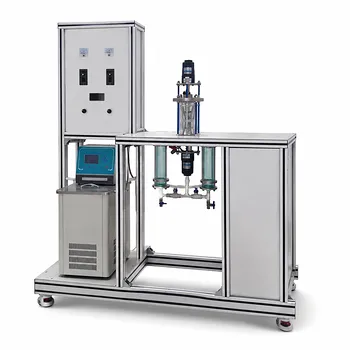
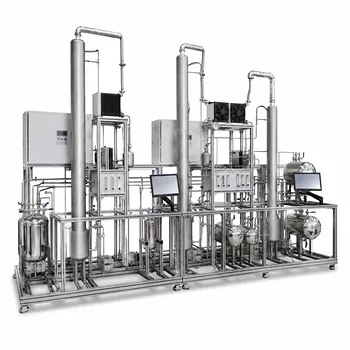
The divergence between simply dissolving a solute and engineering a reactive mass transfer defines every material and operational choice in your pilot plant. For a physical extraction system, you are primarily selecting materials for compatibility and sizing equipment for hydrodynamic efficiency. For a chemical extraction system, your pilot plant transforms into an isothermal, controlled reactor where the materials of construction must actively resist corrosive attack, and your operational controls must govern not just phase mixing, but the stoichiometry and kinetics of the chemical reaction itself.
The fundamental choice hinges on stability. In physical extraction, the solvent and solute remain chemically unchanged, making inert material selection and clean phase separation your primary goals. In chemical extraction, the deliberate instability—the targeted reaction between extractant and solute—demands a pilot plant built from highly resistant materials and equipped to enforce precise kinetic control through pH, temperature, and intense mixing.
Material Selection: From Simple Compatibility to Active Resistance
The chemical nature of your chosen extraction system dictates the entire material specification for the pilot plant’s wetted path. A miscalculation here leads to immediate contamination, equipment failure, and invalid data.
Material Demands of Physical Extraction
Physical systems rely on solubility differences using solvents like MIBK or alcohols with no chemical reaction occurring. The material requirements are consequently more straightforward.
Your primary concern is passive compatibility and non-contamination. The goal is to avoid solvent-induced swelling, leaching, or corrosion that could foul the downstream process. Borosilicate glass and standard stainless steels are often sufficient, as the process streams are relatively benign. The major operational concern becomes preventing the formation of stable emulsions, which is a fluid dynamic problem, not a chemical compatibility one.
Material Demands of Chemical Extraction
Chemical extraction introduces reactive extractants like acidic D2EHPA or basic amines that actively complex with the target solute. This transforms the operating environment into a chemically aggressive one.
The pilot plant's wetted materials must have high chemical resistance. You are often dealing with corrosive acidic or basic reagents. This leaves you with a very short, proven list of materials: borosilicate glass, PTFE, or high-grade, corrosion-resistant stainless steel alloys. Selecting any lesser material will result in rapid degradation, compromising the experiment's integrity and potentially creating a safety hazard. The material choice is no longer a preference; it is a binary decision between a functioning plant and a failed one.
Operational Factors: Engineering the Separation vs. Engineering the Reaction
Your operational control strategy must shift from managing a physical settling process to orchestrating a chemical reaction environment. The pilot plant’s instrumentation and agitator design become critical.
Controlling Process Parameters for Reactive Extraction
Physical extraction operations focus on maximizing interfacial area and managing throughput to avoid flooding. The key adjustable parameters are flow rates and mixing speed.
Chemical extraction, however, requires you to simulate and optimize a reactive process. The kinetics are often slower and highly sensitive to specific conditions. Your pilot plant must, therefore, be equipped with:
- Adjustable agitation: This is essential to provide the high interfacial area needed to overcome slow reaction rates and ensure adequate contact between the reactive extractant and the feed.
- Precise temperature control: Reaction kinetics are exponentially dependent on temperature. A heating/cooling jacket and accurate probes are non-negotiable.
- Inline pH monitoring: Since many chemical extraction reactions are pH-dependent, real-time control of pH at the mixing interface is required to drive the reaction to completion and maintain selectivity. Without these, you are not simulating a reactive extraction; you are simply running a poorly controlled, unreproducible experiment.
Matching Equipment to Separation Difficulty and Stage Requirements
Regardless of the extraction type, the mechanical design must align with the thermodynamics and fluid properties of the system. This becomes a synthesis of your separation goals and your physical constraints.
For systems requiring only 3 or fewer theoretical stages, gravity-driven columns are sufficient and simpler to operate. When your process demands 10 to 20 stages, you must switch to energy-input systems like rotating disc columns or horizontally arranged mixer-settlers. The same logic applies when physical properties are unfavorable. A low density difference or high viscosity between phases creates a settling challenge that physical extraction alone often cannot solve efficiently. In these cases, you are forced to adopt an energy-input device, such as a centrifugal extractor, to provide the high G-forces needed for a clean separation.
Addressing Emulsions and Solids Handling
A specific operational nightmare in any pilot plant is the formation of a stable emulsion. This hazard exists in both physical and chemical extraction but requires a clear mitigation strategy.
On a pilot scale, if a rag layer forms and refuses to separate, you can test several remediation techniques. Adding inorganic salts can "salt out" the organic phase and increase interfacial tension. Raising the operating temperature lowers viscosity, speeding up droplet settling. For persistent cases, filtering the mixture to remove stabilizing interfacial particulates or employing a centrifugal separator are viable mechanical solutions. If your feed contains solids, you must also avoid trayed or packed columns, which are prone to clogging. Instead, select a reciprocating plate or rotating disc tower with self-cleaning capabilities.
Understanding the Trade-offs: Solvent Power vs. Process Safety
A solvent's effectiveness as an extractant is often inversely correlated with its safety profile, a trade-off that must be objectively managed in a pilot plant environment. This applies to both physical and chemical systems.
A high-performance, low-polarity solvent like diethyl ether provides excellent extraction power. However, for a pilot plant, its low flash point and peroxide-forming potential introduce an unacceptable fire and explosion risk. The education and research environment demands you substitute such hazardous materials with inherently safer, yet still effective, alternatives. For example, toluene or cyclohexane should replace carcinogenic benzene. Designing a safe process means integrating a risk assessment that balances the desired separation chemistry against the solvent’s flammability limits and toxicity, ensuring the pilot plant is both an effective and safe learning tool.
Making the Right Choice for Your Goal
Your decision path must start with the chemical system's reactivity and then flow down to fluid properties and physical constraints.
- If your primary focus is validating a reactive extraction chemistry: Prioritize unmatched chemical resistance and tight process control. A pilot plant built from PTFE and borosilicate glass, with precise pH, temperature, and agitation control, is the only viable platform to generate meaningful scale-up data.
- If your primary focus is high-throughput physical separation of a stable, non-reactive system: Optimize for hydrodynamics and physical efficiency. Select your column or mixer-settler based on the number of required stages, and focus your controls on managing flow rates and phase interface levels to prevent flooding.
- If your primary focus is accommodating a constrained physical footprint or handling fouling feeds: Let the physical environment and stream composition guide the equipment choice. For low ceilings, choose a horizontal mixer-settler; for solids-laden feeds, choose a reciprocating plate column with self-cleaning capabilities.
Design the plant around the chemical truth of your process, using mechanical creativity to solve the physical constraints, and you will build a system that generates data you can trust.
Summary Table:
| Factor | Physical Extraction | Chemical Extraction |
|---|---|---|
| Primary Goal | Passive compatibility & clean separation | Reactive mass transfer & stoichiometry |
| Materials | Glass, standard stainless steel | PTFE, high-grade corrosion-resistant alloys |
| Key Controls | Flow rates, mixing speed, interface level | Adjustable agitation, temperature, inline pH |
| Equipment | Gravity columns, centrifugal separators | Jacketed mixer-settlers, rotating disc towers |
Scale Up Your Chemical Engineering Operations with LABPARK
Choosing the right extraction setup is critical for accurate research and education. LABPARK designs and delivers high-performance Educational and Vocational Unit Operations Pilot Plants in chemical engineering, bioprocess & biotech, and environmental & water treatment. Engineered for universities, research institutes, and enterprises, our custom pilot plants ensure precise process control and long-term durability.
Get expert guidance on your next project—contact LABPARK today!
Related Products
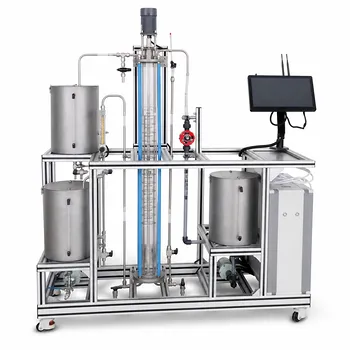
- Educational Rotary Disc Liquid-Liquid Extraction Pilot Plant
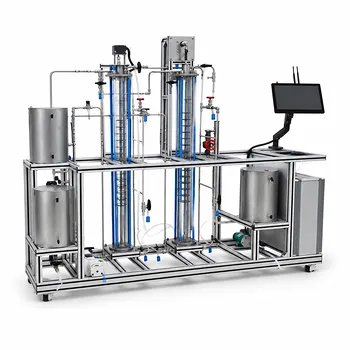
- Comprehensive Liquid-Liquid Extraction Pilot Plant for Engineering Education
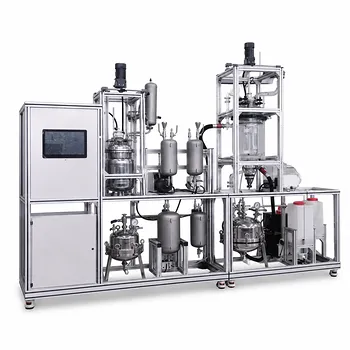
- Gallium and Indium Selective Extraction Educational Pilot Plant
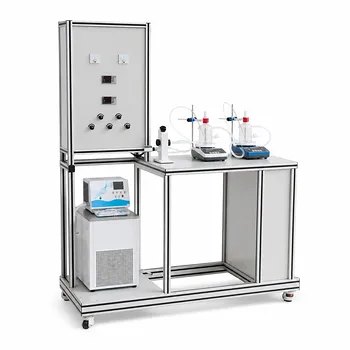
- Ternary Liquid-Liquid Equilibrium Educational Pilot Plant
- Liquid-Liquid Mass Transfer Coefficient Determination Educational Pilot Plant
People Also Ask
- How do density and IFT affect liquid-liquid extraction pilot plants? Optimize Column Performance
- How are ternary phase diagrams and LLE data applied in extraction experiments? Optimize Pilot Plant Scale-up
- In a liquid-liquid extraction pilot plant, how is a ternary-phase diagram utilized to determine solvent feed requirements?
- How Do Selectivity & Distribution Coefficients Influence LLE Pilot Plant Solvent Choice?
- How to Validate BIPs for LLE Pilot Plants? Steps to Align Simulations with Reality