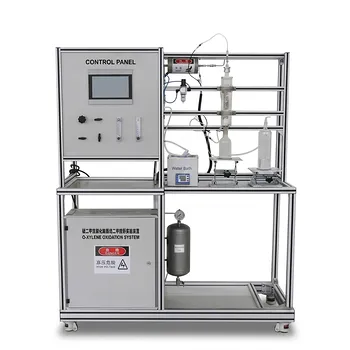
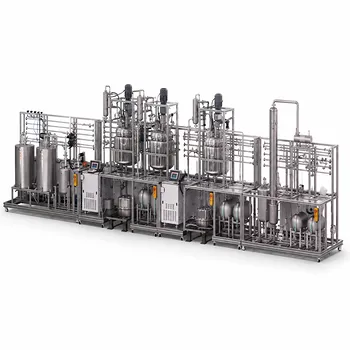
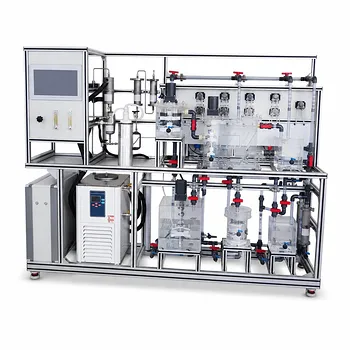
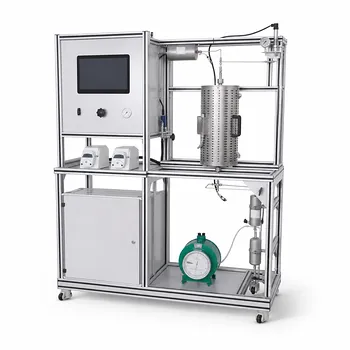
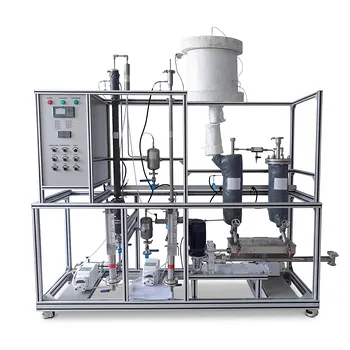
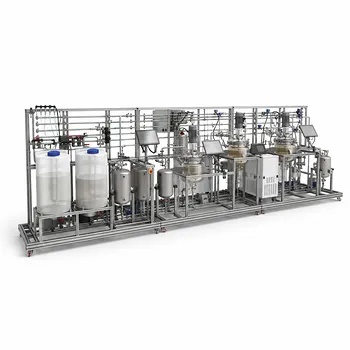
A pilot plant used to train operators on thionyl chloride chemistry must be engineered as a fortress against its own inherent violence. At a minimum, three integrated systems are non-negotiable: a nitrogen purging and blanketing setup to maintain a rigorously anhydrous, inert atmosphere; a wet scrubbing column charged with alkaline solution to neutralize toxic acid gases; and a network of fast-response temperature and pressure sensors with automated interlocks to avert runaway exotherms. These elements form an integrated shield—protecting trainees from explosive vapor reactions, corrosive gas releases, and uncontrolled heat generation while forcing disciplined moisture exclusion.
The central takeaway: The true purpose of these systems is not just to comply with safety mandates. It is to create a controlled learning crucible where operators internalize the two non-negotiable rules of chlorination chemistry: absolute moisture exclusion and proactive gas abatement. In a properly equipped pilot plant, abstract chemical hazards become tangible risks that can be seen, measured, and mastered.
Designing the Integrated Safety Architecture
Why Thionyl Chloride and Water Are a Deadly Mix
Thionyl chloride (SOCl₂) reacts violently with even trace moisture, liberating corrosive hydrogen chloride (HCl) and sulfur dioxide (SO₂) gas.
This hydrolysis is rapid, highly exothermic, and generates a dangerous pressure surge if venting is inadequate.
For a trainee, the first lesson is that every surface, vessel, and feed line must be bone-dry before the reagent enters the system.
Nitrogen Inerting as the Primary Defense
A dedicated nitrogen purging and blanketing system is the plant’s front-line barrier against ambient moisture.
High-purity nitrogen is passed through a drying column and then used to purge the reactor and piping. A subsequent low-flow blanket maintains a slight positive pressure to prevent humid air from leaking in.
This system teaches operators a critical discipline: they must verify atmosphere integrity using in-line dew point sensors or manual sampling before ever charging the chlorinating agent. Glass or alloy reactors, as noted in plant designs, provide a non-porous, corrosion-resistant vessel that holds this inert shield reliably.
Neutralizing Toxic Off-Gases with Alkaline Absorption
The HCl and SO₂ gases generated during reaction and quenching must never reach the laboratory atmosphere.
A wet scrubbing column, typically packed with a high-surface-area medium and irrigated with a circulating sodium hydroxide (NaOH) solution, absorbs and neutralizes these acidic species.
This unit teaches chemical emission abatement as a hands-on skill. Trainees monitor the scrubber liquor pH, adjust caustic makeup, and observe the critical relationship between gas flow rate and absorption efficiency.
Building a Scrubber That Teaches Visibility
For a training pilot plant, avoid opaque metal columns. Use borosilicate glass or transparent PTFE components that allow operators to see liquid distribution, flooding, or channeling.
Integrate a flow sensor on the scrubber circulation pump that automatically triggers a reactor shutdown if the scrubbing liquor stops flowing. That interlock demonstrates the immutable hierarchy of controls: no scrubbing means no reaction.
Detecting the Invisible Threat: Monitoring and Control
Why Standard Sensors Don’t Suffice
Chlorination exotherms can transition from steady heat release to runaway within seconds.
Traditional thermocouples and pressure gauges with slow refresh rates miss this inflection point. The pilot plant must use fast-response, low-thermal-mass sensors coupled with high-frequency data acquisition.
Temperature probes placed directly in the reaction mass and pressure transducers on the reactor head space feed into a safety PLC that triggers an automatic quench or full shutdown if deviation thresholds are breached.
Training with Real-Time Data, Not Just Alarms
Display the temperature and pressure trend curves prominently on the reactor’s HMI.
Trainers can then point to the exact moment an induction period ended or a cooling failure began to accelerate. This transforms raw sensor data into a deep, intuitive understanding of kinetics.
Introduce simulated failures—such as a deliberately throttled cooling valve—so operators learn to correlate the alarm with the root cause long before an incident becomes critical.
The Silent Backbone: Material Integrity and Contamination Control
Choosing Wetted Materials That Refuse to React
Trace moisture transforms HCl gas into a liquid acid film that attacks ordinary metals, while metallic corrosion products can act as unwanted catalysts that alter reaction selectivity.
Therefore, all wetted parts—reactor lining, thermowells, dip pipes, and valves—must be constructed from glass-lined steel, PTFE, or specialty nickel alloys.
The supplementary design principles are clear: non-metallic or passivated surfaces protect both safety and product purity. For operators, this teaches that even a small rusty fitting can compromise an entire synthesis batch.
Drying Feedstocks and Excluding Catalytic Contaminants
Any solvent or liquid reactant introduced into the plant must pass through a drying step, such as molecular sieves or a distillation column, verified by Karl Fischer titration.
The plant should include a simple feed drying station as an integral auxiliary system. This is where operators learn that a quality assurance check is actually a safety measure—wet feed directly leads to a pressure spike.
Similarly, raw material quality control eliminates metallic impurities like iron or aluminum that can redirect the chlorination toward dangerous side reactions. This trains the instinct to always question the chemical pedigree of every input.
Understanding the Trade-offs and Pitfalls
Balancing Pedagogical Value with Inherent Safety
A training plant must be more conservatively designed than its industrial counterpart because it will be operated by novices.
However, overly automating every safeguard can turn the system into a black box where operators learn nothing. The trade-off is intentionally introducing manual, supervised steps—like manually bleeding the purge valve or logging scrubber pH—that force active engagement without compromising the protective shutdown layer.
Maintenance Demands of Wet Scrubbing Systems
Alkaline scrubbing solutions can absorb carbon dioxide from air, forming carbonate sludge that clogs packing and spray nozzles.
If not maintained, a blocked scrubber becomes a hidden danger that fails silently. The training regime must therefore include preventive maintenance inspections, teaching operators that safety systems do not maintain themselves.
Sensor Drift and False Security
Fast-response sensors are sensitive and can drift. Nuisance alarms that trigger shutdowns on minor fluctuations erode trust; operators may begin to bypass interlocks.
The design must include diagnostic self-checks and a clear protocol that distinguishes a sensor fault from a true process upset. Training must ingrain that a bypassed interlock is a guaranteed accident.
Designing Your Training Plant for Maximum Impact
Every component you select should serve a dual purpose: protecting the person and engraving a lesson. The following goal-based strategies help balance your investment.
- If your primary focus is operator competency: Prioritize transparent scrubbers, manual purging sequences, and an HMI that requires interpretation of raw sensor data. Let trainees see cause and effect in every process change.
- If your primary focus is maximized safety assurance: Implement redundant shutdown interlocks, automated scrubber pump backup, and non-metallic, intrinsically safe materials throughout. Assume novices will make errors and design out the catastrophic consequences.
- If your primary focus is cost-efficiency for a multi-purpose teaching facility: Standardize on a modular glass plant with a centralized, correctly sized scrubber system serving multiple reactor bays. Invest in high-fidelity process simulations to reduce physical run time and waste generation.
A pilot plant engineered with this integrated safety envelope does not simply mitigate risk—it turns the inherent volatility of chlorination chemistry into the most enduring and vivid lesson an operator will ever receive.
Summary Table:
| System Type | Primary Function | Key Features & Materials |
|---|---|---|
| Nitrogen Inerting | Prevents moisture intrusion and violent hydrolysis | Dry N2 blanketing, positive pressure control, dew point sensors |
| Wet Scrubbing | Neutralizes toxic and corrosive HCl and SO2 off-gases | Transparent borosilicate glass/PTFE columns, NaOH solution, flow interlocks |
| Monitoring & Control | Detects and prevents runaway exothermic reactions | Fast-response temperature & pressure sensors, safety PLC, HMI trends |
| Materials & Drying | Prevents corrosion and unwanted catalytic side-reactions | Glass-lined steel, PTFE, specialty alloys, integrated feed drying stations |
Build a Safer, Smarter Training Environment with LABPARK
At LABPARK, we provide state-of-the-art Educational and Vocational Unit Operations Pilot Plants in chemical engineering, bioprocess & biotech, and environmental & water treatment. We help universities, research institutes, and enterprises build hands-on training facilities that balance absolute safety with rich pedagogical value.
Our custom-engineered pilot plants utilize high-visibility glass columns, robust material selection, and advanced process control systems to prepare the next generation of operators for hazardous chemical processes.
Ensure your training programs meet the highest industry standards. Contact LABPARK today to customize your pilot plant!
Related Products
- Methane Cracking Educational Unit Operations Pilot Plant
- Natural Product Extraction Unit Operations Training Pilot Plant
- Bio-fermentation Ethanol Production Practical Training Unit Operations Pilot Plant
- Ethyl Acetate Synthesis Unit Operations Pilot Plant for Practical Training
- Methanol Synthesis and Catalyst Performance Evaluation Educational Unit Operations Pilot Plant
People Also Ask
- How do ethane vs naphtha cracking influence teaching pilot plant analytical configurations? Key Design Guide
- How can flow-NMR be integrated with pilot plant reactors to monitor kinetics? A Complete Guide
- How do cracking temperature and residence time affect olefin yield? Pilot Plant Guide
- How are utility consumption rates integrated into chemical pilot plant economic evaluations?
- How should OSBL investments be estimated? Key Steps to Avoid Budget Overruns in Pilot Plant Projects