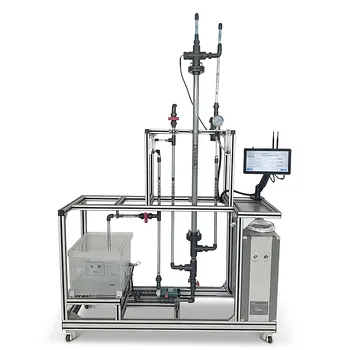
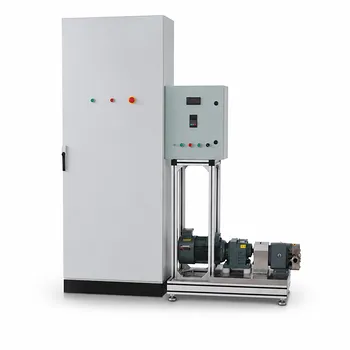
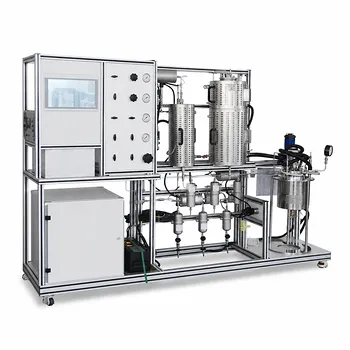
The critical role of educational unit operations pilot plants is to provide a hands-on laboratory for mastering the core principles of continuous processing—principles that are fundamentally different from the batch operations most engineers learn first. These pilot systems allow trainees to directly experience steady‑state dynamics, residence time distribution, and real‑time process control. This practical immersion is what transforms a theoretical understanding of continuous manufacturing into the engineering instinct required to design, operate, and troubleshoot modern production lines.
The shift from batch to continuous manufacturing demands more than just new equipment—it requires a new way of thinking. Educational pilot plants are the essential bridge, letting engineers compare both modes side‑by‑side, internalize the dynamics of continuous flow, and learn to leverage real‑time data for process control, all while minimizing risk during the critical scale‑up phase.
Bridging the Gap from Lab to Production
Why Glassware Alone Cannot Teach Continuous Manufacturing
Traditional bench‑top glassware experiments operate at gram scale and are inherently batch‑oriented. They cannot replicate the flow dynamics, heat and mass transfer limitations, or integrated control loops that define a continuous production train.
Pilot plants fill this void by simulating the scaled‑down environment of a kilo lab or a small production module. Here, students encounter the real‑world challenges of fluid dynamics, process safety, and multi‑unit integration that commercial manufacturing demands.
Building the Foundation for Scale‑Up
The transition from a laboratory recipe (50 grams) to a commercial batch (over 100 kilograms) often fails because scale‑dependent parameters are ignored. Pilot plants allow users to apply dimensional analysis and Design of Experiments (DOE) in a controlled setting.
Trainees can study how impeller speed, feed rates, and dwell times directly impact product quality. This experience teaches them to anticipate and mitigate risks like blend segregation or tablet capping long before they become costly factory problems.
Learning the Dynamics of Continuous Processes
Moving from Batch Thinking to Steady‑State Flow
In a batch reactor, everything changes with time. In a continuous system, the goal is a stable, unchanging state. Pilot plants equipped with continuous distillation columns or continuous stirred‑tank reactors force students to confront this shift.
They observe how a process stabilizes at a set point and learn that the quality of output depends on maintaining that steady‑state equilibrium, not on timing a single reaction cycle.
Demystifying Residence Time Distribution
One of the most abstract concepts in chemical engineering becomes tangible. By injecting a tracer and monitoring its exit concentration, trainees can visualize residence time distribution (RTD).
This directly connects to product consistency: a narrow RTD means less work‑in‑process and a tighter quality profile. Understanding RTD at pilot scale is what enables an engineer to design a production line that eliminates the need for large safety stocks.
Mastering Real‑Time Process Control
Continuous processes cannot rely on end‑product testing to catch errors. They require immediate, automated corrections. Pilot plants integrate with real‑time sensors and programmable logic controllers, creating a live feedback loop.
Students program control loops to handle disturbances and watch how a system recovers. This hands‑on training builds the core competency for designing reliable, autonomous production trains that are the hallmark of modern continuous manufacturing.
Comparing Batch and Continuous Operations
A Controlled Environment for Direct Comparison
The most profound learning happens when the same product can be made both ways. Educational pilot plants that feature interchangeable batch and continuous modules let trainees run a full comparison.
They quantify the differences: the manual control and cleaning‑intensive batch cycle versus the automated, low‑inventory continuous flow. This side‑by‑side analysis makes the business case for continuous manufacturing—reduced footprint, lower operating costs—immediately concrete.
Understanding the Versatility of Batch for Context
Not everything should be continuous. High‑value, low‑volume products like pharmaceutical intermediates often rely on multi‑purpose batch reactors. Pilot plants teach this nuance by showing how a single vessel can act as a heater, decanter, crystallizer, or distillation kettle.
By understanding the strengths of batch first, engineers can make informed decisions about when to transition to continuous and when a flexible batch setup remains the more economical choice.
Integrating Process Analytical Technology
From End‑Product Testing to Continuous Verification
Modern quality assurance demands a shift from testing a sample of the final product to verifying quality during production. Pilot plants provide the platform to integrate Process Analytical Technology (PAT) tools—inline spectrometers, particle size analyzers, and automated data systems.
Trainees learn to monitor critical quality attributes in real time and correlate them with process parameters. This hands‑on work demonstrates how continuous process verification can reduce release testing and build quality into the product from the start.
Understanding the Trade‑offs
Continuous Is Not a Universal Solution
While continuous manufacturing reduces work‑in‑process inventory and equipment footprint, it excels in high‑volume, dedicated production lines. For low‑volume, high‑variety portfolios, the cost and complexity of cleaning and reconfiguring continuous equipment can outweigh the benefits.
Educational pilot plants teach this balance. Trainees learn that the right choice depends on product volume, variety, and the specific process chemistry, preventing the over‑application of continuous methods where a flexible batch plant would be more practical.
The Hidden Complexity of Startup and Shutdown
Steady‑state operation is elegant, but transitions are not. A continuous plant’s startup and shutdown phases produce off‑spec material until the system stabilizes. Pilot plant training exposes engineers to these transient states and the procedures needed to manage them safely and efficiently.
This experience is invaluable for avoiding massive waste and safety incidents when a new continuous line is commissioned in a real factory.
Making the Right Choice for Your Training Goal
The role of the pilot plant is defined by what you need your engineers to learn. Tailor the experience to the specific skills gap your organization faces.
- If your primary focus is transitioning a high‑volume product to continuous: Emphasize steady‑state dynamics, residence time distribution, and the design of integrated control loops to build a reliable production train.
- If your primary focus is mastering scale‑up from a batch laboratory process: Use the pilot plant as a DOE platform to map scale‑dependent parameters and de‑risk the move to an engineering‑validated batch size.
- If your primary focus is implementing real‑time release and PAT: Select a pilot plant with integrated sensors and data acquisition, and teach engineers to build control strategies based on continuous process verification.
- If your primary focus is building a flexible workforce for both batch and continuous environments: Insist on a curriculum that directly compares the two modes, highlighting the operational and economic drivers for each.
The pilot plant is not just a piece of equipment; it is the curriculum that transforms a traditional engineer into a modern process designer.
Summary Table:
| Key Learning Area | Batch Operations | Continuous Operations | Pilot Plant Training Value |
|---|---|---|---|
| Flow Dynamics | Time-dependent, volume-limited | Steady-state, constant flow | Hands-on RTD & flow rate control |
| Process Control | Offline testing & manual adjustments | Real-time automated feedback | Programming PLCs & PAT integration |
| Scale-Up Risk | High margin of error in volume jumps | Complex startup/shutdown transitions | Dimensional analysis & safe testing |
Elevate Your Engineering & Bioprocess Training
Ready to bridge the gap between classroom theory and modern industrial manufacturing?
LABPARK provides advanced Educational and Vocational Unit Operations Pilot Plants across key disciplines:
- Chemical Engineering: Master steady-state dynamics, continuous distillation, and fluid dynamics.
- Bioprocess & Biotech: Gain hands-on experience with bioreactors and scaling up biological processes.
- Environmental & Water Treatment: Train on real-world filtration and wastewater treatment modules.
Tailored for universities, research institutes, and enterprises, our solutions prepare your trainees for the future of process automation and scale-up success.
Contact LABPARK Today to design the perfect pilot plant system for your laboratory!
Related Products
- Multi-Reactor Educational Pilot Plant for Reaction Engineering Unit Operations
- Polymerization Granulation and Pellet Processing Educational Unit Operations Pilot Plant
- Multi-Functional Drying Educational Unit Operations Pilot Plant
- Comprehensive Fluid Mechanics Educational Unit Operations Pilot Plant
- Electrolytic Hydrogen Production Educational Unit Operations Pilot Plant
People Also Ask
- How do educational unit operations pilot plants address safety and waste management when scaling up?
- How do educational unit operations pilot plants bridge theory and design? Bridge the Engineering Gap
- Why Compare Predicted and Experimental Excess Enthalpy? Key to Accurate Pilot Plant Scale-up
- How to study gasification in pilot plants? Compare exit gas composition & efficiency
- Why Use PTFE & Hastelloy in Chemical Pilot Plants? Prevent Corrosion & Ensure Safety