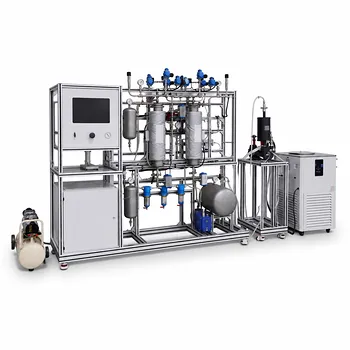
For a pilot plant gasket to work, you must simultaneously evaluate the process temperature, pressure, and chemical aggressiveness — and then respect clear temperature ceilings. The primary parameters are operating pressure, continuous and peak temperatures, the corrosive nature of the media, how often the joint must be opened, and the geometry of the flange face. Your temperature limit defines the material family you can use, while pressure and chemical exposure determine whether you need pure polymers, fiber-reinforced sheets, or metal-based seals.
Selecting a gasket for a reactor or distillation column is not a single-decision problem — it’s a balancing act. If system pressure stays below 20 bar, temperature and chemical compatibility become the primary drivers, and your material choice will follow a clear thermal ladder: vegetable fiber or synthetic rubber below 100 °C, solid PTFE or compressed asbestos‑rubber up to 260 °C, metal‑reinforced gaskets up to 450 °C, and pure soft metals beyond that. Overlook any one parameter, and even a correctly rated gasket can fail from chemical swelling, creep relaxation, or insufficient seating stress.
The Five Parameters That Decide Gasket Success
Gasket selection in a pilot plant is a carefully choreographed interplay of process conditions and mechanical realities. Every parameter you ignore creates a potential leak path.
Process Pressure – The 20 bar Threshold
Pressure defines the mechanical demand on the seal. Below 20 bar, pressure is rarely the limiting factor — instead, temperature and chemical resistance take centre stage.
Above 20 bar, you must account for the gasket factor (m), which is the ratio of residual gasket stress to internal pressure needed to keep the seal tight during operation. Higher pressures demand a higher seating stress and a gasket material that resists blowout.
Operating Temperature – The Material‑Family Ceiling
Temperature is the dividing line between material families. Each class has a hard upper limit dictated by thermal degradation, creep resistance, and oxidation resistance:
- Below 100 °C: Vegetable fiber and synthetic rubber gaskets are appropriate.
- Up to 260 °C: Solid PTFE (Teflon) or compressed asbestos‑rubber gaskets can be utilized.
- Up to 450 °C: Metal‑reinforced gaskets are required.
- Beyond 450 °C: Pure soft metal gaskets (e.g., aluminium, copper, silver‑plated) are recommended.
Always use the maximum anticipated process temperature — not the nominal setpoint — because material strength drops rapidly with heat. For example, low‑carbon steel loses over half its tensile strength between 25 °C and 500 °C, and standard carbon steel plates are prohibited above 482 °C by ASME codes.
Chemical Corrosiveness – The Compatibility Gate
A gasket can survive the temperature and still fail if the process fluid attacks it. Incompatible chemicals cause softening, swelling, or embrittlement, leading to leaks that compromise safety in a pilot plant environment.
- PTFE offers near‑universal chemical resistance and is the default for aggressive solvents, acids, and bases.
- Viton and other fluorinated elastomers handle many corrosive organics below 200 °C.
- Always consult chemical resistance charts and MSDS data, especially when running novel or mixed‑solvent campaigns.
Frequency of Disassembly – The Practical Test
Pilot plants are deliberately flexible — columns are reconfigured, reactors are cleaned, and lines are altered constantly. Every disassembly risks damaging the gasket and flange face.
Materials that stick or deform permanently under heat (like certain rubbers) become a maintenance liability. PTFE is often preferred in pilot service because it releases cleanly and can be reused more often than fiber‑based sheets, reducing downtime and the risk of flange‑face corrosion from stuck gasket fragments.
Flange Sealing Face Type – The Mechanical Interface
The flange geometry dictates the gasket seating stress (y) — the minimum compressive stress needed to flow the material into micro‑roughness and create a seal.
- Raised‑face flanges work well with soft sheet gaskets because they concentrate load.
- Full‑face flanges require flat gaskets and lower seating stress.
- A pure metal gasket needs a smooth, highly controlled flange finish and much higher bolt load than a PTFE envelope gasket.
Ignoring flange type leads to under‑compressed gaskets that leak at start‑up.
Mapping Temperature Limits to Material Families
Building a mental temperature ladder helps you shortlist materials instantly.
The Sub‑100 °C Zone: Vegetable Fiber and Rubber
Where fluids are mild and water‑based, vegetable fiber sheets (e.g., aramid, cellulose) or synthetic rubber provide an economical, tolerant seal. They work well for low‑pressure distillation receivers, condenser water boxes, and atmospheric storage tanks.
The 100–260 °C Window: PTFE and Compressed Sheets
This is the workhorse region for organic synthesis and batch distillation. Solid PTFE gaskets or restructured PTFE handle most corrosive chemistries and temperature surges. Compressed asbestos‑rubber sheets (where permitted) offer mechanical robustness, but in modern plants PTFE dominates because of its chemical inertness and clean removal.
The 260–450 °C Span: Metal‑Reinforced Gaskets
As you approach the boiling points of high‑temperature heat transfer fluids (like Therminol® up to 400 °C), polymeric materials lose compressive strength rapidly. Metal‑reinforced gaskets — such as spiral‑wound types with a PTFE or graphite filler — combine a rigid metal skeleton with a conformable sealant. This design resists creep and blowout under high pressure.
Beyond 450 °C: Pure Soft Metal Gaskets
For catalytic reactors, gas‑phase oxidation, or hot gas filtration units, soft metal gaskets (copper, aluminium, nickel) are the final choice. They deform permanently under high bolt load to create a tight metallic barrier, but they demand precisely finished flanges and careful handling — a single scratch can cause a leak path.
The Role of Design Margins and Safety in Temperature Specification
A gasket rated for a certain temperature will fail if the vessel’s metal wall exceeds its own design limit. Therefore, the pressure vessel’s design temperature envelope directly gates your gasket selection.
Maximum Design Temperature and MDMT
The maximum design temperature must be set above the highest possible operating temperature, with a margin for process deviations. Simultaneously, you must define the Minimum Design Metal Temperature (MDMT) — the lowest temperature the vessel can safely experience during start‑up, shut‑down, or an auto‑refrigeration event — to avoid brittle fracture. Your gasket material must remain resilient and elastic across this entire range.
Pressure Margins for Pilot Safety
A pilot plant’s design pressure should exceed the maximum operating pressure by 5 % to 10 % (as per API RP 520 principles). If the vessel is a tall distillation column, the hydrostatic head at the bottom must be added to the set pressure. The gasket must seal reliably at that elevated pressure without requiring excessive bolt loads that could warp flanges.
Understanding the Trade‑offs
No single material wins on every front. Recognizing the compromises keeps your pilot plant running while controlling cost and risk.
- PTFE is chemically superb but can cold‑flow under high, sustained loads, requiring periodic re‑torqueing in some flange designs.
- Metal‑reinforced gaskets handle temperature extremes but demand high bolt loads that may not be practical on thin‑walled pilot equipment.
- Graphite seals combine thermal stability and lubricity but can promote galvanic corrosion on stainless steel flanges if moisture is present.
- Frequent disassembly favours elastomeric or PTFE gaskets because they release cleanly, whereas fiber binders often bake onto the flange face, requiring hours of hand‑scraping.
Making the Right Choice for Your Pilot Plant
Your final decision must align with the plant’s operating envelope, maintenance rhythms, and chemical slate. Use the following goal‑oriented guidelines to focus your evaluation.
- If your primary focus is chemical versatility across multiple campaigns: Prioritize PTFE or PTFE‑envelope gaskets, and verify that the maximum temperature stays below 260 °C. This choice minimizes cross‑contamination and clean‑up time between experiments.
- If your primary focus is high‑temperature reactions above 260 °C: Move to spiral‑wound metal‑reinforced gaskets with a graphite or PTFE filler, and ensure your flange design can deliver the required seating stress without excessive bolt‑tightening.
- If your primary focus is extreme simplicity for mild, low‑pressure conditions: Standard vegetable fiber or rubber gaskets are acceptable below 100 °C and 20 bar, but always check solvent compatibility — even mild solvents can extract plasticizers from rubber, causing shrinkage and leaks.
- If your primary focus is frequent disassembly and rapid reconfiguration: Choose a compressible, non‑adhering material like restructured PTFE, and use raised‑face flanges with controlled surface roughness to maintain the seal through multiple reassembly cycles.
A gasket is the smallest investment in your pilot plant, yet it governs the containment of every reaction and separation you run. Judge it against temperature, pressure, chemistry, mechanical frequency, and flange reality — and the seal will hold.
Summary Table:
| Temperature Range | Recommended Gasket Materials | Primary Applications & Suitability |
|---|---|---|
| Below 100 °C | Vegetable fiber, synthetic rubber | Mild, water-based fluids; low-pressure distillation receivers. |
| 100 °C to 260 °C | Solid / restructured PTFE | Aggressive solvents, acids, and bases; organic synthesis. |
| 260 °C to 450 °C | Metal-reinforced (e.g., spiral-wound with graphite/PTFE) | High-temperature heat transfer fluids; resists creep and blowout. |
| Beyond 450 °C | Pure soft metals (Aluminium, copper, nickel) | Catalytic reactors and hot gas filtration; requires high seating stress. |
Optimize Your Pilot Plant Safety and Performance with LABPARK
Selecting the right sealing components is critical to the safety and success of your research. LABPARK provides state-of-the-art Educational and Vocational Unit Operations Pilot Plants in chemical engineering, bioprocess & biotech, and environmental & water treatment. Tailored for universities, research institutes, and enterprises, our pilot plants are engineered to meet strict temperature, pressure, and material compatibility standards.
Let our experts help you design and equip your facility with reliable, high-performance systems. Contact LABPARK today to discuss your pilot plant requirements!
Related Products
- Fixed-Bed Chemical Reaction and Gas Dust Tar Removal Unit Operations Pilot Plant
- Fixed Bed Gas Solid Catalytic Reaction Educational Pilot Plant
- Ethyl Acetate Synthesis Unit Operations Pilot Plant for Practical Training
- Carbon Material Thermal Pretreatment Multiphase Separation Educational Pilot Plant
- Gallium and Indium Selective Extraction Educational Pilot Plant
People Also Ask
- When to transition from PID to adaptive control in pilot plants? Key process indicators.
- How do deviations in estimating latent heat impact pilot plant thermal systems? Avoid hardware mis-sizing.
- Why Compare Predicted and Experimental Excess Enthalpy? Key to Accurate Pilot Plant Scale-up
- Why Use PTFE & Hastelloy in Chemical Pilot Plants? Prevent Corrosion & Ensure Safety
- How to study gasification in pilot plants? Compare exit gas composition & efficiency