The heart of safe operation for a Roots blower in a gas transmission pilot plant is understanding that it is not a compressor in the traditional sense. You must never throttle its outlet to control flow. Instead, flow regulation must be accomplished with a bypass recirculation line, and the operating temperature must be held below 85°C to prevent the rotors from expanding and colliding.
The two ironclad rules are: regulate flow exclusively via a bypass line—never by closing the discharge valve—and monitor thermal limits as if the machine’s life depends on it, because it does. A Roots blower moves a fixed volume of gas per revolution, making it a positive-displacement conveyor, not a pressure-generating compressor. Treating it like a centrifugal machine will destroy it.
Why Standard Control Methods Fail Here
The Roots blower’s design creates a deceptive trap for operators accustomed to other gas-moving equipment. Its operating principle demands a very specific control philosophy.
The Fixed Displacement Danger
A Roots blower traps gas between its figure-eight rotors and the casing, then transports that volume to the discharge side. Flow rate is almost entirely a function of rotational speed, not system pressure. If you partially close the outlet valve to reduce flow, the blower will continue to push its full swept volume against a rising back pressure.
This pressure buildup does not significantly reduce the flow—it just forces the machine to work harder. Since the blower has no internal compression, the gas is simply dumped against the high-pressure discharge line, causing energy to be wasted as heat and vibration. Ultimately, the motor may stall or the casing may fail.
Why a Bypass Is Non-Negotiable
To reduce net flow to the downstream process, you must divert a portion of the discharge back to the suction side through a recirculation line. The blower itself continues to run at its required speed, moving its full design volume. The system sees a lower forward flow because a fraction is continuously recycled.
Never rely on throttling the suction valve either. Restricting suction pressure can cause cavitation-like instability, overheating, and mechanical shock as the rotors alternately starve and surge.
The 85°C Barrier: When Microns Matter
The rotors inside a Roots blower operate with incredibly tight clearances—often just a few tenths of a millimeter. This precise gap is what allows the blower to run oil-free in the compression chamber, but it also makes thermal expansion a catastrophic threat.
How Heat Destroys the Machine
As the gas heats up, the rotors and the casing expand. Because the rotors are typically solid and the casing has fins or a water jacket, the rotors can heat faster. If the discharge temperature climbs past 85°C, the rotors can grow enough to physically strike the casing.
This metal-to-metal contact is instantaneous and severe. It can score surfaces, bend shafts, and destroy bearings. For a laboratory pilot plant where downtime and repair budgets are limited, this failure mode is completely preventable by simple temperature monitoring.
Practical Monitoring in a Lab
Install a thermocouple directly in the discharge line as close to the blower outlet as possible. Set an alarm at 80°C to give yourself a safety margin. If the temperature rises, the first corrective action is to increase the recirculation flow—this reduces the net compression work. Check cooling water flow if a jacket is present, and verify that the inlet gas temperature is not already elevated.
Understanding the Trade-offs
Recirculation control is safe, but it introduces its own challenges that a pilot plant operator must manage intelligently.
Efficiency Losses
Recirculating gas is inherently inefficient. The blower spends energy compressing that extra volume only to have it expand back to suction pressure through the bypass valve. For a long-duration experiment, this can represent significant energy consumption and needless heating of the gas stream.
This heat can compound the thermal problem you are trying to avoid. A poorly designed recirculation loop that dumps hot discharge gas directly into the suction will raise the inlet temperature, pushing the discharge temperature closer to the 85°C limit. A heat exchanger in the recirculation loop or a generous suction gas cooler is often required.
Piping and Vibration
The bypass line must be sized generously and routed smoothly. Rapid recirculation can set up pulsations that interact with the blower’s lobe-passing frequency, exciting acoustic resonances. In a gas transmission lab, where piping may be temporary or reconfigured often, ensure the bypass line is well-supported and free of sharp bends that create pressure drop.
Making Safety Routine in Your Pilot Plant
Protecting a Roots blower in a laboratory gas transmission unit demands that these principles become automatic checkpoints before every run.
- If your primary focus is preventing mechanical destruction: Never, under any circumstances, close the discharge or suction valve as a means of flow control. Physically lock those valves open or remove their handles, and rely solely on a recirculation bypass line with a variable valve or control valve.
- If your primary focus is experimental repeatability: Log the recirculation flow ratio and the discharge temperature continuously. A change in temperature or the recirculation flow required to maintain a setpoint can be an early indicator of rotor coating wear or seal degradation, giving you invaluable diagnostic data before a hard failure.
- If your primary focus is safety of personnel and facility: Install a hard-wired shutdown that trips the blower when discharge temperature exceeds 85°C. Do not rely on a software alarm alone. In a pilot plant where multiple experiments may run unattended, an independent thermal switch is the last line of defense.
Your operational discipline transforms the Roots blower from a temperamental antique into a predictable, rugged workhorse that will serve your gas transmission experiments reliably for years.
Summary Table:
| Operational Area | Primary Hazard / Rule | Best Practice / Action |
|---|---|---|
| Flow Control | Throttling causes catastrophic pressure & heat spike | Use bypass recirculation loop; never throttle valves |
| Thermal Limit | Rotor expansion & collision above 85°C | Install discharge thermocouple & automatic safety trip at 80°C |
| System Stability | Recirculation heat & piping vibration | Add suction gas cooler & ensure robust piping support |
Build a Safer, More Reliable Unit Operations Lab with LABPARK
Designing and running chemical engineering experiments requires equipment that balances academic precision with industrial-grade safety. LABPARK provides premium Educational and Vocational Unit Operations Pilot Plants across chemical engineering, bioprocess & biotech, and environmental & water treatment for universities, research institutes, and enterprises.
Our pilot plants are engineered with built-in safety safeguards—like optimized bypass loops and integrated thermal monitoring—to ensure student safety and protect your research assets from operational errors.
Partner with LABPARK to elevate your laboratory capabilities. Contact our engineering team today to discuss your custom pilot plant specifications.
Related Products
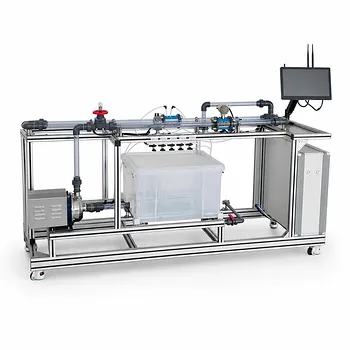
- Orifice and Venturi Flowmeter Calibration Educational Pilot Plant for Fluid Mechanics Laboratory
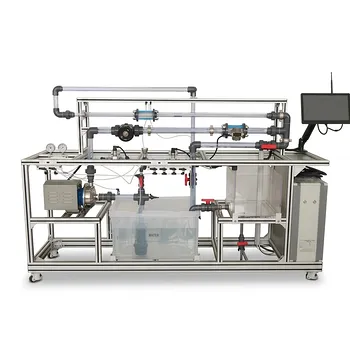
- Centrifugal Pump Performance and Orifice Flowmeter Calibration Educational Pilot Plant
- Constant Pressure Filtration Educational Unit Operations Pilot Plant
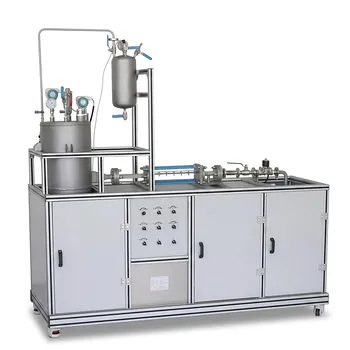
- Rising and Falling Film Evaporation Educational Unit Operations Pilot Plant
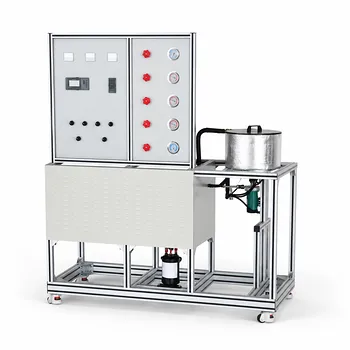
- Educational Compression Refrigeration Performance Determination Unit Operations Pilot Plant
People Also Ask
- What is the difference between static and stagnation pressure? Master Pilot Plant Flow Measurement
- How do pilot plants demonstrate siphon pressure variations? Visualizing Bernoulli's Energy Balance
- How do fluid mechanics training pilot plants facilitate the visualization and calculation of laminar and turbulent flows?
- How to update chemometric calibration models in pilot plants? Best practices for process engineers.
- Why are the laws of similitude critical in fluid flow pilot plants? Scale Up Safely