The most immediate operational challenge is a silent one: concentration drift. When volatile reagents are repeatedly exposed to air during sampling or charging in a unit operations pilot plant, active components evaporate preferentially. This lowers the actual reagent potency, leading to undercharging in the reactor, distorted reaction kinetics, and unreliable scale-up data.
Reagent volatility introduces a systematic loss of active species before the reaction even starts. The primary defense is rigorous mass balance verification, which uses conservation principles and real-time analytics to detect this loss, quantify it, and correct the process model before a flawed recipe moves to full-scale production.
The Hidden Pitfall of Reagent Volatility During Scale‑Up
Concentration Drift and Undercharging
Every time a volatile reagent container is opened, headspace vapor escapes. The liquid phase becomes gradually enriched in non‑volatile components, while the concentration of the volatile active species declines over time. In a pilot plant running multiple campaigns, this drift can go unnoticed if operators rely on nominal potency values. The result: you charge less reactant than the calculated stoichiometry demands, producing lower yields, unexpected impurity profiles, and a reaction model that does not reflect reality. The batch data then becomes useless for predicting commercial‑scale performance.
Safety and Process Hazards
Reagent volatility is not just an analytical problem—it is a process safety multiplier. Vapor buildup in storage or feed areas can create flammable atmospheres or toxic exposures. Pilot‑scale safety assessments must account for the vapor pressure of volatile feeds, particularly when storage containers are opened frequently or when the reagent is pre‑heated. This introduces physical hazards such as electrostatic discharge risks and the need for additional ventilation and grounding. The operational challenge is balancing precise inventory tracking with the engineering controls needed to safely handle that same volume.
Distorted Mixing and Mass Transfer
In heterogeneous reactions, volatility adds a layer of mass‑transfer complexity. A volatile component may partially flash off in the feed line or the reactor headspace, reducing the liquid‑phase concentration available for reaction. This shifts the effective phase ratio and can mislead mixing‑scale‑up studies, where engineers assume a constant liquid‑phase composition. The result is a pilot plant that teaches you how the chemistry behaves in a leaky system, not how it will perform in a sealed commercial reactor.
Verifying Mass Balance in the Pilot Plant
The Fundamental Principle: Input = Output
At steady state, or across a complete batch cycle, the Law of Conservation of Mass requires that all material entering the system either leaves as product/waste or is consumed in chemical transformation. In a pilot plant, this means that the sum of precisely weighed inputs must equal the sum of outputs, after accounting for reaction stoichiometry. Any deviation from a closure of close to 100 % signals unmeasured losses—volatilized solvent, fugitive emissions, or sampling errors—that must be tracked down before trusting the data.
The Step‑by‑Step Verification Workflow
To perform a rigorous mass balance, engineers follow a structured approach:
- Map the process flow: Draw a complete diagram labeling every stream (gas, liquid, solid) entering and leaving the unit operation.
- Write stoichiometry: Define exactly which reactions occur, including side reactions, so you can account for elemental redistribution.
- Choose a basis: Anchor the calculation to a known mass or molar flow rate, often the limiting reactant feed.
- Perform component or elemental balances: Track atoms (carbon, nitrogen, hydrogen) through the system. Elemental balances are insensitive to reaction extent and can reveal losses even when conversion is uncertain.
Overcoming Sampling Errors for Accurate Balances
The most common threat to a clean mass balance is sample bias. When a high‑temperature reaction mixture is extracted and cooled, volatile species like light reactants or reaction intermediates can escape, or the equilibrium may shift during quenching. The sample no longer represents what actually existed at reaction conditions. To counter this, pilot plants integrate in‑situ analytical tools (spectroscopic probes, online GC) that measure concentrations without withdrawing material. When physical sampling is unavoidable, rapid quenching methods that trap volatiles are essential to capture a true snapshot of the system.
An Industrial Example: Formaldehyde Production
Consider a pilot‑scale gas‑phase oxidation of methanol to formaldehyde. Students and engineers feed vaporized methanol and air over a catalyst, then separate liquid product (formaldehyde, water, unreacted methanol) from tail gas (N₂, O₂, CO₂). To verify the mass balance, they collect real‑time data on feed rates, reactor temperature, and output stream masses. By applying a carbon balance across the system, they can calculate the methanol conversion (typically ~80 %) and selectivity to formaldehyde. A mass balance closure deviating from 100 % immediately highlights either unmeasured gas‑phase leaks or systematic analytical error in the tail‑gas composition measurement. This forces a redesign of the sampling train, not a blind acceptance of the faulty data.
Understanding the Trade‑offs
Mass balance verification is powerful, but it has practical limits in a pilot environment. Precise closure often demands exotic in‑situ sensors or extensive offline analytics, which can delay development timelines and increase project cost. There is also an inherent tension: the more you instrument the system to capture volatile losses, the more potential leak points you introduce. Furthermore, a perfect mass balance tells you that material is conserved, but it does not diagnose why selectivity is poor or why a reaction is sluggish. It must be paired with kinetic analysis and mixing studies to yield a complete picture. Over‑reliance on mass balance alone can create a false sense of security if the underlying chemical mechanism is not fully understood.
Making Mass Balance Work for Your Scale‑Up Goal
The strategy you adopt should match your primary development risk. The right approach depends on whether volatility is a minor nuisance or a fundamental uncertainty that threatens your entire scale‑up model.
- If your primary focus is process model validation: Prioritize elemental balances with in‑situ monitoring. A closure within 2‑3 % of 100 % confirms your reactor model captures all significant material flows and gives you confidence to run predictive simulations for larger vessels.
- If your primary focus is safety and emissions control: Use the mass balance as a leak‑detection tool. Any loss of volatile carbon that cannot be explained by reaction stoichiometry flags a fugitive emission or vent pathway that must be engineered closed before scaling up.
- If your primary focus is reagent cost and purity: Track inventory drift by periodically titrating stored reagents. Combine this with mass balance verification to convert a reactive feed concentration into an effective duty point, avoiding undercharging without over‑compensating with expensive excess reagent.
Mastering mass balance in the pilot plant transforms reagent volatility from a silent data killer into a quantified and controlled variable, ensuring your scale‑up decisions are built on a bedrock of physical truth.
Summary Table:
| Challenge | Process Impact | Key Mitigation Strategy |
|---|---|---|
| Concentration Drift | Undercharging, distorted stoichiometry & kinetics | Periodic titration, sealed storage, in-situ analytics |
| Safety Hazards | Flammable atmospheres, toxic vapor exposure | Proper ventilation, grounding, engineered closed feeds |
| Mass Transfer Issues | Reactant flashing, incorrect phase-ratio assumptions | In-situ spectroscopic probes, elemental carbon balances |
Optimize Your Process Scale-Up with LABPARK
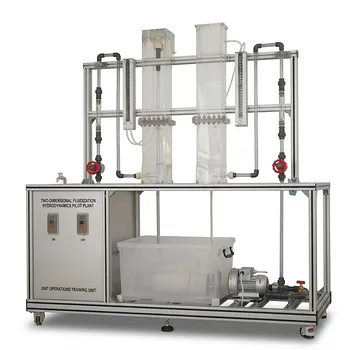
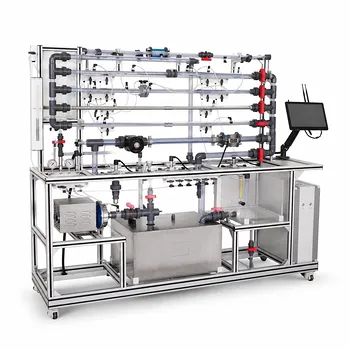
Managing reagent volatility and ensuring precise mass balance verification requires robust, industry-grade equipment. LABPARK provides state-of-the-art Educational and Vocational Unit Operations Pilot Plants in chemical engineering, bioprocess & biotech, and environmental & water treatment.
Whether you represent a university, research institute, or enterprise, our pilot systems are designed to minimize volatile losses, enhance process safety, and deliver the reliable data needed for successful scale-up.
Ready to elevate your research and training capabilities? Contact LABPARK today to discuss your pilot plant requirements!
Related Products
- General Purpose Cosmetics Production Unit Operations Training Pilot Plant
- Multi Pump Fluid Transport Process Piping Unit Operations Training Pilot Plant
- Multi-Functional Drying Educational Unit Operations Pilot Plant
- Fixed-Bed Chemical Reaction and Gas Dust Tar Removal Unit Operations Pilot Plant
- 100L Continuous Loop Hydrogenation Educational Unit Operations Pilot Plant
People Also Ask
- How do deviations in estimating latent heat impact pilot plant thermal systems? Avoid hardware mis-sizing.
- Why is the chemical plant startup schedule crucial? De-risk scale-up with pilot plants.
- When to transition from PID to adaptive control in pilot plants? Key process indicators.
- Why Compare Predicted and Experimental Excess Enthalpy? Key to Accurate Pilot Plant Scale-up
- Why Use PTFE & Hastelloy in Chemical Pilot Plants? Prevent Corrosion & Ensure Safety