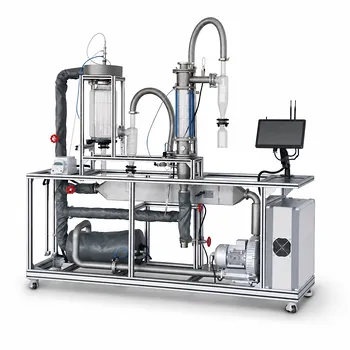
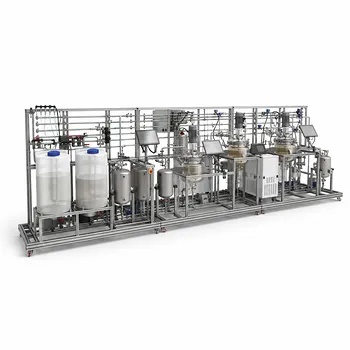
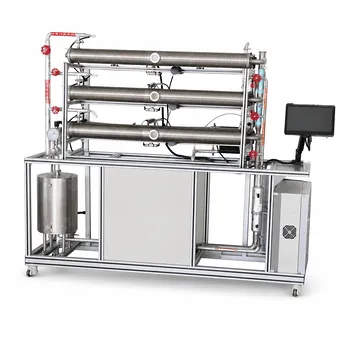
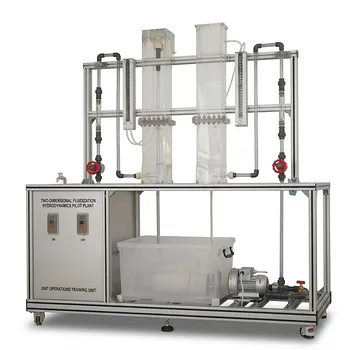
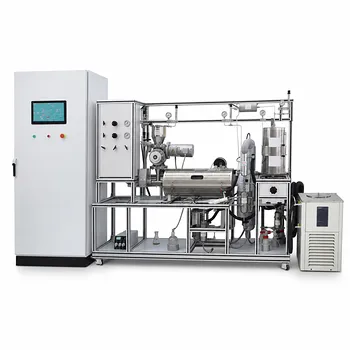
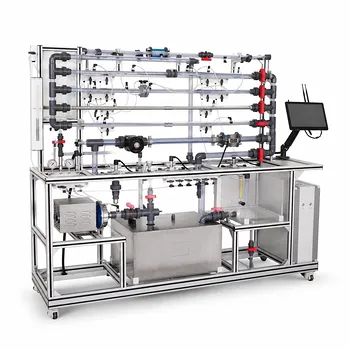
Deciding purely on price is a recipe for an educational disaster. When planning unit operations pilot plants for bioprocess and environmental water treatment education, you must evaluate a suite of non-economic criteria that directly impact student safety, pedagogical value, and long-term operational integrity. These critical factors range from inherent safety systems and waste stream management to the alignment of equipment complexity with your team's technical expertise.
While a purchase price fits a budget, a successful educational pilot plant fits the laboratory. The true decision drivers are safety containment, regulatory adherence, infrastructure compatibility, and the supplier's ability to support your curriculum—not just the lowest bid.
Prioritizing Safety and Environmental Stewardship
An educational pilot plant handling biological media or water treatment chemicals introduces hazards that must be contained by design. Student operation demands equipment that anticipates mistakes.
Built-in Hazard Containment
Safety is the foundational non-negotiable. The equipment must feature physical guards, emergency shutdowns, and pressure relief systems designed for novice users. For bioprocess, this means containment for bioaerosols; for water treatment, safe handling of corrosive reagents like chlorine or sodium hydroxide. The system must fail-safe, not create additional risks when a student forgets a step.
Managing Waste and Effluents
A pilot plant is an environmental actor within your lab. You must map out how every liquid, solid, or gaseous waste stream will be collected, treated, and discharged in compliance with local regulations. Bioprocess effluents may require sterilization before drain disposal, while chemical sludges from coagulation/flocculation units demand a signed waste-disposal pathway. Ignoring this turns a learning tool into a liability.
Ensuring Regulatory and Educational Alignment
The most elegantly designed pilot plant is worthless if it cannot be legally operated or if it overwhelms your instructors. These criteria form the operational boundary.
Regulatory Compliance Within Timelines
Local laboratory, building, and environmental codes dictate design. A pressurized steam system will need a boiler inspection; a solvent extraction unit may trigger air-quality permits. You must evaluate whether the supplier’s standard design meets these constraints immediately, avoiding a lengthy post-purchase retrofit that delays the entire semester.
Matching Technical Complexity to Expertise
The pilot plant’s complexity must match, not exceed, the skill level of your lab instructors and students. A highly automated, data-rich system is a liability if your team struggles to troubleshoot a tripped sensor or reprogram a logic controller. Critically assess the learning curve: can a new instructor become proficient within a week, or does it require months of shadow training?
Verifying Infrastructure and Supplier Support
A pilot plant does not operate in a vacuum. Its physical needs and the supplier's post-sale commitment define day-to-day usability.
Utility and Facility Readiness
You must evaluate your building’s capacity before the plant arrives. Standard process design bases for these units often demand specific electricity (voltage and phase), cooling water at precise flow rates and temperatures, compressed air, and steam. In a bioprocess lab, you may also need clean-in-place (CIP) water and pure steam connections. A shortfall in cooling water pressure will halt a distillation module instantly, invalidating experimental data.
Operation and Curriculum-Solving Provenance
A pilot plant is a curricular tool, and you need proof it teaches effectively. Evaluate the proposed unit based on its performance history in similar educational settings. Does the design allow students to trace a complete industrial flow—from raw material prep through reaction, separation, and recovery? The equipment must enable capacity balancing exercises and demonstrate real-world constraints like heat exchanger fouling or reactor yield optimization, not just serve as a static display.
Supplier Proximity and Support Chain
When a pump fails mid-semester, the supplier’s location becomes your most urgent metric. Evaluate the availability of spare parts, the responsiveness of their technical support, and the local knowledge of their regional office. A low-cost supplier on another continent with a two-week lead time for a critical seal essentially guarantees a quarter-long shutdown.
Understanding the Trade-offs
Objective evaluation requires acknowledging that optimizing one criterion often compromises another. Here are the common pitfalls.
Flexibility Versus Specialization
A highly flexible unit capable of multiple operations (reaction, extraction, filtration) caters to diverse curricula but often lacks the depth in any single process. A specialized bioprocess bioreactor with precise DO/pH controls teaches fermentation exquisitely but cannot demonstrate downstream centrifugation. Choose based on your curriculum’s breadth goal, not an abstract desire for "more features."
Automation for Data, or Manual for Understanding
Fully automated, Industry 4.0-style pilot plants generate beautiful trend data but can hide the underlying physical principles from students. Manual control loops force students to grasp what a PID controller actually does, but they risk data scatter and operational fatigue. The optimum is often a hybrid: automated data logging with manual setpoint adjustment, ensuring both data quality and conceptual learning.
Customization and Technical Certainty
The supplementary references highlight a critical cost/design relationship: a highly customized pilot plant carries massive technical uncertainty. For non-economic metrics, this translates into unvalidated safety procedures, untested standard operating protocols, and a high probability that the system will not perform as expected on day one. A validated, standard design with a history of safe operation is a de-risked educational tool, even if it doesn't match every niche requirement.
Making the Right Choice for Your Educational Goal
The decision framework changes based on your institution's primary mission. Use these goal-driven filters to weigh the non-economic criteria.
- If your primary focus is maximizing student safety: Prioritize built-in hazard containment, fail-safe automation, and a supplier with an exhaustive safety dossier and local support. Select a standard design with a long operational history to avoid unvalidated risks.
- If your primary focus is deep, hands-on conceptual learning: Favor manual control flexibility and unit operations that allow capacity balancing across the entire process flow. Match complexity to your instructor's proven troubleshooting ability, and be prepared to trade some automated safety systems for pedagogically transparent mechanical controls, while still meeting baseline safety regulations.
- If your primary focus is aligning with a strict environmental water treatment curriculum: Evaluate the waste treatment chain first. The pilot plant must include its own downstream treatment (e.g., membrane polishing, activated carbon, or chemical neutralization) or integrate cleanly with your existing lab waste system, ensuring full regulatory compliance from day one.
- If your primary focus is long-term operability and uptime: Make supplier proximity and spare parts availability your primary filter. Simultaneously, audit your building’s utility infrastructure with brutal honesty—any gap in cooling water or electrical phase must be resolved before installation, as these are the most common cause of post-installation downtime.
Selecting an educational pilot plant is an exercise in aligning physical capability with human and institutional capacity. The best decision is the one that keeps your students safe, your instructors confident, and your curriculum running smoothly for years to come.
Summary Table:
| Non-Economic Criteria | Key Focus | Educational & Operational Impact |
|---|---|---|
| Safety & Environment | Hazard containment & waste management | Prevents accidents; ensures safe chemical & biological disposal. |
| Regulatory & Complexity | Local code compliance & team expertise | Avoids project delays; aligns equipment with instructor skill levels. |
| Infrastructure & Support | Utility readiness & supplier proximity | Prevents system downtime; guarantees fast access to spare parts. |
| Design Trade-offs | Automation vs. manual control | Balances hands-on learning with data acquisition needs. |
Build a Safe, Compliant, and High-Impact Learning Lab with LABPARK
Ready to upgrade your laboratory? LABPARK provides premium Educational and Vocational Unit Operations Pilot Plants in chemical engineering, bioprocess & biotech, and environmental & water treatment. Designed specifically for universities, research institutes, and enterprises, our systems prioritize:
- Inherent Safety & Compliance: Meet local safety standards with built-in containment and fail-safe designs.
- Curriculum-Aligned Learning: Balance automation and manual controls to match your students' learning curves.
- Reliable Support & Integration: Ensure seamless utility compatibility and long-term operational uptime with expert engineering support.
Don't let installation challenges disrupt your educational goals. Contact the LABPARK team today to customize the ideal pilot plant solution for your facility!
Related Products
- Multi-Functional Drying Educational Unit Operations Pilot Plant
- General Purpose Cosmetics Production Unit Operations Training Pilot Plant
- Dual-Mode Rectification Pilot Plant for Practical Training Unit Operations
- Multi-Reactor Educational Pilot Plant for Reaction Engineering Unit Operations
- Multimodal Absorption and Desorption Pilot Plant for Unit Operations Training
People Also Ask
- Why is the chemical plant startup schedule crucial? De-risk scale-up with pilot plants.
- Why Use PTFE & Hastelloy in Chemical Pilot Plants? Prevent Corrosion & Ensure Safety
- How to study gasification in pilot plants? Compare exit gas composition & efficiency
- How do deviations in estimating latent heat impact pilot plant thermal systems? Avoid hardware mis-sizing.
- When to transition from PID to adaptive control in pilot plants? Key process indicators.