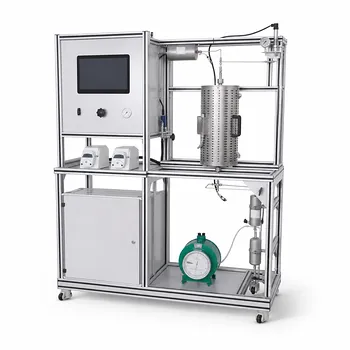
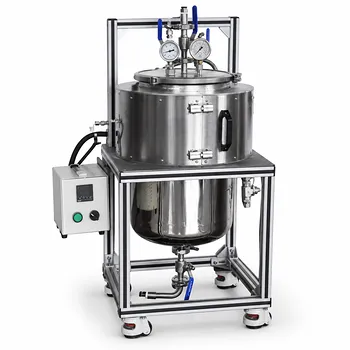
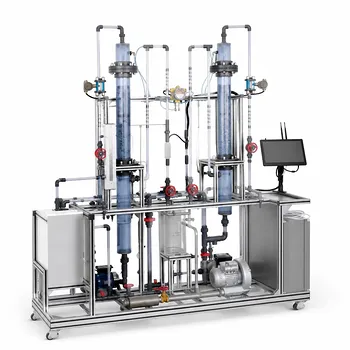
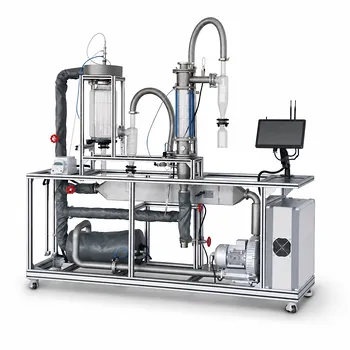
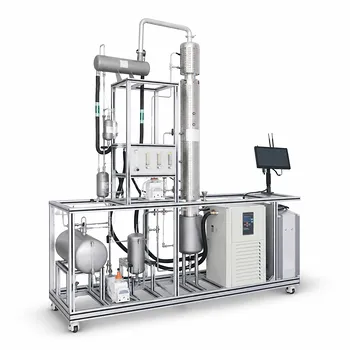
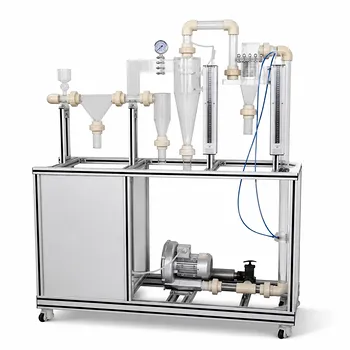
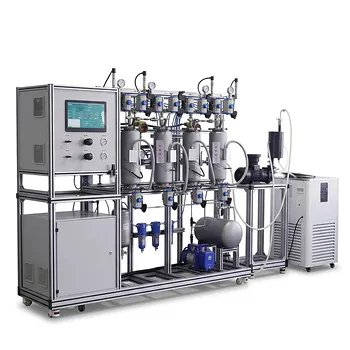
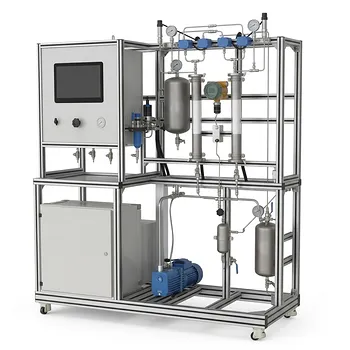
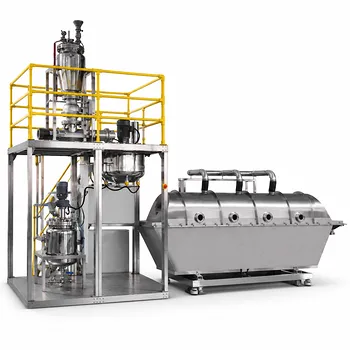
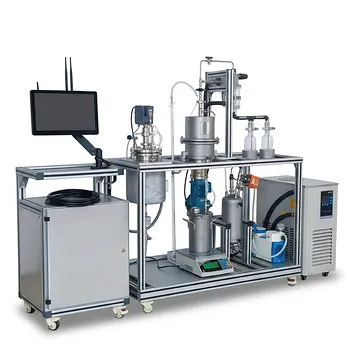
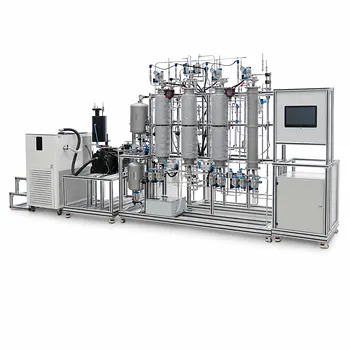
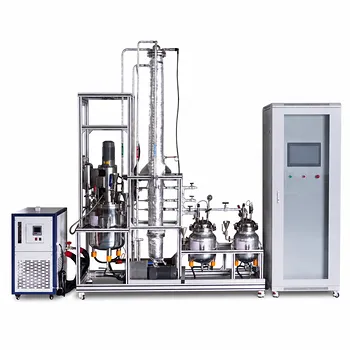
Energy-saving azeotropic heat recovery in an educational pilot plant is not a single piece of equipment — it's a deliberately engineered system that transforms a conventional distillation setup into a living laboratory for industrial sustainability. To effectively demonstrate this for multicomponent mixtures like crude styrene, the pilot plant must feature a multi‑column fractional distillation train with integrated vapor‑overhead heat integration. The latent heat of the overhead vapor from an azeotropic column (such as the ethylbenzene–water azeotrope at roughly 91.8 °C) is captured and used to boil or preheat a downstream feed stream, enabling students to compare conventional and heat‑integrated configurations, quantify utility reductions, and deeply understand the energy‑saving levers available in modern chemical plants.
The decisive design element for an educational unit operations pilot plant is a flexible vapor‑overhead heat recovery loop that lets students toggle between traditional cooling‑water condensation and integrated heat exchange — turning an abstract energy balance into a tangible, measurable learning experience. This core capability, combined with multi‑column sequencing and precise instrumention, directly addresses the challenge of teaching sustainable separation of complex azeotrope‑laden streams like crude styrene.
The Essential Design Blueprint for Heat Recovery Demonstration
An educational pilot plant is not a scaled‑down production unit; it is a teaching tool. Every component must be chosen to make thermodynamic and economic principles visible. The following features form the non‑negotiable backbone for demonstrating azeotropic heat recovery in a multicomponent context.
Multi‑Column Configuration to Mimic Industrial Sequences
Crude styrene separation is never done in a single tower. An educational system must include at least two interconnected fractional distillation columns to replicate the sequential logic of industrial purification.
At minimum, you need a first column dedicated to water removal via a heterogeneous azeotrope (ethylbenzene–water) and a second column to recover ethylbenzene from styrene. This duality allows students to map the energy flows across a sequence, one of the most powerful tutorials in process integration. The columns should be fully modular, enabling them to be run in series or individually, so that the impact of heat integration on the overall train can be isolated and measured.
Vapor‑Overhead Heat Integration: Capturing Latent Heat
The heart of the demonstration is the vapor‑overhead heat integration setup. Instead of simply condensing the top vapor of the first column with cooling water (wasting the latent heat), the plant must route that vapor to a heat exchanger where it preheats the feed or provides reboiler duty for a subsequent column.
The critical design requirement is a shell‑and‑tube or plate heat exchanger installed directly in the overhead line, with bypass piping to revert to a conventional water‑cooled condenser. This two‑mode architecture allows students to pressure‑log temperature drops, calculate the recovered energy load, and compare steam and cooling water consumption in real time. For crude styrene, the water–ethylbenzene azeotrope overhead at about 91–92 °C supplies a gentle, low‑grade heat that is perfect for preheating a cold feedstock, vividly illustrating the principle of process‑to‑process heat transfer.
Precision Instrumentation for Quantitative Energy Balances
Without the ability to measure, the demonstration fails. The plant must be equipped with high‑accuracy temperature sensors (thermocouples or RTDs) at every strategic point — feed, reboiler, condenser, and heat exchanger inlets/outlets — along with pressure transmitters and flow meters on all utility and process streams.
This dense sensor network turns the pilot plant into an open‑book exam in energy auditing. Students can log the steam flow to the first column’s reboiler, then log the flow of steam that is displaced when the overhead vapor preheats the feed. The quantitative link between the latent heat of the azeotrope and the reduction in external utility demand becomes a data‑rich, hands‑on exercise, not a theoretical paper exercise.
An Integrated Decanter for Heterogeneous Azeotropic Systems
Crude styrene contains water that forms a minimum‑boiling azeotrope with ethylbenzene. When that vapor condenses, it often separates into two liquid phases. To reflect real industrial practice, the pilot plant should include a decanter (phase separator) after the condenser.
A clear, transparent decanter vessel allows visual inspection of the organic‑rich layer and the aqueous layer, while also acting as a key node for calculating the mass balance of water removal. The aqueous phase can be recycled or sent to waste, while the organic phase moves to the next column. This component bridges the gap between simple azeotropic distillation and the heterogeneous azeotropic distillation used in styrene production, enriching the learning objectives around phase equilibria and process design without overwhelming the core heat recovery message.
Closed‑Loop Sustainability Modules
An educational plant preparing students for the realities of green chemistry should embed sustainability beyond heat recovery. Integrating a closed‑loop cooling water system and, where safe, a solvent recovery circuit reinforces the broader carbon‑reduction narrative.
Even basic additions like a recirculating cooling water tank with a water meter let students quantify the sharp drop in water usage when heat integration is active. This connects the dots between the thermal energy they are already analyzing and the global resource conservation metrics that modern industry demands, making the pilot plant a microcosm of a circular chemical economy.
Understanding the Trade‑offs: Complexity, Control, and Cost
The most pedagogically rich pilot plant is not necessarily the most complex one. Adding energy‑saving features introduces genuine engineering trade‑offs that, when discussed openly, deepen the learning experience.
Capital Expenditure vs. Long‑Term Insight
Vapor‑overhead heat exchangers and multi‑column systems increase the initial equipment purchase cost compared to a simple single‑column distillation skid. However, for an educational setting, this capital is an investment in curriculum quality, not a production expense. The ability to demonstrate a modern heat‑integrated process justifies the outlay by preparing students to design real, efficient plants. The trade‑off is that a higher upfront cost must be balanced against the depth of engineering competencies taught.
Operational Stability and Control Complexity
Heat‑integrated configurations introduce thermal coupling that can make the system more sensitive to disturbances. A sudden drop in feed flow will affect the overhead vapor rate, which in turn changes the available duty for feed preheating, potentially cascading instability. For an educational plant, this is actually a feature, not a bug — it creates a controlled environment to teach advanced process control strategies. However, it does demand that the instructor and students have a solid grasp of basic distillation dynamics, and the plant should include safeguards like pressure relief valves and automated pump shutoffs to prevent excursions during learning.
Scale and Safe Operating Envelopes
Pilot‑plant scale means smaller pipe diameters, lower holdup, and faster dynamics. The design must use materials compatible with flammables like ethylbenzene and styrene, generally stainless steel, and operate at mild pressures (atmospheric up to 5 bar). Transparent sight glasses on critical lines and vessels are highly desirable for education, but must be rated for the system’s pressure‑temperature limits and chemical compatibility. Over‑emphasizing glass components to make everything visible can create safety risks; a balanced approach uses glass only where visual observation uniquely aids understanding (e.g., the decanter or a column section demonstrating froth height), with metallic construction elsewhere.
Making the Right Choice for Your Educational Objectives
The final configuration of the pilot plant should be driven by the primary pedagogical goal. Use the following decision matrix to weight the design features.
- If your primary focus is teaching core heat integration principles: Prioritize a two‑column system with a single vapor‑overhead heat exchanger and comprehensive instrumentation. Keep the product chemistry simple (e.g., an ethanol‑water mixture with an entrainer) to reduce safety and waste‑handling complexity, while still demonstrating all critical heat recovery steps.
- If your primary focus is simulating a realistic industrial crude styrene separation: Add the decanter and select materials of construction suitable for aromatic hydrocarbons. Include the ethylbenzene–water azeotrope column as the energy donor, and a second column for ethylbenzene–styrene separation as the energy receiver. Plan for longer experimental runs and more rigorous mass balances.
- If your primary focus is on holistic green process design: Integrate the heat recovery loop with closed‑loop cooling water, install a simple solvent recovery distillation column, and ensure all instrumental signals are available for carbon footprint calculation software. This transforms the plant into a platform for discussing full‑plant environmental metrics.
Every educational azeotropic pilot plant should be seen as a storytelling engine: it tells the story of how an input of fuel and raw material becomes a pure product with minimal waste. Anchoring the design in visible, measurable energy recovery turns that story into a lasting professional intuition.
Summary Table:
| Key Feature | Description | Pedagogical Value |
|---|---|---|
| Multi-Column Setup | Interconnected fractional distillation columns | Demonstrates industrial purification sequences and energy flows |
| Vapor-Overhead Integration | Heat exchanger in overhead line with bypass piping | Illustrates latent heat capture and process-to-process heat transfer |
| Precision Instrumentation | RTDs, pressure transmitters, and flow meters | Enables real-time data logging, energy auditing, and balances |
| Integrated Decanter | Transparent phase separator | Visualizes liquid-liquid phase equilibria in heterogeneous systems |
Elevate Your Engineering Curriculum with LABPARK
Ready to transform abstract thermodynamic concepts into tangible, hands-on learning experiences? LABPARK provides premium Educational and Vocational Unit Operations Pilot Plants in chemical engineering, bioprocess & biotech, and environmental & water treatment designed specifically for universities, research institutes, and enterprises.
By integrating advanced features like flexible heat recovery loops, multi-column configurations, and industrial-grade instrumentation, our pilot plants prepare students and researchers to tackle real-world industrial sustainability challenges.
Contact LABPARK today to discuss your laboratory requirements and receive a customized technical proposal!
Related Products
- Multi-Functional Special Distillation Educational Pilot Plant
- Ethylbenzene Dehydrogenation Educational Unit Operations Pilot Plant
- Solid Waste Pyrolysis and Refining Educational Pilot Plant for Unit Operations
- Hot Filtration Educational Unit Operations Pilot Plant Laboratory System
- Absorption and Desorption Educational Unit Operations Pilot Plant
People Also Ask
- Why does simple distillation yield higher efficiency than flash distillation? Key thermodynamic differences.
- How does double temperature difference control improve distillation pilot plants? Stabilize purity.
- How to Verify Distillation Boundary Lines & Composition Regions with Pilot Plants
- How Batch vs Continuous Configuration Affects Distillation Pilot Plant Versatility & Footprint
- How to Estimate Distillation Pilot Plant Tray Efficiency? O'Connell's Correlation Guide