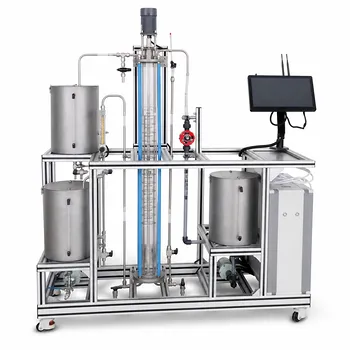
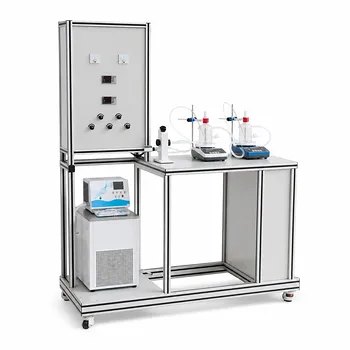
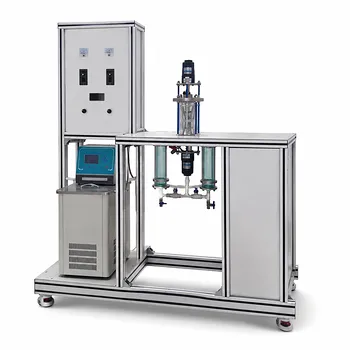
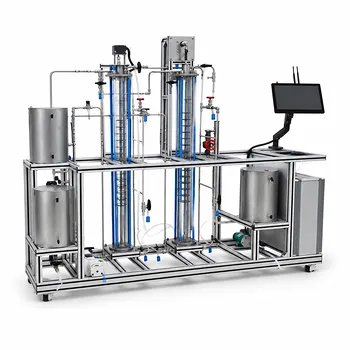
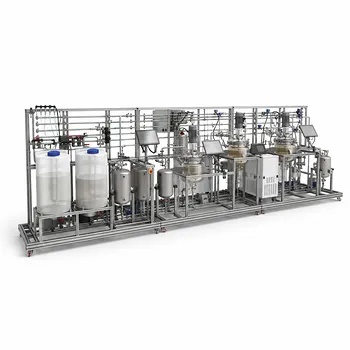
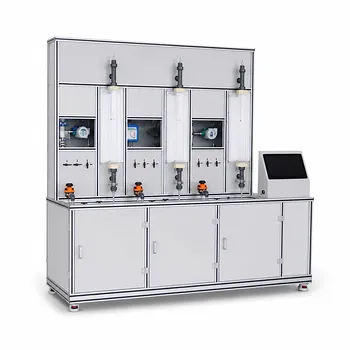
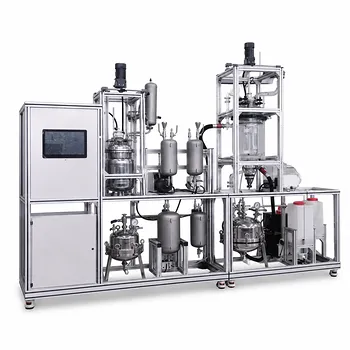
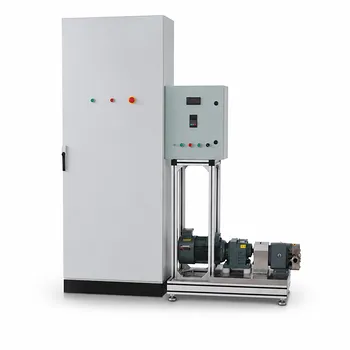
Preparative liquid chromatography is the cornerstone purification technology in any bioprocess pilot plant. It is the definitive method for separating target biomolecules from a complex broth with a level of selectivity that no other unit operation can match, all while preserving the fragile three-dimensional structure of the product. Its true significance in a pilot setting, however, extends beyond simple purification. It is the critical scale-down model where the economic viability of an entire industrial process is either validated or broken.
While its technical role is to resolve mixtures, the pilot plant’s strategic purpose is to bridge the gap between discovery and manufacturing. The central challenge is not just achieving purity, but doing so economically by translating the analytical separation into a scalable, reproducible, and profitable production process.
The Strategic Significance: Bridging Discovery and Manufacturing
A pilot plant exists to derisk scale-up, and chromatography represents the highest-risk, highest-reward step in downstream processing. It is where theoretical chemistry confronts harsh economic reality.
The Unique Ability to Protect Product Quality
The reason chromatography dominates bioprocessing is its ability to operate under non-denaturing conditions. Unlike distillation or solvent extraction, preparative chromatography typically uses aqueous mobile phases at controlled pH, ionic strength, and room temperature.
This gentle environment is not a luxury; it is a fundamental requirement for biologics. If you expose a monoclonal antibody to harsh organic solvents or high heat, it loses its therapeutic function. The pilot plant proves you can achieve 99% purity without destroying the product you are trying to make.
Bridging Theory and Transport Phenomena
A pilot-scale column is a real-world manifestation of Fick’s laws of diffusion and mass transfer theory. In a classroom, students calculate theoretical plates. In a pilot plant, they see exactly how a poorly packed bed creates eddy diffusion, smearing the peak and destroying resolution.
This hands-on experience is what transforms a scientist into a process engineer. It allows the investigation of molecular diffusion coefficients under dynamic flow conditions, directly linking textbook equations to a biomanufacturing career.
Core Design Principles: From Resolution to Economics
Designing a pilot-scale chromatography operation requires zooming out from chemical analysis to focus on mechanical reproducibility and process economics. The molecule’s behavior is fixed; your control over the hardware and economics is the variable.
Optimizing Column Geometry for the Separation Challenge
The selectivity factor (alpha) of your system dictates your column’s architecture. This is a non-negotiable scale-up rule often first validated at pilot scale.
- For difficult separations (alpha < 1.15): You must maximize theoretical plates. This requires longer, narrower columns to provide sufficient residence time for the molecules to resolve. Speed is sacrificed for resolution.
- For easy separations (alpha > 1.15): The bottleneck is throughput, not resolution. You switch to wider columns with larger diameters to dramatically increase volumetric flow and productivity without crushing the pressure drop.
Minimizing HETP Through Fluid Dynamics
The Height Equivalent to a Theoretical Plate (HETP) is your efficiency scorecard. To keep the concentration profile sharp during scale-up, you must wage war on dispersion.
This is achieved through hardware design. In small analytical columns, radial mixing is uniform. In wide pilot columns, the center of the bed moves faster than the walls. Including specialized flow distributors and baffles is critical to defeat this "wall effect" and prevent peak tailing. The ability to swap these internals is a key educational feature of a well-built pilot system.
Defining Robustness Through Critical Process Parameters
The pilot plant is where you intentionally break the process to learn its limits. You systematically vary column temperature, flow rate, buffer concentration, and gradient slope to mirror industrial robustness studies.
Tiny deviations in pH can shift retention times, merging critical peaks with contaminants. By performing these stress tests, the pilot plant generates the acceptable proven range (PAR) for manufacturing. If a process cannot tolerate minor operational swings at pilot scale, it is not ready for the factory floor.
Understanding the Trade-offs and Economic Reality
A purely technical focus on purity leads to an unmanufacturable process. The pilot plant must surface the brutal economic trade-offs to prevent catastrophic failure during commercialization.
The Affinity Media Cost Trap
Protein A chromatography is the ultimate purity weapon, capturing monoclonal antibodies (mAbs) in a single step. However, its resin is one of the most expensive liquids on earth, and ligand leaching degrades the column over dozens of cycles.
It is easy to achieve >99% purity if you ignore the cost of goods. The pilot plant’s job is to study column regeneration protocols—using low pH elution and stripping buffers—to extend media lifetime to hundreds of cycles. You are not just purifying a protein; you are managing a fixed asset.
Moving Beyond Batch to Continuous Processing
The single biggest design shift in modern pilot plants is the move toward continuous multi-column chromatography (MCC) . In batch mode, resin sits idle, and buffer consumption is high.
An interconnected multi-column setup mimics a moving bed, recycling solvents and utilizing resin far more efficiently. This drastically reduces buffer consumption and floor space. A graduate entering industry today must recognize that a pilot plant running a single large column is likely an outdated model compared to a compact, continuous skid.
Using TLC as a Risk Mitigation Tool
Thin Layer Chromatography (TLC) is the low-cost screening partner to the preparative column. Measuring the retention factor (Rf) on a silica plate prevents operators from committing a failed solvent composition to a massive, expensive column.
The TLC plate is a micro-scale pilot plant. It answers the question: "Will this mobile phase separate my mixture?" within minutes, at almost zero cost. Training that links TLC screening directly to preparative column loading teaches a battery-limits approach to process development.
Making the Right Choice for Your Pilot Plant Goals
Your process objectives dictate the configuration and operational philosophy of the chromatography system. There is no universal design, only an optimal fit for your risk profile.
- If your primary focus is maximizing product purity for high-value biologics: Invest in affinity-based chemistries on a well-engineered column with advanced flow distributors. Accept higher resin costs in exchange for the capital efficiency of single-step capture.
- If your primary focus is validating economic viability before commercial scale-up: Prioritize continuous multi-column chromatography (MCC) and solvent recycling loops. The design emphasis shifts from maximizing resolution at any cost to minimizing buffer and resin costs per gram of product.
- If your primary focus is workforce education on unit operations: Demand a transparent, configurable column with adjustable bed heights and mechanical internals. The system must deliberately demonstrate the link between packing irregularities, HETP, and poor elution curves to build true troubleshooting competency.
The pilot plant is more than a purification tool; it is the proving ground where molecular selectivity is translated into manufacturing reliability.
Summary Table:
| Separation Goal | Column Design Focus | Key Parameters / Solution |
|---|---|---|
| Difficult Separations (Alpha < 1.15) | High resolution | Long, narrow columns; higher residence time |
| Easy Separations (Alpha > 1.15) | High throughput | Wide columns; larger diameter; high flow rate |
| Economic Viability & Scale-up | Lower operating cost | Continuous multi-column chromatography (MCC) |
| Educational / Training | Troubleshooting competency | Configurable columns with adjustable bed heights |
Optimize Your Bioprocess Training and Research with LABPARK
Are you looking to bridge the gap between discovery and industrial-scale manufacturing? LABPARK provides state-of-the-art Educational and Vocational Unit Operations Pilot Plants in chemical engineering, bioprocess & biotech, and environmental & water treatment for universities, research institutes, and enterprises.
Our highly configurable systems allow students and engineers to master critical scale-up concepts—such as fluid dynamics, HETP optimization, and continuous chromatography—with hands-on, real-world equipment.
Ready to elevate your laboratory's capabilities? Contact our team today to find the perfect pilot plant solution for your needs.
Related Products
- Educational Rotary Disc Liquid-Liquid Extraction Pilot Plant
- Ternary Liquid-Liquid Equilibrium Educational Pilot Plant
- Electrolyte Distillation Purification and Formulation Educational Pilot Plant
- Liquid-Liquid Mass Transfer Coefficient Determination Educational Pilot Plant
- Continuous Batch Extractive Distillation Educational Pilot Plant
People Also Ask
- How do density and IFT affect liquid-liquid extraction pilot plants? Optimize Column Performance
- How are ternary phase diagrams and LLE data applied in extraction experiments? Optimize Pilot Plant Scale-up
- In a liquid-liquid extraction pilot plant, how is a ternary-phase diagram utilized to determine solvent feed requirements?
- How Do Selectivity & Distribution Coefficients Influence LLE Pilot Plant Solvent Choice?
- How to Validate BIPs for LLE Pilot Plants? Steps to Align Simulations with Reality