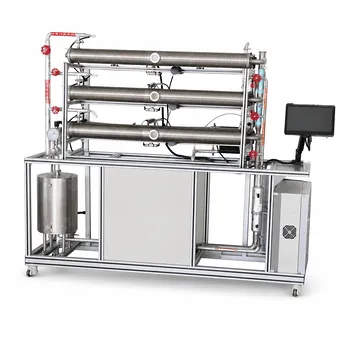
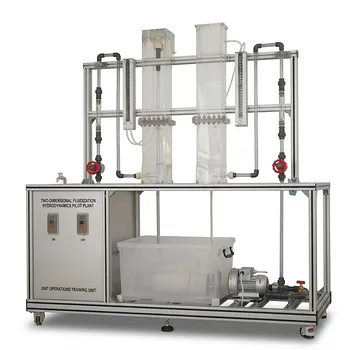
The educational power lies in revealing the limits of the model. Comparing thermodynamic simulations with hands-on pilot plant training fundamentally teaches students that a computer's elegant output is only as valid as its inputs and the assumptions behind the equations. This direct contrast forces future engineers to not just trust, but to critically interrogate, a simulation’s results against the messy, tangible reality of a physical process.
The core educational significance is developing critical validation skills. Pairing simulation with physical operation transforms a student from a passive software user into an engineer who instinctively questions, verifies, and refines theoretical models using real-world data—a mindset that is the bedrock of safe and effective industrial design.
The Critical Gap Between Theory and Reality
The primary reference points to a fundamental truth: software can solve equations at incredible speed, but it cannot check the human logic used to set up the problem. The educational moment happens precisely when the simulation’s prediction and the pilot plant’s output diverge.
The Trust-but-Verify Mindset
A computer will rapidly calculate complex thermodynamic equilibria, such as multi-component distillation profiles. However, it blindly accepts flawed initial assumptions about phase efficiency or heat loss. A physical pilot plant instantly exposes these gaps. When a student sees that the actual top-column temperature profile is 5°C lower than the simulation predicted, they learn to hunt for the missing variable, like heat loss to the ambient environment, that the model omitted.
The Tangibility of Data
Simulations deal in precise, sterile numbers. A pilot plant introduces noisy, imperfect sensor data and physical samples. When a student draws a liquid sample from a reboiler and measures a composition that differs from the simulation’s ideal stage calculation, they confront real-world non-idealities. This teaches them that a flash point or purity prediction is a hypothesis, not a fact, until it's validated by physical measurement.
Bridging Virtual Speed with Physical Insight
Supplementary references show that the true strength of this comparison is not just in finding errors, but in using the synergy to accelerate learning and deepen process understanding.
Rapid Virtual Exploration Before Physical Confirmation
Before stepping into the pilot plant, students can use simulation software with extensive databases to explore a massive variable space virtually. They can ask "what if" questions about pH, temperature, or concentration in seconds. This allows them to design a focused, efficient experiment. The physical pilot plant run then becomes a targeted test of the most promising virtual hypothesis, maximizing the pedagogical value of expensive and time-limited hands-on time.
Visualizing the Invisible in Real Time
Traditional manual calculation makes it impossible to grasp the dynamic nature of a process. Integrated computer simulations connected to pilot plants allow students to immediately see how a change in reflux ratio alters the entire distillation column's concentration profile on a screen. This shifts the cognitive load from rote arithmetic to critical process analysis, enabling students to develop a powerful, intuitive feel for system dynamics that static textbooks can never provide.
Understanding the Trade-offs
An honest educational approach must also teach the limitations of both tools, preventing a student from over-relying on one at the expense of the other.
The Risk of a "Black Box" Mentality
A powerful trade-off is that simulation's ease can turn it into a black box. A student may learn to hit "run" and accept a beautifully rendered result without understanding the activity coefficient model chosen. The pilot plant serves as an antidote. The physical effort required to achieve that same result—managing real flow rates, preventing flooding, dealing with a real temperature lag—builds a visceral respect for the physical laws that the software is approximating.
Physical Constraints Limit Theoretical Purity
Conversely, a pilot plant can never match the "perfect world" of a simulation. A student may set up a simulation with an ideal equilibrium stage model and get a 99.9% purity prediction. The physical plant, limited by real tray efficiency, imperfect mixing, and sensor drift, might only yield 97%. This discrepancy teaches the critical lesson of efficiency factors and the non-ideal nature of all real equipment, a concept that is the very foundation of engineering methodology.
How to Apply This to Your Curriculum or Learning
The goal is not to choose one method over the other, but to use the contrast between them intentionally. Here’s how to focus your approach based on your primary educational objective.
- If your primary focus is developing a safety-conscious, practical engineer: Center the curriculum around the pilot plant first. Use the initial hands-on struggles with real fluid dynamics and measurement deviations to create a "need to know" that makes the subsequent simulation training a welcome tool for explanation, not a mysterious oracle.
- If your primary focus is teaching rigorous model validation and research skills: Use simulation as a hypothesis generator. Require students to pre-run all experiments virtually and write down their predictions. Then, the physical pilot plant run serves as the definitive test of those predictions, with the grade hinging on the analysis of any discrepancy between the simulated and physical outputs.
- If your primary focus is conveying deep thermodynamic intuition about multi-component systems: Integrate them simultaneously in a single lab session. Have students manipulate a process variable on the physical plant and watch the simulated model update in real-time, encouraging them to connect the abstract phase envelope on the screen with the tangible change in sound, sight, and feel of the operating equipment.
The ultimate lesson that no simulator can teach is the informed skepticism needed to question its own results—a quality that only the comparison with physical reality can forge.
Summary Table:
| Aspect | Thermodynamic Simulation | Pilot Plant Training |
|---|---|---|
| Data Source | Ideal mathematical equations | Real, noisy sensor data |
| Process Speed | Fast virtual exploration | Real-time physical run |
| Primary Risk | "Black box" over-reliance | Physical constraints & drift |
| Key Benefit | Rapid "what-if" testing | Hands-on validation skills |
Elevate Your Engineering Curriculum with LABPARK
Bridging the gap between simulation and reality requires robust, reliable hardware. LABPARK provides state-of-the-art Educational and Vocational Unit Operations Pilot Plants in chemical engineering, bioprocess & biotech, and environmental & water treatment. We empower universities, research institutes, and enterprises to cultivate essential validation skills and deep engineering intuition.
Ready to transform your laboratory training? Contact LABPARK today to discuss your custom pilot plant requirements!
Related Products
- Multi-Functional Drying Educational Unit Operations Pilot Plant
- General Purpose Cosmetics Production Unit Operations Training Pilot Plant
- Dual-Mode Rectification Pilot Plant for Practical Training Unit Operations
- Multi-Reactor Educational Pilot Plant for Reaction Engineering Unit Operations
- Multimodal Absorption and Desorption Pilot Plant for Unit Operations Training
People Also Ask
- Why Use PTFE & Hastelloy in Chemical Pilot Plants? Prevent Corrosion & Ensure Safety
- How do deviations in estimating latent heat impact pilot plant thermal systems? Avoid hardware mis-sizing.
- Why is the chemical plant startup schedule crucial? De-risk scale-up with pilot plants.
- How to study gasification in pilot plants? Compare exit gas composition & efficiency
- When to transition from PID to adaptive control in pilot plants? Key process indicators.