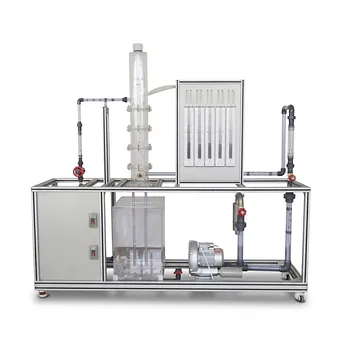
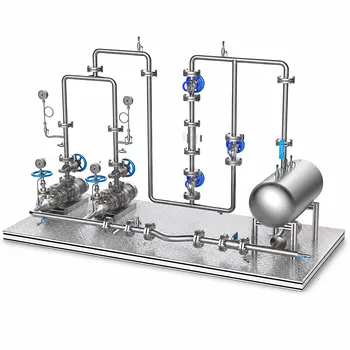
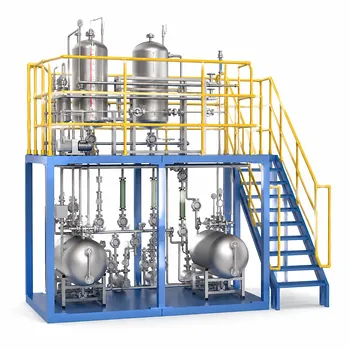
Incorporating non-thermal unit operations such as High Hydrostatic Pressure (HPP) gives a bioprocess pilot plant both a teaching platform and a controlled research environment. Students and researchers can study microbial inactivation, enzyme behavior, protein and starch modification, mass transfer, process kinetics, and energy use without relying on high thermal loads. The pilot scale also exposes them to the practical challenges of validation, process control, safety, and scale-up.
The central value of HPP is that it connects biological mechanisms with real process engineering. It allows users to investigate how pressure changes biological materials and microbial populations while generating data that can guide product development, regulatory validation, and commercial process design.
Why Non-Thermal Operations Matter in Bioprocessing
Protecting Heat-Sensitive Materials
Traditional thermal processing can damage sensitive proteins, enzymes, flavors, nutrients, and intracellular compounds. HPP and other non-thermal technologies provide alternative processing conditions that can reduce thermal degradation.
This makes them especially relevant to heat-sensitive foods, biologics, enzymes, and plant-derived products where quality and functionality are as important as microbial safety.
Connecting Processing Conditions to Biological Function
HPP can induce structural changes such as cell membrane disruption, protein unfolding, enzyme inactivation or activation, and starch setting. These effects give researchers a practical way to examine how pressure, temperature, and treatment time influence biological structure and function.
PEF provides a complementary research platform by studying electrically induced membrane permeabilization. Together, these operations broaden the range of non-thermal mechanisms available for investigation.
Educational Value for Students and Researchers
Turning Theory into Measurable Process Behavior
A pilot plant allows learners to move beyond equations and textbook descriptions. They can vary operating parameters, collect samples, and observe how pressure or electric-field treatment affects microbial survival, extraction yield, viscosity, protein functionality, or other product attributes.
This directly reinforces concepts in biochemistry, microbiology, enzyme kinetics, mass transfer, process control, and chemical engineering.
Teaching Process Kinetics
HPP pilot equipment enables students to develop and analyze microbial inactivation kinetics under different pressure-temperature-time conditions. They can determine how treatment severity affects decimal reductions and identify the conditions required to achieve a defined safety target.
The same experimental approach can be applied to enzyme activity, structural transitions, extraction, and other pressure-dependent phenomena.
Building Scale-Up Competence
Pilot equipment sits between laboratory experiments and commercial manufacturing. It introduces practical variables that are often absent from small-scale studies, including equipment configuration, loading, residence or treatment time, product handling, instrumentation, repeatability, and process control.
This experience helps students understand that successful scale-up requires more than multiplying laboratory quantities. The process must remain controllable, reproducible, safe, and economically viable.
Developing Multidisciplinary Skills
Non-thermal processing sits at the intersection of biology, food engineering, materials science, microbiology, and process engineering. Operating a pilot unit requires learners to combine these perspectives rather than treating them as separate subjects.
The result is a stronger understanding of how biological constraints affect engineering decisions.
Research Value of HPP and Other Non-Thermal Operations
Investigating Structural Modification
HPP can be used to study pressure-induced changes in biological matrices. These include controlled protein unfolding, altered casein micelle structures, starch gelation, and cellular disruption that may improve mass transfer.
Such experiments help researchers determine whether a structural change improves a product’s functionality, extractability, stability, or downstream processability.
Improving Extraction of Intracellular Compounds
Pressure-induced opening or disruption of cellular structures can accelerate the release of intracellular compounds and sugars. This creates a research opportunity for evaluating extraction of heat-sensitive secondary metabolites and other valuable biological components.
Researchers can compare extraction yield and product quality with conventional thermal or mechanical approaches.
Studying Enzyme and Microbial Behavior
HPP provides a controlled way to examine whether pressure inactivates or activates particular enzymes under defined conditions. It also supports research into microbial susceptibility and the effects of combined pressure and temperature treatments.
These studies can help identify process windows that achieve microbial safety while preserving desirable biological activity.
Comparing Energy and Product Quality
A pilot plant makes it possible to compare non-thermal processing with traditional thermal pasteurization using practical measures. Researchers can evaluate energy consumption, treatment severity, microbial reduction, structural integrity, and final product quality.
This comparison is essential because a lower thermal load does not automatically guarantee lower total process energy or better economics. The full process must be assessed.
Supporting Validation and Regulatory Readiness
Conducting Controlled Challenge Studies
Pilot-scale HPP equipment provides a contained environment for process validation and capability studies. Researchers can evaluate initial microbial loads, pressure-temperature combinations, treatment times, and resulting log reductions.
Challenge testing can be designed to drive the process toward failure under controlled conditions, helping establish operating limits and demonstrate system ruggedness.
Separating Research Hazards from Production
Using pilot equipment for work with surrogate organisms or pathogenic microbes helps isolate biological hazards from commercial production lines. This separation supports safer experimentation and reduces the risk of contaminating manufacturing equipment.
All challenge studies still require appropriate biosafety controls, validated methods, and institutional oversight.
Generating Scale-Up Data
Commercial implementation requires more than proof that a product can survive a laboratory treatment. Pilot studies generate evidence about repeatability, process capability, operating limits, and product uniformity.
These data support technical decisions and provide a stronger foundation for regulatory submissions and full-scale validation.
Integrating HPP into a Broader Pilot Plant
Linking Upstream and Downstream Processing
HPP is most valuable when it is studied as part of a process train rather than as an isolated machine. Researchers can examine how pressure treatment affects later operations such as filtration, centrifugation, chromatography, crystallization, drying, or formulation.
For example, cellular disruption may improve extraction but also increase solids loading or alter filtration behavior. The pilot plant allows those downstream consequences to be measured.
Comparing Complementary Unit Operations
A well-designed facility can compare non-thermal treatments with fermentation, bioreactor operation, thermal processing, membrane separation, and other unit operations. This teaches researchers to select a process based on the overall product and manufacturing objective.
The question becomes not simply whether HPP works, but where it creates the greatest value in the complete process.
Supporting Product and Process Development
Pilot-scale HPP can support development of clean-label and heat-sensitive products by allowing systematic testing of formulation, treatment conditions, and quality attributes.
It also provides a platform for engineers to identify process bottlenecks before committing to commercial equipment or production-scale trials.
Understanding the Trade-offs
High Capital and Operating Requirements
HPP systems require specialized high-pressure equipment, robust pressure vessels, instrumentation, maintenance, and trained operators. Their cost and complexity may be substantial compared with conventional laboratory equipment.
A pilot plant must therefore justify the investment through education, research capability, industry collaboration, or process-development needs.
Pressure Does Not Preserve Every Quality Attribute
Non-thermal does not mean non-destructive. Pressure can alter proteins, enzymes, membranes, starches, and other structures in ways that may be beneficial or undesirable.
Each application requires its own product-quality assessment rather than assuming that avoiding heat will automatically preserve all attributes.
Scale-Up Is Not Automatic
Results from a small pressure vessel may not translate directly to a larger system. Product loading, pressure distribution, packaging, cycle time, temperature control, and equipment configuration can affect treatment uniformity.
Pilot studies are valuable precisely because they reveal these engineering and biological interactions, but they do not eliminate the need for full-scale validation.
Energy and Sustainability Require Whole-Process Analysis
HPP may reduce thermal exposure, but its sustainability must be evaluated across the complete process. Energy use, water consumption, cycle duration, throughput, equipment utilization, and downstream requirements all influence the final assessment.
Comparing only the treatment step can lead to misleading conclusions.
Safety and Operational Discipline Are Essential
High-pressure systems present significant mechanical hazards. Effective training must include operating procedures, pressure-vessel safety, interlocks, inspection, emergency response, and appropriate containment for biological work.
The educational value is highest when safety and process discipline are treated as core engineering outcomes, not administrative additions.
How to Apply This to Your Project
A non-thermal pilot plant should be designed around the questions researchers and students need to answer.
- If your primary focus is education: Use HPP and related operations to teach kinetics, mass transfer, process control, microbial safety, and scale-up through hands-on experiments.
- If your primary focus is product quality: Study pressure-induced structural and enzymatic changes alongside microbial inactivation to identify conditions that protect or improve functionality.
- If your primary focus is process development: Integrate HPP with upstream and downstream unit operations so you can assess extraction, separation, filtration, drying, and overall process performance.
- If your primary focus is validation: Use controlled pilot-scale challenge studies to establish log reductions, operating limits, repeatability, and data needed for regulatory and commercial decisions.
- If your primary focus is sustainability: Compare energy and resource consumption with thermal processing across the entire process, not only within the HPP treatment step.
Used thoughtfully, non-thermal pilot equipment transforms a bioprocess laboratory into a practical environment for learning, discovery, validation, and responsible scale-up.
Summary Table:
| Focus area | Value of HPP and non-thermal operations |
|---|---|
| Education | Teaches kinetics, mass transfer, process control, safety, and scale-up through hands-on experiments |
| Product quality | Helps protect or improve heat-sensitive proteins, enzymes, nutrients, flavors, and biological compounds |
| Research | Enables studies of microbial inactivation, enzyme behavior, protein modification, starch setting, and cellular disruption |
| Process development | Supports extraction, filtration, separation, formulation, and integration with upstream and downstream operations |
| Validation | Generates pilot-scale data on log reduction, repeatability, operating limits, and process capability |
| Sustainability | Enables whole-process comparisons of energy, water, throughput, treatment severity, and product quality |
| Key considerations | Requires specialized equipment, trained operators, safety controls, and full-scale validation |
Ready to develop safer, smarter, and more scalable bioprocesses? Contact LABPARK to discuss an Educational or Vocational Unit Operations Pilot Plant tailored to your goals. LABPARK supports universities, research institutes, and enterprises with pilot-scale solutions for chemical engineering, bioprocess and biotech, and environmental and water treatment applications. Our systems help teams teach real process behavior, study HPP and other non-thermal operations, validate microbial reduction, protect heat-sensitive products, improve extraction and downstream performance, generate scale-up data, and prepare for commercial process decisions. Share your application, operating requirements, and educational or research objectives with our specialists so we can help define the right equipment configuration and process train.
Related Products
- Carbon Dioxide Hydrogen Methanol Synthesis Educational Unit Operations Pilot Plant
- Methanol Synthesis and Catalyst Performance Evaluation Educational Unit Operations Pilot Plant
- Constant Pressure Filtration Educational Unit Operations Pilot Plant
- 100L Continuous Loop Hydrogenation Educational Unit Operations Pilot Plant
- Plate Column Hydrodynamics Tray Demonstration Educational Pilot Plant
People Also Ask
- How do temp & pressure affect methanol synthesis pilot plants? Optimize equilibrium and catalyst performance.
- Why is a purge system necessary when operating a gas recirculation loop in a methanol synthesis pilot plant? (Guide)
- Why do modern methanol pilot plants operate at lower pressures? Catalyst & Feed Requirements Explained
- What are the operational requirements for catalyst activation? Safe Methanol Pilot Plant Operation
- Why is the chemical plant startup schedule crucial? De-risk scale-up with pilot plants.