The single greatest threat to analytical balance accuracy isn't the sample—it's the environment. To ensure the ±0.1 mg or ±0.01 mg precision required in chemical engineering and bioprocess pilot plants, the balance must be placed on a vibration‑resistant bench in a draft‑free, thermally stable location, all measurements must be taken with the draft shield fully closed, and every sample must be allowed to reach room temperature before weighing. Equally non‑negotiable are keeping a desiccant active inside the chamber and removing chemical residues immediately after use.
The core insight is that an analytical balance acts as a sensitive air‑density and vibration detector. Its accuracy depends less on the balance itself and more on mastering the thermal, mechanical, and humidity conditions of its immediate microenvironment—especially in a pilot plant where pumps, compressors, and aggressive reagents are never far away.
The Installation Environment
A single overlooked vibration source can make a 0.1 mg balance useless. In pilot plants, the challenge is multiplied by large rotating equipment, high‑flow air systems, and foot traffic.
Vibration Isolation: A Non‑Negotiable Foundation
The balance must sit on a purpose‑built, heavy, vibration‑damping table in a dedicated area. Even minor oscillations from a nearby pump, compressor, or centrifuge are transmitted through benchtops and floor slabs, causing continuous drift in the electromagnetic force restoration mechanism.
Placement is as important as the table itself. Keep the balance away from windows, exterior doors, and heavy‑traffic corridors. Inactive isolation is not enough; a floating optical table or a thick marble slab set on elastomeric pads is the practical standard for pilot‑plant labs.
Thermal Stability and Draft Avoidance
Direct sunlight and point‑source heat (ovens, autoclaves, steam lines) create invisible thermal drafts that disturb the weigh pan. Even a 0.2 °C gradient across the weighing chamber can generate enough air movement to shift a reading by several milligrams.
Position the balance away from HVAC diffusers, heating vents, and windows. The entire room should maintain a stable temperature (ideally ±0.5 °C) with low‑velocity air change. Drafts not only affect the sample but also destabilize the balance’s internal temperature compensation loop.
Operational Discipline Inside the Weighing Chamber
Even a perfectly installed balance will report erratic numbers if the operator ignores the micro‑climate inside the draft shield.
The Critical Role of the Draft Shield
The glass doors of the draft shield must remain completely closed during the entire measurement cycle. Ambient air currents in a busy lab, even from someone walking past, can exert pN‑level forces on the weigh pan—enough to move the last decimal.
Opening the shield after taring immediately reintroduces instability. Always load samples through the side doors, close them, and wait for the reading to stabilize. The extra seconds are insignificant compared to the data integrity gained.
Temperature Equilibrium of Samples
A sample that is hotter or colder than the ambient air creates its own convective plume inside the weighing chamber. This self‑generated draft exerts a measurable buoyancy effect, leading to systematic under‑ or over‑estimation of mass.
Mandate a thermal equilibration step for every sample. Transfer the substance into the weighing vessel, place it near the balance (not on it), and wait until both reach room temperature. For hygroscopic powders common in bioprocess work, this wait also prevents moisture uptake that would add phantom mass.
Humidity Control and Chemical Cleanliness
High humidity leads to condensation on cold metal parts and static charge buildup on glass surfaces, both of which ruin accuracy. The chamber must contain fresh silica gel (or an equivalent desiccant) that is regularly regenerated.
Chemical residues from spills are doubly dangerous: they corrode the stainless‑steel pan and can outgas corrosive vapors that attack the balance’s internal sensors. Clean the chamber immediately after use with a lint‑free cloth and a mild solvent compatible with the balance materials. In bioprocess labs where acids, bases, or proteinaceous solutions are handled, this rule prevents cumulative, hidden damage.
Understanding the Trade‑offs and Common Pitfalls
High‑end balances often feature internal calibration weights, but these cannot compensate for a poor environment.
Pitfall 1 – Assuming auto‑calibration fixes environmental drift. An internal weight can correct span, but it does nothing for random noise from vibration or drafts. A balance that calibrates successfully can still give unreliable results.
Pitfall 2 – Neglecting intermittent vibration sources. A pump that cycles on for only 5 minutes per hour may not be noticed during a quick check, but it can invalidate a whole afternoon’s weighings. Install the balance far from any equipment with intermittent operation.
Pitfall 3 – Over‑drying the chamber. While desiccant is essential, lowering the relative humidity below 20 % can promote static electricity on plastic containers and powders, causing particles to leap off the spatula or stick to the draft shield. The goal is <40 % RH, not zero.
Making the Right Choice for Your Pilot‑Plant Lab
Every pilot‑plant setting has unique constraints. Adapt these priorities based on your dominant risk factors:
- If your primary interference is building vibration from nearby process equipment: Invest in a heavy granite balance table with active or passive pneumatic isolation. Relocate the balance as far as structurally possible from pumps and compressors.
- If your lab suffers from drastic temperature swings or strong HVAC drafts: Create a small, insulated “balance alcove” with its own fan‑coil unit set to constant recirculation, and install a transparent polycarbonate shield around the entire setup.
- If you mainly weigh hygroscopic, static‑prone biological powders: Use a grounded anti‑static kit, keep the chamber humidity around 35–40 % with conditioned desiccant, and always pre‑dry the weighing boat in a desiccator before taring.
- If the risk is chemical corrosion from aggressive reagents: Apply a thin protective film to the stainless‑steel surfaces (if manufacturer‑approved), clean after every single weighing, and replace the desiccant weekly to trap acidic vapors.
The accuracy of your mass data is never defined by the balance’s specifications alone—it is a direct mirror of how strictly you control its thermal, mechanical, and chemical environment.
Summary Table:
| Environmental/Operational Factor | Impact on Balance Accuracy | Best Practice / Solution |
|---|---|---|
| Vibration | Electromagnetic force drift | Use heavy, vibration-damping tables away from pumps. |
| Thermal Drafts | Air movement shifts pan readings | Avoid direct sunlight/HVAC vents; maintain stable room temp. |
| Draft Shield | Ambient air currents destabilize pan | Keep glass doors completely closed during measurement. |
| Sample Temp | Convective plumes cause buoyancy errors | Allow samples to reach room temperature before weighing. |
| Humidity & Spills | Static charge & sensor corrosion | Maintain 20%-40% RH with silica gel; clean residues immediately. |
Elevate Your Pilot Plant's Precision with LABPARK
Accurate measurements are the foundation of successful scale-up. LABPARK provides premium Educational and Vocational Unit Operations Pilot Plants in chemical engineering, bioprocess & biotech, and environmental & water treatment for universities, research institutes, and enterprises.
Need to optimize your laboratory layout for maximum precision or source robust pilot-scale systems? Contact our experts today to discover how LABPARK can support your research and training goals.
Related Products
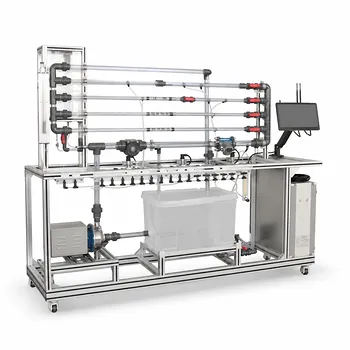
- Fluid Friction Resistance Determination Educational Unit Operations Pilot Plant
- Constant Pressure Filtration Educational Unit Operations Pilot Plant
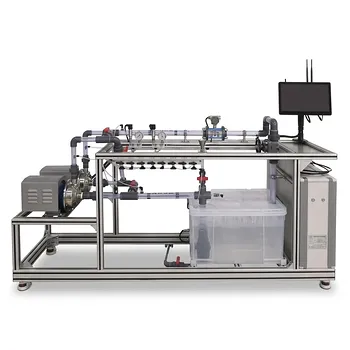
- Centrifugal Pump Performance and Orifice Flowmeter Calibration Educational Pilot Plant
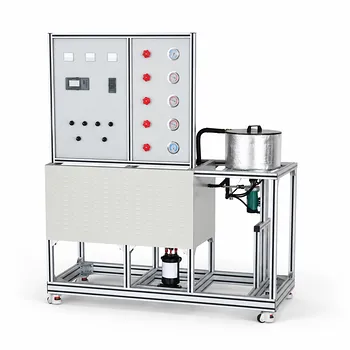
- Educational Compression Refrigeration Performance Determination Unit Operations Pilot Plant
- Orifice and Venturi Flowmeter Calibration Educational Pilot Plant for Fluid Mechanics Laboratory
People Also Ask
- How do pilot plants teach U-tube manometers? Master Differential Pressure Calculations
- How is the hydrodynamic entrance length estimated for high-Re channel flows? Design accurate pilot-plant measurements
- How do pilot plants demonstrate siphon pressure variations? Visualizing Bernoulli's Energy Balance
- How do velocity profiles and flow rates differ in Newtonian and power-law fluids? A Pilot Plant Guide
- How do fluid mechanics pilot plants distinguish streamlines from streaklines? See flow visualization in action