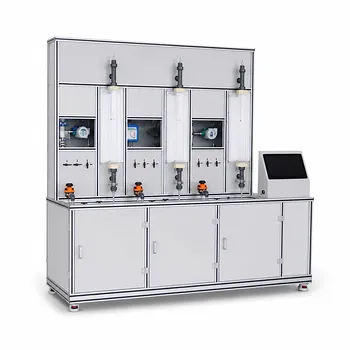
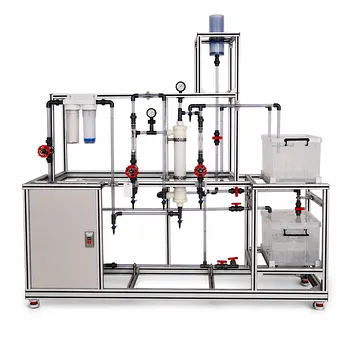
Coaxial dual-pipe microreactors stand out as the most elegant, directly relevant design solution to prevent clogging during microfluidic nanoparticle synthesis.
In a laboratory pilot plant, the root cause of clogging is wall precipitation—when nanoparticles nucleate and grow on the channel surfaces. The coaxial dual-pipe design eliminates this failure mode by confining the reaction to a core fluid stream that never touches the walls. By feeding the precipitating agent through an outer tube and the solute through an inner tube, the precipitation reaction occurs inside a laminar annular flow of two immiscible liquids, creating a self-cleaning micro space. This approach not only prevents blockages but also lets operators tune particle size (e.g., 40–150 nm) simply by selecting the inner tube diameter, making it an ideal demonstration for teaching advanced nanotechnology and fluid dynamics.
The core insight: Wall fouling is a surface-contact problem, not a chemistry problem. The coaxial dual-pipe reactor solves it by moving the reaction into a fluidic core shielded by an inert liquid film, turning a chronic operational failure into a tunable, teachable unit operation.
The Clogging Challenge in Microfluidic Precipitation
Why Microchannels Are Prone to Immediate Blockage
Precipitation reactions are extraordinarily fast. When the reactive solutions meet, supersaturation spikes and nucleation occurs in milliseconds. In a standard microchannel, the newly formed nanoparticles have a strong tendency to adhere to the channel surfaces due to van der Waals forces, electrostatic interactions, or simple mechanical entrapment.
Because the channel dimensions are small—often tens to hundreds of micrometers—even a thin layer of deposited solids dramatically changes the flow resistance. Once a deposit forms, it accelerates further clogging by creating low-velocity zones where more particles can settle.
The Cost of Clogging in a Pilot-Plant Demonstration
In an educational or prototype setting, a clogged microreactor halts the experiment. The blockage often occurs minutes into a run, long before enough data has been collected to explain particle growth kinetics or morphology. This makes it impossible to use a simple single-channel device to reliably demonstrate continuous nanoprecipitation, undermining the learning objectives around steady-state mass transfer and controlled crystallization.
The Coaxial Dual-Pipe Reactor: A Design That Keeps the Reaction Off the Walls
How Annular Laminar Flow Creates a Virtual Microreactor
The core innovation is the use of two immiscible liquids in a coaxial geometry. A carrier phase (e.g., an oil or a non-interacting solvent) flows in the outer annular space, while the reactant stream enters through the inner capillary. As the two streams flow co-currently, a stable laminar interface forms.
The precipitation agent is introduced into the outer flow, but because the liquids are immiscible, the reaction front is confined to the thin liquid‑liquid interface around the core stream. The solid nanoparticles precipitate entirely inside the core fluid, never touching the reactor wall. The outer liquid acts as a dynamic lubricating sleeve that continuously sweeps the wall and prevents any solid from sticking.
Controlling Particle Size Simply by Adjusting a Tubing Diameter
A remarkable attribute of this design is its built-in particle sizing mechanism. The diameter of the inner capillary directly sets the width of the core fluid stream—and thus the volume where nucleation and growth occur. By swapping inner tubes, operators can control the residence time and local supersaturation gradient experienced by the precipitating species.
In practice, this translates to predictable size tuning. For a typical reactive system, using smaller inner tube diameters restricts the core volume and produces smaller particles (around 40 nm), while larger inner tubes yield larger particles (up to 150 nm). This relationship is a powerful demonstration of fundamental fluid dynamics and mass transfer coupling.
Demonstrating Key Unit Operations in an Educational Context
From a pedagogical standpoint, the coaxial dual-pipe reactor elegantly combines:
- Microfluidics: laminar flow regimes and diffusion-limited mixing.
- Crystallization and precipitation: control over nucleation and growth rates.
- Interfacial engineering: use of immiscible liquid pairs to manipulate reaction fronts.
It turns a frustrating clogging problem into a lesson on how process intensification and clever reactor design can overcome intrinsic material challenges.
Complementary Process Controls that Support Clog‑Free Operation
Even with the coaxial design, chemistry still matters. In a co-precipitation synthesis of magnetic iron oxide nanoparticles (e.g., Fe₃O₄), precise control of pH, temperature, mixing rate, and inert gas atmosphere (nitrogen) is critical. These parameters influence the nanoparticle surface charge, growth kinetics, and tendency to agglomerate.
Maintaining a reducing or inert atmosphere, for example, prevents premature oxidation that could form insoluble hydroxides capable of fouling surfaces. A well-tuned pH keeps the precursor species in the desired form and can minimize uncontrolled secondary nucleation near the walls. While the coaxial geometry physically isolates the reaction, these chemical controls ensure that the precipitate itself remains stable and does not later aggregate and settle in downstream tubing.
Understanding the Trade‑offs
Complexity of Maintaining a Stable Annular Flow
The coaxial approach introduces its own operational requirements. The two liquids must be truly immiscible and their flow rates must be balanced to preserve a stable core‑annulus interface. Viscosity differences can cause the inner stream to break up or the outer film to thin dangerously, potentially leading to intermittent wall contact. In a teaching lab, this means dedicating time to flow visualization and pump calibration.
Throughput Limitations
Because the precipitation occurs in a core stream only a fraction of the total tube volume, the effective production rate per reactor is modest. This is perfectly acceptable for a pilot-plant demonstration or for making research quantities, but it is not a plug‑and‑play scale‑up solution for high‑volume manufacturing.
Integration with Downstream Processing
Nanoparticle suspensions exiting the coaxial reactor still require separation and purification. The presence of the immiscible carrier phase complicates product collection—it must be separated, often by density or breaking the emulsion. This adds steps that must be considered in the overall pilot plant layout.
Making the Right Choice for Your Educational Pilot Plant
The best design solution depends on what you want the pilot plant to teach and demonstrate.
- If your primary focus is demonstrating clog‑free microfluidic precipitation and nanoparticle size control: Choose a coaxial dual‑pipe reactor with a transparent outer tubing for visual observation. Pair it with interchangeable inner capillaries to show the direct link between geometry and particle size.
- If your primary focus is on fundamental chemical process control in co‑precipitation: Supplement the coaxial reactor with a fully instrumented system that monitors and adjusts pH, temperature, and inert gas flow. This highlights how process chemistry and reactor design work together.
- If your primary focus is introducing scalable continuous manufacturing concepts: Use the coaxial reactor as a teaching analog for shell‑base techniques like coaxial electrospraying or confined impinging jet mixers, while openly discussing the throughput trade‑offs.
When you design the laboratory pilot plant around a reactor that physically prevents wall contact, you transform a chronic operational headache into a reliable, instructive experiment—and you give students a memorable insight into how reactor engineering solves real-world problems.
Summary Table:
| Feature | Mechanism | Key Benefit |
|---|---|---|
| Annular Laminar Flow | Outer fluid phase shields the core reactant stream | Prevents wall contact and eliminates clogging |
| Tunable Capillary | Interchangeable inner tube diameters | Direct control over particle size (40–150 nm) |
| Integrated Controls | Coordinated control of pH, temperature, and nitrogen | Prevents secondary particle agglomeration |
Elevate Your Chemical Engineering Lab with LABPARK
Ready to demonstrate advanced nanotechnology and fluid dynamics without the frustration of system blockages?
LABPARK provides state-of-the-art Educational and Vocational Unit Operations Pilot Plants in chemical engineering, bioprocess & biotech, and environmental & water treatment. Designed specifically for universities, research institutes, and enterprises, our pilot plants help you transition from theoretical concepts to reliable, hands-on learning.
- Prevent Operational Downtime: Utilize advanced coaxial reactor designs to keep your laboratory demonstrations running smoothly.
- Enhance Student Engagement: Offer hands-on experience with tunable particle synthesis and process intensification.
- Custom Engineering: Tailor pilot plant specifications to match your exact curriculum or research goals.
Contact us today to customize your pilot plant solution and bring clog-free, cutting-edge technology to your institution.
Related Products
- Micro-Scale Gas-Solid Catalytic Reaction Educational Pilot Plant
- Comprehensive Liquid-Liquid Extraction Pilot Plant for Engineering Education
- Comprehensive Fluid Mechanics Educational Unit Operations Pilot Plant
- Liquid-Liquid Mass Transfer Coefficient Determination Educational Pilot Plant
- Educational Unit Operations Pilot Plant for Intraparticle Diffusion Effective Factor Measurement
People Also Ask
- How to determine catalyst pore radius & porosity? Optimize your chemical engineering pilot plant.
- How does identifying the rate-limiting step optimize reaction conditions? Pilot Plant Guide
- Why is a multibed configuration necessary for exothermic reactions? Optimize your pilot plant trajectory.
- Fluidized vs. Fixed Bed Reactors: Comparing Heat & Complexity in Pilot Plants
- How to distinguish Knudsen vs molecular diffusion in catalytic reactor pilot plants?