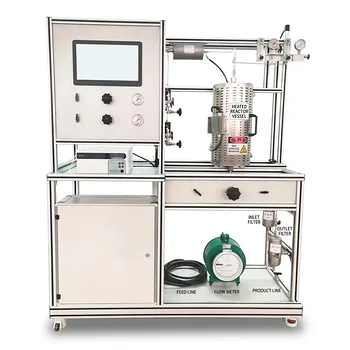
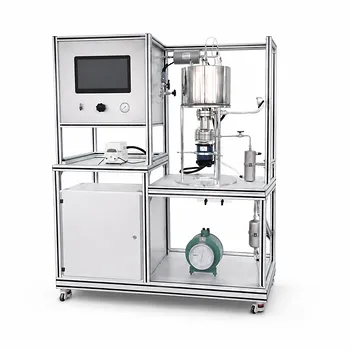
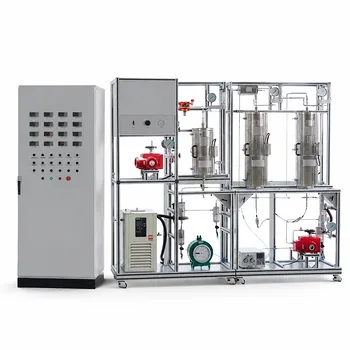
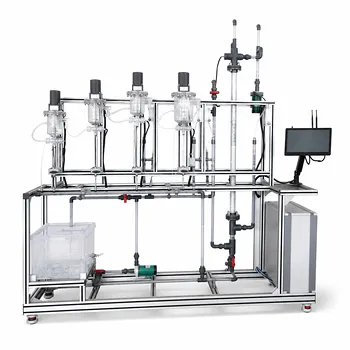
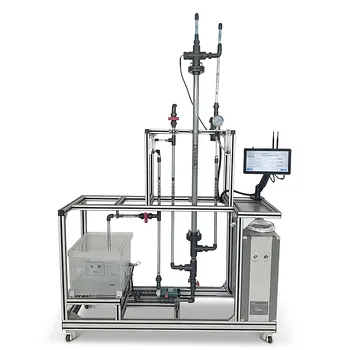
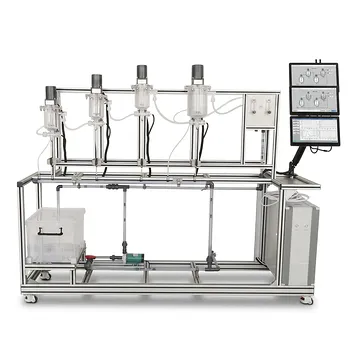
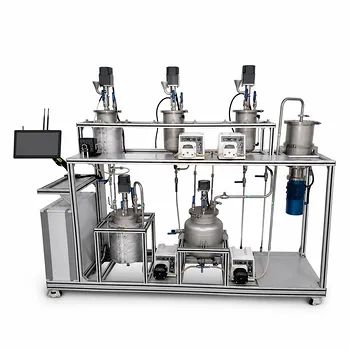
The shift from a clear, single-phase solution to a murky, multiphase mixture doesn’t just change what you see—it fundamentally alters how molecules meet and react. When scaling from a homogeneous to a heterogeneous system, the primary challenges center on mixing limitations and mass transfer control, which are often negligible at the bench. A pilot plant resolves these by providing a physical platform where impeller designs, baffle configurations, and feed rates can be adjusted, generating the experimental data needed to decouple fluid mechanics from kinetics and validate a successful scale-up.
Scaling from homogeneous to heterogeneous conditions turns mixing and interphase transport into performance‑limiting steps. Pilot plants allow you to study these physical phenomena directly, capture representative hydrodynamic and kinetic data, and transform scale‑up from an assumption‑laden exercise into a validated, data‑driven process.
The Hidden Complexity of Heterogeneous Systems
Homogeneous reactions enjoy rapid, intimate contact between all reactants. Once a second phase appears, the system’s behavior is no longer ruled purely by chemical kinetics—physical transport steps become decisive.
Why Mixing Becomes the Rate‑Limiting Step
In laboratory glassware, blend times are often just 1–2 seconds, effectively masking any mixing deficiency. Scale up that same chemistry to a pilot vessel, and blend times can easily stretch to 30 seconds or more. This slow mixing creates localized zones of high reagent concentration, which promote unwanted side reactions and erode product selectivity.
To quantify the risk before building a pilot, you can calculate the Damköhler number (Da)—the ratio of the characteristic mixing timescale to the reaction timescale. A Da value much greater than 1 signals that mixing will dramatically influence conversion and selectivity, demanding careful scale‑up attention.
Mass Transfer: The New Bottleneck
In heterogeneous systems, reaction rates become gated by how fast a species moves from one phase to another. Whether you’re dealing with gas‑liquid oxidation, liquid‑liquid extraction, or suspended solids, the volumetric mass transfer coefficient (kLa) and the just‑suspended speed (Njs) become critical design parameters.
A reactor agitator optimized for a single‑phase solution rarely provides adequate phase dispersion. Poor mass transfer reduces the effective interfacial area, starves the reaction, and can even allow catalyst deactivation—for example, palladium precipitation in the Wacker‑type acetaldehyde synthesis.
Heat Transfer Dangers in Multiphase Reactions
Heterogeneous reactions often concentrate energy release near phase interfaces or within viscous slugs. Bulk polymerization of methyl methacrylate is a classic case: autoacceleration (the gel effect) causes viscosity to spike, trapping heat and generating local hot spots. Without rapid heat removal, these thermal runaways can rupture equipment or degrade product.
Pilot plants let you map these hot spots and test multi‑stage temperature control strategies under realistic fluid‑dynamic conditions—something no computational model alone can guarantee.
How Reactor Pilot Plants Bridge the Gap
Pilot plants operate at an intermediate scale where physical effects are no longer masked, yet you still have the flexibility to isolate and study them.
Decoupling Physical Effects from Reaction Kinetics
A modular pilot reactor allows you to change impeller type, baffle configuration, and feed point location while holding chemistry constant. You can measure blend times, gas uptake rates, and solids suspension performance under relevant Reynolds numbers and power‑per‑volume ratios. This separation of mass transfer, heat transfer, and fluid mechanics from the intrinsic kinetics is impossible using glassware alone, and it is the foundation of a trustworthy design of experiments (DoE).
Validating Scale‑Up with Real‑World Data
Each unit operation has a maximum reliable scale‑up factor. Distillation columns might go from pilot to production with a factor of 1,000–50,000, but crystallization is riskily limited to 20–30, and gas‑solid fluidized beds to 50–100. A pilot plant targets these high‑risk steps, collecting representative hydrodynamic and kinetic data that validate your computational simulations. This data de‑risks the final commercial design and justifies the capital expense.
In‑Situ Monitoring and Safe Parameter Optimization
High‑temperature heterogeneous systems complicate sampling: cooling a sample during withdrawal can shift equilibrium compositions, producing misleading data. Pilot plants tackle this with in‑situ analytical instruments (spectroscopy, calorimetry) or rapid quenching methods that freeze the true process state.
In the industrial oxidation of ethylene to acetaldehyde, a pilot reactor with precise temperature (≈100 °C) and pressure (≈0.4 MPa) controls allows you to monitor catalyst coordination states, prevent metallic palladium precipitation, and optimize the air‑regeneration rate of the copper chloride co‑catalyst—all while safely managing the exotherm.
Common Pitfalls and Limitations to Anticipate
Even with a pilot plant, certain traps can undermine your scale‑up effort.
- Mismatched similarity: You cannot simultaneously keep tip speed, rotational speed, power per volume, and Reynolds number constant when scaling. Choosing the wrong similarity criterion can recreate bench‑scale mixing limitations in your pilot, offering false confidence.
- Beyond the reliable scale‑up window: If you attempt to jump directly from a pilot to a full‑scale crystallizer by a factor of 100, you are operating in a technically risky zone where flow patterns and heat transfer regimes will be unrecognizable.
- False representativeness: A pilot unit operated as a simple stirred tank may mask the feed‑distribution problems that will plague a multi‑injection commercial reactor. Always mimic the intended commercial geometry and feeding strategy as closely as possible.
- Time and cost: Pilot campaigns are not trivial—they require skilled operators, analytical support, and weeks of steady‑state operation. Rushing this phase often results in having to redo the work at larger scale, where mistakes cost far more.
Making the Right Choice for Your Scale‑Up Strategy
Your pilot plant approach must align with the specific physics that dominate your chemistry.
- If your primary focus is fast, mixing‑sensitive kinetics: Run comparative laboratory tests first (slow addition with good mixing vs. fast addition with poor mixing) and calculate the Damköhler number; if Da is high, pilot studies with adjustable agitation are non‑negotiable.
- If your primary focus is gas‑liquid or liquid‑liquid mass transfer: Design the pilot to quantify kLa and solids suspension (Njs) across a range of agitator speeds; use that data to anchor your scale‑up correlations.
- If your primary focus is a viscous polymerization prone to autoacceleration: Use a pilot plant with high‑torque agitators and multi‑zone temperature control, and validate a pre‑polymerization step to manage shrinkage and heat before the final mold transfer.
- If your primary focus is obtaining accurate thermodynamic or equilibrium data: Equip the pilot with in‑situ spectroscopy or implement a validated rapid‑quench sample protocol to avoid composition shifts during extraction.
When you treat a pilot plant as an experimental bridge—not a miniature production unit—you gain the physical insight needed to turn multiphase complexity from a scale‑up barrier into a well‑controlled, profitable reality.
Summary Table:
| Challenge | Key Impact & Risks | Pilot Plant Solution |
|---|---|---|
| Mixing Limitations | Long blend times, side reactions, low selectivity | Adjust impellers, baffles, and feed points to optimize fluid dynamics. |
| Mass Transfer Bottlenecks | Low kLa, phase separation, catalyst deactivation | Measure kLa and Njs under realistic Reynolds numbers to optimize dispersion. |
| Heat Transfer Risks | Thermal runaway, hot spots, autoacceleration | Map temperature profiles and validate multi-stage cooling strategies. |
Scale Up with Confidence Using LABPARK Pilot Plants
Don't let mixing limitations and mass transfer bottlenecks stall your chemical process scale-up. LABPARK provides high-quality Educational and Vocational Unit Operations Pilot Plants in chemical engineering, bioprocess & biotech, and environmental & water treatment. Designed specifically to help universities, research institutes, and enterprises bridge the gap from bench to commercial production, our systems deliver the precise hydrodynamic and kinetic data needed to de-risk your operations.
Contact LABPARK today to find the perfect pilot plant solution for your facility.
Related Products
- Fixed-Bed Chemical Reaction and Gas Dust Tar Removal Unit Operations Pilot Plant
- Multi-Reactor Educational Pilot Plant for Reaction Engineering Unit Operations
- Fixed Bed Gas Solid Catalytic Reaction Educational Pilot Plant
- 100L Continuous Loop Hydrogenation Educational Unit Operations Pilot Plant
- Internal Circulation Gradient Free Catalytic Reaction Educational Pilot Plant
People Also Ask
- When to transition from PID to adaptive control in pilot plants? Key process indicators.
- How do deviations in estimating latent heat impact pilot plant thermal systems? Avoid hardware mis-sizing.
- Why Compare Predicted and Experimental Excess Enthalpy? Key to Accurate Pilot Plant Scale-up
- How to study gasification in pilot plants? Compare exit gas composition & efficiency
- Why Use PTFE & Hastelloy in Chemical Pilot Plants? Prevent Corrosion & Ensure Safety