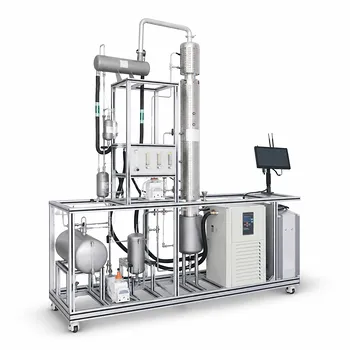
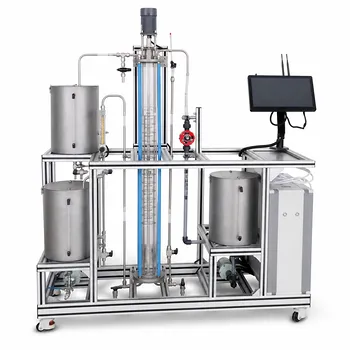
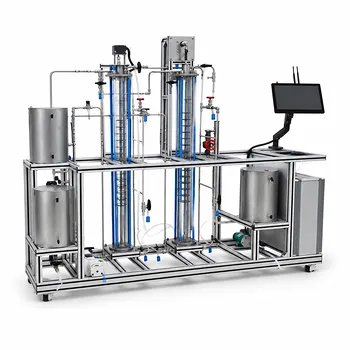
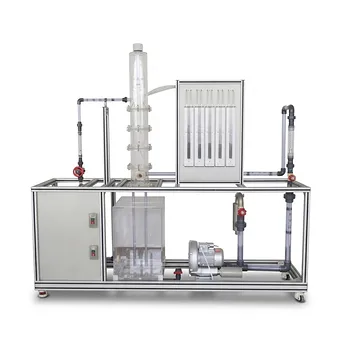
Pressure control in a distillation pilot plant is not a one-size-fits-all task—it directly determines the column’s vapor-liquid equilibrium and stability. The four typical methods are direct venting, condenser venting, coolant flow regulation, and variable heat transfer area. Their selection depends critically on the process medium: direct venting is only safe for non‑hazardous streams, while the other three closed‑loop techniques are required when handling toxic, flammable, or thermally sensitive fluids.
The choice of pressure control method hinges on the safety profile, phase behavior, and thermal sensitivity of the process medium. Understanding these differences lets you protect the equipment, recover valuable products, and replicate industrial conditions in a pilot setting with absolute confidence.
The Four Core Pressure Control Strategies
Every pilot-scale distillation column needs a way to impose and hold the proper pressure. The following four methods cover the vast majority of installations.
Direct Venting: The Simplest Path
A control valve vents vapor directly to the atmosphere or, more commonly in a pilot plant, to a recovery system.
Direct venting is the most straightforward and lowest‑cost solution.
However, it releases process fluid to the surroundings. That makes it unacceptable for any stream that is toxic, flammable, or economically valuable—those must be routed to a scrubber or a closed gas recovery unit instead. In a pilot environment, this method is typically reserved for benign, water‑like systems or non‑volatile vent streams.
Condenser Venting: Purging the In‑Condensables
Here a valve releases the non‑condensable gases that accumulate downstream of the condenser, directly regulating column pressure.
The strategy maintains control by removing inert components that would otherwise blanket the condenser and raise the pressure.
Because the vent is after the primary condenser, the escaping stream is richer in non‑condensables and leaner in condensable product. Still, if the medium is hazardous, the vented gas must still be sent to a scrubber or flare. This method finds wide use in both atmospheric and pressurized pilots for mixtures that release light inerts.
Coolant Flow Regulation: Mastering the Condensation Rate
By adjusting the flow rate of the cooling medium to the condenser, you directly change the rate of vapor condensation and, therefore, the system pressure.
More coolant → more condensation → lower pressure; less coolant → higher pressure.
This is a fully closed‑loop control scheme that never opens the column to the environment. It is safe for toxic, flammable, and high‑value materials because the entire control takes place on the utility side. Pilot plants often combine coolant flow regulation with a dedicated temperature control loop to keep the condenser dynamics fast and predictable.
Variable Heat Transfer Area: Controlling via Condenser Level
Some pilot columns deliberately flood part of the condenser shell with liquid, varying the effective heat transfer area.
When the condensate level rises, less metal surface is available for cooling, the condensation rate drops, and the pressure increases. Lowering the level exposes more area and pulls the pressure down.
Like coolant regulation, this is a closed strategy that never vents process vapors. It can respond faster than coolant throttling in certain exchangers and is especially attractive for vacuum operations where maintaining a tight, sealed system is critical.
How the Process Medium Shapes the Pressure Control Decision
The properties of the feed mixture do more than just select the operating pressure range—they directly dictate which of the four control strategies is viable.
Toxicity, Flammability, and Product Value
The primary divider is whether the vapor can be safely released.
- Benign, low‑value solvents (e.g., water, atmospheric‑pressure ethanol‑water) can often use direct venting, keeping the installation simple.
- Toxic, flammable, or expensive products force you into closed methods: condenser venting (with downstream treatment), coolant flow regulation, or variable area. Pilot plants handling chlorinated solvents, light hydrocarbons, or pharmaceutical intermediates almost always rely on the latter two because they maintain a fully sealed system.
Boiling Range and Thermal Sensitivity
The mixture’s normal boiling curve determines the pressure regime—atmospheric, pressurized, or vacuum—and that regime influences the control method choices.
- Low‑boilers (boiling below room temperature) require pressurized distillation. Here, pressure is often held by a back‑pressure regulator on the vent, but if the medium is also hazardous, the ultimate control may cascade to a coolant‑flow or variable‑area loop that works against the back‑pressure valve.
- Heat‑sensitive mixtures (common in bioprocess and fine‑chemical pilots) demand vacuum distillation to prevent thermal degradation. In this vacuum range, direct atmospheric venting is impossible; control instead leverages variable heat transfer area or coolant flow regulation in combination with a vacuum pump. The supplementary notes emphasize that for reproducible vapor‑liquid equilibrium, absolute pressure must be measured and controlled, not gauge or vacuum pressure, because ambient conditions vary with altitude.
- Atmospheric‑range mixtures (boiling 25–150 °C) give the most flexibility: direct venting for safe media, condenser venting for inerts, or the closed utility‑side loops when the process demands containment.
Facility and Equipment Constraints
Pilot‑plant vessels often have a working pressure range of 0.05 bar to 3 bar and temperature limits from -20 °C to 150 °C dictated by jacketed systems and heat transfer fluid services.
These physical boundaries mean the pressure control method must accommodate both vacuum and moderate pressure in a single skid. Variable heat transfer area and coolant flow regulation are particularly forgiving across this wide range, whereas direct venting cannot hold vacuum and becomes unsafe at the higher pressures if the medium is hazardous.
Understanding the Trade‑offs
No single method is perfect; each brings a set of operational compromises you must weigh.
- Direct Venting trades product loss and safety risk for mechanical simplicity. It can also introduce compositional disturbances if a sudden pressure drop flashes volatile components.
- Condenser Venting may still discharge small amounts of condensable vapors if the condenser is not perfectly efficient. It also requires a reliable source of sweep gas if you want to actively control inert accumulation.
- Coolant Flow Regulation introduces thermal inertia. A change in cooling water flow takes time to propagate through the heat exchanger, which can slow disturbance rejection—especially problematic during feed rate or composition upsets.
- Variable Heat Transfer Area depends on precise level measurement inside the condenser. Foaming, fouling, or miscalculated level setpoints can lead to oscillations, and the mechanical arrangement may be more complex than a simple coolant valve.
Making the Right Choice for Your Pilot Plant
Your decision must align with your most critical operational priority. Use the following guide to map your goal to a starting strategy.
- If your primary focus is maximizing uptime with non‑hazardous, low‑cost feeds: Direct venting offers the lowest equipment burden and is perfectly adequate for educational demonstrations involving water‑ethanol or similar safe mixtures.
- If your primary focus is handling hazardous or high‑value streams without any atmospheric release: Start with coolant flow regulation—it is robust, widely understood, and keeps the entire process boundary intact.
- If your primary focus is achieving extremely stable vacuum operation for heat‑sensitive bio‑products: Combine variable heat transfer area control with absolute pressure monitoring to eliminate product degradation and maintain day‑to‑day reproducibility.
- If your primary focus is managing inerts that accumulate in a recycle loop or closed battery: Employ condenser venting with a downstream scrubber, and augment it with coolant flow trimming for fine pressure hold.
Once you align the pressure control philosophy with the true nature of your process medium, the pilot plant becomes a reliable mirror of industrial reality, not just a piece of laboratory equipment.
Summary Table:
| Pressure Control Method | Best Suited For | Key Advantage | Major Limitation |
|---|---|---|---|
| Direct Venting | Benign, low-cost media (e.g., water) | Simplest and lowest cost | Unsafe for toxic or flammable streams |
| Condenser Venting | Systems with accumulating inerts | Efficiently purges non-condensables | Requires downstream scrubbing for hazards |
| Coolant Flow Regulation | Toxic, flammable, or high-value media | Fully closed-loop utility-side control | Thermal inertia slows response time |
| Variable Heat Transfer Area | Vacuum & heat-sensitive systems | Fast response, maintains tight seal | Higher complexity in level control |
Optimize Your Distillation Processes with LABPARK
Achieving precise pressure control is critical to securing accurate vapor-liquid equilibrium data in your pilot studies. LABPARK designs and manufactures premium Educational and Vocational Unit Operations Pilot Plants in chemical engineering, bioprocess & biotech, and environmental & water treatment.
We help universities, research institutes, and enterprises configure safe, reliable, and highly stable distillation systems tailored to their specific process media.
Ready to elevate your research or training capabilities? Contact our engineering experts today to find the perfect pilot plant solution for your facility!
Related Products
- Continuous Sieve-Plate Distillation Pilot Plant for Unit Operations Laboratory Education
- Multi-Functional Special Distillation Educational Pilot Plant
- Multi-Modal Distillation Unit Operations Training Pilot Plant
- Continuous Batch Extractive Distillation Educational Pilot Plant
- Dual-Mode Rectification Pilot Plant for Practical Training Unit Operations
People Also Ask
- How to select the right activity coefficient model (Wilson, NRTL, UNIQUAC) for distillation pilot plants?
- How can real-time carbon number prediction improve distillation pilot plants? Optimize control.
- What are the primary reflux ratio control strategies? Master Distillation Unit Operations
- Why is vacuum operation capability an essential feature for a distillation unit operations pilot plant? Unlock Efficiency
- How does catalyst water concentration affect distillation pilot plant design? Key separation train choices.