A Roots blower delivers a gas flow rate that is directly proportional to its rotational speed—and critically, almost completely independent of the discharge pressure it works against. This pressure-insensitive, steady, and oil-free delivery is what makes it a standout choice for aeration in environmental water treatment pilot plants, where stable air supply must be maintained despite fluctuating water levels and back-pressure in the biological reactor.
The core advantage is that a Roots blower behaves like a positive displacement flow source, not a pressure source. In a pilot-scale aeration system, this means you get a consistent volume of air per revolution regardless of how deep or obstructed the diffuser is, ensuring repeatable experimental oxygen transfer rates without the steep flow droop that a centrifugal machine would suffer.
The Defining Operational Characteristics
A Roots blower is a rotary positive displacement machine that moves gas by trapping a fixed volume in the spaces between two figure-8 shaped rotors and the casing wall. This mechanical principle gives it a distinct set of operating traits that directly dictate where it excels in process engineering.
Flow Rate Is a Linear Function of Speed
The blower’s volumetric flow rate (( Q )) follows an almost ideal relationship with rotational speed (( N )): ( Q \propto N ). As long as the machine stays within its design clearances, every revolution sweeps out nearly the same geometric volume. This makes flow control extremely predictable—adjust the motor speed or pulley ratio, and you adjust the throughput in a linear, repeatable way.
Flow Is Virtually Immune to Discharge Pressure Changes
This is the single most important characteristic. A Roots blower does not compress internally; it pushes volume against whatever back-pressure exists. If the discharge pressure rises by 50% due to a deeper tank or fouled diffuser, the slip through the internal clearances increases only slightly. The delivered flow drops far less than it would in a centrifugal blower, giving you a nearly constant volume delivery over a wide pressure range.
Continuous and Relatively Uniform Gas Flow
Because the rotors engage in a continuous, non-contact sweeping motion, the discharge is pulse-free enough for most process applications. You get a steady stream of air without the pulsation dampeners often required by reciprocating compressors.
Simple, Compact, and Oil-Free Construction
The timing gears are oil-lubricated, but the compression chamber runs completely dry. There is no metal-to-metal contact, so lubricating oil can never contaminate the process gas. The unit is compact, has few wearing parts, and requires minimal maintenance—factors that matter in a pilot plant where uptime and clean gas are non-negotiable.
Why This Fits Aeration in Environmental Water Treatment Pilot Plants
Pilot-scale wastewater treatment systems present a unique set of challenges: they operate at small scale, demand high measurement repeatability, and face highly variable hydraulic loads. A Roots blower solves the core aeration challenge in a way that other blower types simply cannot match.
The Hydrostatic Pressure Fluctuation Problem
In an aeration basin, the back-pressure on the blower equals the water column height above the diffuser plus any losses in the piping. This pressure is never static. Water levels change with inflow and decant cycles. Diffuser fouling builds over weeks of an experiment. If the blower were a centrifugal machine, its flow would collapse as pressure increased, starving the biology of oxygen and ruining the experiment’s repeatability. A Roots blower treats these pressure swings as a minor annoyance, not a flow-changing event.
Guaranteeing Stable Oxygen Transfer
Aeration pilot plants study treatment kinetics, and those kinetics depend directly on the oxygen mass transfer rate. If airflow wanders because hydrostatic pressure drifted, the resulting dissolved oxygen data becomes nearly worthless. By delivering a stable, known airflow independent of downstream resistance, the Roots blower removes one of the biggest uncontrolled variables from the experimental design. You set the speed, and you know the flow—period.
Oil-Free Air Protects the Biological Culture
The activated sludge or biofilm in a pilot reactor is highly sensitive. Even a microscopic entrainment of oil from a lubricated compressor can coat the flocs, inhibit microbial activity, and skew toxicity studies. The Roots blower's oilless compression chamber guarantees that the aeration gas is as clean as the intake air, which is essential for both process validity and environmental discharge compliance.
Operational Nuances and Trade-offs
No machine is without its constraints. The exact characteristics that make a Roots blower ideal for aeration also create specific operating rules that pilot plant engineers must follow.
You Cannot Throttle the Outlet Valve
Because the blower is a positive displacement device, it will keep pushing a fixed volume regardless of downstream restriction. Closing the discharge valve does not reduce flow; it forces the blower to work against a deadhead, causing pressure to spike rapidly until either the relief valve lifts or serious damage occurs. Flow regulation must be achieved either by varying the rotational speed or, as commonly specified, using a bypass recirculation line that returns excess air to the suction side or vents it.
The Strict 85°C Temperature Limit
The rotors operate with extremely small clearances—often a fraction of a millimeter. If the discharge temperature exceeds approximately 85°C due to high-pressure operation or insufficient cooling, thermal expansion can close these clearances to zero. The result is catastrophic mechanical contact, rotor scoring, and potential seizure. Pilot plant operating procedures must always monitor discharge temperature and respect the pressure ratio limits.
Fixed Flow per Speed Is a Double-Edged Sword
The pressure independence is a blessing, but it also means you cannot “dial in” a new flow by simply choking a valve as you might with a centrifugal fan. If your pilot study requires rapid, wide-range airflow adjustment, you need a variable-speed drive or a carefully designed bypass system. This adds complexity, but for most aeration applications, the stable base flow is exactly what is desired.
Making the Right Choice for Your Pilot Plant
Your decision depends on whether the experiment prioritizes precise flow stability or wide turndown flexibility. Use the following guide to confirm that a Roots blower aligns with your goals.
- If your primary focus is reproducible oxygen transfer studies: A Roots blower is the definitive answer. Its pressure-independent flow eliminates a critical variable, letting you attribute changes in dissolved oxygen to biological activity, not blower drift.
- If your primary focus is piloting a process that will scale to a large centrifugal blower design: Consider the operating point carefully. At very high flows and low pressures, a centrifugal machine may be more energy-efficient at full scale. However, for the pilot plant itself, the Roots blower’s stable flow may still be required for valid data collection—just be aware of the scale-up mismatch.
- If your primary focus is aeration in a variable-depth or sequential batch reactor (SBR): The Roots blower is the natural fit because the discharge pressure changes continuously during fill, react, and decant phases, yet the air demand must remain rock-solid.
By understanding that a Roots blower is fundamentally a flow-constant device, not a pressure-constant device, you turn its unique operating physics into your experiment’s greatest control tool.
Summary Table:
| Operational Characteristic | Impact on Aeration Pilot Plants | Key Practical Benefit |
|---|---|---|
| Pressure-Independent Flow | Resists water level & diffuser pressure changes | Ensures stable, repeatable oxygen transfer rates |
| Linear Flow-to-Speed | Flow rate is directly proportional to RPM | Predictable flow control via VSD |
| Oil-Free Compression | Dry compression chamber, zero oil contact | Protects sensitive biological cultures from contamination |
| Positive Displacement | Cannot be throttled at the outlet | Requires bypass line or VSD to avoid overpressure damage |
Optimize Your Process Engineering with LABPARK
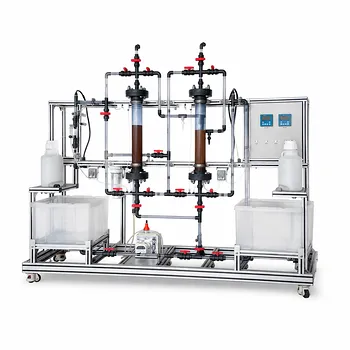
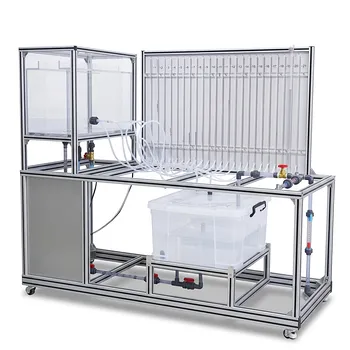
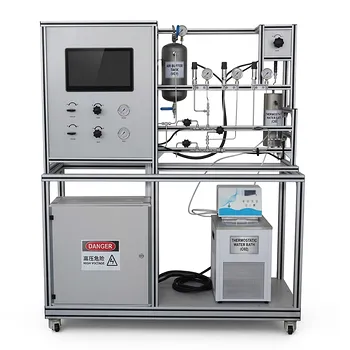
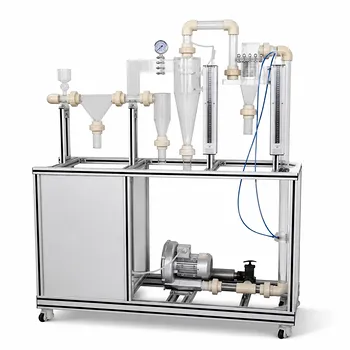
Are you looking to enhance your research and training capabilities? LABPARK provides state-of-the-art Educational and Vocational Unit Operations Pilot Plants in chemical engineering, bioprocess & biotech, and environmental & water treatment.
Designed specifically for universities, research institutes, and enterprises, our pilot plants integrate highly reliable components—like pressure-stable Roots blowers—to ensure your experiments yield precise, repeatable, and scale-up-ready data.
Contact our technical team today to discuss your laboratory's unique requirements!
Related Products
- Orifice and Venturi Flowmeter Calibration Educational Pilot Plant for Fluid Mechanics Laboratory
- Centrifugal Pump Performance and Orifice Flowmeter Calibration Educational Pilot Plant
- Constant Pressure Filtration Educational Unit Operations Pilot Plant
- Rising and Falling Film Evaporation Educational Unit Operations Pilot Plant
- Educational Compression Refrigeration Performance Determination Unit Operations Pilot Plant
People Also Ask
- What is the difference between static and stagnation pressure? Master Pilot Plant Flow Measurement
- How do pilot plants demonstrate siphon pressure variations? Visualizing Bernoulli's Energy Balance
- How do fluid mechanics training pilot plants facilitate the visualization and calculation of laminar and turbulent flows?
- How to update chemometric calibration models in pilot plants? Best practices for process engineers.
- Why are the laws of similitude critical in fluid flow pilot plants? Scale Up Safely