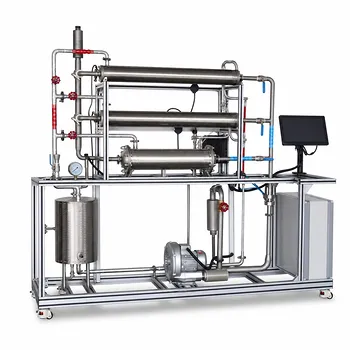
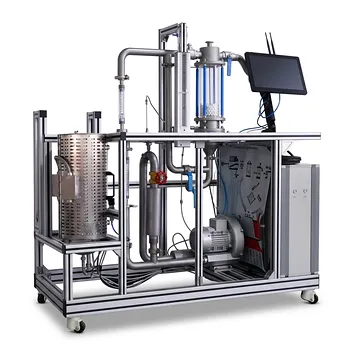
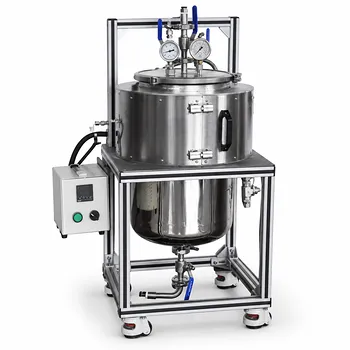
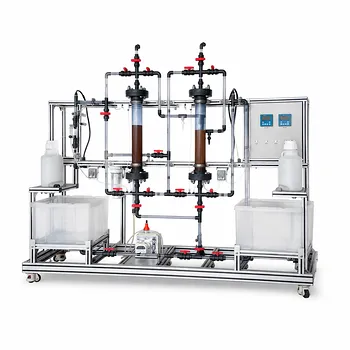
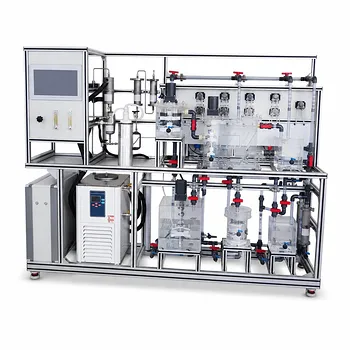
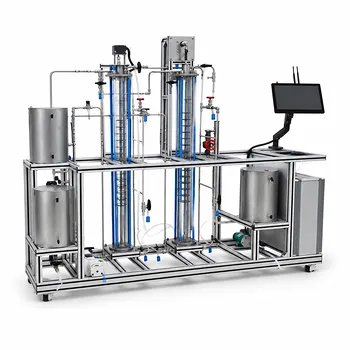
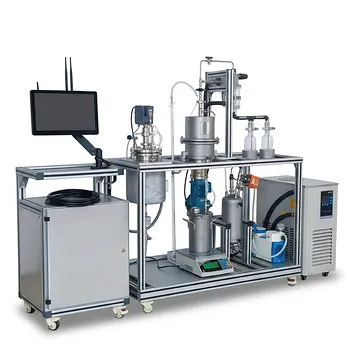
Heat exchangers are the workhorses of thermal processes. In chemical engineering education, pilot plants categorize these devices into three fundamental types based on how fluids interact thermally: direct contact, regenerative, and recuperative. Direct contact exchangers mix fluids for maximum efficiency, regenerative units use a solid matrix to store and release heat cyclically, and recuperative exchangers keep fluids separated by a solid wall, enabling contamination-free heat transfer.
At their core, these three heat exchanger categories differ in whether fluids mix, whether a solid storage medium is used intermittently, or whether a permanent solid wall separates the streams. In unit operations pilot plants, each type is deployed strategically: direct contact condensers demonstrate high-efficiency mixing, regenerative packed beds teach transient thermal storage and flow reversal, and recuperative shell-and-tube or plate exchangers provide the industrial standard for steady-state, separated-stream heat transfer calculations.
Understanding the Three Core Heat Exchange Mechanisms
These three classes are distinguished by the fundamental thermal pathway they establish.
Direct Contact: Near-Perfect Efficiency Through Mixing
In a direct contact heat exchanger, the hot and cold fluids are allowed to physically mix. This eliminates the resistance of a solid wall, making heat transfer exceptionally rapid and efficient. The classic example is a hybrid condenser where steam is condensed by spraying cooling water directly into the vapor space.
Regenerative: Cyclical Energy Storage in a Matrix
A regenerative heat exchanger uses a solid packing material—often ceramic or metallic—as a temporary heat reservoir. Hot fluid passes through the matrix, heating the solids; then a cold fluid flows through the same space to absorb that stored heat. This cyclic operation allows for high-temperature gas heating but inherently carries a risk of cross-contamination between the two fluid streams.
Recuperative: Continuous Transfer Through a Solid Wall
Recuperative (wall-type) exchangers keep the two fluids permanently separated by a solid barrier. Heat transfers continuously through the three classic steps: convection from the hot fluid to the wall, conduction through the wall, and convection from the wall to the cold fluid. This is the most common type in the process industries, with shell-and-tube and plate heat exchangers as prime examples.
How These Exchangers Appear in Unit Operations Pilot Plants
Educational pilot plants are not just miniature factories—they are engineered to make thermal principles visible, measurable, and controllable.
Direct Contact Demonstrations: Hybrid Condensation and Spray Towers
In pilot plants, direct contact systems are often represented by glass columns where steam rises to meet a falling film of cooling water. This setup teaches students to observe the high volumetric heat transfer rates possible when mixing is permissible. It also visually reinforces the condition: direct contact is only viable when the two fluids are chemically compatible and the process tolerates mixing, such as condensing a volatile vapor that will not contaminate the coolant.
Regenerative Setups: Packed Beds and Reverse-Flow Reactors
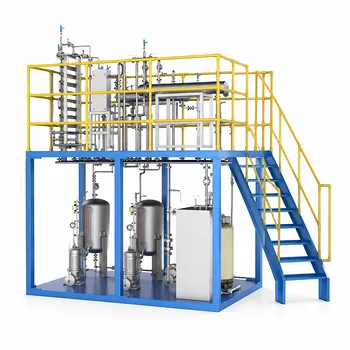
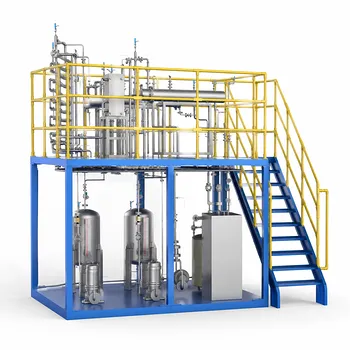
Simple regenerative demonstrations use a packed bed of heat-resistant solids in a double-pipe arrangement, alternating hot and cold gas flow. More advanced pilot plants feature a reverse-flow reactor with inert monoliths flanking a catalyst bed. By periodically reversing the flow direction with synchronized valves, students see a self-sustaining, symmetric temperature profile build up—an excellent platform for teaching transient heat transfer, dynamic process control, and energy integration.
Recuperative Configurations: The Industry Workhorse in the Lab
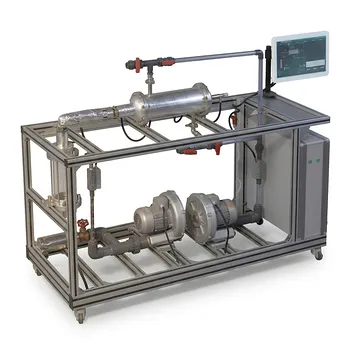
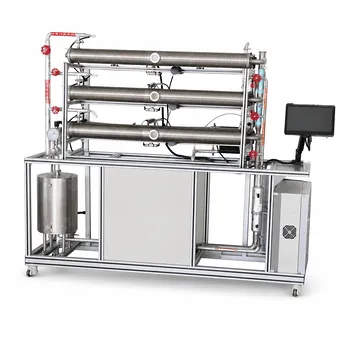
Recuperative exchangers dominate pilot plant curricula. A double-pipe heat exchanger is the simplest setup, perfect for illustrating basic counter-current and co-current temperature profiles. Shell-and-tube exchangers introduce baffle arrangements, shell-side flow patterns, and the calculation of individual heat transfer coefficients. Plate and frame exchangers offer flexibility: students can add or remove plates to change the heat transfer area, observing the direct impact on the overall heat transfer coefficient, which can reach up to 7000 W/(m²·°C) for low-viscosity fluids. These configurations allow students to systematically vary flow rates, measure logarithmic mean temperature differences, and validate theoretical predictions against experimental data.
Understanding the Trade-offs
Each heat exchanger type represents a compromise, and pilot plants must highlight these for realistic industrial understanding.
Efficiency vs. Fluid Integrity
Direct contact provides near-perfect thermal efficiency but at the cost of complete fluid mixing. If the process cannot tolerate any cross-contamination—even trace amounts—this design is immediately excluded. Regenerative exchangers offer a middle ground with high thermal efficiency for gases, yet a small amount of carryover mixing is always possible.
Thermal Inertia and Footprint
Regenerative systems are inherently bulky because they need a large solid mass to store energy effectively. This high thermal inertia makes them slow to respond to control changes, a key learning objective for students used to fast-reacting recuperative units. In contrast, recuperative plate exchangers are extremely compact and lightweight, but their high efficiency comes with low processing capacity and strict pressure-temperature limits (typically below 1500 kPa and 130 °C for rubber gaskets).
Maintenance and Flexibility
Recuperative plate exchangers are easy to disassemble, clean, and reconfigure—a major advantage in a teaching lab where numerous student groups run experiments. However, their gaskets are a common failure point, and the narrow flow paths are prone to plugging. Shell-and-tube units, while harder to clean mechanically in-situ, handle fouling and higher pressures much more robustly, reflecting the real industrial trade-off between compactness and robustness.
Making the Right Choice for Your Educational Pilot Plant
Selecting the right mix of heat exchanger types depends entirely on the specific learning outcomes you want to achieve. A well-designed pilot plant balances simplicity with industrial relevance.
- If your primary focus is teaching foundational heat transfer theory: Start with a double-pipe recuperative exchanger and a direct contact condenser. They make temperature driving forces and heat transfer coefficients easy to visualize and calculate without the complexity of complex flow paths.
- If your primary focus is demonstrating industrial-scale equipment: Prioritize a shell-and-tube and a plate-and-frame recuperative exchanger. Students must learn to dismantle, inspect, and correlate heat transfer for the equipment they will encounter in industry.
- If your primary focus is advanced process control and energy integration: Include a regenerative reverse-flow reactor module. Its transient, cyclic operation forces students to think beyond steady-state and confront the dynamics of thermal storage and automated valve sequencing.
- If your primary focus is understanding limitations and troubleshooting: Ensure the pilot plant runs a plate exchanger near its gasket temperature limit and a double-pipe unit with deliberately variated flow rates. This teaches the real-world meaning of pressure drop, thermal degradation, and the penalties of operating outside design envelopes.
A deliberate combination of direct contact, regenerative, and recuperative modules transforms a pilot plant from a simple flow loop into a comprehensive learning laboratory where every pipe, packing, and plate reinforces the core principles of chemical engineering thermodynamics.
Summary Table:
| Exchanger Type | Heat Transfer Mechanism | Fluid Interaction | Key Pilot Plant Example |
|---|---|---|---|
| Direct Contact | Direct mixing of hot and cold fluids | Complete mixing (no solid wall) | Hybrid Condenser / Spray Tower |
| Regenerative | Cyclic energy storage in a solid matrix | Intermittent flow through same matrix | Packed Bed / Reverse-Flow Reactor |
| Recuperative | Continuous transfer through a solid wall | Permanently separated streams | Shell-and-Tube / Plate & Frame Exchanger |
Elevate Your Chemical Engineering Lab with LABPARK
Hands-on training is essential for mastering complex thermal dynamics. LABPARK provides state-of-the-art Educational and Vocational Unit Operations Pilot Plants in chemical engineering, bioprocess & biotech, and environmental & water treatment. Designed specifically for universities, research institutes, and enterprises, our equipment helps students visualize and analyze heat transfer mechanisms in real-world scenarios.
Ready to upgrade your laboratory training equipment? Contact LABPARK today to discover how we can customize the perfect pilot plant solution for your educational goals.
Related Products
- Shell and Tube Heat Exchanger Heat Transfer Coefficient Determination Educational Pilot Plant
- Dual Mode Heat Transfer Pilot Plant for Unit Operations Training
- Comprehensive Multi-Modal Heat Transfer Unit Operations Pilot Plant for Engineering Training
- Three-Tube Heat Transfer Educational Pilot Plant for Unit Operations Training
- Comprehensive Heat Transfer Coefficient Determination Educational Unit Operations Pilot Plant
People Also Ask
- Why Apply LMTD Correction in Shell-and-Tube Pilot Plants & How to Determine It
- How is the fouling factor (Rd) evaluated? Key Pilot Plant Insights for Students
- How is fouling factor demonstrated using shell and tube pilot plants? Practical Lab Guide
- Why is simulating and calculating fouling factors crucial when operating educational heat exchanger pilot plants?
- Why Estimate Tube Wall Temp in Heat Exchangers? Master Pilot Plant Thermal Resistance