Knowledge Chemical Engineering Education What flowmeters are used in chemical pilot plants? Selection Guide
Author avatar

Tech Team · LABPARK

Updated 2 months ago

What flowmeters are used in chemical pilot plants? Selection Guide


The key categories are defined by their physical operating principle. The eight primary groups include differential pressure, variable area, positive displacement, turbine, electromagnetic, ultrasonic, Coriolis mass, and vortex shedding meters. The optimal selection is never purely technical; it is a calculated balancing act between the fluid’s physical properties, the process’s operational objectives, and the hard constraints of budget and installation space.

The fundamental purpose of a pilot plant flowmeter is to secure accurate material and energy balance data. While the device category matters, success depends entirely on how well the meter’s capabilities align with the fluid’s Reynolds number, density, conductivity, and the required turndown ratio (rangeability) of the experiment.

The Core Selection Matrix: Beyond the Category

Choosing a flowmeter requires looking past the brand name and focusing on the physics of your specific unit operation. A meter that performs flawlessly in a water-based heat transfer experiment may fail catastrophically in a high-viscosity polymer reaction.

The Physics of the Fluid

The fluid state is your first decision gate. Gases, clean liquids, slurries, and corrosive chemicals impose unique demands.

For conductive liquids (especially corrosive or slurry-based), Electromagnetic Flowmeters are the dominant choice. They introduce zero pressure drop, have no moving parts to clog, and remain unaffected by density or viscosity changes. This makes them invaluable in environmental, wastewater, or crystallization pilot loops.

For non-conductive, high-purity, or high-viscosity fluids, mechanical principles take over. Positive displacement meters offer precision for dosing viscous oils, while Coriolis meters provide the ultimate versatility by directly reading mass flow irrespective of fluid property changes.

The Tyranny of Reynolds Number and Flow Profile

Accuracy plummets if the flow profile is distorted by upstream piping. The Reynolds number dictates the flow regime—laminar, transitional, or turbulent—which directly influences meter performance.

You must assess the velocity profile. A Pitot tube measures a single point and is excellent for large-diameter gas ducts, but it assumes a known profile. Conversely, an orifice plate introduces a mechanical restriction to create a differential pressure.

The permanent pressure loss from an orifice plate is a critical trade-off. As the fluid passes the plate, it forms a vena contracta and then undergoes a turbulent expansion, converting mechanical energy into irreversible heat. While reliable, this energy drain can impact downstream pump efficiency.

Understanding the Trade-offs: Accuracy vs. Reality

The highest theoretical accuracy stated on a datasheet is meaningless if the meter interferes with the process or fails under experimental conditions. You must weigh the cost of ownership against the cost of error.

Direct Mass vs. Inferential Calculation

A pivotal decision point is whether to invest in a direct Coriolis mass flowmeter or an indirect volumetric system.

Coriolis meters provide true mass flow and density data directly by measuring the Coriolis force generated in a vibrating tube. This is indispensable for material balance closure in bioprocesses or chemical reactions where fluid composition shifts unpredictably. The trade-off is a higher initial cost, potential zero-point drift, and acute sensitivity to pipeline vibrations in a busy pilot plant environment.

An indirect system pairs a volumetric meter (like a turbine or vortex) with a density analyzer and a flow computer. While often more cost-effective and mechanically robust in educational settings, this method stacks sensor errors. Any error in the volumetric measurement, temperature compensation, or density reading compounds, introducing uncertainty into your mass balance.

Installation Constraints

A meter’s mechanical footprint often overrides its performance specs. Moving-vane or piston meters are unacceptable for fluids with suspended solids because of fouling risks.

Similarly, a vortex meter requires a minimum flow velocity to generate a measurable shedding frequency, creating a low-flow dead zone. If your pilot plant must idle at trickle flows, a rotameter or small-bore Coriolis meter—which lacks a high cut-off velocity—is the superior choice.

How to Apply This to Your Pilot Plant

Selecting a flowmeter is an act of prioritization. Your choice dictates the quality of data available for scale-up calculations.

  • If your primary focus is closing mass and energy balances with high precision: Select a Coriolis mass flowmeter. It eliminates density and property compensation errors inherent in volumetric meters.
  • If your primary focus is handling harsh, corrosive, or slurry-based fluids: Select an Electromagnetic flowmeter. Its non-invasive, obstructionless design prevents clogging and material compatibility issues.
  • If your primary focus is measuring gas flow in large-diameter conduits or minimizing pump energy costs: Select a Pitot tube or Venturi meter. They offer the lowest permanent pressure loss among differential pressure devices.
  • If your primary focus is a limited budget and educational demonstration of flow physics: Select a rotameter or orifice plate. Despite their limitations, they provide visible, intuitive feedback and have a low acquisition cost.

Data integrity begins at the sensor. By matching the meter’s physical limits to your unit operation’s transport phenomena, you transform the flowmeter from a simple gauge into a trusted instrument for discovery.

Summary Table:

Flowmeter Type Ideal Application Key Advantages Major Limitations
Coriolis Mass High-viscosity, high-purity fluids Direct mass & density reading High cost, vibration sensitive
Electromagnetic Conductive, corrosive fluids, slurries Zero pressure drop, no moving parts Only for conductive fluids
Differential Pressure Gas flow, general DP experiments Low cost (Orifice), low loss (Venturi) Permanent pressure loss (Orifice)
Rotameter / VA Budget-friendly educational labs Low cost, visual feedback Limited accuracy & automation

Optimizing fluid flow experiments requires the right equipment configuration. LABPARK provides state-of-the-art Educational and Vocational Unit Operations Pilot Plants in chemical engineering, bioprocess & biotech, and environmental & water treatment. Designed specifically for universities, research institutes, and enterprises, our systems ensure precise data collection and reliable performance.

Ready to elevate your laboratory capabilities? Contact LABPARK today to discuss your pilot plant requirements with our engineering team!

Related Products

People Also Ask

Related Products

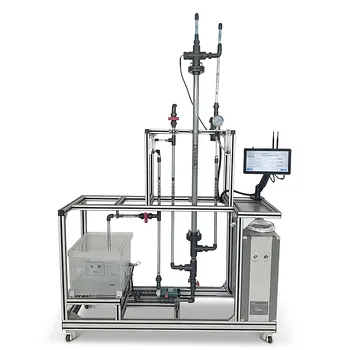
Orifice and Venturi Flowmeter Calibration Educational Pilot Plant for Fluid Mechanics Laboratory

Orifice and Venturi Flowmeter Calibration Educational Pilot Plant for Fluid Mechanics Laboratory

Enhance fluid dynamics education with the Orifice and Venturi Flowmeter Calibration Educational Unit Operations Pilot Plant, featuring transparent orifice and Venturi meters, industrial sensors, touchscreen interface for real-time data analysis and automatic coefficient calculations in engineering student laboratories.

Centrifugal Pump Performance and Orifice Flowmeter Calibration Educational Pilot Plant

Centrifugal Pump Performance and Orifice Flowmeter Calibration Educational Pilot Plant

This versatile educational pilot plant enables engineering students to conduct centrifugal pump performance tests, orifice flowmeter calibration, and fluid mechanics experiments using a transparent flow loop, industrial HMI, and 3D virtual simulation for a comprehensive hands-on learning experience.

Quantitative Dosing and Liquid Flow Control Educational Unit Operations Pilot Plant

Quantitative Dosing and Liquid Flow Control Educational Unit Operations Pilot Plant

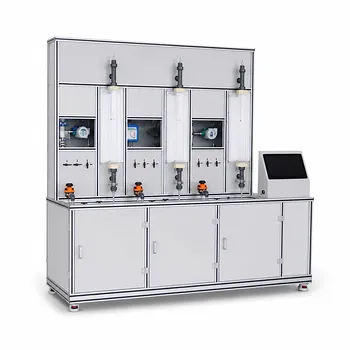
Explore industrial fluid transport and automated process control with this quantitative dosing and liquid flow control educational pilot plant, featuring local and remote control cabinets, variable speed metering pump, high-precision flow sensors, and PLC-based SCADA integration for engineering students.

Residence Time Distribution and Reactor Flow Characteristics Determination Educational Pilot Plant

Residence Time Distribution and Reactor Flow Characteristics Determination Educational Pilot Plant

This versatile educational pilot plant is designed for comprehensive study of residence time distribution and reactor flow characteristics, featuring multiple CSTRs in series, a tubular reactor, variable recycle loop, and automated real-time data acquisition, perfect for hands-on chemical engineering education.

Tubular Reactor Flow Characteristics Determination Educational Unit Operations Pilot Plant

Tubular Reactor Flow Characteristics Determination Educational Unit Operations Pilot Plant

Educational pilot plant for investigating tubular reactor flow characteristics and residence time distribution Features adjustable recycle for plug flow and backmixing studies industrial touchscreen interface and real-time data acquisition Ideal for chemical engineering unit operations laboratory training and education

Two Phase Flow Pattern Velocity Resistance Measurement Educational Pilot Plant

Two Phase Flow Pattern Velocity Resistance Measurement Educational Pilot Plant

Benchtop educational pilot plant for university labs studying gas-liquid two-phase flow patterns, velocity, and resistance across circular, square, and rectangular conduits. Features 15.6-inch touchscreen, 5G connectivity, differential pressure sensors, safe water-air operation. Supports chemical engineering curricula.

Multi Pump Fluid Transport Process Piping Unit Operations Training Pilot Plant

Multi Pump Fluid Transport Process Piping Unit Operations Training Pilot Plant

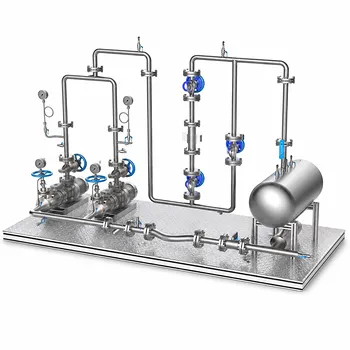
Industrial-scale multi-pump pilot plant for unit operations training in fluid transport and process piping, featuring real-material and semi-physical simulation modes, comprehensive pump and flowmeter calibration, and safety-enhanced two-tier platform, bridging academic theory and industrial practice for chemical engineering education.

Chemical Pipeline Assembly and Fluid Transport Practical Training Unit Operations Pilot Plant

Chemical Pipeline Assembly and Fluid Transport Practical Training Unit Operations Pilot Plant

Integrated skid-mounted engineering training pilot plant for university labs offers hands-on experience in chemical pipeline assembly, fluid transport, centrifugal pump operation, and pressure testing. Customizable system bridges academic theory and industrial practice with digital pre-lab resources and comprehensive tools.

Multi-Modal Distillation Unit Operations Training Pilot Plant

Multi-Modal Distillation Unit Operations Training Pilot Plant

Multi-modal distillation pilot plant for practical unit operations training in chemical engineering education. Features real, analog, and semi-physical simulation modes, industrial construction, customizable for university labs. Hands-on fractionation columns, SCADA control, safety systems. Includes sight glasses, sampling ports, closed-loop recycling.

Ethyl Acetate Synthesis Unit Operations Pilot Plant for Practical Training

Ethyl Acetate Synthesis Unit Operations Pilot Plant for Practical Training

Modular and customizable pilot plant for ethyl acetate synthesis practical training. Integrates esterification reaction, liquid-liquid extraction, neutralization, and sieve-plate distillation unit operations. Bridging theory and real-world industrial processes. Designed for university chemical engineering labs

Multi-Functional Special Distillation Educational Pilot Plant

Multi-Functional Special Distillation Educational Pilot Plant

Versatile multi-functional special distillation pilot plant for chemical engineering education. Supports continuous, vacuum, azeotropic, reactive, extractive distillation. Transparent glass columns enable real-time visual observation of hydrodynamics and separation processes.

Fluid Friction Resistance Determination Educational Unit Operations Pilot Plant

Fluid Friction Resistance Determination Educational Unit Operations Pilot Plant

Engineered bench-scale system for university engineering labs. Provides hands-on fluid mechanics experience: quantitative energy loss analysis, flow regime observation, friction coefficient determination. Features four-point pressure measurement, transparent sections, industrial touchscreen PLC, 3D virtual simulation. Ideal for chemical, mechanical, civil engineering.

Multi-Reactor Educational Pilot Plant for Reaction Engineering Unit Operations

Multi-Reactor Educational Pilot Plant for Reaction Engineering Unit Operations

Integrated bench-scale educational pilot plant for chemical engineering teaching featuring fixed bed fluidized bed and stirred tank reactors with web-based digital twin controls and safety interlocks for hands-on unit operations and reaction engineering comparative studies in one compact system.

100L Continuous Loop Hydrogenation Educational Unit Operations Pilot Plant

100L Continuous Loop Hydrogenation Educational Unit Operations Pilot Plant

This 100L continuous loop hydrogenation pilot plant is designed for chemical engineering education, featuring 316 stainless steel construction, advanced gas-liquid mass transfer components, explosion-proof safety systems, and a 15.6-inch touchscreen with 5G connectivity, cloud data logging, bridging theory and industry.

Bernoulli Equation Demonstration Unit Operations Pilot Plant

Bernoulli Equation Demonstration Unit Operations Pilot Plant

Laboratory pilot plant for Bernoulli's equation demonstration with transparent PVC pipes, 23 piezometer tubes for pressure measurement, and hands-on experiments. Designed for engineering education to study energy conservation, hydraulic grade line, and localized losses in fluid steady-flow systems.

Comprehensive Fluid Mechanics Educational Unit Operations Pilot Plant

Comprehensive Fluid Mechanics Educational Unit Operations Pilot Plant

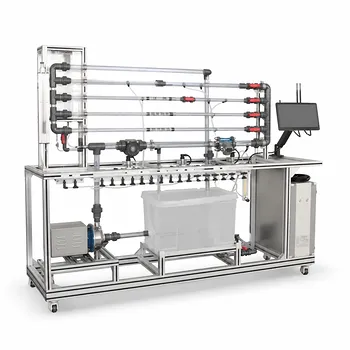
Hands-on fluid mechanics pilot plant for engineering education covering over 13 principles including pipe flow, minor losses, flowmeter calibration, and pump performance with industrial-grade components, smooth and rough piping, venturi and orifice flowmeters, and centrifugal pump testing and analysis.

Educational Unit Operations Pilot Plant for Intraparticle Diffusion Effective Factor Measurement

Educational Unit Operations Pilot Plant for Intraparticle Diffusion Effective Factor Measurement

Designed for chemical engineering university labs, this pilot plant allows hands-on determination of catalyst particle intraparticle diffusion effective factors and gas-solid reaction kinetics using a fixed-bed tubular reactor with industrial touchscreen control, bridging theory and practical reactor design.

Fixed-Bed Chemical Reaction and Gas Dust Tar Removal Unit Operations Pilot Plant

Fixed-Bed Chemical Reaction and Gas Dust Tar Removal Unit Operations Pilot Plant

Integrated educational pilot plant for studying catalytic gas-solid reactions and downstream gas purification. Features dual fixed-bed reactor, three-stage heating, and touchscreen control for hands-on engineering training. Ideal for chemical and environmental engineering curricula.

Electrolyte Distillation Purification and Formulation Educational Pilot Plant

Electrolyte Distillation Purification and Formulation Educational Pilot Plant

Integrated bench-to-pilot scale educational pilot plant for electrolyte distillation, purification, and formulation with borosilicate glass construction, PLC automation, touchscreen HMI, and advanced industrial safety features for hands-on chemical process training, ideal for chemical engineering and materials science curricula.

Methane Cracking Educational Unit Operations Pilot Plant

Methane Cracking Educational Unit Operations Pilot Plant

This bench-scale methane cracking educational pilot plant provides hands-on catalytic conversion training with a 1000°C furnace, seven mass flow controllers, and real-time automation for safe, curriculum-aligned experiments. Designed for university teaching of unit operations and reaction engineering.


Leave Your Message