Sodium, calcium, and magnesium in scale are the unmistakable chemical fingerprints of a salt water leak. In a pilot-scale heat exchanger or condenser, these contaminants almost always point to a breach in the condenser tubes, allowing cooling water to mix with the process stream. The immediate implication is severe, accelerated corrosion — especially for steel components throughout the unit, even when more resistant alloys like Monel are present.
The presence of sodium, calcium, and magnesium in scale signals a condenser tube leak. This intrusion of salt water triggers a cascade of corrosion that can rapidly degrade steel equipment, while masking the root cause behind misleading deposit analyses. Understanding this link allows chemical engineers to move from treating the symptom (scale) to eliminating the root cause (the leak and its corrosive chemistry).
The Corrosion Signature: Decoding Scale Chemistry
Why Sodium, Calcium, and Magnesium Signal a Leak
These three elements are rarely native to most chemical process streams in significant quantities. Instead, they are the dominant cations in typical cooling water — sodium from salt, calcium and magnesium from hardness.
When a condenser tube develops a leak, cooling water enters the process side. The heat of the unit evaporates the water, leaving these minerals behind as scale deposits. The analysis of the scale therefore becomes a diagnostic tool: detect sodium, calcium, and magnesium, and you have strong evidence of a leak.
The Hidden Danger: Salt Water and Corrosion
The primary reference makes a critical point: Monel is chosen for its resistance to specific chemicals like hydrofluoric acid. But it is not immune to salt water attack.
Once salt water enters through a leak, it creates an aggressive, chloride-rich environment. This accelerates the corrosion of steel trays, supports, and vessel walls throughout the column. The corrosion is often galvanic or pitting, and it can progress rapidly — far faster than the original process fluid would cause alone.
The Leak Pathway and Metal Attack
From Scale Deposit to Equipment Failure
The corrosion mechanism is straightforward but devastating. The salt water acts as a strong electrolyte. It bypasses the protective oxide layers on steel and, in the presence of dissolved oxygen, drives localized corrosion cells.
Even if the Monel components survive longer, the carbon steel parts in the same circuit suffer. Column internals, reboiler tubes, and associated piping can thin, pit, or crack. A single condenser leak can therefore propagate damage far beyond the heat exchanger itself, leading to unplanned shutdowns and costly repairs.
Why Monel Alone Cannot Save the Plant
Monel’s excellent resistance to hydrofluoric and many organic acids is a metallic property defined by its nickel-copper composition. However, chloride stress corrosion cracking and crevice corrosion can still affect Monel under certain temperature and concentration conditions.
In pilot plant environments, where vessels may be smaller and fluid stagnation points more common, crevices around gaskets or tube-tubesheet joints become ideal sites for chloride attack. Relying on Monel’s reputation without recognizing this vulnerability can lead to surprising failures.
Quantifying the Problem: Analytical Techniques for Scale
The Role of Classic Wet Chemistry in Scale Analysis
While modern spectroscopy can identify elements, quantifying calcium and magnesium in complex scales often requires separation from interfering ions. The supplementary references describe reliable gravimetric and titrimetric methods used in teaching laboratories.
Calcium is precipitated as calcium oxalate ($CaC_2O_4 \cdot H_2O$) at a controlled temperature and pH, then dissolved and titrated with standard permanganate. Magnesium is precipitated as magnesium hydroxyquinolate with 8-hydroxyquinoline, filtered, dried, and weighed as $MgO$. These methods not only give precise numbers but also teach the importance of process control — a skill directly transferable to pilot-plant operation.
Navigating Co-precipitation and Iron Interference
A major implication for chemical engineers is that scale analysis itself is not trivial. The calcium oxalate precipitation can be contaminated by co-precipitated magnesium oxalate or interfered with by iron.
In a pilot plant, where scale composition can be highly variable, such analytical errors can mask the true severity of a leak or lead to misdiagnosis. Mastering the adjustments — pH, temperature, digestion time — to produce pure precipitates is analogous to controlling a crystallizer or an ion-exchange column. The analytical bench teaches the same discipline required to run the pilot unit reliably.
Pilot Plants as Problem-Solving Platforms
Bridging Analytical Chemistry and Unit Operations
Pilot-scale heat exchangers and condensers serve more than just process development. They are training grounds where the connection between a laboratory titration and a plant-wide corrosion crisis becomes tangible.
When students or operators analyze their own scale samples, they see firsthand how a cooling water leak manifests as a solid deposit. They learn to correlate sodium levels with leak severity, and calcium and magnesium with scaling tendency. This integrated view — mixing analytical chemistry with unit operations — creates engineers who can troubleshoot real industrial systems faster and more effectively.
Optimizing Water Treatment and Leak Prevention
The analytical insight leads directly to corrective action. Once a leak is confirmed, the pilot plant team can implement or improve water treatment strategies: shift to softened or demineralized water on the coolant side, adjust corrosion inhibitor dosing, or install monitoring for conductivity and chlorides.
Pilot plants allow safe, controlled experimentation with these changes. The chemical engineering implication is clear: the pilot unit becomes a test bed for water quality management protocols that will later protect full-scale assets.
Understanding the Trade-offs
Material Selection vs. Process Robustness
Choosing Monel or other corrosion-resistant alloys addresses one aspect of the problem, but it is never a complete solution. The presence of salt water introduces failure modes that even premium materials may not withstand indefinitely.
The trade-off is between capital cost (exotic metals) and operational discipline (leak detection, water treatment). A pilot plant manager must decide whether to invest in better materials or in more rigorous maintenance and monitoring. Often, the right answer is a combination of both, guided by the scale analysis data.
Analytical Precision vs. Practical Speed
Wet chemical methods for calcium and magnesium are accurate but time-consuming. In a pilot plant running 24/7, there is pressure to get results quickly. A trade-off emerges: accept the risk of co-precipitation errors with faster, less controlled precipitation, or invest the time for perfect gravimetric analysis.
The deeper skill is knowing when rapid semi-quantitative data (e.g., from conductivity or simple test kits) is sufficient to confirm a leak, and when a full-scale analytical procedure is needed to calibrate a treatment program. This judgment is honed in the pilot plant environment.
Making the Right Choice for Your Pilot Plant
The implications of finding sodium, calcium, and magnesium in your condenser scale extend from immediate leak detection to long-term asset integrity. Here’s how to act on that information based on your primary focus:
- If your primary focus is rapid troubleshooting: Use the scale analysis as a definitive trigger to inspect condenser tube integrity. Shut down, plug leaking tubes, and test the cooling water circuit immediately.
- If your primary focus is long-term corrosion management: Reevaluate your coolant water quality and material compatibility. Pair Monel or steel with robust chemical treatment that controls chlorides and dissolved oxygen.
- If your primary focus is analytical skill development: Use the scale as a training sample. Perform the calcium oxalate and magnesium hydroxyquinolate methods, troubleshoot interferences, and link the data to the unit’s mass balance.
- If your primary focus is bridging lab and plant operations: Design a pilot-plant protocol where scale analysis results feed directly into water treatment adjustments, creating a closed-loop learning cycle that mirrors industrial best practices.
The story told by a few milligrams of scale is profound: it reveals a leak, predicts a corrosion failure, and teaches the chemical engineer how to stop both.
Summary Table:
| Contaminant | Likely Source | System Implication | Corrective Action |
|---|---|---|---|
| Sodium (Na) | Cooling water / Salt water leak | Severe galvanic & pitting corrosion | Inspect condenser tube integrity and plug leaks |
| Calcium (Ca) & Magnesium (Mg) | Cooling water hardness | Scale buildup, heat transfer resistance | Implement water softening & treatment protocols |
Optimize Your Unit Operations with LABPARK
Prevent corrosion failures and elevate practical learning in your facility. LABPARK provides high-quality Educational and Vocational Unit Operations Pilot Plants in chemical engineering, bioprocess & biotech, and environmental & water treatment.
Tailored for universities, research institutes, and enterprises, our pilot plants help students and researchers master real-world troubleshooting, process control, and scale analysis.
Ready to upgrade your lab? Contact us today to discuss your equipment needs!
Related Products
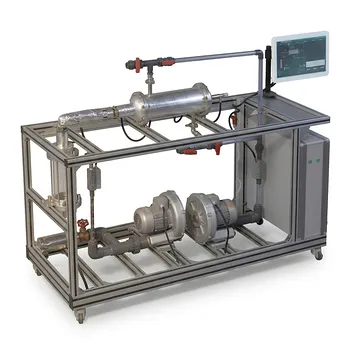
- Three-Tube Heat Transfer Educational Pilot Plant for Unit Operations Training
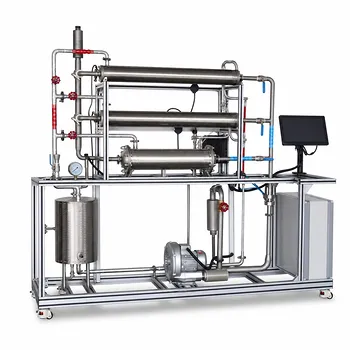
- Shell and Tube Heat Exchanger Heat Transfer Coefficient Determination Educational Pilot Plant
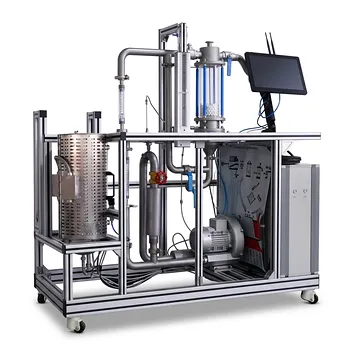
- Dual Mode Heat Transfer Pilot Plant for Unit Operations Training
- Comprehensive Multi-Modal Heat Transfer Unit Operations Pilot Plant for Engineering Training
- Comprehensive Heat Transfer Coefficient Determination Educational Unit Operations Pilot Plant
People Also Ask
- When is ε-NTU preferred over LMTD in pilot plants? Predict heat exchanger performance without iteration.
- How does cascade control achieve superior disturbance rejection in heat transfer pilot plants?
- How to configure heat transfer pilot plants for pinch analysis? Teach energy recovery.
- How can a heat transfer pilot plant demonstrate waste heat recovery? Learn to optimize industrial thermal systems.
- What engineering trade-offs must students analyze in a heat transfer pilot plant? Balance performance & cost.