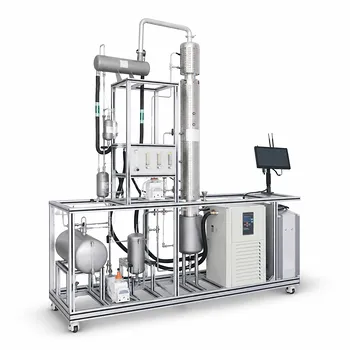
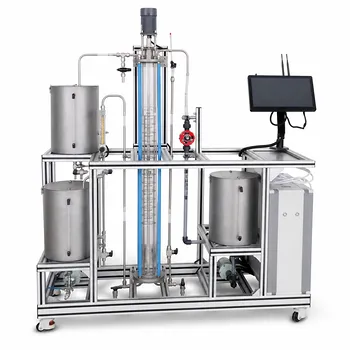
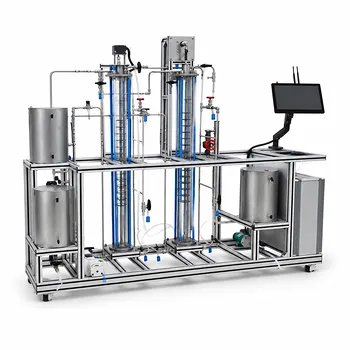
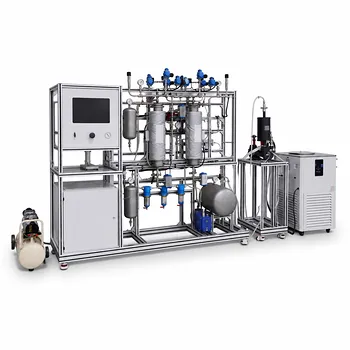
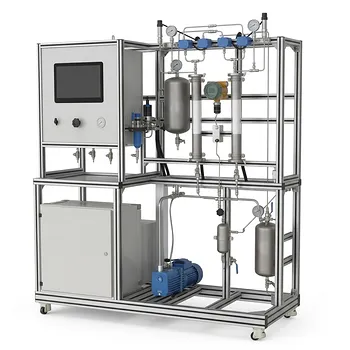
Here’s the simple rule: glass linings and high‑quality chemical ceramics will resist almost everything you throw at them — except hydrofluoric acid (HF) and strong caustic alkalis. If your pilot‑scale column is processing these two classes of chemicals, the silicate‑based material will fail, often rapidly and catastrophically.
While glass‑lined steel and ceramic tower packings deliver outstanding corrosion resistance against a vast range of acids, salts, and organic solvents, they share a hard chemical ceiling. Their Achilles’ heel is the combination of a silica backbone that dissolves in HF and a vulnerable silicate network that crumbles in concentrated alkaline solutions. Understanding exactly where that boundary sits is the key to safe, reliable pilot‑plant operation.
Why Glass and Ceramic Fail: The Chemistry Behind the Limits
To anticipate failure, you need to see the chemical attack at the molecular level. Glass linings and chemical ceramics both rely on a silicate (SiO₂) matrix. That shared chemistry creates the same two critical compatibility gaps.
The Hydrofluoric Acid Problem
Hydrofluoric acid attacks silica directly. The fluoride ion breaks the Si–O bonds and forms soluble hexafluorosilicate complexes.
Even dilute HF will etch, cloud, and eventually perforate a glass lining. Ceramic packings undergo the same dissolution, losing mechanical integrity and contaminating the process stream. There is no safe threshold — any fluid containing free fluoride ions, including compounds that can hydrolyze to release HF at operating temperatures, must be excluded from glass‑lined equipment.
The Alkaline Destabilization
Strong caustic alkalis — sodium hydroxide, potassium hydroxide, and other concentrated bases — dissolve the silicate network through a different mechanism. Hydroxide ions break the Si–O–Si bridges, depolymerizing the glass or ceramic into soluble silicates.
This attack becomes significant at pH above approximately 10–11, accelerating with temperature and concentration. In hot, strong alkaline environments, a glass‑lined column or ceramic packing can lose its protective surface and suffer severe thinning in a matter of hours. The process is often invisible until mechanical failure occurs.
Why This Matters in a Pilot‑Scale Column
Pilot columns combine high surface‑area exposure with aggressive thermal cycling. Chemical attack that is trivial in a static container becomes acute when reactive fluids flow over packing surfaces, down column walls, or through vapor spaces. Even brief excursions outside the compatibility window can compromise the structural integrity of the glass lining and create hazardous leaks.
Practical Limits in Distillation, Absorption, and Packing
The theoretical chemistry translates into hard operating rules for the three most common pilot‑scale applications.
Glass‑Lined Distillation Columns
Glass‑lined steel provides a seamless barrier against corrosive condensing acids like HCl, H₂SO₄, or HNO₃. However, if the feedstream carries trace fluoride or if the column is cleaned with a caustic solution that isn’t fully rinsed, the lining will degrade from the inside out. Reboiler temperatures that concentrate alkaline residues accelerate the damage.
Absorption Columns with Reactive Liquids
Absorption processes often use aqueous scrubbers. If the scrubbing medium is alkaline — an amine solution, a carbonate wash, or a simple NaOH spray — the internal glass surfaces and any ceramic packing will be continuously leached. The result is silica contamination of the liquid and progressive roughening of the lining, which reduces flow efficiency and increases pressure drop.
Ceramic Packing in Packed Columns
High‑quality chemical ceramic packing resists all common acids except for HF. But it has two critical limits:
- Strong alkaline environments: The attack is the same as with glass. Ceramic saddles, rings, and structured packings crumble when exposed to hot, high‑pH solutions.
- Mechanical fragility: While not a chemical limit per se, ceramic’s brittleness makes it susceptible to breakage during thermal shocks, pressure surges, or improper installation. Once cracked, the chemically resistant surface is compromised, exposing fresh surface to attack.
Understanding the Trade‑offs
No material is perfect. Recognizing what glass and ceramic give you — and what they take away — helps you make the right choice for each project.
The Unbeatable Strength
Against mineral and organic acids, neutral salts, and virtually all organic solvents, glass linings and chemical ceramics offer near‑universal inertness. They do not leach metal ions, they withstand temperatures that degrade plastics, and they provide the transparency needed for visual observation. In pilot environments, that combination of purity and feedback is invaluable.
The Critical Weakness
The clean divide between universal acid resistance and complete vulnerability to HF/alkalis creates a non‑negotiable selection gate. Before even considering a glass‑lined column or ceramic packing, you must confirm that the process stream — including any cleaning agents, startup fluids, and potential impurity buildups — is free of fluoride and strong caustic. A single misstep at pilot scale can destroy expensive assets and compromise safety.
Mitigation Measures That Help (but Don’t Cure)
While you can’t chemically fix the silica‑HF‑alkali conflict, you can surround the system with safeguards. Use PTFE gaskets to maintain seal reliability. Wrap external glass piping with protective plastic tape to contain spray in case of breakage. Ensure columns are properly vented to prevent dangerous pressure buildup. However, none of these measures expand the chemical compatibility window; they only manage the consequences of operating within it.
Making the Right Choice for Your Pilot Plant
Every pilot study is a balancing act between chemical resistance, mechanical needs, and budget. Use these guidelines to navigate the glass/ceramic decision.
- If your primary focus is acid‑catalyzed reactions or corrosive distillation without fluoride: Glass‑lined columns and ceramic packing are an ideal, proven combination. They will give you pure, repeatable results with minimal maintenance.
- If your process involves alkaline media or any fluoride‑containing compound: Move away from silicates entirely. Specify PTFE‑lined components, advanced plastic packing (with solvent and temperature limits), or a metal alloy specifically matched to your corrosion profile.
- If you need high‑temperature operation or vacuum service: Metal packing often outperforms ceramic mechanically, but you must verify long‑term corrosion resistance. Treat ceramic as your chemically inert fallback only when the stream is acidic and free of HF and strong alkalis.
- If the plant is used for hands‑on training or visual demonstration: The transparency of glass and the low cost of ceramic packing are powerful educational assets — provided the chemistry stays within the safe zone. Wrap all exposed glass and maintain strict chemical management protocols.
Choose the material that lets you simulate your process safely and faithfully, and you’ll avoid the classic pilot‑plant pitfall of learning a compatibility lesson the hard way.
Summary Table:
| Material | Excellent Compatibility | Vulnerabilities (Avoid) | Primary Failure Modes |
|---|---|---|---|
| Glass-Lined Steel | Mineral & organic acids, organic solvents, neutral salts | Hydrofluoric acid (HF), strong alkalis (pH > 10) | Silica dissolution, lining thinning, leakage |
| Chemical Ceramics | Most acids, organic solvents, high-temp processes | HF, hot alkaline solutions, thermal/mechanical shock | Cracking, crumbling of packing, process contamination |
Build a Safe and Reliable Pilot Plant with LABPARK
Choosing the right materials is critical to preventing catastrophic chemical failures. LABPARK provides state-of-the-art Educational and Vocational Unit Operations Pilot Plants in chemical engineering, bioprocess & biotech, and environmental & water treatment.
We assist universities, research institutes, and enterprises in selecting and configuring robust pilot-scale systems tailored to your specific chemical profiles.
Ready to design your next-generation pilot system? Contact LABPARK today to get started!
Related Products
- Continuous Sieve-Plate Distillation Pilot Plant for Unit Operations Laboratory Education
- Multi-Modal Distillation Unit Operations Training Pilot Plant
- Multi-Functional Special Distillation Educational Pilot Plant
- Continuous Batch Extractive Distillation Educational Pilot Plant
- Dual-Mode Rectification Pilot Plant for Practical Training Unit Operations
People Also Ask
- What are the primary reflux ratio control strategies? Master Distillation Unit Operations
- How can real-time carbon number prediction improve distillation pilot plants? Optimize control.
- Why is vacuum operation capability an essential feature for a distillation unit operations pilot plant? Unlock Efficiency
- How to select the right activity coefficient model (Wilson, NRTL, UNIQUAC) for distillation pilot plants?
- How does catalyst water concentration affect distillation pilot plant design? Key separation train choices.