Digital control valves bring an unmatched blend of precision and direct digital interfacing to fluid control, but their internal complexity can introduce cost and reliability concerns. Often referred to as “micro‑valves” or “binary array valves,” these devices manipulate flow by opening and closing a set of parallel, binary-weighted orifices. This design delivers exceptionally fine flow resolution and near-instant response, making them a powerful tool in research labs. However, the same intricate mechanism that provides these benefits also drives up manufacturing costs and makes the valve sensitive to communication glitches—trade-offs that can rule them out for many pilot‑scale systems.
For laboratory applications demanding micro‑flow precision, hysteresis‑free operation, and direct digital control, digital control valves are a leading choice. But their mechanical complexity, higher cost, and vulnerability to signal errors often tilt the balance toward conventional valves with positioners in budget‑conscious pilot plants where robust, simple operation is paramount.
The Distinctive Advantages of Digital Control Valves
Unrivaled Resolution Through Binary Orifices
An 8‑bit digital control valve uses a parallel array of orifices, each weighted to a power of two (2⁰, 2¹, up to 2⁷). By energizing the correct combination of solenoids, the valve can produce 256 distinct flow steps. This discrete, additive control yields ultra‑fine resolution, far exceeding what a conventional analog valve can achieve without highly specialized actuation. For micro‑flow research that requires subtly adjusting reagent streams or carrier gas flows, this granularity is a game changer.
Fast Response and Bubble-Tight Shut-Off
Because each orifice is individually opened or closed by a small solenoid, the entire array can switch states in milliseconds. This blazing response speed enables dynamic flow‑to‑flow transitions without the lag of stem travel or actuator loading. Moreover, in the fully closed state, the valves often achieve excellent shut‑off characteristics, minimizing leakage and ensuring that “zero” truly means zero flow—critical in applications like gas chromatography or catalyst testing.
Direct Digital Compatibility
Digital control valves inherently speak a binary language. They can interface directly with a computer, PLC, or microcontroller, requiring no intermediate digital‑to‑analog (D/A) converter. This eliminates conversion errors, simplifies the control loop, and allows for deterministic flow setting via standard I/O ports. For laboratory automation systems, this native compatibility reduces hardware overhead and accelerates integration.
Hysteresis‑Free, Linear Performance
Conventional globe or needle valves struggle with friction, stiction, and backlash that cause hysteresis—the valve position depends on whether you are opening or closing it. Digital control valves, by virtue of being an array of discrete on/off orifices, exhibit no such memory effect. When you command a certain flow step, you get that step, whether you arrived from a higher or lower flow. Combined with the binary‑weighted architecture, the resulting flow characteristic is highly linear, making calibration and modeling far simpler.
The Mechanical and Practical Limitations
Intricate Mechanics Drive Up Cost
That same multi‑orifice design that delivers precision introduces significant mechanical complexity. An 8‑bit valve contains at least eight individually actuated orifices, each requiring a solenoid, plunger, and precise seating. Manufacturing tolerances must be extremely tight to ensure consistent weighting of each flow path. This translates directly into higher initial purchase cost and greater ongoing maintenance expense compared to a single‑seated control valve with a positioner.
Sensitivity to Signal Transmission Errors
Because digital control valves rely on a parallel binary command (e.g., an 8‑bit word), a single flipped bit can open or close a completely wrong set of orifices. A momentary wiring issue, electromagnetic interference, or ground loop can corrupt the binary signal, leading to an incorrect valve opening. In continuous processes, such a glitch might cause sudden, unstable flow conditions that are hard to diagnose. Conventional analog valves, by contrast, degrade more gracefully under signal noise.
Not Always the Right Fit for Pilot Plants
In pilot‑scale unit operations, the primary control challenge is often reliable, repeatable modulation over a broad range, not micro‑flow precision. Here, engineers typically size valves based on the flow coefficient (Cv), targeting a valve that is 1 to 2 pipe sizes smaller than the line, with a maximum Cv at least 1.3 times the calculated maximum flow requirement. The operating point is chosen to stay within a stable band, often 30% below full capacity. For these duties, a simple globe or segmented ball valve with a smart positioner often provides the required control authority at a fraction of the cost and with a much longer track record in harsh environments. The added complexity of a digital valve rarely justifies its use when the primary need is robust, medium‑precision flow control.
Understanding the Trade-offs: When Precision Collides with Practicality
The Lab‑Pilot Plant Divide
A research-grade benchtop reactor thrives on sub‑milliliter‑per‑minute resolution and rapid set point changes for experimental design. Here, the digital valve’s cost and complexity are dwarfed by the value of better data. In a pilot plant, however, the flow meters are larger, the piping is bigger, and the control objective is often disturbance rejection rather than absolute granularity. The budget and robustness of a conventional valve with a 4–20 mA positioner becomes the more sensible choice. The pilot plant engineer’s sizing exercise (multiple Cv trials, accounting for pressure drop) is the same regardless of valve type, but the digital valve’s structural overhead adds risk without proportional benefit.
Maintenance Realities
A conventional valve with a positioner can be serviced by any instrument technician with standard tools; stem packing, actuator diaphragms, and I/P converters are widely known. A digital valve’s multi‑orifice array, however, demands specialized spare parts and deep knowledge of the binary actuation scheme. In a pilot plant that runs 24/7 experiments, that increased mean‑time‑to‑repair can be a hidden cost that eclipses the initial price tag.
Making the Right Choice for Your System
Selecting a fluid control valve means aligning its strengths with what your process truly demands.
- If your primary focus is ultra‑precise micro‑flow research: Choose a digital control valve. Its step‑less linearity, hysteresis‑free response, and direct digital command will give you data quality that conventional valves cannot match, especially in applications like catalyst screening or nanoliter dosing.
- If your primary focus is cost‑effective, reliable operation in a pilot plant: A conventional control valve with a digital positioner remains the industrial workhorse. It handles the higher flows, tolerates the electrical noise of a plant floor, and is far simpler to size, install, and maintain across long‑duration campaigns.
In the end, the “best” valve is the one that solves your core problem: exquisite resolution for the lab bench or robust, no‑surprises control for the pilot scale. Matching the valve’s character to the process’s true need is what turns smart engineering into operational success.
Summary Table:
| Aspect | Advantages of Digital Control Valves | Limitations & Challenges |
|---|---|---|
| Precision & Resolution | Ultra-fine resolution (e.g., 8-bit/256 steps) | Intricate mechanics drive up initial purchase costs |
| Response & Shut-off | Millisecond response times and bubble-tight shut-off | High maintenance complexity and specialized spare parts |
| System Integration | Direct digital compatibility (no D/A converter needed) | High sensitivity to signal transmission errors/noise |
| Flow Performance | Hysteresis-free, highly linear calibration | Less practical than conventional valves for pilot-scale Cv requirements |
Optimize Your Fluid Control Systems with LABPARK
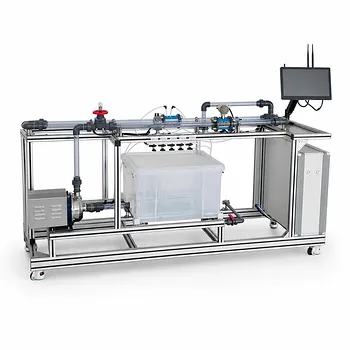
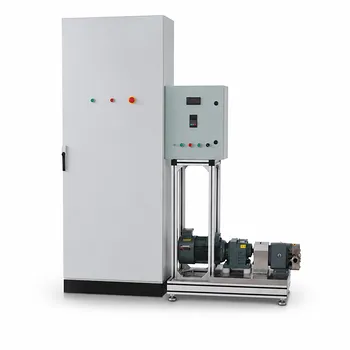
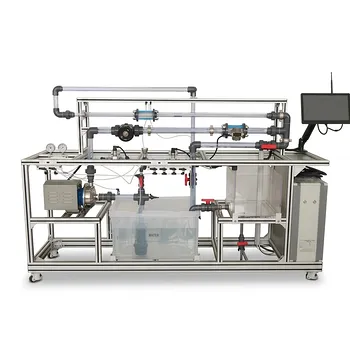
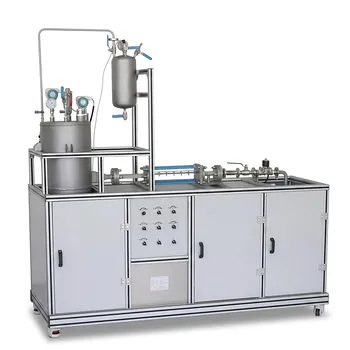
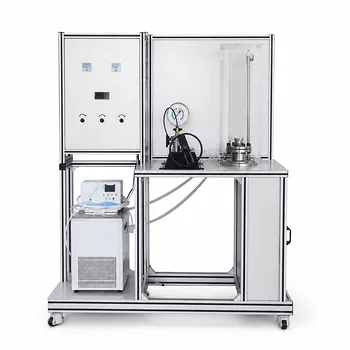
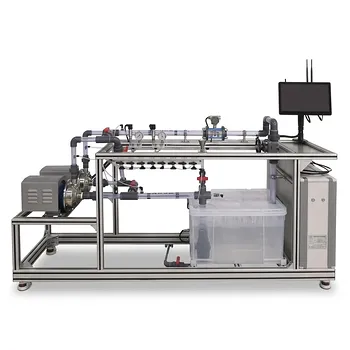
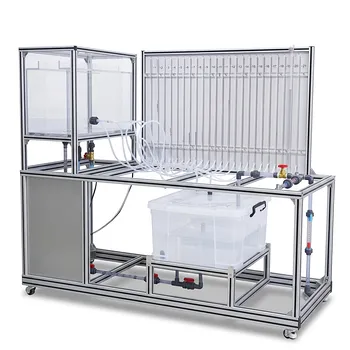
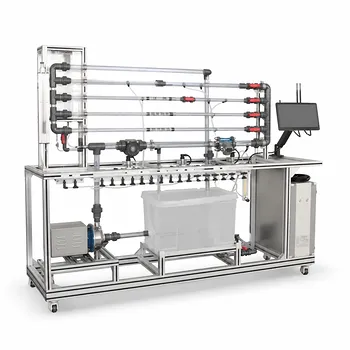
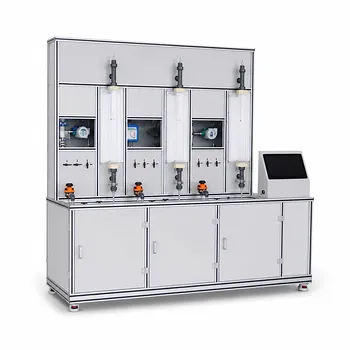
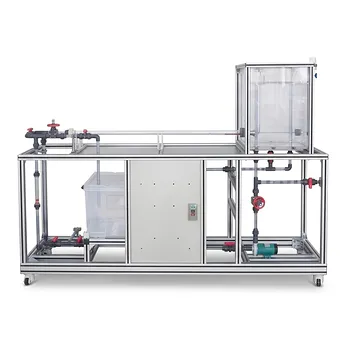
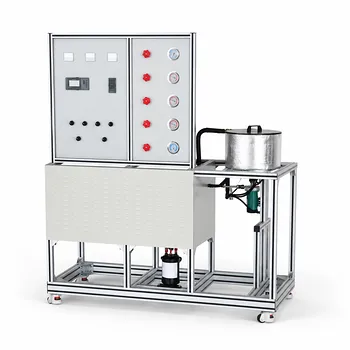
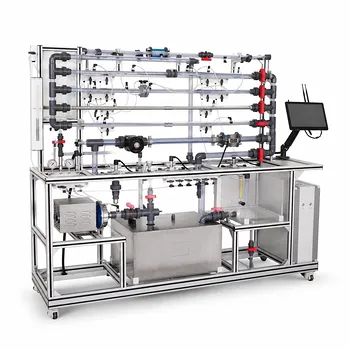
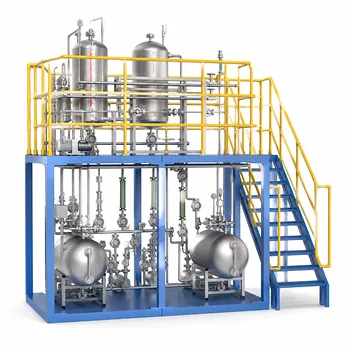
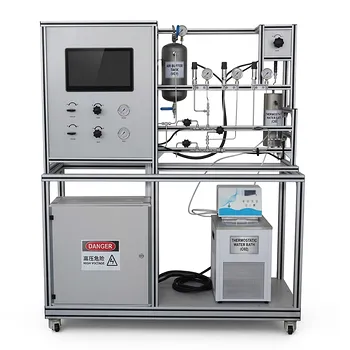
Choosing the right control valves is critical to ensuring experimental precision and operational safety. LABPARK provides high-quality Educational and Vocational Unit Operations Pilot Plants in chemical engineering, bioprocess & biotech, and environmental & water treatment tailored for universities, research institutes, and enterprises.
Let our engineering experts help you design, scale, and equip your laboratory or pilot plant with the perfect fluid control solutions. Contact LABPARK today to discuss your project requirements!
Related Products
- Orifice and Venturi Flowmeter Calibration Educational Pilot Plant for Fluid Mechanics Laboratory
- Quantitative Dosing and Liquid Flow Control Educational Unit Operations Pilot Plant
- Centrifugal Pump Performance and Orifice Flowmeter Calibration Educational Pilot Plant
- Cavitation Phenomenon Demonstration and Analysis Educational Unit Operations Pilot Plant
- Carbon Dioxide PVT Curve Determination Educational Unit Operations Pilot Plant
People Also Ask
- What is the difference between static and stagnation pressure? Master Pilot Plant Flow Measurement
- How do pilot plants demonstrate siphon pressure variations? Visualizing Bernoulli's Energy Balance
- How do fluid mechanics training pilot plants facilitate the visualization and calculation of laminar and turbulent flows?
- How to update chemometric calibration models in pilot plants? Best practices for process engineers.
- Why are the laws of similitude critical in fluid flow pilot plants? Scale Up Safely