The difference comes down to one critical alloying element: molybdenum. In pilot plants handling dilute acids or chloride-bearing solutions, 316 stainless steel is preferred over 304 because its molybdenum content (typically 2–3%) dramatically boosts resistance to pitting and stress corrosion cracking. This chemical upgrade prevents the rapid, localized attack that would otherwise compromise equipment integrity and process safety.
While 304 is a workhorse for general construction, it falters in the presence of chlorides and reducing acids. The strategic addition of molybdenum in 316 forms a more robust passive layer that defies localized corrosion, making it the baseline material for any pilot plant dealing with saline, acidic, or wastewater streams.
The Hidden Threat in Your Pilot Plant: Localized Corrosion
Not all corrosion announces itself with uniform rust. The real danger in chloride and dilute acid environments is insidious, pinpoint attacks that can perforate a tank or pipe with minimal overall weight loss.
Why 304 Fails Against Chlorides
304 stainless steel relies on a chromium-oxide film for protection. Chloride ions aggressively breach this passive layer, especially at crevices, gaskets, or surface deposits. Once initiated, pitting rapidly deepens, and stress corrosion cracking can fracture components under tensile loads — catastrophically and without warning.
The Particular Danger of Reducing Acids
Dilute acids like sulfuric acid are reducing agents. They strip away the passive film more aggressively than oxidizing environments. 304 lacks the necessary alloying elements to maintain a stable shield under these conditions, leading to wide-scale activation and rapid thinning of equipment walls.
Why Molybdenum is the Game-Changer
Molybdenum does not just “add a little corrosion resistance.” It fundamentally alters how the passive film behaves under attack. Understanding this is the key to material selection.
The Synergistic Protection Mechanism
Molybdenum works synergistically with chromium. It enriches the passive film and, crucially, promotes rapid re-passivation of damaged areas. In chloride-containing solutions, this means the pit initiation time is drastically extended, and once a tiny pit starts, the surrounding molybdenum-rich surface works to stifle its growth before it breaches the wall.
Quantifying the Advantage
The resistance to pitting is often expressed by the Pitting Resistance Equivalent Number (PREN). Thanks to its 2–3% molybdenum, 316 achieves a significantly higher PREN than 304. This isn’t a marginal improvement — it’s the difference between a component lasting for years versus failing in weeks in a pilot plant handling even modest chloride levels or dilute acids.
Applying This to Real-World Pilot Plant Operations
Pilot plants are particularly vulnerable. They often explore a wide range of process chemistries, encounter transient conditions, and operate with thinner-walled components than full-scale equipment. Safety margins are everything.
The True Cost of a Leak
A pin-hole leak in a pilot plant environment is not just a maintenance headache. It can be a significant safety event, exposing operators to hot, acidic, or toxic media. A single failure from chloride stress corrosion cracking can halt research and development for months, far outweighing the upfront cost savings of using 304.
Material Selection as Process Insurance
Switching to 316 or its low-carbon variant, 316L, is not about “better” metal — it’s about removing a known, predictable failure mode. For any pilot plant that might encounter saline solutions, chlorinated feedstocks, or pH swings into the acidic range, using 304 is an active gamble that often does not pay off.
Understanding the Trade-offs
No material is a one-size-fits-all solution. Being a trusted advisor means knowing when 316 hits its limits and what true alternatives exist.
When 316 Is No Longer Enough
While 316 handles typical acids and moderate chlorides, it can still suffer pitting in high-temperature, high-chloride brine or very low-pH, aggressive reducing conditions. At such extremes, super-austenitic or nickel-based alloys like Hastelloy C-276 become necessary, as their higher molybdenum and nickel content provide a step-change in durability.
Cost, Strength, and Mechanical Demands
316 is more expensive than 304, and this often sparks a debate. However, factor in downtime and safety, and the lifecycle cost almost always favors a pitting-resistant design. Furthermore, if process pressures demand higher mechanical strength alongside corrosion resistance, duplex stainless steels become a valuable option, bridging the gap between standard austenitics and exotic high-nickel alloys without breaking the budget.
How to Make the Right Material Choice for Your Pilot Plant
Your decision should align with the specific hazards and operational goals of your process. Use these use-cases as your starting compass.
- If your primary focus is reliable, long-term operation with dilute acids or moderate chlorides: Choose 316/316L. It provides the decisive pitting and cracking resistance that keeps operations safe and avoids the predictable failure modes of 304.
- If your primary focus is minimizing upfront capital cost for strictly benign chemistry: Only then may 304 be considered. But validate beyond doubt that chloride and acid levels will remain negligible at all temperatures and under all possible process upsets.
- If your primary focus is facing aggressive conditions like hot, concentrated chlorides or strong reducing acids: Look beyond 316. Evaluate duplex stainless steel for added strength, or invest in Hastelloy C-276 when maximum corrosion integrity is non-negotiable.
Build your material specification around the chemistry you know and, more importantly, the chemistry you cannot rule out — a 316 foundation is the most rational starting point for any corrosive pilot plant service.
Summary Table:
| Material | Key Element | Chloride/Acid Resistance | Best Use Case |
|---|---|---|---|
| 304 SS | Chromium (18%), Nickel (8%) | Poor (prone to pitting & SCC) | Benign chemistry, low budget |
| 316 SS | Molybdenum (2-3%) | Good (resists pitting & dilute acids) | Standard corrosive pilot plants |
| Hastelloy C-276 | High Mo & Nickel | Excellent (extreme environments) | Hot concentrated chlorides/acids |
Build Safe and Reliable Pilot Plants with LABPARK
Are you planning to scale up your chemical processes or upgrade your laboratory facilities? Material selection is critical to ensuring process safety, experimental accuracy, and equipment longevity.
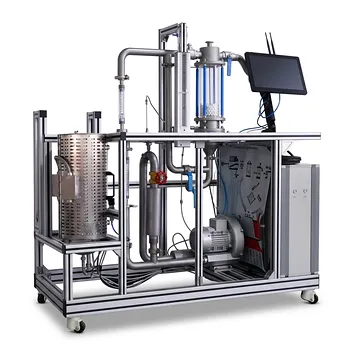
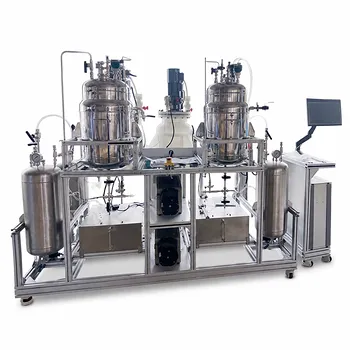
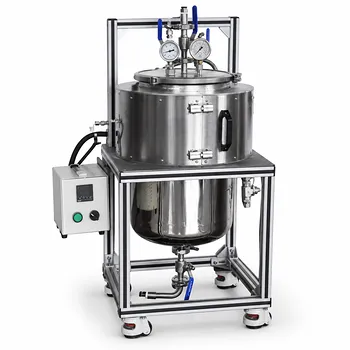
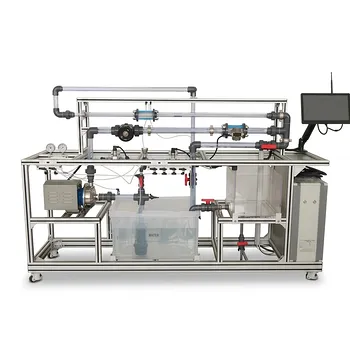
LABPARK provides high-quality Educational and Vocational Unit Operations Pilot Plants in chemical engineering, bioprocess & biotech, and environmental & water treatment. Designed specifically for universities, research institutes, and enterprises, our pilot plants are engineered with corrosion-resistant materials (such as 316 stainless steel and advanced alloys) to handle challenging acid and chloride environments safely.
Protect your research from unexpected equipment failure. Contact LABPARK today to discuss your custom pilot plant requirements with our engineering specialists!
Related Products
- Three-Tube Heat Transfer Educational Pilot Plant for Unit Operations Training
- Multi Functional Catalytic Reaction and Reactor Evaluation Educational Unit Operations Pilot Plant
- Constant Pressure Filtration Educational Unit Operations Pilot Plant
- Rising and Falling Film Evaporation Educational Unit Operations Pilot Plant
- Multi-Functional Special Distillation Educational Pilot Plant
People Also Ask
- When is ε-NTU preferred over LMTD in pilot plants? Predict heat exchanger performance without iteration.
- How does thermal conductivity affect pilot plant performance? Optimize heat transfer & accuracy
- What engineering trade-offs must students analyze in a heat transfer pilot plant? Balance performance & cost.
- How to configure heat transfer pilot plants for pinch analysis? Teach energy recovery.
- How does cascade control achieve superior disturbance rejection in heat transfer pilot plants?