Mastering monomer purification starts with eliminating a single contaminant that poisons polymer growth.
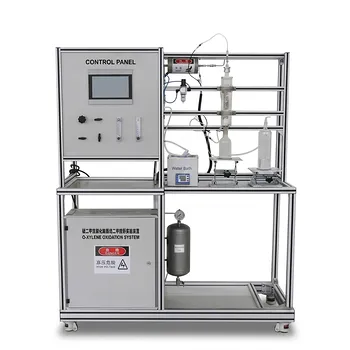
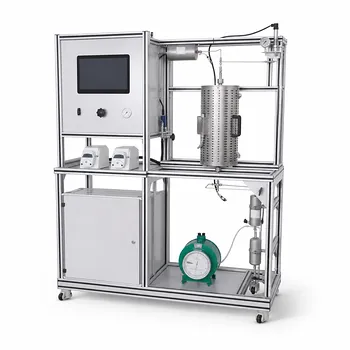
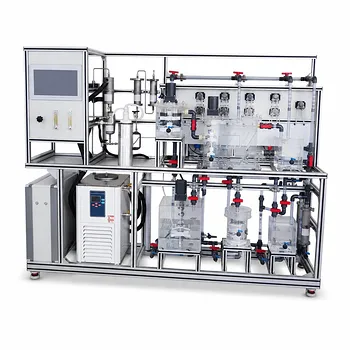
In chemical engineering education and research, a fixed-bed reactor pilot plant is used to demonstrate how crude terephthalic acid (TPA) is purified by selectively hydrogenating the problematic impurity 4‑carboxybenzaldehyde (4‑CBA). Crude TPA is dissolved in hot, pressurized water and passed over a palladium (Pd) catalyst packed in a stationary bed. The 4‑CBA is converted to p‑toluic acid, which stays dissolved during subsequent cooling, allowing ultra‑pure TPA to crystallize and be separated downstream. The pilot plant thus becomes a living textbook for reaction engineering, catalysis, and integrated separations all focused on delivering polymerization‑grade monomer.
A TPA purification pilot plant compresses an entire industrial purification train into a teachable system. It reveals how a selective catalytic hydrogenation step, combined with solubility‑driven crystallization, turns a monomer contaminated with a chain‑terminating impurity into a polymer‑ready building block. The hands‑on environment lets researchers and students bridge textbook chemistry and real‑world process design.
The Core Problem in Monomer Production and How a Fixed‑Bed Reactor Solves It
Why 4‑CBA Must Be Removed from Crude TPA
4‑CBA carries an aldehyde group that acts as a chain terminator during polyester synthesis. Even trace amounts (below 25 ppm) will cap growing polymer chains, drastically reducing molecular weight and ruining fiber or bottle‑grade PET.
Removing it to polymer‑grade specifications is non‑negotiable.
Traditional physical separation (recrystallization) alone cannot drop 4‑CBA low enough because some co‑crystallizes with TPA. A chemical transformation is required.
The Hydrogenation Chemistry and Catalyst
In the pilot plant, crude TPA is dissolved in water at high temperature (typically 250–280 °C) to keep everything in solution. The stream then enters a fixed‑bed reactor packed with a palladium‑on‑carbon (Pd/C) catalyst.
Under a hydrogen atmosphere, the aldehyde group on 4‑CBA is selectively hydrogenated to a methyl group, forming p‑toluic acid.
This reaction is highly selective — the aromatic ring of TPA remains untouched. The Pd catalyst provides the combination of activity and selectivity that makes the process viable.
The fixed‑bed configuration ensures continuous operation and a well‑defined residence time, letting researchers decouple reaction kinetics from fluid dynamics.
Downstream Separation and Integration
Once hydrogenation is complete, the stream is cooled. p‑Toluic acid is vastly more soluble than TPA, so it stays in the mother liquor while pure TPA crystallizes.
The pilot plant’s crystallization and filtration modules then isolate the solid product. The mother liquor can be recycled or purged, closing a realistic mass balance.
This connection between the reactor and separation units is a key educational feature: students see how a reaction creates a separation opportunity that would not exist otherwise.
How the Pilot Plant Elevates Chemical Engineering Education and Research
From Theory to Hands‑On Process Control
Running the fixed‑bed reactor teaches real‑time process discipline. Students and researchers must:
- Maintain high temperature and pressure to keep TPA dissolved and hydrogen in solution.
- Control hydrogen flow rate to avoid starvation or excess that wastes reactant.
- Manipulate residence time by adjusting feed rate to explore conversion vs. selectivity trade‑offs.
These activities transform abstract concepts like Damköhler numbers and mass transfer limitations into tangible dials and readings.
Studying Catalyst Performance and Deactivation
Multi‑point thermocouples embedded along the bed allow researchers to map the axial temperature profile. The hydrogenation is exothermic, so a temperature rise (or “hot spot”) marks where the reaction is most intense.
Over time, catalyst deactivation (from sintering, poisoning, or coking) causes this hot spot to migrate downstream. Tracking that shift quantifies the catalyst’s lifespan and helps students understand how to adjust inlet temperature or flow rates to compensate — a direct lesson in industrial reactor maintenance.
The pilot scale also enables catalyst screening: swapping different Pd loadings or support morphologies and comparing pressure drop, conversion, and selectivity under identical conditions.
Scale‑Up Insights and Process Optimization
A lab‑scale fixed‑bed reactor differs from an industrial adiabatic unit, but the pilot plant still exposes scale‑up sensitivities:
- Radial temperature gradients can hint at wall effects that vanish in larger reactors.
- Pressure drop measurements teach how particle size and bed packing affect throughput.
- Integration with downstream units reveals how reactor performance governs crystallization yield and filtrate purity.
These insights are invaluable for research teams aiming to translate a new catalyst from the bench to a commercial process.
Understanding the Trade‑offs and Practical Challenges
Safety and Operational Complexity
Operating at 250 °C and 40–60 bar with hydrogen makes safety paramount. The pilot plant must include proper pressure relief, hydrogen detection, and emergency shutdowns. Educational institutions invest heavily in process safety training around these units, turning the risk into a learning module.
Catalyst Cost and Handling
Palladium is expensive, and any leak into the product is a financial and purity concern. Pilot‑scale work often uses a small preserved batch; students learn to monitor bed pressure drop for signs of fines and to handle pyrophoric catalysts carefully during unloading.
Solubility and Crystallization Nuances
Keeping crude TPA fully dissolved demands tight temperature control upstream. Even slight cooling before the reactor can cause premature crystallization, plugging lines and skewing kinetics. The crystallization section must also carefully control cooling rate to avoid occluding mother liquor, trapping p‑toluic acid inside TPA crystals — a subtle purity pitfall that pilot‑scale experiments can reveal.
Making the Right Choice for Your Educational or Research Goal
Use the specific strengths of a TPA purification pilot plant to match your objectives.
-
If your primary focus is teaching integrated unit operations: The plant is a rare example that links a catalytic reaction directly to crystallization and filtration, showing how a chemical change enables a physical separation.
-
If your primary focus is catalyst development: Use the plant to compare selectivity and deactivation behavior under realistic, high‑temperature aqueous conditions that a slurry reactor cannot easily mimic.
-
If your primary focus is process safety and control: The high‑pressure hydrogen environment and exothermic reaction provide a rich platform for training in hazard analysis and advanced control strategies.
-
If your primary focus is scale‑up fundamentals: Map temperature and concentration gradients to challenge assumptions of perfect mixing and to practice using dimensionless numbers in data analysis.
The fixed‑bed reactor pilot plant for crude TPA purification doesn’t just clean a monomer — it transforms a theoretical process into an experimental sandbox where reaction engineering, separations, and safety converge, equipping the next generation of engineers with the intuition needed to produce ultra‑pure, life‑cycle‑safe materials.
Summary Table:
| Process Phase | Chemical / Physical Action | Educational & Research Value |
|---|---|---|
| Catalytic Hydrogenation | Selectively converts 4-CBA impurity into p-toluic acid over a Pd/C catalyst. | Teaches reaction kinetics, selectivity, and catalyst deactivation monitoring. |
| Fixed-Bed Reactor Control | Operates at 250–280°C and 40–60 bar under a hydrogen atmosphere. | Provides hands-on experience with high-pressure safety, residence time, and mass transfer. |
| Downstream Separation | Cools the stream to crystallize pure TPA while keeping p-toluic acid dissolved. | Demonstrates the integration of chemical reaction engineering with physical crystallization. |
Bring Industrial-Scale Process Engineering into Your Lab
Looking to bridge the gap between chemical engineering theory and industrial reality? LABPARK designs and manufactures high-quality Educational and Vocational Unit Operations Pilot Plants in chemical engineering, bioprocess & biotech, and environmental & water treatment.
Our custom pilot systems empower universities, research institutes, and enterprises to:
- Deliver Hands-On Training: Teach complex concepts like catalytic reactions, thermodynamics, and integrated separations in a safe, controlled environment.
- Accelerate R&D: Conduct precise catalyst screening, kinetics analysis, and process optimization on a scalable pilot level.
- Ensure Operational Safety: Experience real-world high-pressure and high-temperature process control with industry-standard safety mitigations.
Ready to elevate your department's research and teaching capabilities? Contact LABPARK today to explore our pilot plant solutions!
Related Products
- Fixed-Bed Chemical Reaction and Gas Dust Tar Removal Unit Operations Pilot Plant
- Fixed Bed Gas Solid Catalytic Reaction Educational Pilot Plant
- Multi Functional Catalytic Reaction and Reactor Evaluation Educational Unit Operations Pilot Plant
- Multi-Reactor Educational Pilot Plant for Reaction Engineering Unit Operations
- O-Xylene Oxidation to Phthalic Anhydride Educational Unit Operations Pilot Plant
People Also Ask
- When to transition from PID to adaptive control in pilot plants? Key process indicators.
- How do deviations in estimating latent heat impact pilot plant thermal systems? Avoid hardware mis-sizing.
- Why Compare Predicted and Experimental Excess Enthalpy? Key to Accurate Pilot Plant Scale-up
- How to study gasification in pilot plants? Compare exit gas composition & efficiency
- Why Use PTFE & Hastelloy in Chemical Pilot Plants? Prevent Corrosion & Ensure Safety