If your pilot system deals with corrosive agents, high temperatures, or strict purity requirements, the plastic you choose is more than a plumbing decision—it directly determines data quality and process safety. Polyethylene (PE) and polypropylene (PP) are lightweight and cost-effective, but they cannot withstand aggressive chemical environments or elevated heat. Polytetrafluoroethylene (PTFE) components provide unmatched chemical inertness, reliable operation from -200°C to 250°C, and negligible leaching, making them the go-to solution for critical fluid-handling components, seals, and linings in chemical and environmental pilot plants.
PTFE’s fundamental advantage over polyolefins is a near-universal resistance to strong acids, bases, and organic solvents combined with an extreme temperature range. This protects sensitive processes and analytical data, but must be balanced against PTFE’s lower mechanical strength and higher cost compared to PE or PP.
Understanding the Performance Gap Between PTFE and Polyolefins
Chemical Inertness: The Fluorine Shield Effect
PTFE’s backbone is completely shielded by fluorine atoms, which create a dense, non-reactive armor.
The large size and high electronegativity of fluorine protect the carbon-carbon bonds from attack. This allows PTFE to resist substances that instantly degrade polyolefins, including concentrated sodium hydroxide, aqua regia, and organic solvents.
PE and PP, built on hydrocarbon chains, readily swell, soften, or chemically decompose under such conditions. In a pilot plant, that degradation means leaks, contamination, and process shutdowns.
Temperature Tolerance: From Cryogenic to Boiling Solvents
Polypropylene can typically handle continuous use up to 120°C, while polyethylene softens at even lower temperatures.
PTFE maintains its mechanical and chemical stability across an exceptionally wide window, from -200°C to 250°C. This is critical for processes involving heated reactors, steam sterilization, or cryogenic quenching.
When a pilot operation cycles between temperature extremes, only PTFE components avoid cracking, creeping excessively, or losing chemical resistance during the swing.
Purity and Low Extractables: Protecting Your Analytical Data
Environmental and chemical pilot studies often center on trace metal analysis or ultra‑pure reagent handling.
Polyolefins can contain processing aids, stabilizers, or residual monomers that leach into the process stream and skew concentration data. PTFE’s inherent purity virtually eliminates extractables, ensuring that sample integrity is maintained from the beaker to the analytical instrument.
For membrane separation units, chemically inert tubing, and valve diaphragms, this means you measure what your process actually produces—not what the materials add.
Understanding the Trade-offs
Mechanical Strength and Creep
Unfilled PTFE has relatively low tensile strength and is prone to cold flow (creep) under constant load.
Gaskets and seals can deform over time, requiring periodic re-torqueing to maintain a leak-proof joint. For structural components like pump housings or large fittings, plain PTFE will often sag or fail unless reinforced with glass or carbon fibers.
This reinforcement adds both fabrication complexity and cost.
Cost and Fabrication Complexity
PTFE is significantly more expensive per kilogram than PE or PP, and it cannot be easily heat‑welded like polyolefins.
Custom shapes often require sintering or machining from stock shapes, driving up lead times and part costs. When a pilot skid calls for dozens of fittings and valve seats, the price difference becomes a serious budget consideration.
When Polyolefins Still Shine
For process water at ambient temperature, mild acids, or neutral salt solutions, PE and PP provide perfectly adequate chemical resistance at a fraction of the cost.
Over‑specifying PTFE in these mild environments needlessly strains project budgets and delivers no measurable performance benefit. The key is matching the material to the real chemical and thermal load.
Making the Right Polymer Choice for Your Pilot Operation
Your decision should be guided by the worst‑case chemical, temperature, and purity conditions the pilot will experience. Use the following goal‑based framework to choose confidently.
- If your primary focus is handling strong acids, caustics, or halogenated solvents at elevated temperatures: PTFE components are essential to prevent material failure and maintain continuous, safe operation.
- If your primary focus is ultra‑pure water or trace‑level environmental analysis: PTFE’s negligible extractables guarantee sample integrity and remove material variability from your scale‑up data.
- If your primary focus is high‑pressure structural parts or cost‑sensitive, low‑temperature aqueous processes: Consider glass‑filled PTFE for moderate improvements, or rely on polypropylene, which offers a solid balance of chemical resistance and mechanical toughness for less aggressive duties.
In pilot‑scale operations, every data point can influence the next investment. Grounding your polymer selection in the real chemical demands of your process builds the strongest foundation for successful scale‑up.
Summary Table:
| Feature | PTFE Components | Polyolefin Plastics (PE / PP) |
|---|---|---|
| Chemical Resistance | Near-universal (resists strong acids, bases, solvents) | Low; prone to swelling, softening, and degradation |
| Temperature Range | Excellent (-200°C to 250°C) | Limited (up to 120°C for PP; lower for PE) |
| Purity & Leaching | High; negligible extractables (ideal for trace analysis) | Low; potential leaching of stabilizers/monomers |
| Mechanical Strength | Low; prone to cold flow (creep) under load | Moderate to High; good structural integrity |
| Relative Cost | High material and fabrication/machining costs | Low material, molding, and heat-welding costs |
Optimize Your Pilot Operations with LABPARK
Choosing the right materials like PTFE is critical to securing accurate scale-up data and maintaining system safety in demanding chemical processes.
LABPARK provides premium Educational and Vocational Unit Operations Pilot Plants in chemical engineering, bioprocess & biotech, and environmental & water treatment. Tailored for universities, research institutes, and enterprises, our pilot plants are engineered with high-performance materials to withstand the toughest operating conditions.
Ready to elevate your research and training capabilities? Contact LABPARK today to discuss your custom pilot system requirements!
Related Products
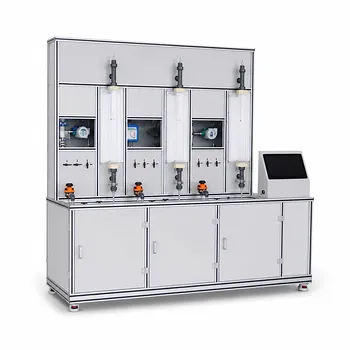
- Two Phase Flow Pattern Velocity Resistance Measurement Educational Pilot Plant
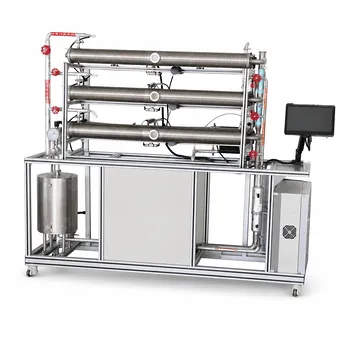
- Three-Tube Heat Transfer Educational Pilot Plant for Unit Operations Training
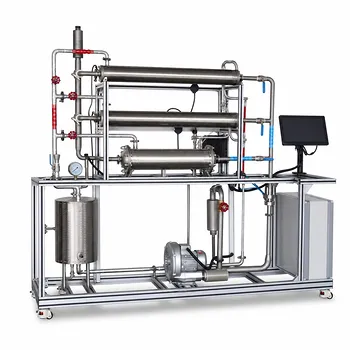
- Comprehensive Heat Transfer Coefficient Determination Educational Unit Operations Pilot Plant
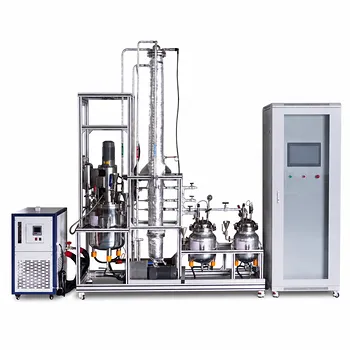
- Rising and Falling Film Evaporation Educational Unit Operations Pilot Plant
- Polymerization Granulation and Pellet Processing Educational Unit Operations Pilot Plant
People Also Ask
- How to update chemometric calibration models in pilot plants? Best practices for process engineers.
- Why Correct Sig Figs & Rounding Matter in Educational Pilot Plants: Ensure Data Accuracy
- How does nuclear yield inefficiency translate to chemical engineering education? Optimize kinetics with pilot plants.
- How can educational pilot plants be used to teach process safety and risk assessment in chemical engineering curricula?
- How to identify two-phase gas-liquid flow patterns? Master fluid dynamics with pilot plants