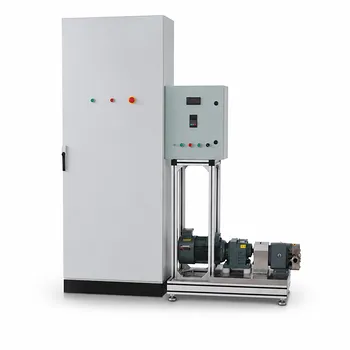
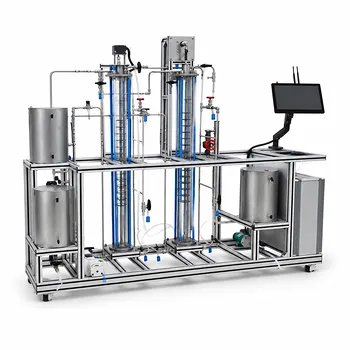
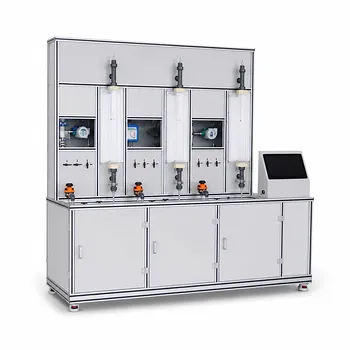
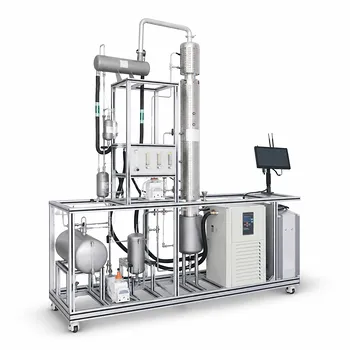
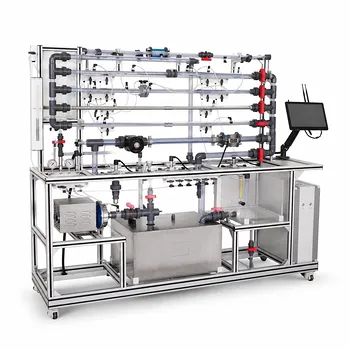
The decision boils down to one question: will your pilot plant’s control needs remain stable, or are they destined to evolve? Compact (block-type) PLCs integrate the CPU, power supply, and a fixed set of I/O points into a single chassis, making them a space‑saving, budget‑friendly choice for small, dedicated pilot units with unchanging operational parameters. Modular PLCs, on the other hand, let you independently plug the CPU, power supply, and I/O modules into a rack or bus system. For multi‑functional unit‑operations pilot plants—especially those in chemical engineering and environmental research—that require frequent sensor changes, a mix of analog and digital signals, or future expansion, the modular architecture is almost always the preferred route.
Pilot plants are living research platforms, and their control systems must keep pace. While compact PLCs are a simple, low‑cost fit for fixed, single‑purpose rigs, modular PLCs deliver the flexibility, I/O scalability, and ease of troubleshooting needed when reactors, columns, and sensor suites change between experimental campaigns. For most laboratory engineers, the modular approach is the smarter long‑term investment, even though it demands a bit more initial space and budget.
Understanding the Core Architectural Difference
At the hardware level, the contrast is stark. A compact PLC integrates the central processing unit, memory, power supply, and a fixed number of input/output (I/O) points into a single, unexpandable housing. A modular PLC separates these functions and places them on a backplane that can accept dozens of independent modules over time.
What Compact Integration Really Means
When you buy a compact PLC, you are locking in the exact I/O count and signal types the manufacturer offers. Typically, this is a limited mix—perhaps 16 digital inputs, 8 digital outputs, and a handful of analog channels. Many compact units allow a small expansion via proprietary add‑on modules, but the total point count rarely exceeds a few hundred, and adding them often strains the power budget or the housing’s physical space.
How Modular Architectures Unlock Scalability
A modular system starts with a rack and a separate CPU module. You then select discrete I/O modules—24‑volt digital input cards, isolated analog thermocouple input cards, PID loop‑capable analog output cards—and slide them into the backplane. Because the rack determines the physical capacity and the CPU determines the logical polling rate, you can scale a modular PLC from a few dozen points to several thousand simply by adding modules or extending the rack.
When Compact PLCs Shine
For a defined, repeatable pilot plant—think a single packed distillation column used to teach pressure‑temperature relationships with a fixed sensor suite—a compact PLC is a beautiful fit. It minimizes footprint inside cramped laboratory spaces and keeps the bill of materials low.
The Fit for Fixed, Small‑Scale Setups
If the pilot unit will never add more than its original 20‑30 I/O points and the process variables (temperature, pressure, flow) are measured by a stable, pre‑defined set of instruments, the compact PLC’s built‑in I/O perfectly matches the requirement. No extra modules, no backplane configuration, no unused capacity.
Space and Cost Efficiency
Because everything is inside one box, you eliminate the need for a separate rack, extra wiring between power supplies and CPU, and the clutter of module connectors. The upfront cost is significantly lower—often a third to half of an equivalently sized modular system—which pleases grant‑funded lab budgets and projects with strict capital ceilings.
When Modular PLCs Are the Better Choice
Most chemical engineering and environmental unit‑operations pilot plants fall into exactly the opposite category. They are multi‑purpose platforms where the column becomes a membrane test rig next month, or where new optical sensors, mass flow controllers, and spectroscopic probes appear mid‑campaign.
Frequent Sensor and Signal Type Changes
Modular PLCs excel with diverse signal mixes. You can install a 16‑channel thermocouple input card today and replace it with an 8‑channel 4‑20 mA input card next semester without touching the CPU. This is critical when a pilot plant shifts from a wastewater treatment experiment using suspended‑solids meters to a high‑pressure gas reaction study requiring ultra‑fast pressure transmitters.
Seamless Expansion Without Hardware Migration
If a research group secures funding for a new downstream separator, a modular PLC lets you simply add a new rack or I/O module to the existing CPU. With a compact PLC, you would likely need to purchase an entirely new unit, rewire everything, and rewrite logic to bridge the two controllers—a source of needless complexity and error.
Advanced Control Loop Capability
Multi‑functional pilot plants often run cascade control loops (e.g., jacket temperature responding to reactor temperature) and advanced alarm routines. Modular PLCs typically offer faster scan times across larger programs and the dedicated coprocessors needed for PID and data‑logging without bogging down the main CPU. This headroom is essential when research students experiment with non‑linear model‑predictive control or advanced process monitoring.
The Critical Role of I/O Flexibility and Signal Mix
A pilot plant that swings between chemical reactions and environmental membrane separation will inevitably use a wide array of instruments. Analog 4‑20 mA transmitters for pressure and thermocouple signals for temperature must coexist with digital pulse trains from positive‑displacement flowmeters and digital dry‑contacts from level switches.
Why Fixed I/O Quickly Becomes a Limitation
A compact PLC ships with a pre‑defined number of analog inputs—often four or six. If your membrane fouling study suddenly requires eight pressure transducers and three conductivity cells, you hit a wall. A modular PLC simply needs an additional 8‑channel analog input module, which can be plugged into an empty slot or an extension rack that shares the same backplane bus.
Handling Hazardous or Specialized Sensors
When teaching the operation of hydrogenation reactors or ozone‑based advanced oxidation, you may need galvanically isolated modules or intrinsically safe barriers. Modular systems offer plug‑in isolator modules and certified I/O cards that a compact block‑type PLC cannot natively accommodate. This keeps the pilot plant safe without adding external interposing relays that clutter the panel and introduce failure points.
Troubleshooting and Maintenance Advantages
In teaching and research environments, things go wrong—and they go wrong more often when students are learning. A modular architecture turns a system‑wide fault into a localized module issue that can be diagnosed and resolved quickly.
Hot‑Swap and Fault Isolation
With a modular PLC, each I/O card has its own diagnostic LEDs and can often be removed and replaced with the rack powered (hot‑swap). If a thermocouple input card fails during a critical experiment, you can swap it in seconds without stopping the entire pilot plant’s data logging. A compact PLC failure usually means replacing the whole unit and recalibrating every signal connection.
Clearer Wiring and Maintenance
Modular systems naturally organize wiring by card type—all thermocouples terminate on one card, all digital outputs on another—which makes for a self‑documenting control panel. Laboratory engineers can trace signals effortlessly, a benefit that compounds as the pilot plant grows and staff turns over.
Understanding the Trade‑offs
Objectively, a modular PLC is not always the perfect solution. There are scenarios where its advantages become detriments if not aligned with the plant’s actual trajectory.
The Risk of Over‑Specification
If a pilot plant is a single‑unit, short‑term teaching rig with no funding for future reconfiguration, purchasing a seven‑slot rack and seven spare modules wastes grant money and bench space. A compact PLC would have delivered the same functionality at lower cost and with a simpler parts list.
Increased Panel Footprint and Wiring Complexity
A modular system needs a larger backplane and separate power supply modules, which can dominate a small wall‑mounted enclosure. The initial wiring effort is also higher because you terminate field signals on individual terminal blocks connected to each card, rather than a single multi‑conductor connector. This upfront investment only pays back if the system actually expands.
Higher Initial Hardware Cost
For the same functional I/O point count, a modular PLC typically costs 30–60% more than a compact PLC with equivalent onboard channels. Labs operating under tight capital constraints must carefully weigh this premium against the probabilistic cost of future hardware migration.
How to Make the Right Choice for Your Pilot Plant
Your decision should map directly to the life‑cycle intent of the unit‑operations setup. Use these goal‑oriented questions to select the architecture that aligns with your research and teaching mission.
- If your primary focus is a small, permanent single‑process pilot plant: Opt for a compact PLC. The integrated design saves space, reduces cost, and simplifies the control panel to a level ideal for introductory teaching.
- If your primary focus is a multi‑functional research pilot plant that will host diverse experiments: Go modular. The ability to expand I/O, mix signal types, and swap modules without downtime directly supports the iterative, hypothesis‑driven nature of academic and R&D lab work.
- If your primary focus is balancing current budget with an uncertain future roadmap: Choose a compact PLC only if the plant’s scope is contractually fixed. Otherwise, invest in a small modular starter chassis—perhaps a four‑slot base—that lets you add one or two expansion modules later without paying the full premium up front.
- If your primary focus is training students on industrial maintenance and control panel design: A modular rack with removable cards teaches diagnostics, hot‑swapping, and proper signal segregation. The compact PLC hides these lessons inside a sealed shell.
The best architecture is the one that evolves at the same pace as your research questions—selecting modularity now ensures your control system never becomes the bottleneck that delays the next discovery.
Summary Table:
| Feature | Compact PLC | Modular PLC |
|---|---|---|
| Ideal For | Fixed, single-purpose rigs | Multi-functional, evolving setups |
| I/O Scalability | Fixed or very limited | Highly scalable (flexible backplane) |
| Cost & Space | Lower cost, small footprint | Higher upfront cost, larger footprint |
| Maintenance | Replace whole unit on failure | Hot-swappable cards, localized fixes |
Optimize Your Pilot Plant Control System with LABPARK
Need help selecting or configuring the right control architecture for your lab? LABPARK provides state-of-the-art Educational and Vocational Unit Operations Pilot Plants in chemical engineering, bioprocess & biotech, and environmental & water treatment.
Whether you represent a university, research institute, or enterprise, we can help you design a flexible, future-proof control system tailored to your exact curriculum and research goals.
Contact LABPARK Today to Discuss Your Project
Related Products
- Quantitative Dosing and Liquid Flow Control Educational Unit Operations Pilot Plant
- Polymerization Granulation and Pellet Processing Educational Unit Operations Pilot Plant
- Comprehensive Liquid-Liquid Extraction Pilot Plant for Engineering Education
- Multi Pump Fluid Transport Process Piping Unit Operations Training Pilot Plant
- Multi Functional Catalytic Reaction and Reactor Evaluation Educational Unit Operations Pilot Plant
People Also Ask
- How do educational unit operations pilot plants bridge theory and design? Bridge the Engineering Gap
- How do educational unit operations pilot plants address safety and waste management when scaling up?
- How do conservation equations guide fluid flow pilot plants? Key Scale-Up Principles
- Why is the attenuation path length (lA) critical when positioning pressure sensors in a fluid flow unit operations pilot plant?
- What are the key differences in process analytics requirements from R&D to production?