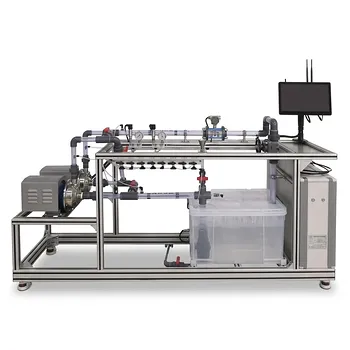
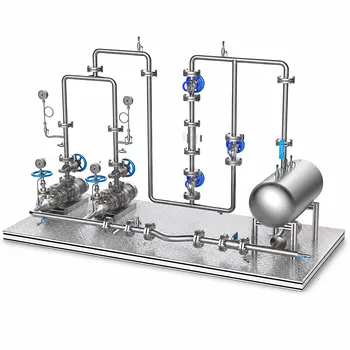
A dense suspension of cells, cellular debris, or protein precipitate sits in the pilot plant, and the question is immediate: low-speed or high-speed? The answer, at its core, is dictated by particle size and density difference. Select a low-speed centrifuge (under 10,000 rpm) for large, readily sedimenting particles like yeast, animal cells, blood components, and coarse precipitates; choose a high-speed centrifuge (10,000–30,000 rpm) for submicron or colloidal materials such as bacteria, viruses, proteins, and nanoparticles. Getting this right prevents lost product and teaches the fundamental link between centrifugation and bioprocess efficiency.
Particle size is the primary selector: low-speed centrifuges handle robust, micron-scale particles, while high-speed centrifuges are needed for submicron biologicals. But in an educational pilot plant, the real lesson is that speed is only the starting point—G-force, centrifuge type, feed concentration, and process goals all intersect to define the optimal operating window.
The Foundation: Speed Dictates Sedimentation Rate
In bioprocess, the terminal velocity of a particle under centrifugal force scales with the square of its diameter. This means a 5-µm yeast cell settles hundreds of times faster than a 100-nm virus particle under the same conditions. Matching rotor speed to the target particle is therefore the first step.
When to Choose Low-Speed (Under 10,000 RPM)
Low-speed centrifuges excel at separating materials that are clearly visible under a light microscope and have significant density contrast with the suspending medium. Typical educational separations include harvesting yeast (Saccharomyces cerevisiae, ~5–10 µm), pelleting mammalian or insect cells, concentrating blood components, or dewatering coarse precipitates like ammonium sulfate cuts. The gentle forces minimize shear damage to intact cells, which is essential when cell viability is required for downstream re-culture or metabolic studies.
When High-Speed (10,000–30,000 RPM) Becomes Necessary
Once the target particle drops below a few microns—typical for bacteria (Escherichia coli, ~1–2 µm), cell debris, inclusion bodies, or virus-like particles—sedimentation under normal gravity is impractically slow. A high-speed centrifuge generates the accelerations needed to drive these small particles to the wall in a reasonable residence time. Subcellular components, proteins in the form of precipitates or aggregates, and synthetic nanoparticles used in bioprocess demonstrations also fall into this category. Students learn directly that downstream clarification after cell lysis or nanoparticle synthesis cannot succeed without high-speed separation.
Beyond RPM: The Critical Role of G-Force and Geometry
A frequent teaching mistake is to equate speed with separation power. The true driving force is the relative centrifugal force (RCF, or G-factor), which depends on both RPM and rotor radius. A low-speed centrifuge with a large rotor can generate higher G-forces than a miniature high-speed unit, making it capable of pelleting fine bacteria if designed appropriately.
Teaching G-Force, Not Just RPM
Have students calculate RCF = 1.12 × r (mm) × (rpm/1000)² for different rotors. A pilot plant with interchangeable rotors—swing-bucket for gentle pelleting, fixed-angle for higher throughput—provides the perfect arena to demonstrate that “high-speed” is a relative term. The takeaway: selection is always based on the required RCF for a given particle Stokes radius, not merely the rpm dial setting.
The Role of Residence Time and Flow Rate
In continuous or semi-continuous pilot-scale centrifuges, the separation efficiency is also a function of how long the feed remains in the bowl. A high-speed disc-stack centrifuge can handle bacteria effectively because the narrow disc spacing reduces settling distance, even at moderate G-forces. Educational pilot plants that allow adjustment of feed flow rate teach the balance between throughput and clarity, a lesson no lecture can fully capture.
Matching Centrifuge Type to Feed Concentration
Speed selection alone cannot guarantee success if the centrifuge type is mismatched with the solids loading. The pilot plant must demonstrate that the same biological particle can require entirely different hardware depending on its concentration in the feed stream.
Low Solids (<1% v/v): Tubular Bowl Centrifuges
When students work with very dilute cell cultures or need to separate two immiscible liquids, the tubular bowl centrifuge is the tool of choice. Its slender bowl and high rotational speed (often high-speed range) generate extreme G-forces that capture even fine solids from thin suspensions, making it a classic platform for recovering vitamin-rich oils or clarifying dilute fermentation broths.
Moderate Solids (1–15% v/v): Disc-Stack Centrifuges
Most pilot-scale yeast and bacterial harvesting falls into this range. The disc-stack centrifuge creates a multitude of thin settling chambers, drastically shortening the particle’s path and enabling high-throughput biomass concentration. Here, the operational speed may be in the high-speed range, but the true lesson is how geometric design modifies the effective sedimentation distance, allowing even low-G-force discs to handle particles that would require ultracentrifugation in a simple bottle rotor.
High Solids (>15% v/v): Decanter Centrifuges
For thick slurries, such as a fungal mycelial mat or a precipitated enzyme cake, a decanter (scroll discharge) centrifuge operating at lower speeds continuously conveys solids out of the bowl. This links the speed selection back to the physical state of the material: high solids demand a robust, slow-to-moderate-speed design that avoids plugging, even if the individual particles are microscopic.
Bioprocess-Specific Considerations: Asepsis and Cell Integrity
An educational pilot plant cannot treat centrifugation as a purely physical unit operation. The biological reality imposes constraints that override the simple speed/particle-size rule.
Shear Sensitivity and Viability
Mammalian cells and some stem-cell cultures are notoriously shear-sensitive. Using a high-speed disc-stack centrifuge may achieve excellent clarification but kill 90% of the cells. The pilot plant curriculum should explicitly test viability post-centrifugation, teaching students that the best separation speed is the lowest that meets the clarity target. This often means selecting a low-speed, larger-radius rotor operated at gentle accelerations.
Maintaining Sterility and Containment
High-speed operations generate aerosols and heat, increasing the risk of contaminating the environment or the product. In an educational setting, demonstrating the need for hermetic seals, steam-sterilizable bowls, and cooling jackets teaches good manufacturing practice alongside engineering principles. The selection of a low-speed centrifuge may be driven as much by the ease of cleaning and sterile operation as by the particle size itself.
Common Pitfalls and Trade-offs in Educational Settings
Even a perfectly matched centrifuge speed can lead to poor learning outcomes if the underlying trade-offs are not exposed.
- Over-Speeding Causes Product Loss: High centrifugal forces can pack sediments so tightly that resuspension is difficult, or they can rupture cells, releasing proteases and degrading the target product. Students should be asked to always check for lysis markers (e.g., lactate dehydrogenase) when pushing for maximum dryness.
- Under-Speeding Fails the Clarification Step: A classic student mistake is using a low-speed setting for a bacterial culture, resulting in a turbid supernatant that fouls chromatography columns downstream. The pilot plant should have a bench-scale test protocol: run a spin-curve (RCF vs. turbidity) before scaling up.
- Neglecting Temperature Control: High-speed runs heat the bowl significantly, potentially denaturing heat-labile proteins. When separating enzymes or antibodies, a jacketed, low-speed centrifuge operating at 4°C may outperform a high-speed unit that cooks the product.
- Ignoring the Feed’s Particle Size Distribution: A fermentation broth often contains whole cells, cell debris, and fine precipitates. A single speed cannot separate everything perfectly. The educational goal must be to define the primary target and accept that a subsequent polishing step (e.g., depth filtration) will handle the fines, rather than trying to tune the centrifuge for a perfect one-step separation.
Making the Right Choice for Your Educational Goals
The centrifuge speed decision in a pilot plant is never a one-variable problem; it is a systems choice that teaches students to balance particle physics, equipment design, and biological constraints.
- If your primary focus is teaching fundamental sedimentation principles: Start with low-speed separations of well-characterized yeast or large latex beads, so students can visually measure the sediment front and calculate Stokes velocities before introducing the complexities of high-speed, invisible particles.
- If your primary focus is mimicking industrial bioprocessing: Incorporate a high-speed disc-stack centrifuge for bacterial harvesting and challenge students to optimize both speed and feed rate to maximize throughput while maintaining a pre-defined supernatant clarity target.
- If your primary focus is protein or viral purification: Invest in a modular system that can run at both low-speed (for initial cell removal) and high-speed (for precipitates or virus pelleting), emphasizing the integration of centrifugation into a complete DSP sequence.
- If your primary focus is cell therapy or regenerative medicine: Prioritize low-speed, large-bowl centrifuges with sterile, single-use liners to teach closed processing and viability preservation, even if separation time increases.
The centrifuge is a classroom in itself: choosing the right speed teaches not just how to separate solids from liquids, but how to think like a process engineer who respects the living materials at every turn.
Summary Table:
| Centrifuge Type | Speed Range | Target Particles (Examples) | Key Considerations |
|---|---|---|---|
| Low-Speed | < 10,000 RPM | Yeast, mammalian/insect cells, blood, coarse precipitates | Low shear, preserves cell viability, easy cleanability |
| High-Speed | 10,000–30,000 RPM | Bacteria (E. coli), viruses, proteins, nanoparticles | High G-force, requires cooling, risk of cell lysis |
Bring Real-World Bioprocessing into Your Lab with LABPARK
To master downstream processing, students need hands-on experience with industry-grade separation technology. LABPARK provides premium Educational and Vocational Unit Operations Pilot Plants in chemical engineering, bioprocess & biotech, and environmental & water treatment for universities, research institutes, and enterprises.
Our custom-designed pilot plants enable students to experiment with variable G-forces, feed rates, and different centrifuge geometries, bridging the gap between theory and industrial practice.
Ready to elevate your engineering curriculum? Contact LABPARK today to explore our pilot plant solutions!
Related Products
- Centrifugal Pump Performance and Orifice Flowmeter Calibration Educational Pilot Plant
- Centrifugal Pump Performance Determination Educational Unit Operations Pilot Plant
- Chemical Pipeline Assembly and Fluid Transport Practical Training Unit Operations Pilot Plant
- Bio-fermentation Ethanol Production Practical Training Unit Operations Pilot Plant
- Hot Filtration Educational Unit Operations Pilot Plant Laboratory System
People Also Ask
- What features should instructors look for in pump & flowmeter pilot plants? Key Selection Guide
- Why start a centrifugal pump with a closed outlet valve? Protect your pilot plant motors.
- How to update chemometric calibration models in pilot plants? Best practices for process engineers.
- Why is Peng-Robinson preferred over SRK? Enhance thermodynamic modeling in educational pilot plants.
- Why is continuous measurement preferred over manual sampling in pilot plants? Get real-time kinetic insights.