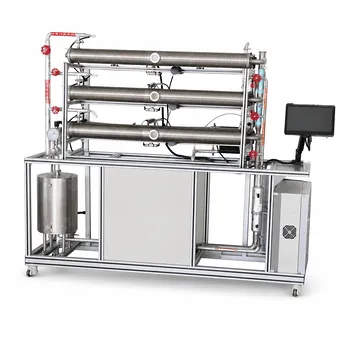
Polymorphic control is the cornerstone of crystalline product quality. Near-infrared (NIR) spectroscopy is applied to monitor polymorphic transformations during crystallization by integrating a probe directly into the process reactor and tracking the real‑time spectral changes that arise from distinct crystal lattice structures and hydrogen bonding patterns. These differences shift the overtone and combination absorption bands in the NIR region, enabling you to detect, quantify, and determine the precise endpoint of a polymorph conversion without ever taking a sample.
Crystallization is ultimately a structural engineering problem in disguise. NIR spectroscopy solves it by acting as an in‑situ structural detective—it reads the unique vibrational fingerprint of each polymorph’s crystal lattice and hydrogen‑bond network, giving you a continuous, non‑destructive kinetic trace of the solid‑state transformation.
The Spectral Basis for Polymorph Identification
How Crystal Structure Alters the NIR Signal
Different polymorphs pack the same molecule into distinct three‑dimensional arrays. These arrays create unique environments for hydrogen bonding and intermolecular forces, which in turn alter the vibrational energy levels of bonds like O–H, N–H, and C–H. As a result, the overtone and combination bands in the NIR region shift in both position and intensity. This is the physical foundation that makes NIR a sensitive probe of solid‑state form.
Why Overtones Offer a Practical Advantage
Unlike mid‑infrared (MIR) spectroscopy, which monitors fundamental vibrations that often require careful sample preparation to avoid signal saturation, NIR measures weaker overtones. This inherent lower absorptivity means you can analyze bulk powders, slurries, or wet mixtures as they are—directly in the reactor, without dilution or surface contact complications. The trade‑off in peak intensity is more than compensated by the freedom to monitor the process non‑invasively and in real time.
Implementing NIR for Real-Time Crystallization Monitoring
Integrating Probes into the Reactor
A fiber‑optic immersion probe or a non‑contact reflectance probe is placed directly in the pilot‑plant crystallizer. This setup allows continuous spectral acquisition during cooling, anti‑solvent addition, or seeding. Because the measurement is instantaneous and does not require extracting a sample, you avoid the risk of inducing an unintended polymorphic transformation during handling—a critical advantage when metastable forms are in play.
Building Calibration Models and Spectral Libraries
Raw spectra must be turned into actionable information. By first collecting reference spectra of pure polymorphs and preparing laboratory‑scale mixtures that mimic process conditions, you can build multivariate calibration models (such as partial least squares, PLS). These models correlate spectral features with the relative abundance of each form. Additionally, spectral libraries and correlation‑coefficient methods allow rapid qualitative identification of the dominant polymorph present at any moment, making it straightforward to track which form is growing and which is dissolving.
Extracting Kinetic and Endpoint Information
Using Spectral Changes to Map Conversion
As a metastable polymorph transforms into the stable form, the spectral signature gradually transitions from one characteristic pattern to another. By monitoring the intensity of a polymorph‑specific peak or the score of a principal component over time, you obtain a kinetic curve of the solid‑state transformation. This reveals the influence of temperature, stirring rate, or solvent composition on the conversion rate, enabling precise kinetic parameter estimation.
Identifying the True Endpoint of Transformation
A common process failure is stopping the crystallization before the conversion is complete, leaving residual unwanted polymorph that impacts product stability or dissolution. NIR’s real‑time signal allows you to determine the exact endpoint when the spectral trace stabilizes fully on the target polymorph. This objective online endpoint detection replaces arbitrary holding times and ensures batch‑to‑batch consistency.
Understanding the Trade-offs and Pitfalls
Sensitivity to Physical Changes
NIR spectra are sensitive not only to chemical form but also to physical properties like particle size and bulk density. During crystallization, both polymorph composition and crystal size distribution may evolve simultaneously. If not properly handled in the calibration strategy—for instance, by including samples with varying physical attributes—the multivariate model can confuse a particle‑size change with a polymorph change, leading to misleading quantification.
The Need for Robust Multivariate Modeling
Off‑the‑shelf chemometric models can fail if they are not built with a calibration set that spans the full range of expected process variability. This means deliberately preparing laboratory samples that match the physical characteristics of the crystallization slurry—temperature, solid loading, and particle size range—to avoid cross‑correlation between spectral variations and the property you want to measure. Without this rigor, model predictions can drift over time.
Limits of Detection for Low-Level Polymorphs
While NIR is effective at tracking major components, detecting a trace polymorph at the fraction‑of‑a‑percent level may require more sensitive techniques or advanced data processing (such as spectral subtraction or imaging‑based NIR chemical imaging). For routine bulk monitoring during process development, NIR’s detection limit is typically sufficient to track the late stages of transformation, but early nucleation of a minority form may be missed if it falls below the instrument’s sensitivity threshold.
Making the Right Choice for Your Process Monitoring Goal
- If your primary focus is real‑time process control and endpoint determination: Implement NIR with a direct immersion probe and a simple moving‑block correlation metric against a target polymorph spectrum. The rapid, non‑destructive measurement will give you immediate, actionable feedback to decide when to discharge the batch.
- If your goal is to study the detailed kinetics of solvent‑ or temperature‑mediated transformations: Build a quantitative multivariate model using a well‑designed calibration set that spans the full physical and chemical design space. This will produce accurate concentration‑time profiles for kinetic modeling.
- If you are scaling up a new crystallization and must demonstrate Quality‑by‑Design understanding: Use the NIR data to identify critical process parameters that influence the polymorphic outcome, and establish a robust design space that guarantees consistent production of the desired form.
NIR spectroscopy transforms the crystallizer from a black box into a transparent unit operation where solid‑state form is no longer a post‑batch surprise but a continuously verified process variable.
Summary Table:
| Key Phase | NIR Spectroscopy Role | Process Advantage |
|---|---|---|
| Polymorph ID | Measures shifts in overtone/combination bands | Non-destructive, direct slurry analysis |
| In-Situ Monitoring | Uses fiber-optic immersion probes in the reactor | Eliminates sampling-induced transformations |
| Endpoint Detection | Tracks spectral stability of the target form | Prevents premature batch discharge |
| Kinetic Mapping | Generates real-time concentration-time curves | Optimizes temperature & solvent control |
Optimize Your Crystallization & Unit Operations with LABPARK
Bridging the gap between laboratory research and industrial practice is critical for modern scientific advancement. LABPARK provides premium Educational and Vocational Unit Operations Pilot Plants in chemical engineering, bioprocess & biotech, and environmental & water treatment. Designed specifically for universities, research institutes, and enterprises, our pilot systems empower you to master advanced process control and inline monitoring techniques.
Ready to elevate your laboratory scale-up and training capabilities? Contact LABPARK today to discover our tailored pilot plant solutions!
Related Products
- Multi Functional Membrane Crystallization Educational Unit Operations Pilot Plant
- Potassium Salt Thermal Dissolution and Crystallization Separation Educational Unit Operations Pilot Plant
- Multi-Modal Distillation Unit Operations Training Pilot Plant
- General Purpose Cosmetics Production Unit Operations Training Pilot Plant
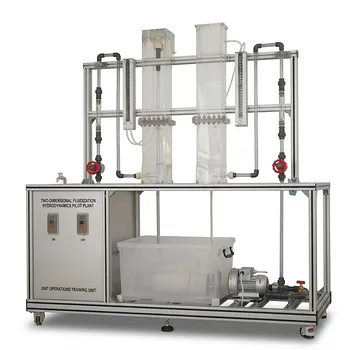
- Two-Dimensional Fluidization Hydrodynamics Educational Pilot Plant for Unit Operations Training
People Also Ask
- Control Crystallization Pilot Plant Secondary Nucleation: 4 Key Adjustments
- Why is precise temperature control critical in crystallization pilot plants? Key to Scale-Up Success
- What key factors should be considered when configuring a crystallization unit operations pilot plant?
- What are the benefits of integrating online PAT tools like ATR-FTIR into crystallization unit operations pilot plants?
- How to use crystallization pilot plant agitation speed to identify diffusion vs reaction growth?