Ion exchange separation is the critical step that makes accurate multi-element analysis of water-formed deposits possible.
In complex boiler scales, phosphate ions aggressively mask and interfere with the quantification of cations like calcium, magnesium, iron, and copper. A rapid ion‑exchange step strips these phosphates away from the target cations, enabling clean, interference‑free determination. Environmental water treatment pilot plants turn this analytical principle into a hands‑on teaching tool—students operate real columns, observe breakthrough curves, and study resin regeneration, directly connecting lab chemistry to industrial boiler protection.
Ion exchange eliminates phosphate interference, transforming a single gram of boiler scale into a clear profile of scaling cations. When executed in a pilot plant, this same separation becomes a live demonstration of column dynamics, selectivity, and regeneration—a complete training engine for preventing scale and optimizing industrial water treatment.
The Analytical Challenge: Why Phosphate Interference Matters
The Complex Chemistry of Water‑Formed Deposits
Boiler deposits are rarely one single compound. A typical sample contains calcium and magnesium phosphates, calcium sulfate, silicates, carbonates, aluminum oxides, and iron oxides. Analyzing this mixture with a single sample (often just 1 g) is standard in pilot‑scale water treatment studies, but it quickly exposes a hidden problem.
The Interference Problem
The trouble is phosphate. During wet‑chemical analysis, phosphate ions form stable complexes or precipitates that distort the measurement of other cations. For example, phosphate can bind calcium, prevent complete precipitation, or produce false signals in spectroscopic steps. Without first removing phosphate, the numbers for calcium, magnesium, iron, and copper are unreliable—making root‑cause scale diagnosis impossible.
How Ion Exchange Separation Resolves the Interference
The Principle of Cation Isolation
The solution is elegantly simple: pass the dissolved deposit through a strong‑acid cation exchange resin. The resin’s fixed sulfonic acid groups hold onto all positively charged cations (Ca²⁺, Mg²⁺, Fe²⁺/³⁺, Cu²⁺) while allowing anionic phosphate species to flow straight through. Phosphate is rapidly separated from the target cations, eliminating the interference at its source.
From Complex Matrix to Clean Analytes
After the column, the effluent contains the interfering phosphates, while the resin bed now holds a clean suite of cations. These cations can be eluted with a slug of acid and then quantified by titration, atomic absorption, or ICP. The result is a clear, uncompromised profile of scaling ions—the essential data for diagnosing hardness leaks, corrosion byproducts, and deposit formation mechanisms.
Bringing the Principle to Life in Pilot Plants
Operating Ion Exchange Columns for Deposit Analysis
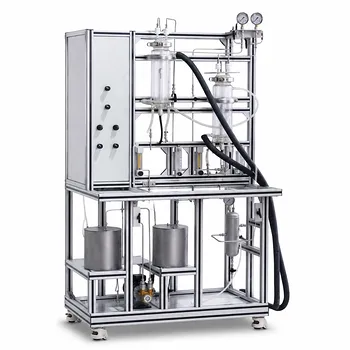
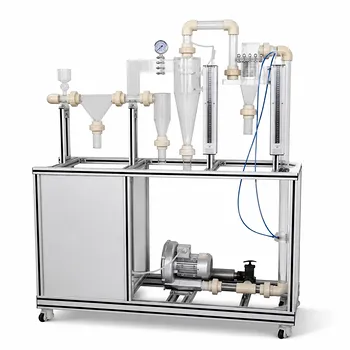
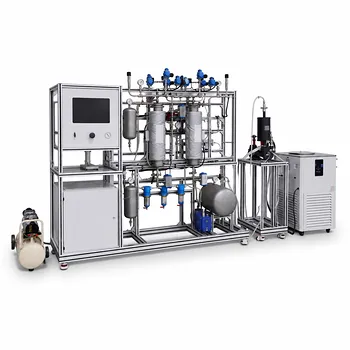
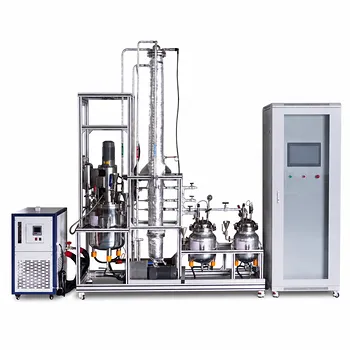
In environmental water treatment pilot plants, this exact analytical separation is performed on pilot‑scale ion exchange columns. Students prepare a synthetic or real boiler deposit solution, load it onto a column packed with a cation resin, and watch the separation happen. They then follow the full analytical chain—from phosphate removal to final cation determination—cementing the link between ion exchange and scale forensics.
Studying Breakthrough Curves and Resin Regeneration
The pilot column is much more than a sample preparation step. By intentionally overloading the resin, students trace breakthrough curves, observing how effluent concentration rises as exchange sites become saturated. They then apply acid (e.g., HCl) or brine to regenerate the column, measuring regeneration efficiency and chemical consumption. This teaches the practical economics: regeneration chemicals (acids and bases) plus waste disposal typically double the cost of treated water compared to raw water, making optimization a key engineering challenge.
Connecting to Total Cation and Alkalinity Measurements
Pilot plants often combine deposit analysis with boiler feed water chemistry. A simple but powerful exercise passes boiler water through a cation column in the acid form and titrates the effluent with NaOH. By comparing the acidity of neutralized versus unneutralized samples, students calculate equivalents per million (epm) of hydroxide and carbonate ions. This directly validates P and M alkalinity measurements and shows how ion exchange clarifies the invisible ions driving scaling and corrosion.
Understanding the Trade‑offs and Practical Pitfalls
Using ion exchange for deposit analysis—and scaling it in pilot plants—comes with clear trade‑offs that build real engineering judgment.
- Resin fouling and selectivity limits. Iron and organic matter can foul the resin, reducing capacity and altering breakthrough behavior. Students learn that proper sample pretreatment and regeneration protocols are non‑negotiable.
- Chemical and waste costs. Regeneration uses strong acids and bases, generating a liquid waste stream that must be neutralized before discharge. The demineralized water produced in mixed‑bed systems can have a total dissolved solids below 1 ppm, but the operating cost is roughly twice that of raw water—a stark lesson in economic balance.
- Dependence on raw water quality. The same column that works perfectly with a synthetic deposit solution can behave differently when fed with real, variable plant water. Scaling the process demands constant adjustment of flow rates, pH, and regeneration schedules.
- Not a standalone solution. Ion exchange removes phosphate interference, but it does not dissolve silicates or digest carbonates. A complete deposit analysis still requires carbonate fusion for silicates, ammonia precipitation for iron and aluminum, and separate silica determination after the ion‑exchange step. The pilot plant curriculum teaches how all these pieces fit together into a systematic, defensible analytical protocol.
Making the Right Choice for Your Training or Process Goals
How you leverage ion exchange separation in a pilot plant depends entirely on your primary objective.
- If your primary focus is training future water treatment operators: Design pilot exercises that pair deposit separation with breakthrough‑curve measurement and regeneration studies. Emphasize the cost of chemicals and the environmental weight of waste disposal.
- If your primary focus is optimizing boiler feedwater quality: Integrate the ion‑exchange separation step with total‑cation titrations and alkalinity verification. Use the clean cation profile to tune softener performance and anti‑scalant dosing.
- If your primary focus is scaling up a deposit analysis method: Validate the ion‑exchange separation against known standards, then deliberately foul the resin with iron or organic matter to establish safe operating limits and regeneration protocols.
- If your primary focus is meeting strict environmental discharge regulations: Combine the ion‑exchange separation with subsequent heavy‑metal removal studies (adsorption, membrane filtration) taught in the same pilot plant, creating a full mass‑transfer curriculum.
When you make ion exchange the analytical heartbeat of your pilot plant, you do more than solve a phosphate interference problem—you build the skills that keep boilers clean, costs down, and discharge permits in the green.
Summary Table:
| Process Stage | Analytical Purpose | Pilot Plant Application |
|---|---|---|
| Cation Isolation | Separates target cations from interfering phosphates | Running deposit solutions through strong-acid cation resin columns. |
| Cation Elution | Recovers Ca²⁺, Mg²⁺, Fe²⁺/³⁺, and Cu²⁺ for analysis | Regenerating columns using acids/brine to measure chemical consumption. |
| Breakthrough Study | Analyzes column capacity and saturation limits | Plotting breakthrough curves to optimize cycle runs and prevent scale. |
Bring Industrial Water Treatment Concepts to Life with LABPARK
Are you looking to equip your students, researchers, or operators with hands-on experience in ion exchange separation and scale prevention?
LABPARK provides premium Educational and Vocational Unit Operations Pilot Plants in chemical engineering, bioprocess & biotech, and environmental & water treatment. Tailored for universities, research institutes, and enterprises, our pilot plants allow users to study column dynamics, trace breakthrough curves, and analyze regeneration economics in real-world scenarios.
Contact us today to discover how LABPARK can elevate your training and research capabilities!
Related Products
- Ion Exchange Water Purification Educational Pilot Plant for Engineering Unit Operations
- Photocatalytic Membrane Separation and Degradation Unit Operations Pilot Plant
- Multifunctional Membrane Separation Educational Pilot Plant with Ultrafiltration, Nanofiltration, Reverse Osmosis
- Gas-Solid Heterogeneous Separation Demonstration Educational Unit Operations Pilot Plant
- Bench Scale Dual Column Gas Separation and Capture Educational Pilot Plant
People Also Ask
- How to Prevent Ion Exchange Channeling? Expert Solutions for Pilot Plants
- What operational precautions should lab operators take for resin volume changes and air pockets? Key Guide
- How does ion exchange work in water treatment pilot plants? Cost & process guide.
- How to use ion exchange pilot plants to verify alkalinity? A hands-on guide for engineering students.
- Why does iron degrade cation resin & how to demonstrate capacity recovery? Step-by-Step Lab Guide