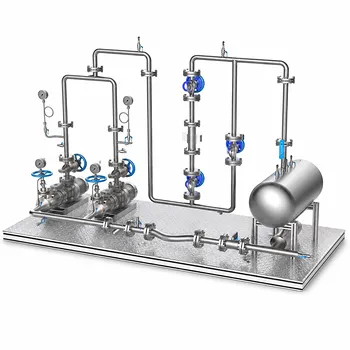
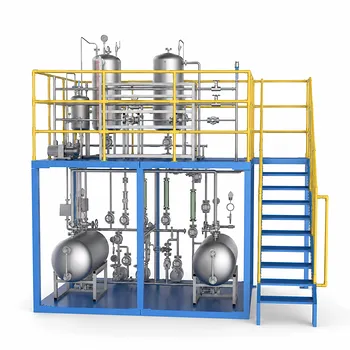
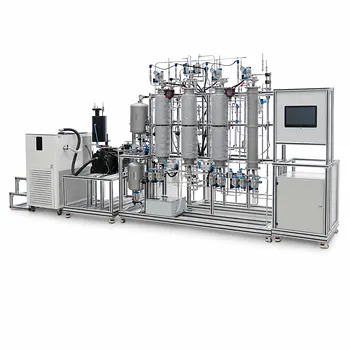
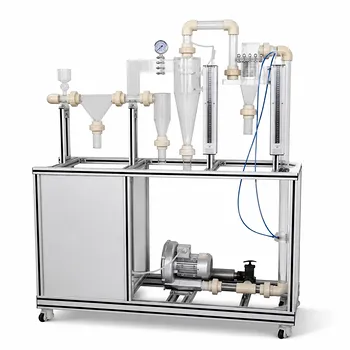
Chemical incompatibility is the silent architect of leaks. When a gasket or O-ring meets a fluid it wasn’t designed for, it doesn’t just fail—it transforms. It can soften into a sticky paste, swell until it extrudes from its groove, or become so brittle it shatters under compression. In a chemical engineering pilot plant, this directly dictates material selection by forcing engineers to prioritize chemical resistance above all else. The process fluids define which polymer families (like PTFE or Viton) are even candidates, and then mechanical and thermal requirements narrow the field to a safe, reliable combination.
Pilot plants exist at the dangerous intersection of research and industrial reality. Chemical incompatibility isn’t just an inconvenience—it’s the primary design constraint for seals and gaskets. A single misjudged fluid-elastomer interaction can compromise containment, invalidate experimental data, and create a serious safety incident. The core material decision always starts with a rigorous fluid compatibility analysis, not a performance spec sheet.
The Mechanisms of Seal Degradation
Chemical attack on a seal is rarely a single event. It’s a progressive, often synergistic assault that undoes the material’s carefully engineered properties.
Swelling and Softening: Why a Swollen Gasket Fails
Chemicals absorb into the polymer matrix, forcing molecular chains apart. This causes the seal to swell and lose dimensional control, often extruding from its housing.
A softened gasket also loses its mechanical integrity. The clamping force relaxes catastrophically, turning a tight flange into a path for hazardous vapor or liquid leaks. Even a 10% volume swell can reduce the sealing stress below the critical threshold needed for containment.
Cracking and Embrittlement: The Brittle Failure Pathway
Some fluids extract plasticizers or attack the polymer backbone directly, leaving the material brittle. Environmental stress cracking can then propagate when the seal is under constant compression.
In pilot plants with frequent heat-up and cool-down cycles, a brittle seal loses its ability to recover elastic deformation. Micro-cracks form, creating permanent leak paths that can go unnoticed until a runaway seal failure occurs during a critical experiment.
Chemical Reaction and Leaching: Contamination Risks
Incompatibility doesn’t only destroy the seal—it can contaminate the process stream. Plasticizers, fillers, or even oligomers can leach out of an incompatible elastomer, poisoning catalysts or skewing analytical results.
For pilot plants mimicking industrial processes, such leaching turns a research run into unreliable data. The tubesheet sealants mentioned in supplementary guidance—epoxy, silicone, or urethane—must be chemically stable with both the membrane polymer and the process fluid to avoid cracking, plasticization, and extractables that would compromise gas purity.
The Material Selection Framework for Pilot Plant Seals
Because chemical environments in pilot plants are rarely static, engineers match seal materials to entire process classes, not just one fluid. The selection begins with a chemical resistance chart, but ends with a nuanced understanding of the material’s behavior under real operating conditions.
Matching Polymer Families to Chemical Classes
The golden rule: no single elastomer works for everything. Strong oxidizing acids, polar solvents, and alkalis each require a different base polymer. The primary reference is correct: MSDS data and resistance charts are the launch point.
But these charts have limits. They often test immersion at room temperature. In a pilot plant, a gasket sees elevated temperatures, dynamic pressure fluctuations, and cleaning cycles—all of which accelerate chemical attack exponentially. The deep need is to simulate your worst-case exposure, not just the steady-state process.
PTFE: The Near-Universal Solution (with Caveats)
Polytetrafluoroethylene (PTFE) is the workhorse of chemical compatibility. Its fluoropolymer structure resists nearly all acids, bases, and solvents, making it the default choice for gaskets, seals, and linings where uncertainty is high.
However, PTFE has a fatal flaw for some applications: it cold-flows under pressure. Without a proper filler or a controlled compression design, a pure PTFE gasket will creep and lose bolt load over time, especially at elevated temperatures. It solves the chemical problem but teases you with a mechanical one.
Elastomers (Viton, EPDM, Silicone): When Flexibility Matters
Where vibration, thermal expansion, or irregular flanges demand elasticity, you need a true elastomer. Viton (FKM) provides excellent resistance to oils, aliphatic hydrocarbons, and many acids at high temperatures—ideal for solvent-based pilot processes.
EPDM is the champion for polar solvents, steam, and aqueous alkaline systems but swells dramatically in any oil or fuel. Silicone offers the widest temperature range and good oxidizer resistance, but its mechanical tear strength is poor, and it swells in many organic solvents. The compatibility decision becomes a careful mapping of the elastomer’s specific weaknesses to the pilot plant’s solvent list.
Graphite and Metal: For Extreme Temperatures and Pressures
When a reaction runs at 500°C and 200 bar, polymers are no longer an option. Graphite-based seals deliver chemical inertness, thermal stability, and a built-in lubricating layer, making them a staple for high-temperature flange and valve applications.
Metal seals (spiral-wound, ring-type) offer ultimate strength but demand perfect flanges and careful metallurgical selection. A spiral-wound gasket with an incompatible filler or the wrong metal winding (e.g., stainless steel in a chloride environment) becomes an immediate corrosion cell. Compatibility here extends from the process fluid to the microscopic galvanic couple in the seal itself.
Understanding the Trade-offs
The engineer’s real job is navigating the necessary compromises. Chemical compatibility is rarely a single-axis decision.
The Conflict Between Chemical Resistance and Mechanical Strength
A material with flawless corrosion resistance—like PTFE—may lack the tensile strength or creep resistance to survive a pressure cycle. Conversely, a high-strength engineering elastomer might swell rapidly in a seemingly mild solvent.
The deep need is to accept that you’re balancing a triangle: chemical resistance, mechanical robustness, and cost. In pilot plants, where safety and data validity trump all, the decision often leans heavily toward chemical resistance, but you must still engineer the joint to accommodate the weaker mechanical properties (via thicker gaskets, better flange alignment, or lower bolt torques).
Cost vs. Safety: Why Cheap Seals Lead to Expensive Failures
A polypropylene gasket is cheap and resists many aqueous solutions, but it will collapse in an organic solvent like heptane. The temptation to standardize on a single low-cost material for a university pilot plant can backfire catastrophically when a student tests an unexpected chemical.
The supplementary guidance on packing materials applies equally to seals: ceramic packing resists acid but shatters with alkalis; plastic packing is solvent-sensitive. Selecting a seal based solely on purchase cost ignores the much larger potential cost of a chemical release or lost research batch. For pilot plants, the economic calculation must internalize the cost of failure.
The Hidden Danger of Cleaning Agents
Pilot plant seals are often selected for the process fluid but destroyed by the cleaning protocol. As your references note, inhibited acid solutions attack stainless steel, and alkaline cleaners attack aluminum. The same applies to polymer seals: the aggressive chemical used to flush the system between experiments can be more damaging than the experiment itself.
An EPDM gasket perfect for a caustic process run will be wrecked by an acid cleaning step. Material selection must therefore consider the full life-cycle fluid exposure, including CIP (clean-in-place) agents, passivation solutions, and steam purges. Overlooking this is the most common avoidable failure in educational and research pilot plants.
Making the Right Choice for Your Goal
Your material selection strategy should shift depending on what you’re optimizing for. Here’s how to apply these principles to your specific pilot plant reality.
- If your primary focus is maximum safety and containment integrity: Default to PTFE or graphite with known mechanical compensation. Use housed gaskets to prevent cold-flow, and verify compatibility with all cleaning agents before finalizing the seal choice.
- If your primary focus is experimental accuracy and eliminating contamination: Choose a seal material with zero extractables for your particular solvent family. Viton for hydrocarbon streams, EPDM for aqueous polar systems—always backed by long-term soak tests at process temperature to verify no leaching.
- If your primary focus is frequent fluid changes and wide chemical diversity: Invest in a modular sealing system with replaceable PTFE envelope gaskets or spring-energized Teflon seals. This sacrifices some mechanical simplicity but gives you near-universal chemical compatibility without retooling the entire plant.
Your pilot plant’s seals are the final, silent guardians of safety and data integrity. Chemical incompatibility is the only variable that can defeat them before they ever feel pressure. Respect the fluid, map its entire exposure timeline, and choose the material that solves the chemical problem first—then engineer around its limitations.
Summary Table:
| Material | Key Compatibility | Main Limitation | Best Use Case |
|---|---|---|---|
| PTFE | Universal chemical resistance | Cold-flows (creeps) under pressure | High-acid and solvent processes |
| Viton (FKM) | Oils, hydrocarbons, high temp | Swells in polar solvents | Solvent-based reaction systems |
| EPDM | Polar solvents, steam, caustics | Destroyed by oils and fuels | Aqueous and alkaline operations |
| Graphite | High temperatures & pressures | Brittle; requires precise installation | Extreme thermal or high-pressure valves |
Ensure Safety and Precision in Your Pilot Plant Operations
Selecting the right seal materials is critical to preventing costly leaks, ensuring safety, and safeguarding experimental data.
LABPARK provides state-of-the-art Educational and Vocational Unit Operations Pilot Plants in chemical engineering, bioprocess & biotech, and environmental & water treatment. We help universities, research institutes, and enterprises design systems with the precise material compatibility needed for diverse chemical processes.
Ready to build a safe, reliable, and high-performing pilot plant? Contact our engineering experts today for custom configurations tailored to your specific chemical and educational needs!
Related Products
- Fixed-Bed Chemical Reaction and Gas Dust Tar Removal Unit Operations Pilot Plant
- Chemical Pipeline Assembly and Fluid Transport Practical Training Unit Operations Pilot Plant
- Ethyl Acetate Synthesis Unit Operations Pilot Plant for Practical Training
- Multi Pump Fluid Transport Process Piping Unit Operations Training Pilot Plant
- Multi-Functional Special Distillation Educational Pilot Plant
People Also Ask
- When to transition from PID to adaptive control in pilot plants? Key process indicators.
- How do deviations in estimating latent heat impact pilot plant thermal systems? Avoid hardware mis-sizing.
- Why Compare Predicted and Experimental Excess Enthalpy? Key to Accurate Pilot Plant Scale-up
- Why Use PTFE & Hastelloy in Chemical Pilot Plants? Prevent Corrosion & Ensure Safety
- How to study gasification in pilot plants? Compare exit gas composition & efficiency